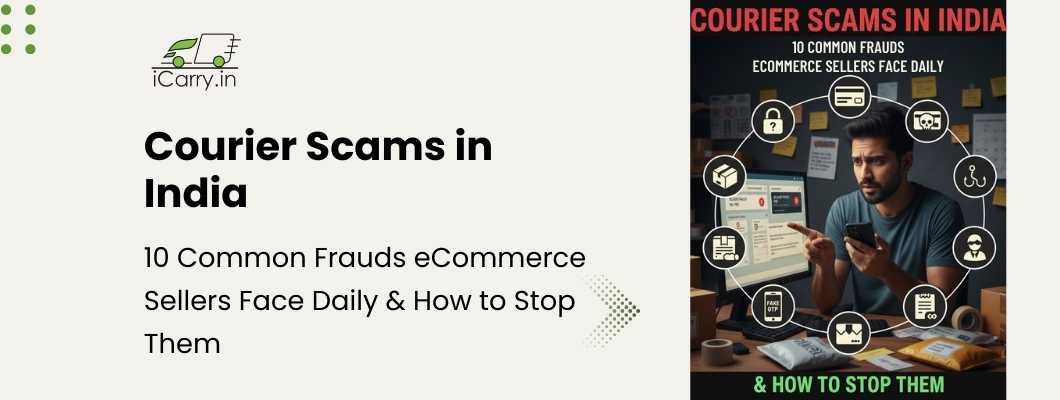
India's eCommerce industry is growing rapidly, but this growth has also led to a sharp rise in courier-related scams. From fake delivery alerts to COD frauds and impersonation calls, sellers are losing money every single day-often without realizing how or why.
If you sell online, understanding these scams is no longer optional. Let's break down the ten most common courier frauds affecting Indian eCommerce sellers and how you can stop them before they damage your business.
1. Fake Delivery Messages & Parcel Scams
Many sellers and customers receive SMS or WhatsApp messages claiming a delivery failed or a parcel is "on hold." These messages usually redirect users to fake tracking pages designed to steal personal or financial data. Indian banks have officially warned customers about such parcel scams, explaining how fraudsters exploit delivery anxiety to trick users into clicking malicious links. Here is a recent article from Times of India on this scam with India Post as well.
How to stop it:
Always verify shipment status directly on the official courier website or app instead of clicking on random tracking links.
2. "Digital Arrest" or Intercepted Parcel Scams
In this scam, fraudsters pose as courier officials or law-enforcement officers, claiming a package contains illegal items and has been seized. Victims are threatened with arrest and pressured to transfer money immediately. This fraud pattern is now widely known as a digital arrest scam, which Indian cybercrime agencies have publicly cautioned against.
How to stop it:
No legitimate authority will threaten arrest via phone calls or WhatsApp. Disconnect immediately and verify through official channels.
3. Cash on Delivery (COD) Frauds & Fake Returns
COD orders remain one of the biggest risk areas for Indian sellers. Fraudsters may refuse delivery, claim fake returns, or even send back tampered or swapped products. Indian seller communities regularly discuss these COD fraud issues, especially among small and mid-sized eCommerce businesses.
These COD-related losses often show up later as unexplained RTO costs - an issue many sellers first notice when reconciling courier statements. You can read about how to reduce RTOs here.
How to stop it:
Enable OTP-based delivery confirmation, use delivery proof images, and restrict COD for high-risk locations or repeat offenders.
4. Courier Company Impersonation Scams
Fraudsters often impersonate popular courier companies using spoofed phone numbers or look-alike email IDs. Sellers or customers are told their parcel is stuck and must pay a "processing" or "release" fee. Several real cases reported by Indian media show how victims lost large amounts to such courier impersonation scams.
How to stop it:
Never trust inbound calls claiming to be from courier services. Always contact the courier using the official contact details on their verified website.
5. Fake Customs or Tax Payment Demands
Another common fraud involves calls claiming a parcel is held by customs due to unpaid duties. Scammers demand instant payments through UPI or bank transfers. The Indian government has officially warned citizens about customs-related courier frauds, clarifying that customs authorities do not collect payments via calls or messages.
How to stop it:
Customs payments are made only through official portals or authorized courier billing systems-never through direct payment requests.
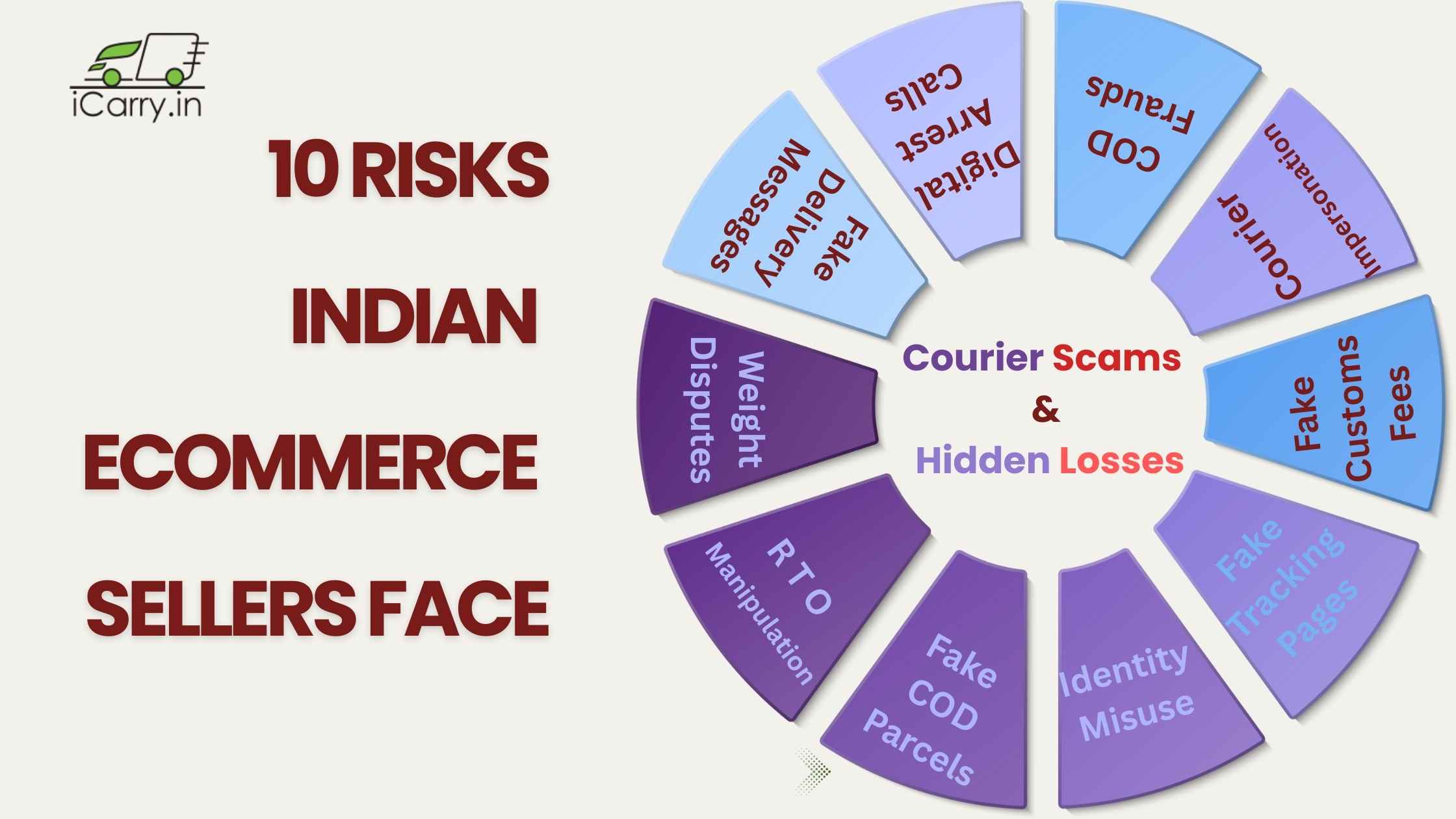
6. Phishing Through Fake Tracking Pages
Fake courier tracking pages closely mimic real courier websites. Once users enter OTPs, card details, or login credentials, scammers gain access to accounts. This technique is one of the most common cyber-fraud methods linked to courier scams, as explained in multiple cybersecurity advisories.
How to stop it:
Always type the courier's website manually in your browser and check the URL carefully for spelling errors or unusual domains.
7. Identity Misuse & Fake Orders
Fraudsters sometimes place orders using someone else's name or address, leading to delivery disputes, chargebacks, and inventory loss for sellers. Such cases are frequently reported across Indian online forums where sellers discuss identity misuse in eCommerce orders.
How to stop it:
Monitor unusual ordering patterns, flag mismatched customer details, and use address verification tools wherever possible.
8. Fake COD Parcel Scams Targeting Households and Shops
According to a recent news article in Hindustan Times, a senior citizen in Bengaluru received a fraudulent COD parcel from a reputed courier service containing a product he never ordered. Police discovered scammers were using personal data scraped from social media to send unsolicited COD parcels, tricking people into paying for worthless products.
Police have registered a case under the IT Act and other cheating laws, and investigations continue.
How to stop it:
Customers should verify their order history before paying for COD parcels, especially if the recipient did not place the order.
9. Fake RTO & Return Manipulation by Courier Staff or Networks
Some sellers face a more subtle but damaging scam where parcels are intentionally marked as "Customer Not Available," "Address Incorrect," or "Refused" without a genuine delivery attempt. In certain cases, parcels are routed back as RTO even though the customer was reachable and willing to accept the order.
This practice inflates RTO costs, reverse logistics charges, and inventory blocking, and is especially harmful for COD-heavy sellers. Because it appears as a routine delivery failure in reports, many businesses fail to detect it early.
In rare but reported cases across seller communities, returned parcels have also come back tampered, repackaged, or missing items, leading to losses that are difficult to dispute after the fact.
How sellers can reduce risk:
- Track delivery attempt timestamps and proof-of-attempt data
- Flag pincodes with unusually high RTO rates
- Compare courier-wise performance regularly
- Use platforms with dashboards that provide delivery transparency and audit trails, not just shipment status updates
This type of manipulation doesn't look like a "scam" at first glance - but over time, it quietly eats into margins.
10. Incorrect Weight Declaration at Courier Franchise Level
Some sellers face a silent but costly issue that starts at the courier franchise or pickup center. Bulky or heavy parcels are sometimes accepted with a lower declared weight than their actual dead or volumetric weight.
The problem surfaces later at sorting hubs, where the mismatch is flagged - resulting in unexpected weight discrepancy charges, penalties, and delayed settlements. Since the incorrect weight was recorded early in the journey, sellers often find it difficult to trace responsibility or raise disputes.
This impacts sellers shipping:
- Bulky or irregular products
- Furniture, appliances, or bundled items
- From franchise-managed pickup locations
How sellers can reduce risk:
- Measure and record dead & volumetric weight in advance
- Click parcel photos on a weighing scale before pickup
- Ensure weight is system-recorded, not verbally confirmed
- Audit courier invoices regularly
Over time, these unnoticed discrepancies quietly eat into margins.
Hidden Losses eCommerce Sellers Often Ignore
Courier scams aren't the only reason sellers lose money. Some of the biggest losses happen quietly, without triggering alarms.
Here are hidden problem areas many sellers overlook:
1. Small Weight Adjustments That Add Up
Minor per-shipment weight corrections may seem insignificant, but across hundreds of orders, they can result in thousands of rupees in excess charges every month.
2. Unchallenged RTO Costs
Many sellers accept high RTO rates as "normal," without realizing patterns tied to specific pin codes, couriers, or COD-heavy regions.
3. Missed SLA Breaches
Late deliveries, delayed pickups, or extended transit times often violate courier SLAs - but sellers rarely track or claim these losses.
4. Hidden COD Remittance Delays
Even when deliveries succeed, delayed COD settlements affect cash flow planning and working capital, especially for growing brands.
5. Lack of Visibility Across Couriers
Using multiple courier partners without centralized tracking leads to blind spots in performance, billing, and dispute management.
Why This Matters
Fraud and inefficiency don't always show up as one big loss. More often, they appear as small leaks across daily operations - leaks that compound over time.
For Indian eCommerce sellers, protecting margins today isn't just about shipping more orders - it's about shipping smarter, with visibility and control.
How eCommerce Sellers Can Protect Themselves in 2026
To reduce courier-related fraud:
- Use official courier dashboards for tracking and reconciliation
- Educate customers about common courier scams via order confirmation messages
- Never share sensitive information over calls or chat
- Enable fraud-detection tools with your payment gateway
- Report suspicious activity immediately through India's cybercrime helpline (1930) or the official National Cyber Crime Reporting Portal
Early reporting significantly increases the chances of blocking fraudulent transactions.
Summary
Courier scams in India are becoming more sophisticated every year. From fake delivery alerts and digital arrest threats to hidden losses like weight discrepancies and fake RTOs, sellers face multiple layers of fraud that silently eat into their margins.
In 2026, awareness is no longer just a precaution - it's a core part of running a safe eCommerce business. By understanding these 10 scams and putting preventive systems in place, sellers can protect their revenue, reputation, and customer trust.
For sellers who want complete visibility and fewer surprises, platforms like iCarry.in focus on keeping shipping rates transparently visible upfront, eliminating hidden charges, and ensuring billing reconciliation is accurate and leakage-proof. Over 50,000+ Indian businesses ship through iCarry.in, with 4★ ratings across 4,000+ Google reviews and valuable testimonials, showing how much sellers value predictable costs and clean billing.
When costs are clear and data is reliable, sellers can spend less time chasing discrepancies and more time growing their business - because shipping smarter means shipping safer.