
In India's export ecosystem, certain exporters are officially recognized for their consistent export performance. This recognition comes in the form of an Export House Certificate.
Holding this certificate doesn't just give prestige - it offers real operational and policy benefits that can make exports easier and more profitable.
This guide explains what an Export House Certificate is, who is eligible, how to apply, and why it matters.
What Is an Export House Certificate? (Simple Meaning)
An Export House Certificate is a recognition granted by the Government of India to exporters who achieve a certain level of export performance over a specified period.
In simple words:
- It officially recognizes you as a high-performing exporter
- The certificate is issued by the Directorate General of Foreign Trade (DGFT)
Beyond policy benefits, Export House status also enables exporters to negotiate better terms with international shipping partners, improve delivery timelines, and manage export logistics more efficiently - all of which directly impact buyer confidence.
Types of Export House Status in India
Based on export performance, exporters can qualify for different levels:
- One Star Export House
- Two Star Export House
- Three Star Export House
- Four Star Export House
- Five Star Export House
Higher stars = higher export performance and greater recognition.
Why Export House Status Matters
Export House Certificate holders get:
- Priority treatment in government offices
- Faster approvals and clearances
- Better credibility with banks and buyers
- Easier access to export incentives
- Simplified documentation
It acts as a trust badge in global trade.
Export Logistics Readiness After Certification
Once an exporter achieves Export House status, the next challenge is execution - moving goods across borders reliably and cost-effectively.
Certified exporters often focus on:
- Optimized courier selection for international shipments
- Accurate weight and invoice reconciliation
- Reduced disputes in freight billing
- Predictable transit timelines for overseas buyers
Efficient export logistics ensures that the credibility gained through DGFT recognition is reinforced at the delivery stage.
Who Is Eligible for an Export House Certificate?
To be eligible, an exporter must:
- Be registered in India
- Hold a valid Importer Exporter Code (IEC)
- Have achieved minimum export turnover as prescribed
- Meet compliance and reporting requirements
Only actual export performance counts.
Export Performance Criteria (High Level)
DGFT considers:
- FOB value of exports
- Performance over a block of years
- Exports under eligible categories
The higher your export value, the higher star status you qualify for.
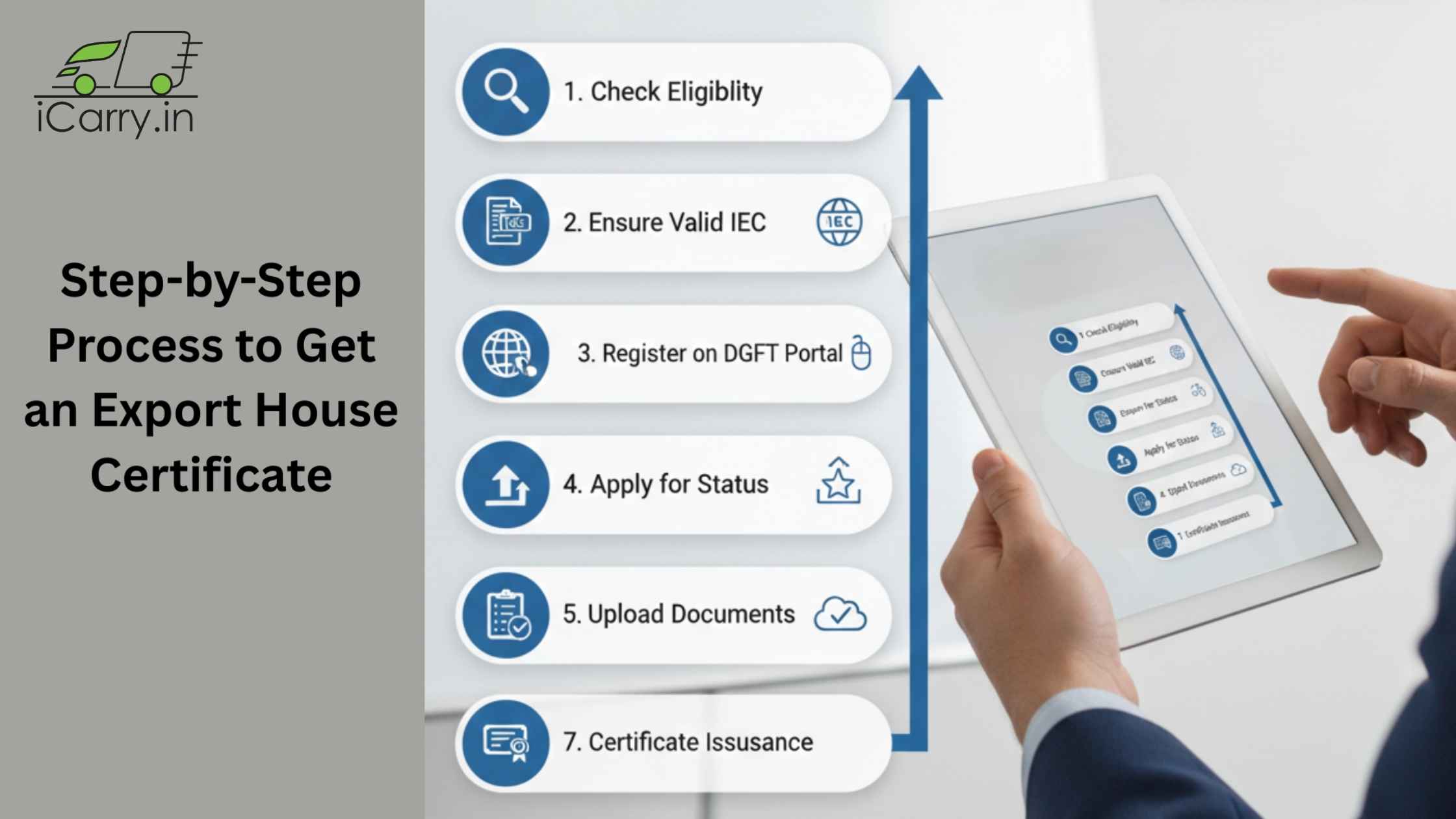
Step-by-Step Process to Get an Export House Certificate
Step 1: Check Eligibility
Confirm that your export turnover meets DGFT thresholds.
Step 2: Ensure Valid IEC
Your Importer Exporter Code must be active and updated.
Step 3: Register on DGFT Portal
Create or log in to your account on the DGFT website.
Step 4: Apply for Star Export House Status
Select the appropriate star category and submit the application.
Step 5: Upload Required Documents
Attach export performance data and declarations.
Step 6: DGFT Verification
DGFT verifies export records and compliance history.
Step 7: Certificate Issuance
Once approved, the Export House Certificate is issued digitally.
Documents Required for Export House Certificate
Commonly required documents include:
- IEC certificate
- Export performance statements
- Chartered Accountant certificate (if required)
- Self-declaration of compliance
- Firm/company details
Accuracy is critical.
Validity of Export House Certificate
- Valid for 5 years
- Renewable based on continued performance
- Can be upgraded to higher star status
Status must be maintained through compliance.
Benefits After Getting Export House Status
- Faster DGFT services
- Priority for trade facilitation schemes
- Easier participation in trade delegations
- Enhanced global credibility
- Better negotiation power with buyers
- Government trade facilitation schemes
Recognition helps scale exports.
Common Mistakes Exporters Make
- Applying without meeting turnover criteria
- Incorrect export data submission
- Expired IEC
- Ignoring compliance history
- Not accounting for shipping inefficiencies such as incorrect weight declarations, courier mismatches, or poor billing reconciliation
Preparation avoids rejection.
Tips to Get Approval Faster
- Verify export values before applying
- Keep documentation clean and updated
- Respond quickly to DGFT queries
- Maintain good compliance records
- Maintain clean export records, including shipping invoices, courier bills, and reconciliation data
Inconsistencies can slow verification during DGFT reviews. Clean data = smooth approval.
Export House Certificate vs Other Export Registrations
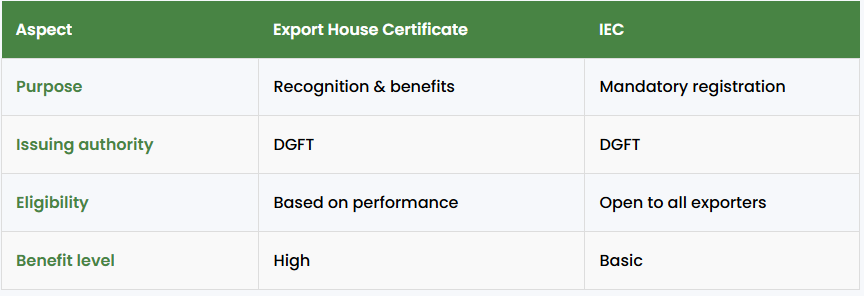
IEC allows you to export. Export House status rewards excellence.
In Summary
An Export House Certificate is more than a title - it is a growth enabler.
For serious exporters, it:
- Improves operational efficiency
- Builds global trust
- Unlocks policy advantages
If you're exporting at scale, this recognition can significantly strengthen your business.
Managing Exports Efficiently at Scale
As export volumes grow, many Indian exporters look for systems that bring visibility and predictability to shipping.
Modern logistics platforms help exporters:
- Compare multiple courier options for international deliveries
- Track shipment performance across regions
- Ensure transparent pricing with no hidden freight charges
- Maintain accurate shipment-level billing reconciliation
This operational clarity becomes especially important for exporters aiming to scale sustainably after receiving Export House recognition.
Export House status opens doors - but efficient logistics execution keeps them open. The combination of DGFT recognition and reliable shipping operations creates lasting competitive advantage in global markets.