
Many businesses don't fail because they're unprofitable. They fail because they run out of cash.
Working capital management ensures your business always has enough short-term money to operate smoothly, pay bills on time, and handle unexpected expenses. Whether you're a startup, SME, or growing company, managing working capital effectively can be the difference between stability and stress.
This guide explains what working capital management is, why it matters, and how businesses can improve cash flow and liquidity in practical ways.
What Is Working Capital?
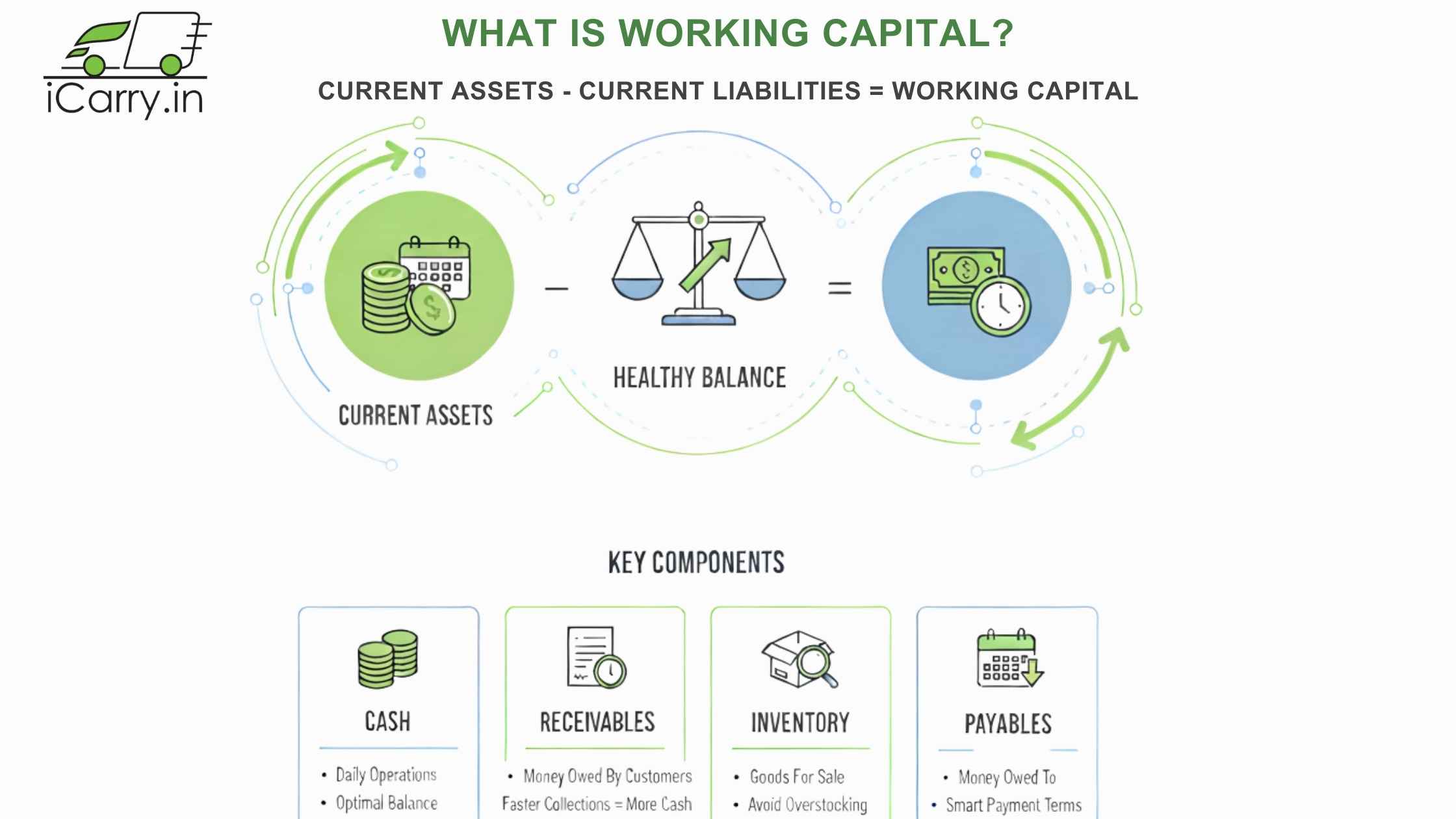
Working capital is the difference between current assets (cash, inventory, receivables) and current liabilities (payables, short-term loans, expenses).
In simple terms, it shows how easily your business can cover short-term obligations.
Positive working capital means you can pay suppliers on time and manage daily operations smoothly.
Negative working capital means cash pressure, delayed payments, and increased borrowing risk.
Why Working Capital Management Is Critical
Even profitable businesses can struggle if cash is tied up. Good working capital management helps you:
- Maintain steady cash flow
- Reduce reliance on loans
- Avoid late fees and penalties
- Invest in growth confidently
- Survive seasonal demand fluctuations
It's not just a finance concept—it's a survival tool. Platforms like iCarry.in can support businesses by improving cash flow through faster payment collections and daily COD remittance payouts.
Key Components Of Working Capital
Cash
Cash is the most liquid asset. Idle cash loses value, while too little cash creates stress. The goal is an optimal cash balance, not maximum cash.
Accounts Receivable
Money customers owe you. Problems arise when invoices are delayed, payment cycles are long, or follow-ups are inconsistent. Faster collections mean healthier cash flow. Using courier aggregators like iCarry.in can ensure timely delivery for product-based receivables, and offering not weekly but daily payment cycles.
Inventory
Inventory ties up cash until it sells. Common issues include overstocking, slow-moving items, and poor demand forecasting. Lean inventory improves liquidity and reduces working capital pressure.
Accounts Payable
Money you owe suppliers. Smart payables management means using full credit periods, avoiding early payments unless discounted, and maintaining strong supplier relationships. Supplier flexibility improves liquidity without borrowing.
How to Improve Working Capital & Cash Flow
Speed Up Customer Payments
- Shorten payment terms
- Offer early payment discounts
- Use automated invoicing
- Follow up consistently
Even small improvements in collection time make a big impact.
Optimize Inventory Levels
- Track fast- and slow-moving SKUs
- Avoid bulk buying without demand certainty
- Use data-driven sales forecasting
Inventory optimization frees trapped cash and improves operational efficiency.
Negotiate Better Supplier Terms
- Ask for longer credit periods
- Align payments with receivables
- Build trust with vendors
Supplier flexibility improves liquidity without extra borrowing.
Control Operating Expenses
- Review recurring costs
- Eliminate low-ROI spending
- Delay non-essential expenses
Cash saved is cash earned.
Improve Cash Forecasting
A simple cash forecast helps you predict shortages, plan payments, and avoid last-minute borrowing. Visibility reduces panic decisions.
Working Capital Ratios Businesses Should Track
- Current Ratio — ability to cover short-term liabilities
- Quick Ratio — liquidity without inventory
- Cash Conversion Cycle (CCC) — time to turn cash into cash again
Tracking trends matters more than perfect numbers.
Common Working Capital Mistakes
- Growing revenue without planning cash needs
- Ignoring receivables follow-ups
- Overstocking due to optimism
- Paying suppliers too early
- Relying heavily on short-term loans
Most cash problems are operational, not strategic.
Working Capital Solutions for Businesses
Depending on needs, businesses may use:
- Invoice discounting
- Short-term credit lines
- Trade finance
- Revenue-based financing
These solutions should support operations, not hide inefficiencies. Platforms like iCarry.in can help by optimizing delivery logistics, reducing cash tied in transit, and supporting efficient order-to-cash cycles.
Final Thoughts
Working capital management is about discipline, visibility, and timing.
Businesses that master cash flow:
- Sleep better
- Grow sustainably
- Handle uncertainty with confidence
You don't need complex systems — you need consistent processes and awareness. Cash flow isn't just a finance issue — it's a leadership responsibility.
Working capital management is not about having maximum cash—it's about having the right amount at the right time to operate smoothly and grow confidently.