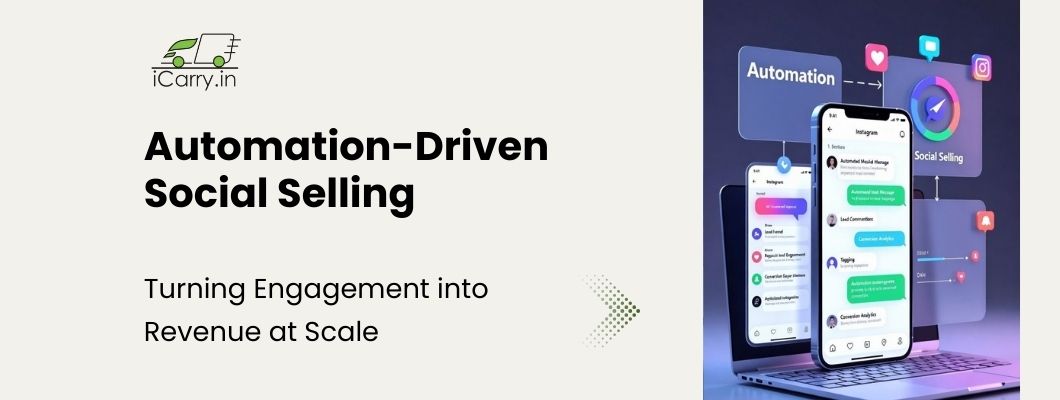
Likes, comments, and DMs look great on a dashboard - but engagement alone doesn't pay the bills. Social selling works when engagement turns into conversations, and conversations turn into revenue.
The challenge is scale. Manually replying to every comment and DM works at 10 leads a day - not at 500. That's where automation-driven social selling comes in.
This guide explains what automation-driven social selling is, how it works, and how brands turn social engagement into predictable revenue at scale.
What Is Automation-Driven Social Selling?
Automation-driven social selling is the use of smart automation tools to:
- Respond instantly to social engagement
- Start meaningful conversations
- Qualify leads
- Support sales teams - without sounding robotic
Automation handles the first response and routing. Humans handle the relationship and closing.
Why Social Selling Needs Automation
As brands grow, social platforms become:
- Lead generation channels
- Customer support channels
- Sales channels
Without automation:
- Replies get delayed
- Leads go cold
- Teams burn out
Fast responses directly impact conversion rates - especially on platforms like Instagram, WhatsApp, and Facebook where social commerce and WhatsApp order fulfillment are growing rapidly in India.
How Automation-Driven Social Selling Works
Step 1: Engagement Trigger
Automation starts when users:
- Reply to a story
- Comment on a post
- Click a CTA
- Send a DM
These actions signal intent.
Step 2: Instant Contextual Response
Automation sends a friendly, relevant reply:
- Acknowledges interest
- Asks a simple qualifying question
- Shares helpful info
Speed keeps the conversation alive.
Step 3: Lead Qualification & Tagging
Based on responses, automation:
- Tags user intent (pricing, product, support)
- Captures location or preference
- Routes high-intent leads to sales teams
This avoids one-size-fits-all replies.
Step 4: Human Takeover for Closing
Once intent is clear:
- Sales or support teams step in
- Personalize the conversation
- Close the sale
Automation supports humans - it doesn't replace them. The same applies to shipping automation, where tools handle repetitive logistics tasks while teams focus on customer experience.
Step 5: Seamless Order Fulfilment & Shipping Automation
Capturing a lead or closing a sale in DMs is only half the job. Real revenue is realized when the product is shipped quickly, tracked properly, and delivered on time.
This is where shipping automation becomes critical.
For Indian D2C brands and social sellers, the biggest drop-offs happen after payment due to:
- Manual courier booking
- Delayed pickups
- High shipping costs
- Poor tracking visibility
- COD reconciliation issues
By integrating social selling workflows with a courier aggregator like iCarry, brands can:
- Auto-create shipments once an order is confirmed on WhatsApp or Instagram
- Compare courier rates instantly across multiple partners
- Ship both Prepaid and COD orders without manual coordination
- Share real-time tracking links automatically with customers
When conversations convert into orders and orders move instantly into shipping, revenue truly scales.
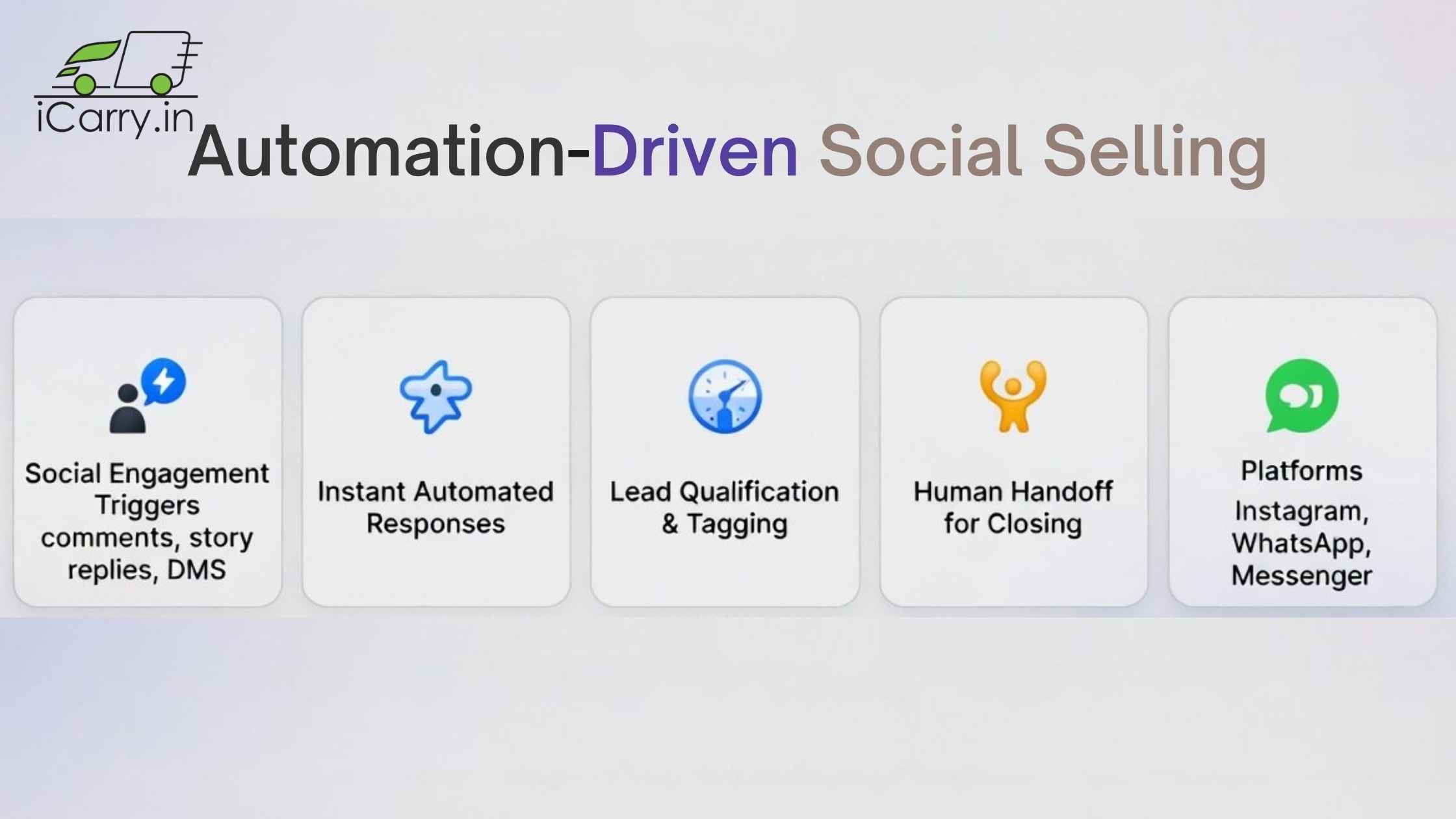
Platforms Where Automation-Driven Social Selling Works Best
- Story reply automation
- Comment-to-DM workflows
- DM-based product discovery
- Automated greetings
- Order updates
- Product catalogs
- Payment links
Facebook Messenger
- FAQ automation
- Lead forms
- Follow-up reminders
Real Business Use Cases
D2C Brands
- Turn story replies into orders
- Handle high DM volumes during launches
- Upsell and cross-sell through conversations
Service Businesses
- Qualify leads
- Book consultations
- Reduce manual follow-ups
Local & High-Ticket Sellers
- Capture warm leads
- Schedule calls
- Share personalized quotes
How Automation Drives Revenue (Not Just Engagement)
Speed = Conversions
Instant replies convert better than delayed responses.
Consistency at Scale
Every lead gets a response - even during peak hours.
Smarter Follow-Ups
Tagged conversations allow targeted reminders instead of spam.
Lower Cost Per Sale
Automation reduces manpower cost per conversion.
What Automation Should NOT Do
Automation fails when it:
- Sends generic spam messages
- Pushes links immediately
- Ignores context
- Replaces human interaction
Good automation feels like help, not marketing.
Best Practices for Automation-Driven Social Selling
- Write messages in natural, conversational tone
- Always offer a human handoff
- Use automation for FAQs and routing
- Review conversations regularly
- Optimize flows based on conversion metrics
Automation should feel invisible.
Common Mistakes Brands Make
- Over-automating every message
- Ignoring platform rules
- Not tracking DM-to-sale conversions
- Using the same flow for all audiences
Automation without strategy kills trust.
How to Start with Automation-Driven Social Selling
Start small:
- Automate first replies
- Add intent-based tagging
- Set handoff rules
- Track conversion metrics
- Improve scripts continuously
Scale only after it works.
Automation-Driven Social Selling + Smart Shipping = Scalable Growth
Social selling brings customers in. Logistics determines whether they come back.
High-performing brands treat shipping as part of the customer conversation:
- "Your order has been picked up"
- "Your shipment is out for delivery"
- "Delivered successfully"
Each update builds trust and reduces support tickets.
Using platforms like iCarry.in, businesses can automate:
- Order-to-shipment workflows
- Courier assignment based on pincode performance
- COD remittance tracking
- RTO and delivery exception handling
This creates a closed loop where marketing, sales, and logistics work together, not in silos.
Why Indian Businesses Need End-to-End Automation
In India's fast-moving D2C and social commerce ecosystem, growth breaks when:
- Sales increase but shipping can't keep up
- Manual courier coordination slows dispatch
- Support teams are flooded with "Where is my order?" queries
Brands that scale successfully automate both conversations and courier booking.
Combining:
- Social selling automation (DMs, comments, WhatsApp)
- Logistics automation via courier aggregators like iCarry creates a system where:
- Leads convert faster
- Orders ship quicker
- Customers trust the brand
- Costs stay under control
Final Thoughts
Automation-driven social selling is not about removing humans - it's about freeing them to do what they do best.
When automation handles speed and scale, humans focus on empathy and closing. True scale happens only when selling automation is matched with shipping automation.
In modern commerce, the conversation is the funnel - and logistics is the backbone that fulfills it. Platforms like iCarry ensure that once the sale happens, delivery never becomes the bottleneck.
Automation-driven social selling is about freeing humans to focus on relationships while automation handles speed and scale—true growth happens when selling meets shipping automation.