
At some point, every growing brand asks the same question: Can we sell more by launching new products under the same brand?
That question leads to brand extension - a powerful growth strategy when executed with clarity and operational readiness, and a risky one when rushed or misaligned.
This guide explains what brand extension is, why brands use it, the benefits and risks involved, and best practices to scale without damaging brand trust or customer experience.
What Is Brand Extension?
Brand extension is the strategy of introducing new products or categories under an existing brand name.
Instead of building a new brand from scratch, companies leverage:
- Existing brand trust
- Loyal customer base
- Market Recognition
Classic examples include brands expanding from one product category into related or complementary ones. In eCommerce and D2C businesses, brand extension often goes hand-in-hand with operational scale - including fulfillment, shipping, and customer support - because customers expect the same experience across all offerings.
Why Brands Use Brand Extension
Launching a new brand is expensive, time-consuming and resource-heavy.
Brand extension helps brands:
- Reduce marketing and launch costs
- Enter new or adjacent markets faster
- Leverage existing customer trust
- Increase customer lifetime value (CLV)
When customers already trust the brand, they're more likely to try new offerings.
However, as brands expand product lines, backend execution becomes as important as marketing. Delays in delivery, inconsistent packaging, or poor post-purchase experience can quickly erode the trust that made the extension possible in the first place. Many brands underestimate how logistics and post-purchase experience influence repeat buying during brand extension phases.
This is why scalable brands invest early in systems that support growth, not just visibility.
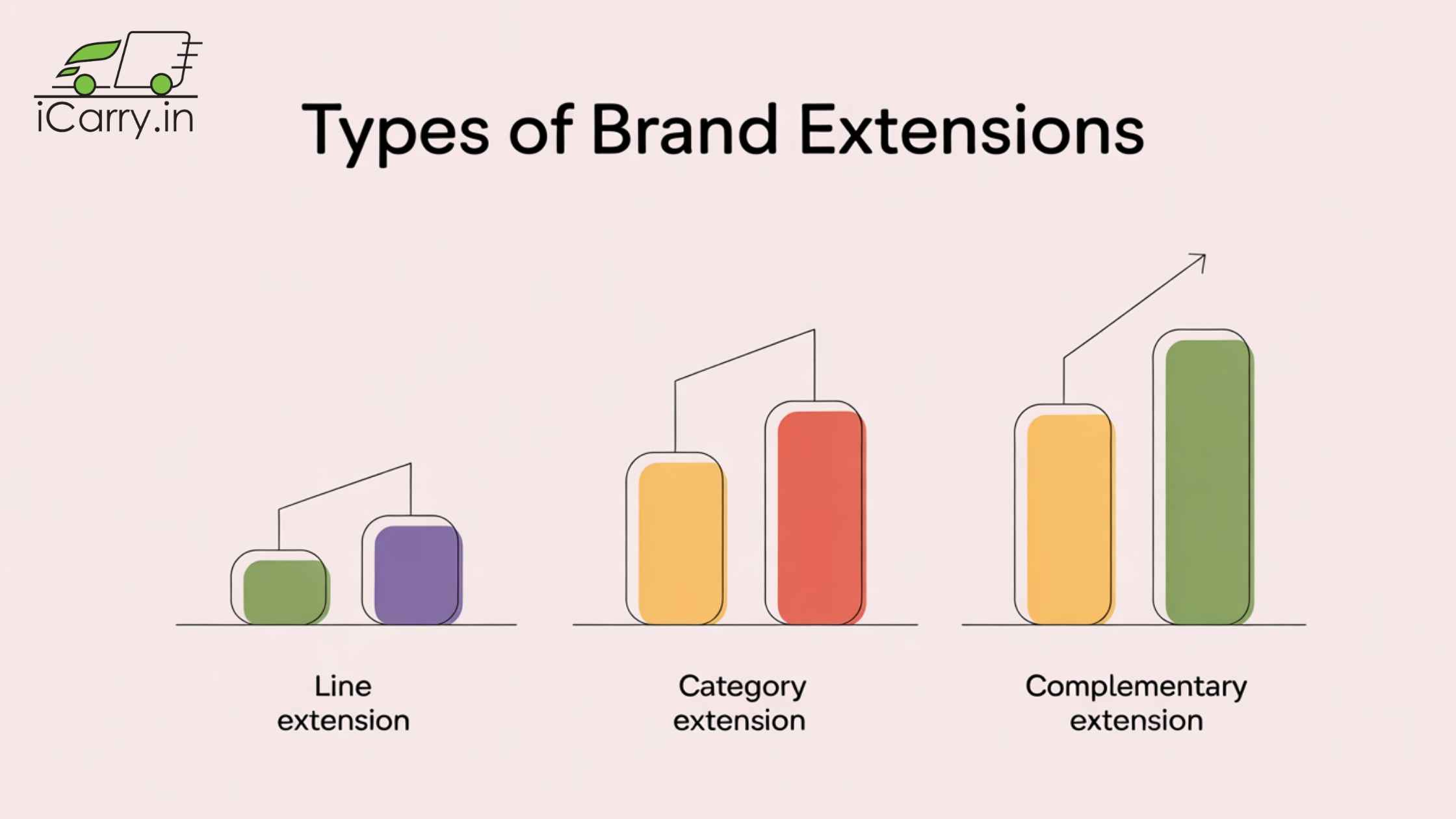
Types of Brand Extensions
1. Line Extension
Introducing variations within the same product line - such as new flavors, sizes, or versions.
This is the lowest-risk form of brand extension, especially when supply chain and fulfillment remain largely unchanged.
2. Category Extension
Entering a new but related category - like a skincare brand launching haircare products.
This works best when customer needs overlap.
This type of extension requires:
- Deeper customer understanding
- Strong quality control
- Reliable logistics and delivery consistency
Customers may try the new category once---but repeat purchases depend heavily on experience parity with the core product. When extensions move into new categories, delivery timelines, courier quality, and returns handling often change - requiring smarter courier allocation.
3. Complementary Extension
Launching products that naturally go with existing ones - such as accessories, refills or add-ons.
Complementary extensions often:
- Increase average order value (AOV)
- Improve retention
- Add minimal acquisition cost
Operationally, these extensions work best when shipping workflows and courier allocation can scale without friction---especially during bundled or multi-item orders.
Benefits of Brand Extension
Faster Market Entry
Existing awareness reduces launch friction. Brands don't start from zero.
Lower Customer Acquisition Cost
Trust lowers resistance. Extensions usually cost less to market than entirely new brands.
Stronger Customer Relationships
Multiple offerings deepen customer engagement and loyalty - as long as customer experience stays consistent across products, deliveries, and touchpoints.
Risks of Brand Extension
Brand Dilution
Launching irrelevant products confuses customers.
If a brand known for reliability or quality launches a poorly executed extension, the damage applies to the entire brand, not just the new product.
Quality Perception Risk
If the new product underperforms, it affects the entire brand - not just the extension.
Also if the new product:
- Ships late
- Has higher return rates
- Faces delivery issues or COD failures
Customers don't separate the extension from the brand - they blame the brand itself.
Overstretching the Brand
Trying to be everything to everyone weakens brand identity.
Strong brands stand for something specific and expand deliberately, ensuring operations, logistics, and support systems are extension-ready before scaling.
Best Practices for Successful Brand Extension
Stay True to the Brand Core
Extensions should align with:
- Brand values
- Customer expectations
- Existing positioning
If customers can't naturally connect the dots, the extension may fail - no matter how good the marketing is.
Validate with Existing Customers First
Your current customers are your best test market.
Feedback and early adoption signal whether the extension fits.
Early feedback helps identify:
- Product-market fit
- Pricing acceptance
- Fulfillment or delivery challenges
Maintain Quality Consistency
Brand extensions inherit both trust and responsibility.
This includes:
- Product quality
- Packaging standards
- Delivery timelines
- Post-purchase communication
Brands that scale smoothly often rely on centralized systems for shipping, courier allocation, and order visibility---ensuring consistency as volumes grow.
This is where courier aggregation platforms like iCarry.in quietly enable extension-ready operations.
Communicate the "Why" Clearly
Customers should instantly understand:
- Why the brand is launching this
- How it benefits them
Clear storytelling reduces confusion and protects brand equity.
When Brand Extension Makes Sense
Brand extension works best when:
- The core brand is strong
- Customer trust is high
- The new category solves related problems
- Execution quality is consistent
Weak brands should fix fundamentals before extending. Brands struggling with fulfillment, returns, or customer complaints should fix the foundation first before extending.
Common Brand Extension Mistakes
- Chasing trends without brand fit
- Expanding too quickly
- Ignoring customer feedback
- Treating the extension like a side project
- Scaling marketing faster than operations
Growth without clarity often damages brand equity.
Summary
Brand extension isn't just about adding products - it's about extending trust.
When done with strategy, alignment, and care, brand extensions unlock powerful growth opportunities.
But when rushed or misaligned, they can undo years of brand building.
The best extensions feel natural - almost obvious - to customers, because everything from messaging to delivery experience remains consistently reliable.
FAQs
Q. Does brand extension reduce marketing costs?
Yes. Strong brands often see lower CAC for extensions because trust already exists.
Q. Why do brand extensions fail?
Most failures happen due to poor brand fit or inconsistent execution, not lack of demand.
Successful brand extension isn't just about launching new products - it's about extending the same trust, quality, and experience that made customers love your brand in the first place.