Most businesses eventually face this question: Should we invest in brand marketing or performance marketing?
One promises long-term recall and trust.
The other promises immediate leads and measurable ROI.
The truth is - both matter, but for different business reasons and at different growth stages.
This guide breaks down the difference between brand marketing and performance marketing, how ROI works for each, and when businesses - especially startups, D2C brands, and eCommerce companies - should decide where to invest.
What Is Brand Marketing?
Brand marketing focuses on building awareness, trust, and emotional connection with your audience.
The goal isn't instant sales - it's long-term recall and preference.
Brand marketing usually includes:
- Storytelling and educational content
- Organic social media presence
- Influencer and creator collaborations
- PR, partnerships & community building
- Consistent brand voice
Strong brands invest in being remembered, not just clicked.
What Is Performance Marketing?
Performance marketing focuses on direct, measurable actions - like clicks, leads, signups or purchases.
Every rupee spent is tracked against results.
Performance marketing includes:
- Google Search & Shopping Ads
- Meta (Facebook & Instagram) ads
- Retargeting and remarketing campaigns
- Affiliate marketing
Platforms like Google Ads and Meta Ads are designed for performance-driven growth, making this approach popular among early-stage businesses. For eCommerce and D2C brands, performance marketing often works best when combined with operational efficiency, especially in areas like checkout, COD success, and shipping reliability.
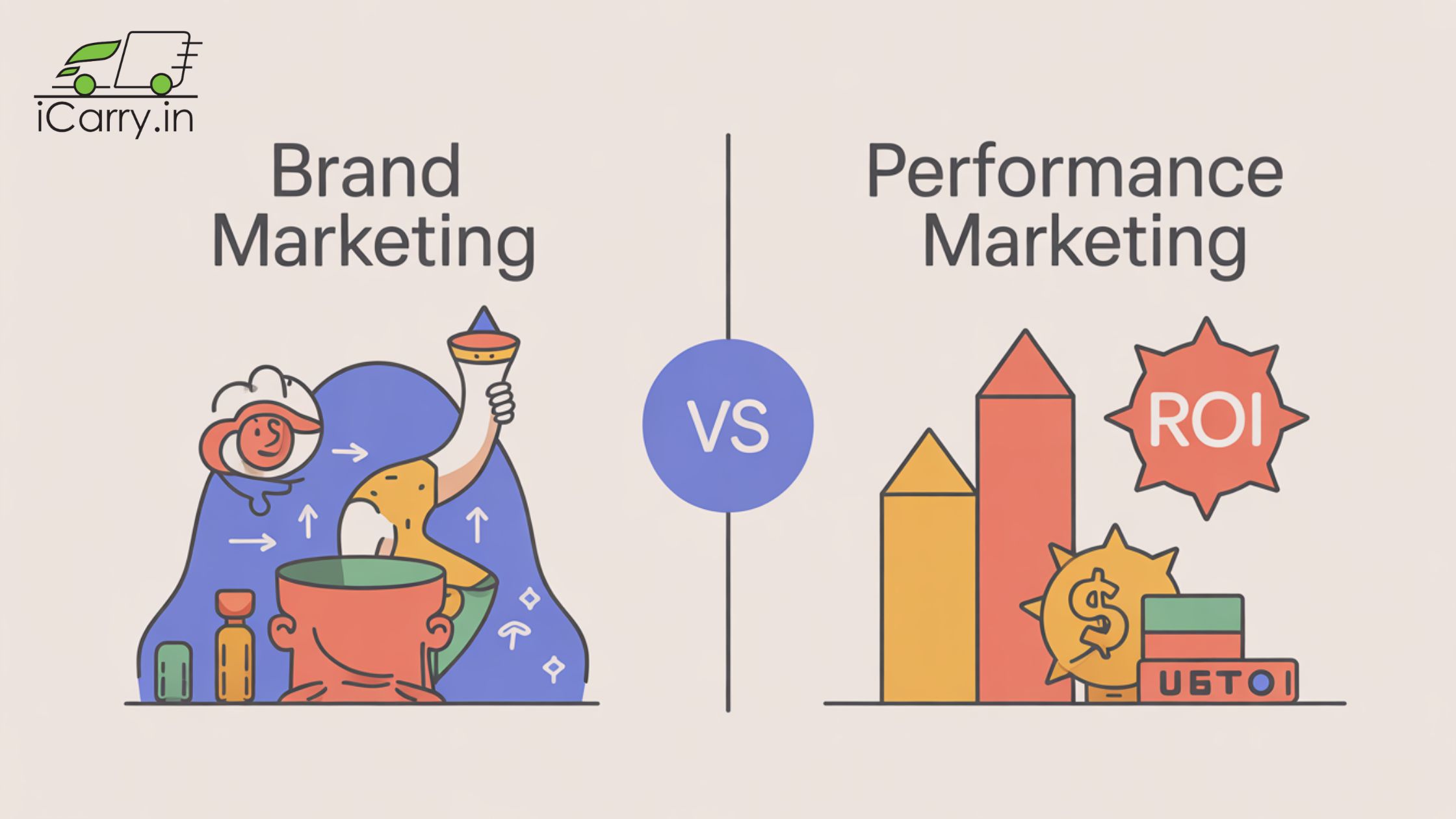
Key Differences Between Brand & Performance Marketing
Goal
Brand marketing: Builds trust, familiarity, and preference
Performance marketing: Drives immediate action and revenue
Measurement
Brand marketing ROI is measured through:
- Brand recall
- Engagement & reach
- Share of voice
- Growth in direct traffic and branded searches
Performance marketing ROI is measured through:
- CAC (Customer Acquisition Cost)
- ROAS (Return on Ad Spend)
- Conversions & revenue per campaign
Time Horizon
Brand marketing compounds over time.
Performance marketing delivers faster results - but stops when spend stops.
Cost Efficiency
Brand marketing reduces acquisition cost over time.
Performance marketing can become expensive as competition increases.
Understanding ROI: Brand vs Performance
Performance ROI is easier to calculate.
Brand ROI is indirect - but very real.
Brands that invest in awareness consistently see:
- Higher ad click-through rates
- Better conversion rates
- Lower customer acquisition costs
- Stronger repeat purchase behaviour
Marketing analytics studies consistently show that strong brands make performance marketing more efficient, not less.
By the way, even the best-performing ads fail if the post-purchase experience breaks down. Factors like delayed delivery, high RTO, and poor courier communication silently erode ROI. You may want to understand how to reduce RTO especially if you are an ecommerce business.
When Should You Focus on Performance Marketing?
Performance marketing works best when:
- You're launching a new product or service
- You need quick traction or leads
- You're testing offers or pricing
- You want measurable short-term results
This is why early-stage startups and D2C brands often begin with performance marketing to validate demand.
When Should You Invest in Brand Marketing?
Brand marketing becomes critical when:
- You operate in a crowded or commoditized market
- Ads costs keep rising
- You want repeat customers and referrals
- You're building long-term value
For growing eCommerce and service platforms (like logistics, SaaS, or marketplaces), brand trust directly impacts conversion, retention, and lifetime value. As brands mature, brand marketing protects margins and loyalty.
Why the Best Brands Use Both
Brand marketing creates demand.
Performance marketing captures demand.
Brands that balance both:
- Convert better
- Retain customers longer
- Spend more efficiently on ads
- Build defensibility beyond pricing
Modern growth strategies treat brand and performance as complementary - not competing. Many fast-growing Indian brands combine strong brand storytelling with data-driven execution across marketing, payments, and logistics.
Common Mistakes Businesses Make
- Expecting brand marketing to deliver instant sales
- Ignoring brand and relying only on ads
- Measuring brand efforts with performance metrics
- Cutting brand spend during downturns
Short-term thinking often hurts long-term growth.
How to Balance Brand & Performance Marketing
A practical approach that most businesses follow:
- Early stage: 70% performance, 30% brand
- Growth stage: 50% performance, 50% brand
- Mature stage: 40% performance, 60% brand
The right balance depends on:
- Industry competitiveness
- Margins
- Customer lifetime value
- Growth goals
Summary
Brand marketing and performance marketing aren't opposites - they're partners.
Performance marketing drives results today.
Brand marketing ensures results tomorrow.
Businesses that scale sustainably don't choose one over the other - they build both together, deliberately and patiently. And sustainable growth happens when marketing promises match delivery reality - something high-performing brands obsess over.
FAQs
Q. Is brand marketing better than performance marketing?
No. Brand marketing builds long-term trust, while performance marketing drives short-term results. The best strategy combines both.
Q. Can startups afford brand marketing?
Yes - through content, storytelling, and consistency. Brand marketing doesn't always require large budgets.
Q. Does brand marketing improve performance marketing ROI?
Yes. Strong brands often see better CTRs, lower CAC, and higher conversion rates.
The most successful brands don't choose between brand and performance marketing - they strategically invest in both, creating demand through brand building while efficiently capturing it through performance campaigns.