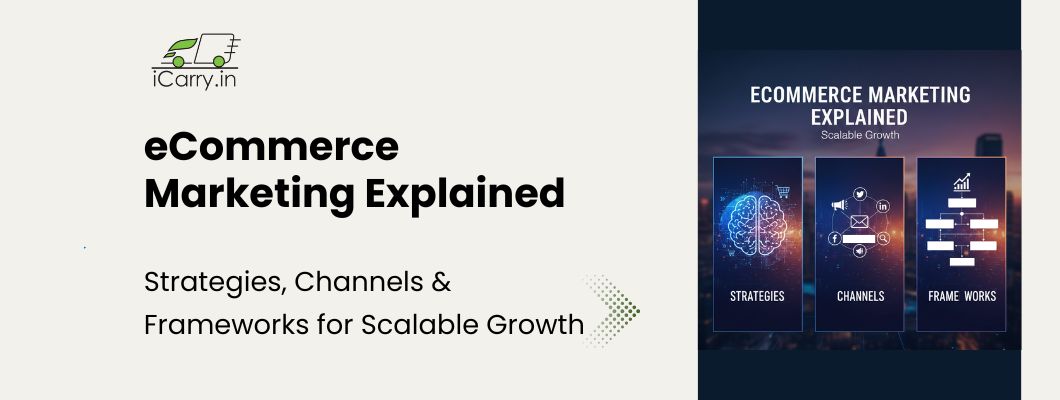
Most eCommerce brands don't fail because of bad products. They struggle because marketing doesn't scale as fast as orders need to.
What works at 10 orders a day breaks at 100.
What works at launch stops working once competition increases.
This guide breaks down what eCommerce marketing really is, the key channels involved, and the frameworks brands use to grow sustainably.
Many brands hit growth bottlenecks not because of poor marketing, but because operational systems fail to scale.
What Is eCommerce Marketing?
eCommerce marketing is the combination of strategies, channels, and systems used to:
- Attract shoppers
- Convert visitors into customers
- Retain buyers and increase lifetime value
It's not just ads. It includes content, email, social, performance marketing, retention, and experience.
According to Shopify, eCommerce marketing includes the strategies and tools used to drive traffic, convert visitors, and retain customers across digital channels.
The Core Goal of eCommerce Marketing
The goal isn't just traffic - it's profitable growth.
Strong eCommerce marketing:
- Lowers customer acquisition cost (CAC)
- Increases conversion rates
- Improves repeat purchases
- Builds long-term brand value
Growth becomes predictable when systems replace guesswork.
Marketing works only when your website converts efficiently. Learn what high-performing stores get right in 10 Must-Have E-commerce Website Features for High-Converting Online Stores.
Key eCommerce Marketing Channels (Explained Simply)
1. Performance Marketing (Paid Ads)
Platforms like Google and Meta help capture demand from shoppers ready to buy.
Best used for:
- New customer acquisition
- Offer testing
- Scaling winning products
Performance marketing drives speed - but needs strong margins to sustain.
Platforms like Google Ads are designed to capture high-intent demand from users actively searching for products and solutions.
Paid ads scale quickly but margins break when logistics costs aren't controlled. Understand hidden expenses in The Hidden Costs of Inefficient Shipping.
2. Social Media & Community Building
Social media builds trust before purchase.
Brands use Instagram, YouTube, and LinkedIn to:
- Educate customers
- Share stories
- Build familiarity
Strong social presence improves ad performance indirectly.
Meta's business resources highlight how consistent social presence improves brand familiarity and supports long-term conversion performance.
3. Email & WhatsApp Marketing
Retention channels drive the highest ROI.
Emails and WhatsApp flows handle:
- Welcome sequences
- Abandoned carts
- Post-purchase follow-ups
- Upsells & repeat sales
Retention reduces dependency on paid ads.
Retention platforms like Klaviyo or Mailchimp consistently report that email and lifecycle marketing deliver some of the highest ROI in eCommerce.
Retention messaging works best when delivery experience matches expectations.
4. Content & SEO
SEO brings long-term, low-cost traffic.
Educational blogs, buying guides, and FAQs help:
- Capture high-intent searches
- Build authority
- Reduce paid ad spend over time
Content compounds - slowly, but powerfully.
Google's SEO Starter Guide explains how high-quality content and clear site structure support long-term organic growth.
5. Influencer & Creator Marketing
Creators build credibility faster than brands.
Micro-influencers often deliver higher trust and engagement than celebrities, especially for niche products.
eCommerce Marketing Frameworks That Scale
Acquisition → Conversion → Retention
Successful brands optimize all three - not just acquisition.
Scaling ads without fixing conversion or retention increases costs and reduces margins.
Full-Funnel Thinking
Top-of-funnel creates awareness.
Mid-funnel builds trust.
Bottom-of-funnel drives action.
Brands that market across the funnel grow more consistently.
According to HubSpot, brands that align marketing efforts across awareness, consideration, and conversion stages see more consistent growth.
A broken last-mile experience can undo the entire funnel. Explore how brands reduce losses in How to Reduce Returns (RTO): Business Strategies
LTV-Driven Growth
Lifetime Value (LTV) matters more than first purchase.
Marketing decisions become smarter when based on repeat behavior, not just first-order ROI.
Research published by Harvard Business Review shows that increasing customer retention has a direct and measurable impact on profitability.
Improving LTV often requires better logistics intelligence. Learn how businesses optimize delivery decisions in Multi-Courier Allocation Explained: Why It Outperforms Single-Courier Dependency in eCommerce
Common eCommerce Marketing Mistakes
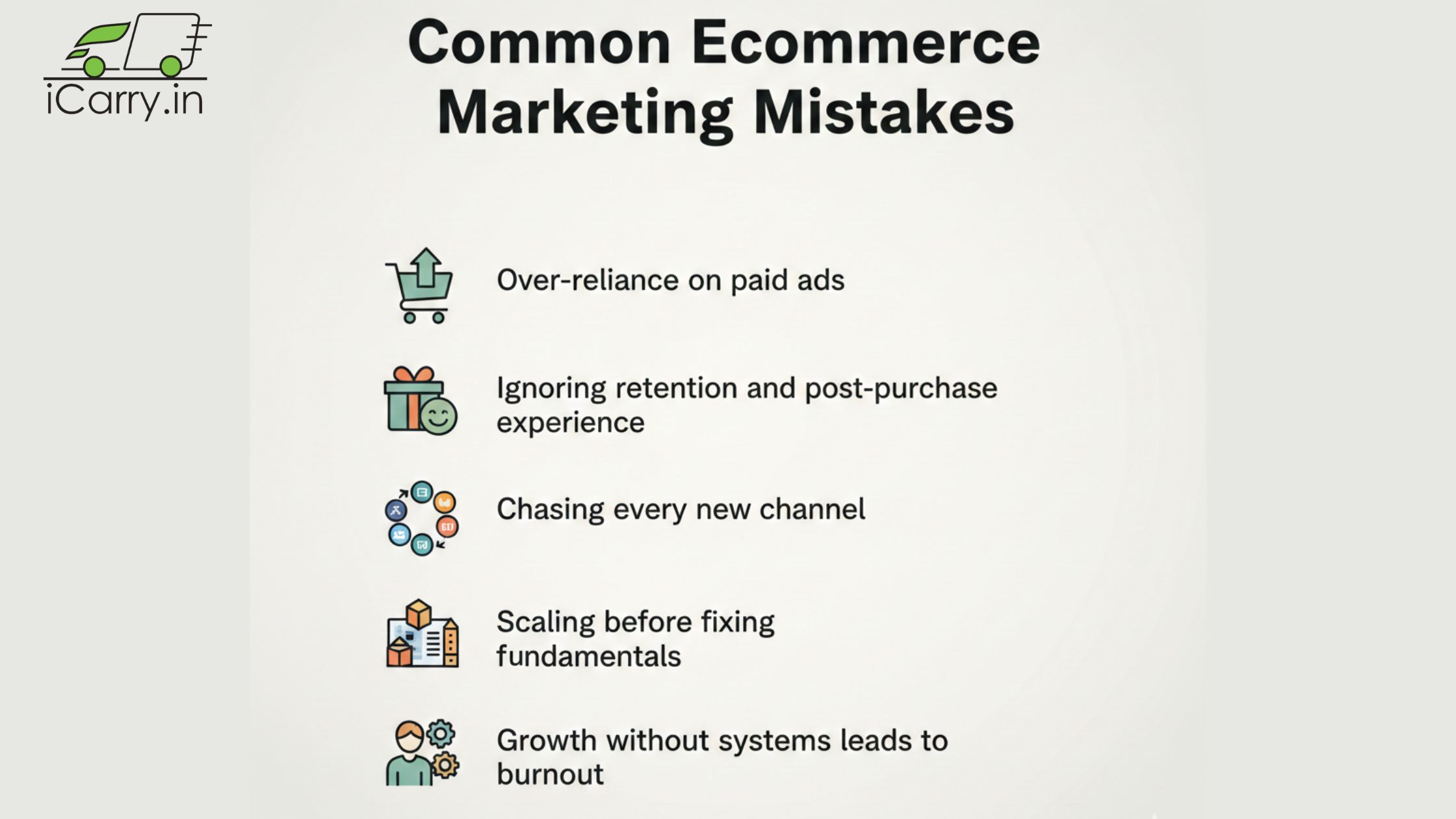
- Over-reliance on paid ads
- Ignoring retention and post-purchase experience
- Chasing every new channel
- Scaling before fixing fundamentals
Growth without systems leads to burnout.
How to Build a Scalable eCommerce Marketing Strategy
Start with:
- Clear positioning
- One or two strong acquisition channels
- Strong website conversion
- Reliable retention flows
- Data-driven iteration
Scaling works best when foundations are solid.
How to Measure Success
Key metrics include:
- CAC
- ROAS
- Conversion rate
- Repeat purchase rate
- Customer lifetime value
Dashboards help track what's working - and what's not.
Tools like Google Analytics help brands track acquisition cost, conversion behavior, and repeat purchase performance across channels.
As order volumes grow, managing performance across systems becomes complex. and a centralized logistics platform helps streamline scalability.
Final Thoughts
eCommerce marketing isn't about hacks - it's about systems that grow with you.
Brands that focus on fundamentals, understand customers, and balance short-term performance with long-term brand building scale sustainably.
Growth becomes easier when marketing stops being reactive and starts being intentional.
Marketing brings orders. Logistics decides profit and retention.
👉 Sign up on iCarry to manage shipping, reduce RTO, and scale profitably from one dashboard.
eCommerce marketing isn't about hacks—it's about systems that grow with you. Focus on fundamentals, balance acquisition with retention, and build sustainable growth through intentional strategy.