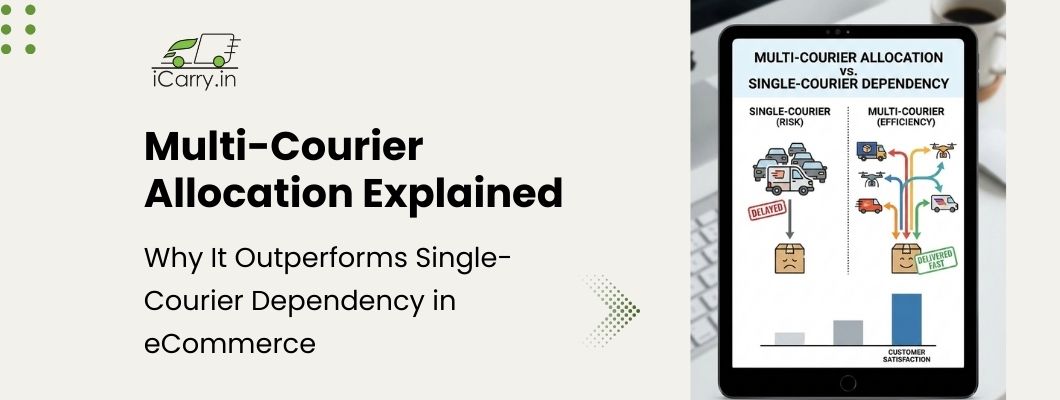
For many eCommerce sellers, shipping starts with one courier partner and stays that way for years. It feels simple, familiar, and "good enough." But as order volumes grow, depending on a single courier often becomes a hidden growth killer.
That's where multi-courier allocation comes in - a smarter, data-driven way to ship orders faster, cheaper, and more reliably.
Let's break it down in simple terms.
What Is Multi-Courier Allocation?
Multi-courier allocation means using multiple courier partners instead of relying on just one. Orders are automatically assigned to the courier that performs best for a specific location, weight, price, or delivery speed.
Logistics research shows that multi-courier allocation significantly improves delivery reliability and fulfillment performance compared to single-courier reliance.
Logistics platforms and courier aggregators use historical delivery data to decide which courier is most likely to deliver an order successfully and on time.
If you're new to this concept, you can also read our beginner-friendly guide on What is a Courier Aggregator or Shipping Aggregator? to understand how multi-courier systems work in practice.
Why Single-Courier Dependency Fails at Scale
A single courier might work well in one city but struggle in another. No courier is perfect across all pincodes. Courier performance varies significantly based on region, shipment size, and serviceability.
Common problems sellers face with single-courier setups:
- High RTO in certain zones
- Delayed deliveries during peak seasons
- No backup during strikes or service outages
- Inconsistent COD success rates
Many of these operational failures also lead to hidden business losses. These inefficiencies silently impact profitability to a great extent.
How Multi-Courier Allocation Improves Delivery Speed
Different couriers dominate different regions. Some perform better in metro cities, while others are stronger in Tier-2 and Tier-3 locations.
By allocating shipments dynamically, sellers can:
- Reduce transit time
- Increase on-time delivery rates
- Improve customer satisfaction
Logistics data shows that choosing the right courier for the right pincode can cut delivery delays significantly and reduce RTOs.
Faster delivery directly improves customer trust and repeat purchases.
Lower Shipping Costs Without Negotiation
With a single courier, pricing is fixed. With multiple couriers, sellers can automatically choose the most cost-effective option per order.
Courier aggregators allow sellers to compare rates in real time, helping reduce shipping costs without manual negotiation.
Over thousands of orders, these small savings add up to a big margin boost.
Reduced RTO & Failed Deliveries
Return-to-Origin (RTO) is one of the biggest profit killers in Indian eCommerce, especially for COD orders.
Multi-courier allocation helps reduce RTO by:
- Assigning couriers with higher COD success rates
- Avoiding couriers with poor performance in certain regions
- Using delivery success data to make smarter routing decisions
Industry studies frequently highlight courier selection as a key factor in lowering RTO rates.
Built-In Risk Management
Courier strikes, system outages, and weather disruptions are unavoidable. Sellers relying on one courier are forced to pause shipments or rush to negotiate with other courier options when issues arise.
With multiple courier partners, shipments continue without disruption. Orders are simply routed through another available courier - protecting revenue and customer trust.
This redundancy is a major reason large D2C brands or even offline businesses avoid single-courier dependency.
Better Customer Experience & Fewer Support Tickets
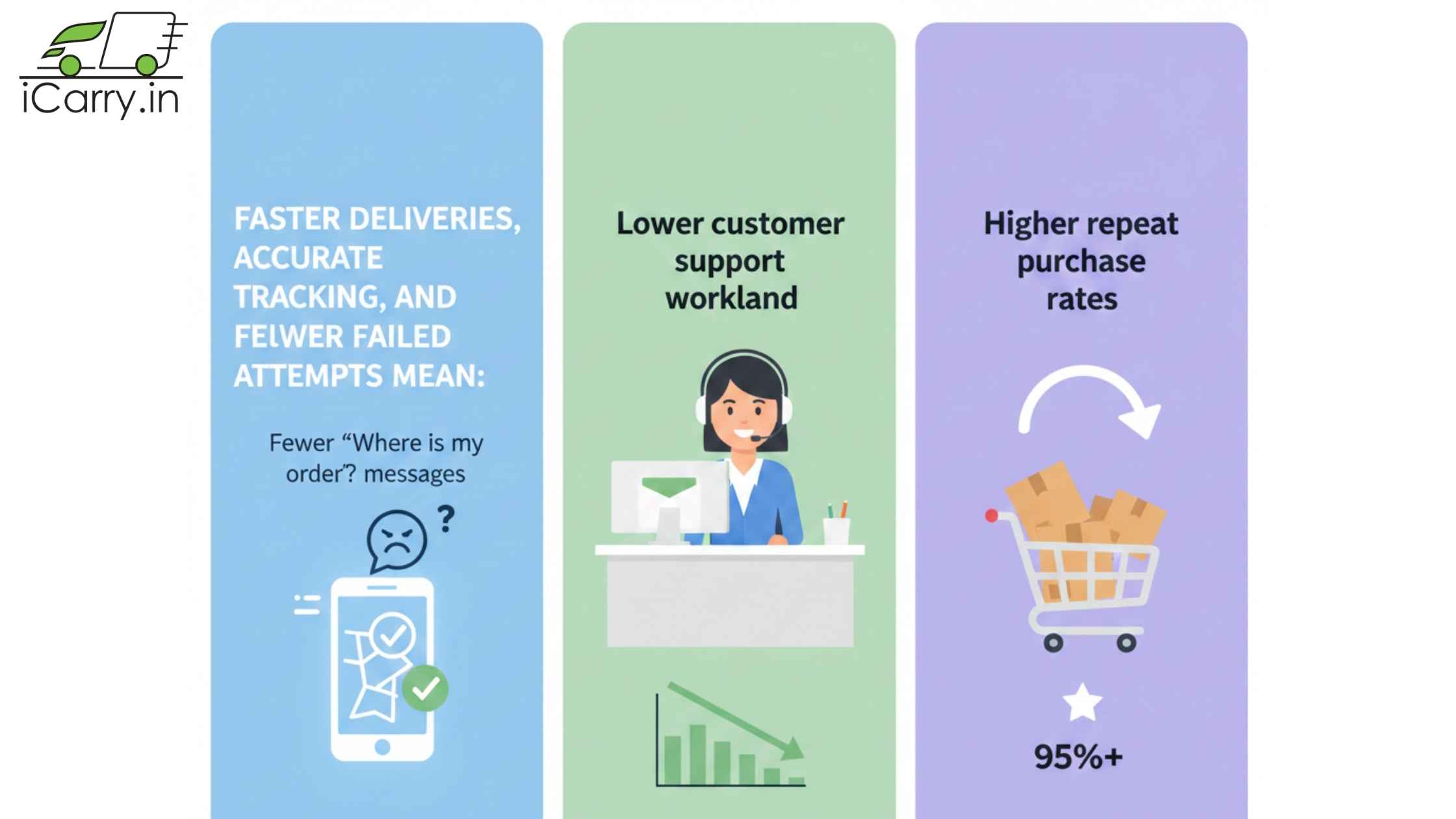
Faster deliveries, accurate tracking, and fewer failed attempts mean:
- Fewer "Where is my order?" messages
- Lower customer support workload
- Higher repeat purchase rates
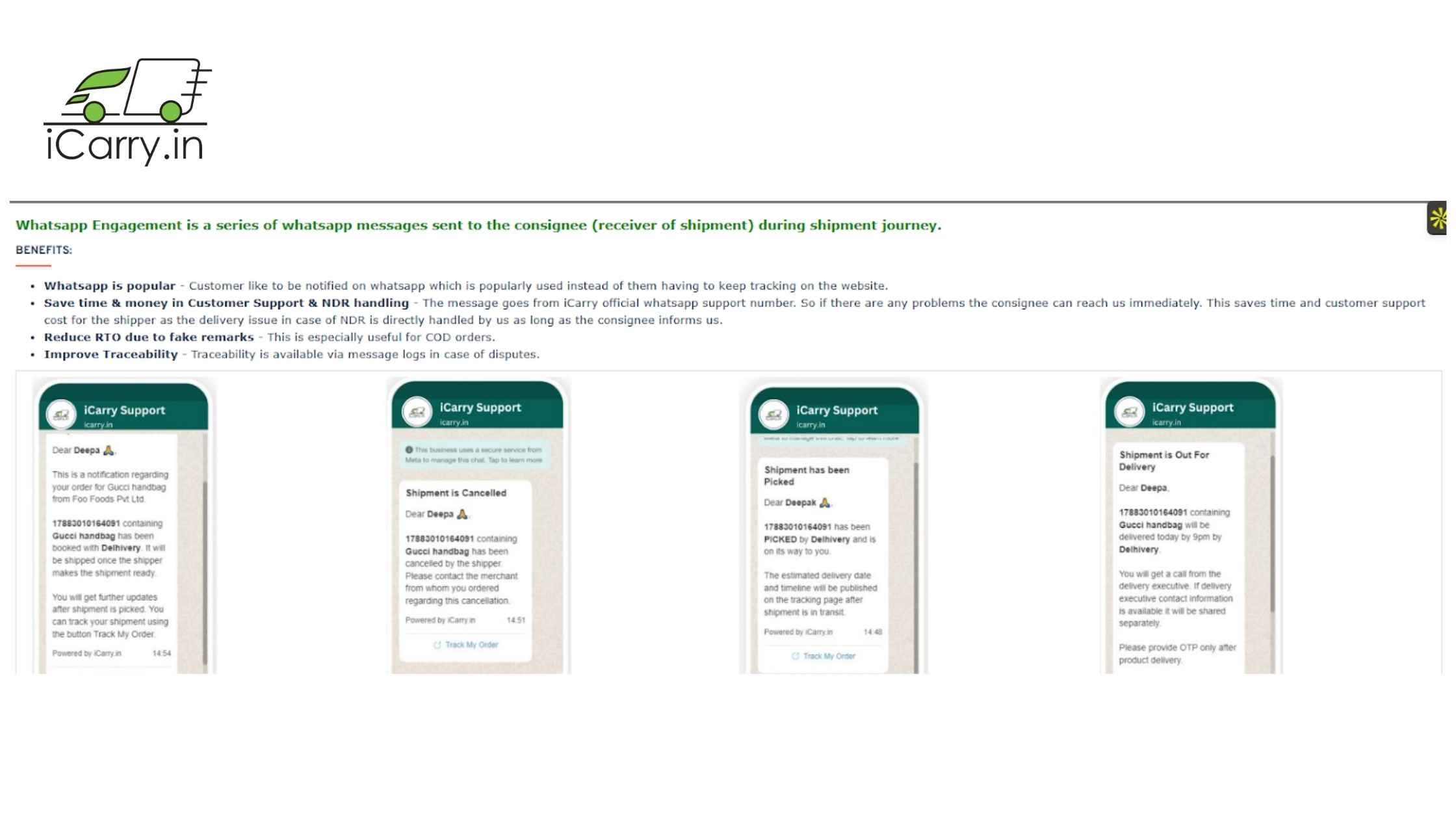
Most courier platforms now provide automated tracking updates, keeping customers informed without manual follow-ups.
At iCarry.in the tracking updates are sent automatically via the WhatsApp Engagement feature which also helps reduce RTOs due to fake remarks by couriers. Also all clients have the ability to send personalized tracking links with their logo on it for better branding.
Is Multi-Courier Allocation Only for Large Brands?
Not anymore. Earlier, multi-courier setups were limited to enterprises with complex logistics teams. Today, even small sellers can access it through courier aggregators. The dashboard and the entire tool of iCarry.in is super easy to use and can be easily integrated with platforms like Shopify, Woocommerce and many more.
This makes enterprise-level logistics intelligence available to startups and growing brands.
When Should You Switch to Multi-Courier Allocation?
You should strongly consider it if:
- You ship across multiple states
- RTO is hurting your profits
- Delivery delays affect sales
- Order volumes are increasing
If logistics is becoming a bottleneck, multi-courier allocation is usually the fix.
Summary
In modern eCommerce, shipping isn't just an operational task - it's a competitive advantage.
Multi-courier allocation allows sellers to ship smarter, not harder. By choosing the right courier for every order, businesses reduce costs, improve delivery success, and protect themselves from operational risks.
If your store is still dependent on a single courier, you're not just limiting logistics - you're limiting growth.
Smart shipping isn't about working with more couriers - it's about working with the right courier for each order.