Email is still one of the highest ROI channels in eCommerce. Yet it's also the fastest way to annoy customers if you overdo it.
Send too few emails, and customers forget you exist.
Send too many, and they unsubscribe - or worse, mark you as spam.
This guide explains what email cadence really means, how often you should email, and how to find the sweet spot without losing customers.
Retention issues rarely come from email alone. Many sellers struggle due to multiple operational gaps.
What Is Email Cadence?
Email cadence is how frequently and at what intervals you send emails to your subscribers.
It's not just about "how many emails per week" - it's about:
- Timing
- Purpose
- Relevance
- Customer intent
Platforms like Mailchimp and Klaviyo often emphasize that cadence should change based on user behavior, not fixed schedules.
Why Email Cadence Matters More Than You Think
Poor cadence leads to:
- High unsubscribe rates
- Low open rates
- Spam complaints
- Reduced inbox placement
Email service providers track engagement signals. If people stop opening your emails, future emails may not even reach the inbox.
That's why cadence directly impacts deliverability, revenue, and brand trust.
Email providers like Gmail track engagement signals, as explained in Google Postmaster Tools, which directly affect inbox placement.
Customer trust depends on consistent communication across the entire order journey.
How Often Should eCommerce Brands Send Emails?
There's no universal number - but there are proven ranges.
For New Subscribers
When someone just signs up:
- 2–3 emails in the first week work well
- Welcome flows outperform regular campaigns
Welcome email best practices shared by major ESPs show these emails get the highest open and conversion rates.
Research shared by HubSpot shows that welcome emails consistently generate higher open and conversion rates than regular campaigns.
For Active Customers
Customers who recently purchased or engaged:
- 1–2 emails per week is usually safe
- Focus on value, not discounts
This keeps your brand top-of-mind without overwhelming them.
For Inactive or Cold Subscribers
For users who haven't engaged in 30–60 days:
- Reduce frequency
- Use re-engagement or win-back campaigns
Sending frequent promotional emails to inactive users often damages the sender reputation.
Types of Emails & Their Ideal Cadence
Transactional Emails
Order confirmations, shipping updates, delivery notifications - these are expected and welcomed.
E-commerce UX research consistently shows transactional emails have the highest open rates and should never be limited.
Promotional Emails
Sales, offers, discounts:
- 1 per week is safe for most brands
- Increase frequency only during major sales
Too many promotions train customers to ignore you.
Promotions drive volume - but failed deliveries erase gains.
Educational & Value Emails
Blogs, tips, how-to content:
- 2–4 per month works well
- Builds long-term trust
Brands that mix educational emails with promotions see better engagement over time.
How to Avoid Email Fatigue
Email fatigue happens when customers feel overwhelmed.
To prevent it:
- Segment your audience
- Don't send the same email to everyone
- Space out promotions
Email marketing platforms recommend behavior-based segmentation to improve engagement without increasing volume.
Over-communication causes fatigue both in inboxes and operations.
Let Customers Control Frequency
A simple but powerful tactic is allowing users to choose:
- Weekly emails
- Monthly emails
- Only order updates
Preference centers reduce unsubscribes while keeping subscribers engaged on their own terms. Giving customers control improves long-term engagement - especially when logistics stays predictable.
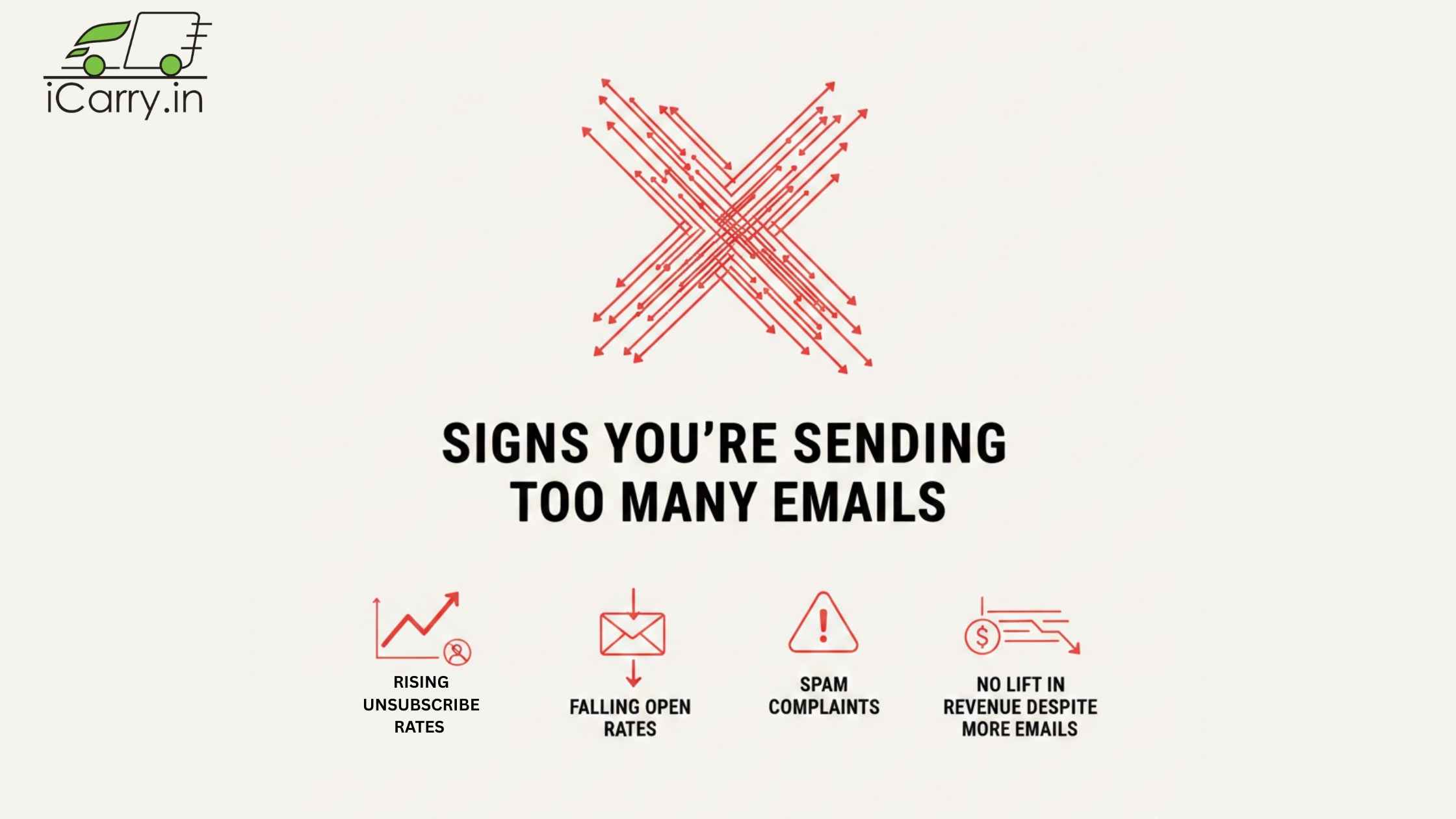
Signs You're Sending Too Many Emails
Watch out for:
- Rising unsubscribe rates
- Falling open rates
- Spam complaints
- No lift in revenue despite more emails
Analytics dashboards from email tools help track these signals in real time.
Testing Your Ideal Email Cadence
The best cadence is the one your audience responds to.
Test:
- 1 vs 2 emails per week
- Promotional vs value content
- Different days and times
A/B testing guides from leading ESPs recommend testing frequency gradually - not drastic jumps. A/B testing frameworks recommended by platforms like Optimizely help brands test email frequency gradually without hurting engagement. As order volumes grow, testing and optimization extend beyond email.
Final Thoughts
Email cadence isn't about sending more - it's about sending smarter.
The brands that win don't flood inboxes. They respect attention, understand customer intent, and deliver value consistently.
When email feels helpful instead of noisy, customers stay - and revenue follows.
Email cadence isn't about sending more—it's about sending smarter. Respect customer attention, understand intent, and deliver value consistently to keep subscribers engaged without overwhelming them.