When people talk about business finances, they often mix up fixed capital and working capital. In reality, these two play very different roles in keeping a business stable, operational, and ready to grow.
Understanding this difference helps businesses plan investments better, avoid cash shortages, and make smarter growth decisions, especially for eCommerce sellers and logistics-driven businesses operating at scale.
Let's break it down in simple terms with clear meanings, use cases, and real-world examples.
What Is Fixed Capital?
Fixed capital is the money invested in long-term assets that help a business operate over many years. These assets are not meant to be sold quickly and usually form the backbone of operations.
Examples of Fixed Capital Assets
- Machinery and equipment
- Buildings and office space
- Vehicles
- Computers and servers
- Manufacturing tools
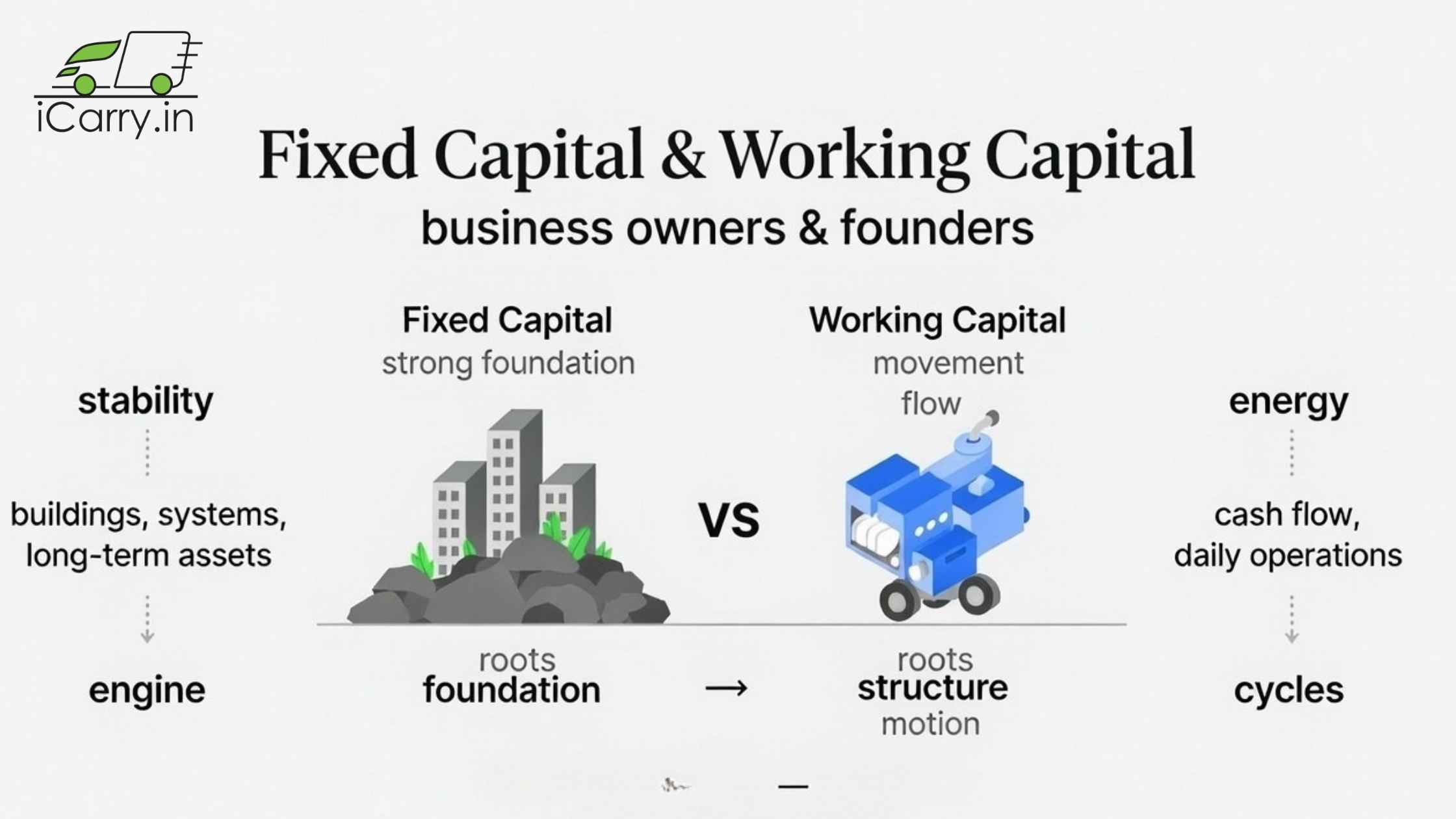
Think of fixed capital as the foundation of your business. Without it, operations cannot even begin.
For online businesses, fixed capital may include technology infrastructure, warehousing systems, and integrations with delivery management features that support shipping and fulfillment at scale.
What Is Working Capital?
Working capital is the money used for day-to-day operations. It keeps the business running every single day and ensures smooth cash flow.
Examples of Working Capital
- Cash in hand or bank
- Inventory or stock
- Accounts receivable
- Short-term expenses like rent, salaries, and electricity
Working capital is the fuel that keeps the engine running. Even the best infrastructure becomes useless without it.
In eCommerce, working capital is closely tied to inventory cycles, COD collections, delivery costs, and returns. One of the biggest working capital challenges for Indian eCommerce sellers is delayed COD remittances. When COD payouts are held for 7 to 15 days by logistics partners, sellers are forced to operate with blocked cash - making it harder to restock inventory, pay vendors, or scale marketing.
This is why logistics decisions directly affect working capital health, not just delivery performance. Poor shipping efficiency or high RTO can quickly lock up cash, which is why sellers focus on inefficient shipping costs and reducing RTO.
At iCarry.in, we've seen how cash flow delays or slows down growing businesses. That's why we offer Daily COD Remittance, ensuring sellers receive their COD payouts every day instead of waiting weeks.
By unlocking cash faster, businesses retain control over their working capital and reinvest it into inventory, operations, and growth - without relying on short-term credit.
Key Differences Between Fixed Capital and Working Capital
Purpose
Fixed capital supports long-term operations
Working capital supports daily business needs
Time Period
Fixed capital is long-term, often years
Working capital is short-term, days or months
Liquidity
Fixed capital has low liquidity
Working capital has high liquidity
Examples
Fixed capital includes machinery and buildings
Working capital includes cash and inventory
Frequency of Use
Fixed capital is used repeatedly
Working capital is used and replaced continuously
When Do Businesses Use Fixed Capital?
Businesses use fixed capital when they:
- Start operations
- Expand production capacity
- Upgrade technology
- Open new offices or factories
Real-World Example
A furniture manufacturer invests in wood-cutting machines, delivery trucks, and factory land. These are fixed capital investments, long-term, expensive, and essential for production.
As businesses scale, they also invest in automation and logistics infrastructure, including courier aggregator systems to manage delivery efficiently.
When Do Businesses Use Working Capital?
Working capital is used for:
- Paying salaries
- Purchasing raw materials
- Covering rent and utilities
- Handling short-term operational expenses
Real-World Example
The same furniture business uses working capital to buy wood and fabric, pay carpenters weekly, and cover electricity and fuel costs. Without working capital, production would stop even if machines exist.
For online sellers, working capital pressure increases due to delayed COD settlements, return cycles, and shipping costs, making eCommerce shipping optimization a priority. Faster COD settlement cycles significantly reduce this pressure. Daily remittance models prevent cash from getting stuck in transit, helping sellers maintain liquidity even during high-order or festive periods.
Why Fixed Capital and Working Capital Are Equally Important
A business can fail if either one is ignored.
Too Much Fixed Capital and Too Little Working Capital
- Machines are available
- No cash to run them
- Operations get stuck
Too Much Working Capital and No Fixed Capital
- Cash is available
- No infrastructure to scale
- Growth becomes limited
Balance is the key to sustainable operations and predictable cash flow.
In traditional logistics setups, COD payouts are often delayed, creating artificial cash shortages for sellers. Even profitable businesses struggle when capital is locked unnecessarily.
Modern shipping platforms focus not just on delivery speed, but also on cash flow velocity. Features like daily COD remittance, faster RTO processing, and transparent billing allow businesses to cycle working capital faster and grow without borrowing.
For eCommerce sellers, logistics is no longer just an operational function - it is a working capital strategy.
Fixed Capital vs Working Capital in Different Businesses
Manufacturing Businesses
- High fixed capital for plants and machinery
- Moderate working capital for raw materials and wages
By optimizing working capital performance, companies can unlock liquidity and drive value that extends well beyond the finance department.
Retail or eCommerce Businesses
- Low fixed capital
- High working capital for inventory, COD handling, and logistics
Retail and eCommerce businesses must manage shipping costs, delivery success, and returns efficiently. Platforms like iCarry.in help sellers improve delivery performance, reduce cash leakage, and streamline operations.
Service-Based Businesses
- Minimal fixed capital
- Working capital mainly for salaries and tools
Efficient working capital turns in the services industry, turns your team's expertise into immediate cash flow, creating competitive advantages that go far beyond the balance sheet.
How Businesses Finance Fixed and Working Capital
Fixed Capital Financing
- Long-term loans
- Equity funding
- Leasing
Working Capital Financing
- Short-term loans
- Overdrafts
- Invoice financing
- Trade credit
Choosing the right financing structure prevents unnecessary stress and supports long-term stability.
Common Mistakes Businesses Make
- Using short-term loans for long-term assets
- Overspending on infrastructure early
- Ignoring working capital planning
- Expanding without cash flow visibility
Many of these mistakes are amplified when logistics costs, RTOs, or delivery failures are ignored. Studying reducing shipping costs and seamless delivery practices helps businesses avoid operational cash drains.
Final Thoughts
Fixed capital builds the business.
Working capital runs the business.
You don't choose one over the other. You manage both wisely.
Businesses that understand this difference:
- Grow sustainably
- Avoid liquidity shocks
- Make confident financial decisions
In modern commerce, managing capital also means controlling logistics, delivery efficiency, and operational costs. Businesses that align financial planning with strong shipping infrastructure using iCarry.in and insights from logistics blogs are better prepared to scale without cash flow surprises.
In modern commerce, managing capital also means controlling logistics, delivery efficiency, and how quickly your cash returns to your business. Faster COD remittance, predictable shipping costs, and strong delivery systems help businesses scale without cash flow shocks.
If you know where your money is locked and where it flows, you're already ahead.
Fixed capital builds the business, working capital runs it—successful businesses manage both wisely, balancing long-term infrastructure with daily cash flow to grow sustainably.