When exporting food products, agricultural goods, animal products, pharmaceuticals, or medical supplies, quality alone is not enough.
Most importing countries legally require official proof that exported goods are safe for consumption, disease-free, and compliant with international health standards. This proof comes in the form of a Health Certificate for Export.
Without this certificate, shipments can face customs delays, rejection, penalties, or even destruction at destination ports.
In this guide, you'll learn:
- What a health certificate is
- Who needs it
- How to apply step-by-step
- Required documents
- Validity rules
- Common mistakes exporters make
✅ What Is a Health Certificate for Export? (Simple Meaning)
A Health Certificate for Export is an official government-issued document that certifies exported goods meet the health, hygiene, and safety requirements of the importing country.
In simple words:
It confirms that your exported products are safe, hygienic, and legally approved for international trade.
Customs authorities use this certificate to verify compliance before allowing entry into their country.
🌍 Why Health Certificates Are Required in International Trade
Health certificates help importing countries:
- Protect public health
- Prevent the spread of diseases
- Maintain food safety standards
- Control quality of imported goods
- Comply with international regulations like WTO & Codex
This requirement is especially strict for food exports, agricultural exports, animal-based products, and pharmaceuticals.
Missing or incorrect documentation often increases logistics costs and operational risks. Learn how this impacts businesses in The Hidden Costs of Inefficient Shipping.
📦 Products That Commonly Require a Health Certificate
Health certificates are typically required for:
- Food products (processed & packaged foods)
- Meat, poultry & seafood
- Dairy products
- Fresh fruits, vegetables & grains
- Animal products (honey, eggs, leather in some cases)
- Pharmaceuticals & medical supplies
Requirements vary based on product type, destination country, and local regulations.
Many of these products are heavy, fragile, or high-value and require specialized logistics handling. You can also read our practical guide on How to Ship Heavy Items across India.
🏛️ Who Issues Health Certificates in India?
In India, health certificates are issued by government-authorized authorities, depending on the product category:
- FSSAI – Food products
- Animal Quarantine & Certification Services (AQCS) – Animal products
- Plant Quarantine Authority – Agricultural exports
- Export Inspection Agencies (EIA) – Quality-certified exports
Managing multiple authorities and documentation can be complex for exporters. Many businesses simplify this process using centralized shipping platforms.
The issuing authority depends on the HS code, product category, and importing country requirement.
📋 Eligibility for Getting a Health Certificate
To apply for a health certificate, exporters must:
- Be registered with relevant government authorities
- Manufacture or source products from approved facilities
- Follow hygiene and quality standards
- Meet importing country specifications
- Maintain traceability and lab testing compliance
Non-registered or non-compliant exporters are usually rejected.
📑 Documents Required for a Health Certificate
Common documents include:
- Exporter registration certificate
- Commercial invoice
- Packing list
- Product specification & composition
- Lab test or analysis reports
- Manufacturing or FSSAI license
- Importing country guidelines
- Shipping details
Accurate documentation helps avoid rejection and delays.
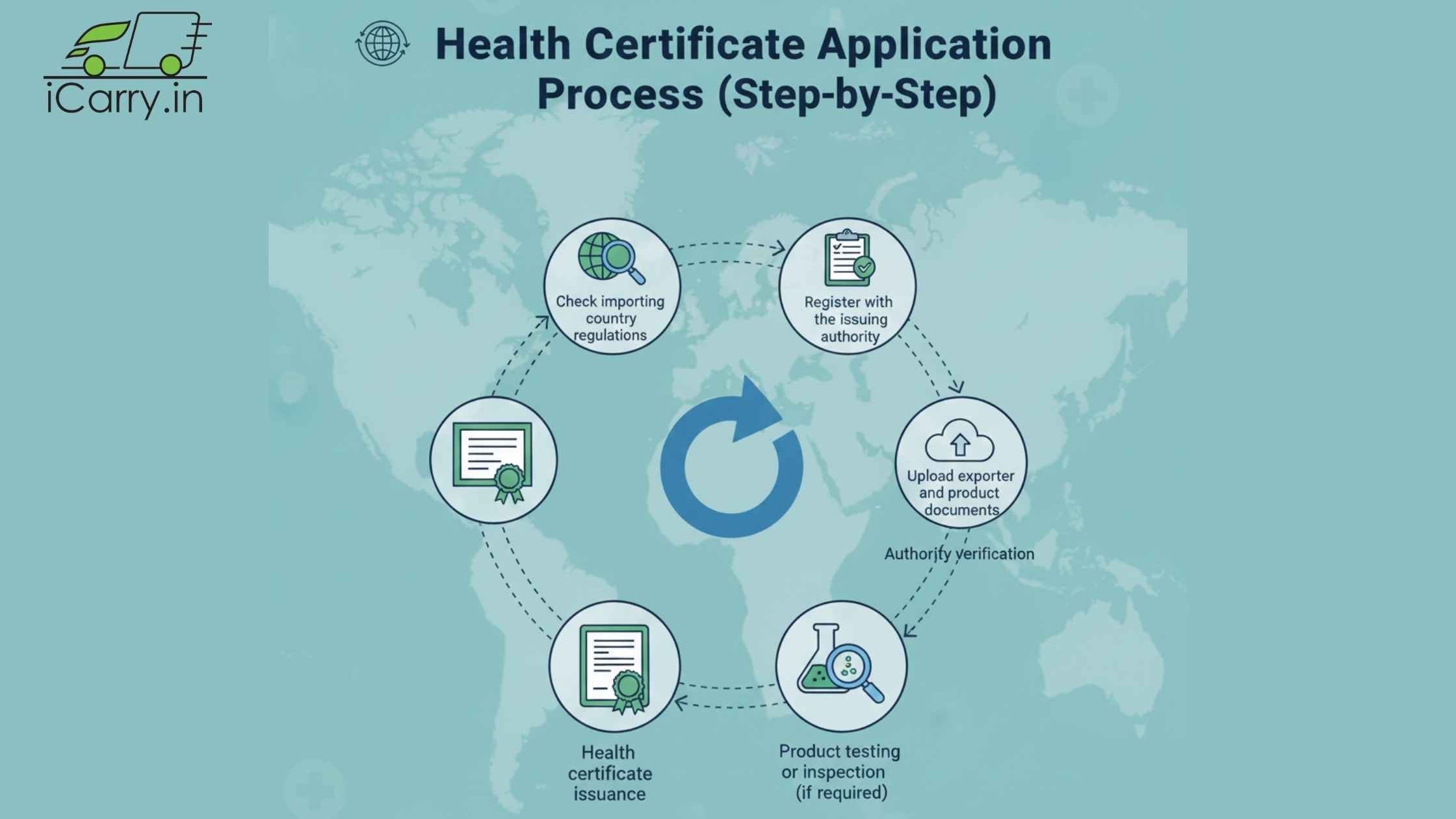
🔄 Health Certificate Application Process (Step-by-Step)
- Check importing country regulations
- Register with the issuing authority
- Upload exporter and product documents
- Product testing or inspection (if required)
- Authority verification
- Health certificate issuance
Many authorities now offer online application systems, reducing processing time.
⏳ Validity of a Health Certificate
- Most certificates are shipment-specific
- Validity ranges from a few days to a few months
- A fresh certificate is usually required for every shipment
Always confirm validity before dispatch.
Health Certificate vs Phytosanitary vs Veterinary Certificate
| Certificate Type | Used For |
|---|---|
| Health Certificate | Food & consumable products |
| Phytosanitary Certificate | Plant & agricultural products |
| Veterinary Certificate | Animal & animal-based products |
Each certificate serves a different regulatory purpose.
What Happens If You Don't Have a Health Certificate?
Without a valid certificate:
- Shipment may be blocked at customs
- Goods may be rejected or destroyed
- Exporter may face penalties or blacklisting
- Buyer confidence may drop
- Financial losses increase
One missing document can wipe out your profit margin.
Shipment failures also increase return rates and customer dissatisfaction. Learn how businesses reduce such losses.
❌ Common Mistakes Exporters Make
- Assuming certificate is optional
- Using expired certificates
- Incorrect document format
- Incomplete lab reports
- Ignoring importing country rules
- Applying at the last minute
⚡ Tips to Get Health Certificates Faster
- Study importing regulations early
- Keep exporter registrations active
- Maintain updated lab reports
- Use professional export consultants
- Avoid last-minute shipping
Prepared exporters face fewer delays.
🌐 Importance of Health Certificates in Global Trade
With stricter international safety regulations:
- Digital verification is increasing
- Compliance checks are becoming tighter
- Buyers demand verified certifications
- Regulatory audits are more frequent
Health certificates are now a mandatory trade requirement, not just paperwork.
Summary
A Health Certificate for Export acts as your product's passport to international markets.
It helps exporters:
- Protect shipments
- Build buyer trust
- Ensure legal compliance
- Avoid costly delays and penalties
If you export food, agriculture, pharmaceuticals, or animal products, understanding and managing this certificate is essential for scaling your global business.
To further optimize your shipping operations and control logistics costs, explore our guide on How to Reduce Shipping Cost.
Health certificates are not optional paperwork—they are mandatory legal documents that protect your shipments, ensure compliance, and build trust in international trade.