
Jewellery is not just another product category. It is high-value, emotional, trust-sensitive, and detail-driven. That is why building a jewellery marketplace is very different from building a fashion or electronics platform. The biggest challenge is not traffic, it is trust.
This guide explains how to build a jewellery marketplace in India, covering seller onboarding, buyer experience, trust and authenticity frameworks, logistics handling for high-value items, and scalable growth strategies. Platforms that integrate technology, secure courier aggregation, and real-time delivery tracking, similar to solutions offered by iCarry.in, are better equipped to manage jewellery orders safely and efficiently.
Why Jewellery Marketplaces Are Unique
Jewellery buyers care deeply about authenticity, price transparency, return and buyback policies, and seller credibility. One broken trust moment can permanently damage the platform. That is why successful jewellery marketplaces are built trust-first, not growth-first. Leveraging secure logistics, verified delivery, and automated notifications - features similar to iCarry.in's RTO reduction tools and WhatsApp engagement system - helps maintain buyer confidence.
Logistics Is a Trust Layer, Not a Backend Function
In jewellery marketplaces, logistics is not just an operational task - it is a core trust signal. Buyers subconsciously judge the platform based on:
- How securely the jewellery is packaged
- How quickly shipping updates are shared
- Whether delivery feels controlled and verifiable
Delayed pickups, missing tracking links, or failed deliveries damage trust instantly - especially for gold, diamond, and gemstone products.
Using a courier aggregator platform allows jewellery marketplaces to:
- Choose courier partners optimized for high-value shipments
- Enable insured shipping and tamper-proof delivery
- Reduce failed deliveries and RTOs through intelligent routing
- Provide real-time tracking updates via WhatsApp or SMS
Marketplaces that treat shipping as part of the buying experience - not an afterthought - retain customers longer and face fewer disputes.
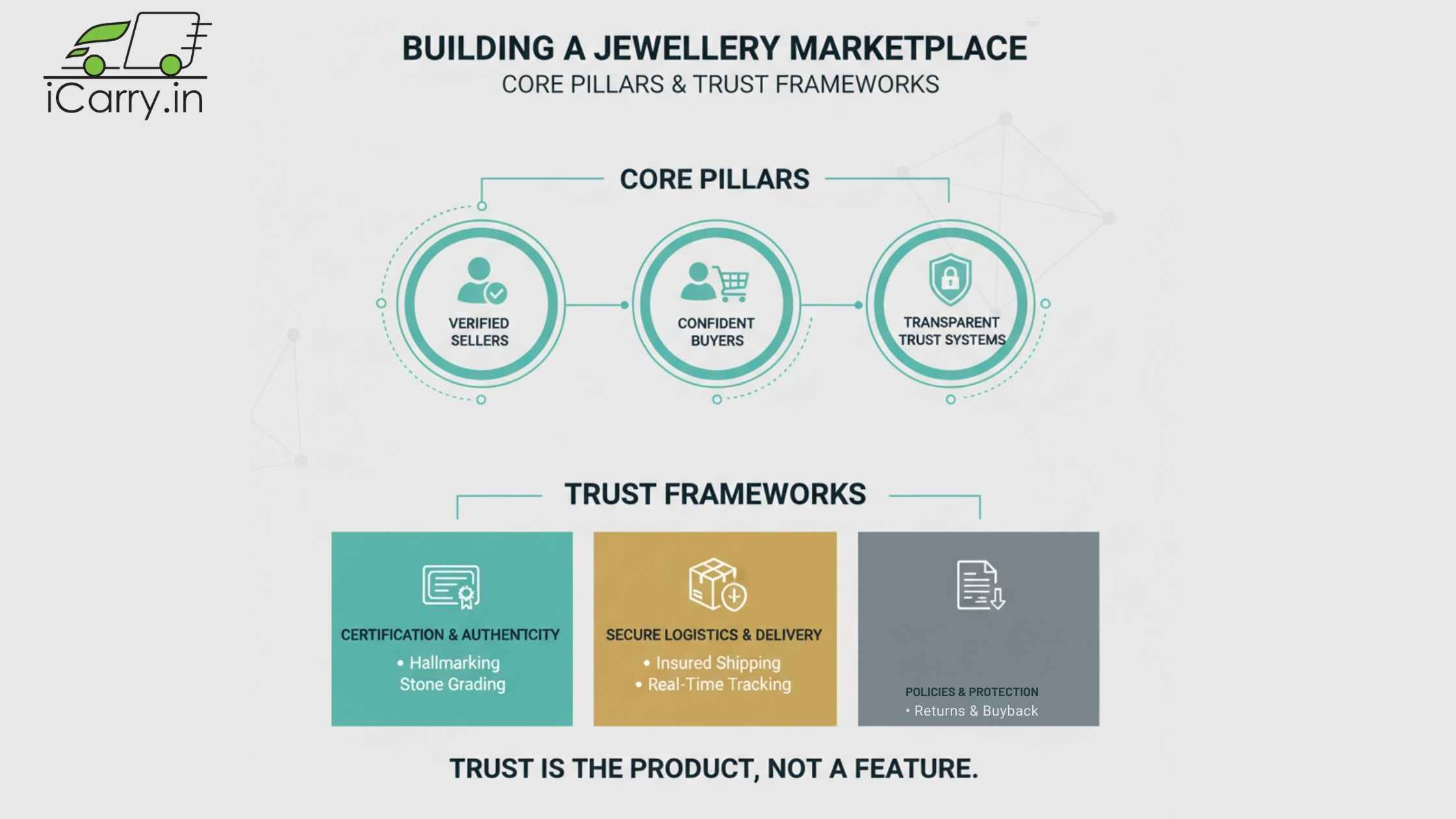
Core Pillars of a Jewellery Marketplace
A strong jewellery marketplace rests on three pillars: verified sellers, confident buyers, and transparent trust systems. If any one of these pillars fails, the marketplace struggles to scale or retain users.
Seller Side: How to Onboard and Manage Jewellery Sellers
Strict Seller Verification
Unlike regular marketplaces, jewellery platforms must verify sellers rigorously. This includes business registration, GST and compliance checks, proof of physical store or manufacturing facility, and past sales history where available. Trust starts with who is allowed to sell.
Quality and Authenticity Standards
Set non-negotiable standards for gold purity, diamond certification, gemstone grading, and hallmarking. Sellers should disclose certifications upfront. Platforms that integrate secure verification systems similar to iCarry.in's shipping API or tracking dashboard can ensure authenticity and reduce disputes.
Seller Education and SOPs
Many jewellery sellers are artisans or traditional jewellers rather than tech-native. Providing listing guidelines, photography standards, pricing transparency rules, and packaging and dispatch SOPs improves consistency and buyer confidence.
Seller Reputation System
Introduce verified seller badges, review and rating systems, and order fulfillment scores. Trust grows when buyers can see seller credibility clearly, supported by reliable delivery tracking and proof-of-dispatch systems similar to courier aggregator solutions.
Seller reputation is also influenced by fulfillment reliability. On-time dispatch, successful first-attempt delivery, and low RTO rates should directly impact seller scores. Integrating logistics performance data - such as pickup delays, delivery success rates, and customer confirmation - through courier dashboards similar to iCarry.in helps marketplaces identify high-quality sellers and flag risk early.
Buyer Side: Designing a High-Trust Buying Experience
Clear Product Information
Jewellery listings must include weight, metal purity, stone details, making charges, and certification info. Ambiguity reduces conversions.
Transparent Pricing Breakdown
Separate metal cost, making charges, stone value, and taxes to increase buyer confidence.
High-Quality Visuals and Videos
Use multiple angles, zoomable images, model shots, and short videos. The closer buyers feel to the product, the higher the conversion.
Flexible Purchase Options
Offer EMI options, buy-now-pay-later, and digital gold integration where applicable. High-ticket flexibility improves accessibility.
Trust Frameworks: The Heart of a Jewellery Marketplace
Certification and Authentication Layer
Every product should display BIS hallmark info, diamond or gemstone certificates, and invoices with purity details. Some platforms also offer post-delivery verification for added assurance.
Secure Logistics and Packaging
Jewellery shipping requires far more than standard courier booking. Platforms must ensure:
- Tamper-proof and discreet packaging
- Insurance coverage for transit loss or damage
- OTP-based or ID-verified delivery
- Real-time shipment tracking and delivery confirmation
Failures in logistics erode trust faster than pricing issues. Missed deliveries or lost packages can permanently damage marketplace credibility.
Using a shipping aggregator like iCarry.in, jewellery marketplaces can:
- Compare courier partners based on pincode-level performance
- Enable insured, high-value deliveries
- Track shipments in real time via API or dashboard
- Reduce RTOs and delivery disputes using smart delivery workflows such as Delivery Boost and API Integration
Reliable logistics is not just a backend function - it is part of the trust promise made to every buyer.
Returns, Buyback and Exchange Policies
Clearly define return eligibility, exchange timelines, and buyback or resale options. Transparency is more important than generosity.
Escrow and Payment Protection
Hold payments until delivery confirmation, release funds post-verification, and handle disputes transparently. Escrow builds platform credibility.
COD, Prepaid Orders, and Risk Management
While many jewellery purchases are prepaid, certain segments - silver jewellery, lightweight gold, or regional designs - still see COD demand, especially in Tier 2 and Tier 3 cities.
Marketplaces must manage this carefully by:
- Limiting COD eligibility by order value
- Using courier partners with high COD success rates
- Monitoring delivery attempts and NDRs closely
Courier aggregation platforms with RTO reduction tools and COD analytics, similar to iCarry.in's systems, help marketplaces balance growth with risk and avoid losses caused by failed deliveries or fake orders.
Technology Stack Considerations
A jewellery marketplace needs high-performance catalog and search functionality, secure payment infrastructure, seller dashboards, review and verification systems, and CRM tools for high-value customers. Scalability matters, but reliability and trust matter more. Features like API integration, real-time updates, and automated notifications help manage operations efficiently.
A robust logistics layer is a key part of the technology stack. Marketplace platforms should integrate courier APIs to automate shipment creation, tracking updates, delivery confirmations, and exception handling. API-driven logistics, real-time notifications, and centralized dashboards - similar to iCarry.in's shipping infrastructure - help operations teams manage scale without increasing manual effort.
Growth Strategies for Jewellery Marketplaces
Start with a Focused Niche
Focus on bridal jewellery, handcrafted silver jewellery, minimal everyday wear, or temple and regional designs. Niche trust beats mass confusion.
Content-Led Trust Building
Use educational blogs, purity guides, buying explainers, and care tips. Educated buyers convert better and return less. Internal blogs, guides, and expert articles, similar to iCarry.in's ecommerce and logistics insights, help boost credibility.
Influencer and Creator Partnerships
Jewellery sells better when styled by creators, explained by experts, and shown in real-life contexts. Authenticity matters more than celebrity reach.
Offline and Online Touchpoints
Pop-up stores, experience centers, or try-at-home options provide physical reassurance and boost online confidence.
Common Mistakes Jewellery Marketplaces Make
Onboarding too many sellers too fast, ignoring certification clarity, weak dispute resolution, poor logistics handling, and prioritizing discounts over trust are common pitfalls. In jewellery, reputation compounds positively and negatively.
Revenue Models for Jewellery Marketplaces
Common models include commission per transaction, seller subscriptions, featured listings, and value-added services such as certification, logistics, and insurance. Platforms that maintain trust can command higher pricing and improve retention.
Final Thoughts
From seller verification and certification clarity to secure logistics and reliable delivery, every interaction shapes buyer confidence.
Marketplaces that win focus on:
- Seller quality over quantity
- Transparency over gimmicks or discounts
- Long term credibility
- Secure delivery over speed alone
In jewellery, trust is not a feature, it is the product. Platforms that integrate verified sellers, secure payments, and reliable courier aggregation, similar to iCarry.in's logistics and API-driven shipping solutions, are better positioned to maintain confidence, scale operational efficiently and protect both buyers and sellers.
In jewellery marketplaces, trust is the product—built through verified sellers, transparent pricing, secure logistics, and reliable delivery. Every interaction shapes buyer confidence.