
Today, most online shoppers start on their mobile devices. If your eCommerce site doesn't work smoothly on mobile, you risk losing traffic, rankings, conversions, and trust.
This guide explains what mobile SEO is, why it matters, and how to optimize speed, user experience, and rankings effectively.
What Is Mobile SEO?
Mobile SEO is the process of optimizing your website so it:
- Loads fast on mobile devices
- Looks clean and readable on small screens
- Is easy to navigate with one hand
- Performs well in mobile search results
Search engines now primarily use the mobile version of your site to decide rankings, making mobile SEO essential for eCommerce growth.
Why Mobile SEO Matters More Than Ever
For online sellers:
- Most traffic comes from mobile
- Mobile users are impatient
- Poor UX leads to high bounce rates
- Slow pages hurt conversions
Optimizing for mobile speed and experience directly impacts rankings, sales, and customer trust. Fast, smooth pages also strengthen your mobile SEO dashboards.
Mobile Speed: The Foundation of Mobile SEO
Page speed is the biggest factor for mobile rankings and conversions. Best practices include:
- Compress images without losing quality
- Use modern image formats
- Minimize JavaScript and CSS
- Enable browser caching
- Use fast hosting and CDN
Even a one-second delay can reduce conversions significantly. Efficient logistics and delivery also reduce RTO reduction concerns.
Mobile UX Best Practices for eCommerce
Mobile-Friendly Design
- Responsive layouts
- No horizontal scrolling
- Proper font sizes
- Buttons easy to tap
Simple Navigation
- Clean menus
- Fewer clicks to product pages
- Sticky search and cart icons
Optimized Product Pages
- Clear product images
- Short, scannable descriptions
- Visible price and CTA
- Easy quantity and size selection
Frictionless Checkout
- Guest checkout option
- Minimal form fields
- Mobile-friendly payment methods with automated notifications
- Clear error messages
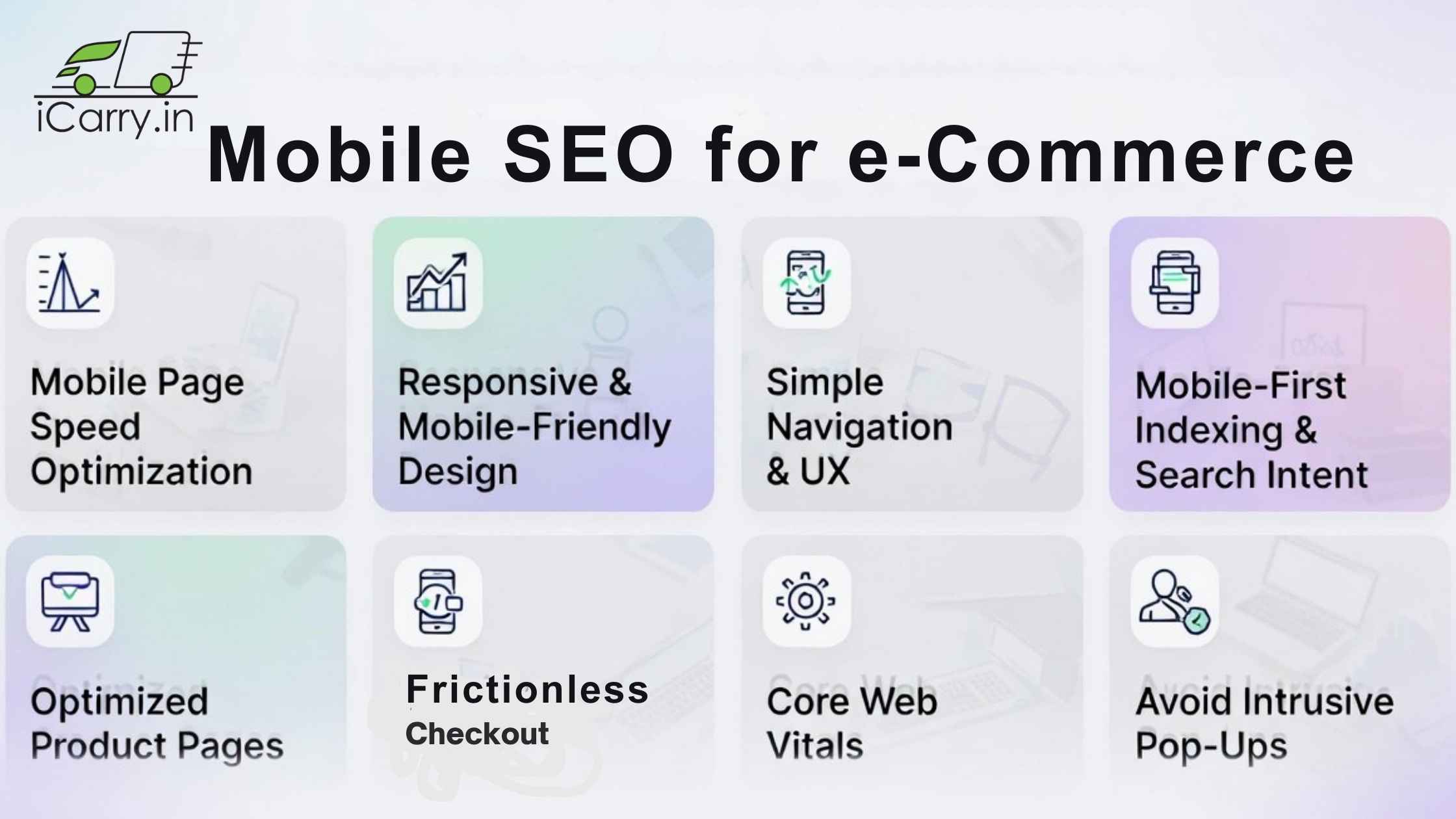
Mobile SEO Ranking Best Practices
Mobile-First Indexing Readiness
- Ensure mobile and desktop content is the same
- Structured data works on mobile
- No hidden critical content
Optimize for Mobile Search Intent
- Mobile searches are often short, local, and action-focused
- Optimize for "buy now" keywords, local delivery terms, and voice-search-friendly phrases
Core Web Vitals for Mobile
- Focus on fast load time, smooth interactions, and stable layout
Avoid Intrusive Pop-Ups
- No full-screen pop-ups on load
- Use small banners instead
- Make exit buttons visible
Common Mobile SEO Mistakes
- Heavy images slowing pages
- Tiny text and buttons
- Broken mobile layouts
- Slow checkout pages
- Hiding important content
Mobile SEO Checklist for eCommerce
- Mobile page loads under 3 seconds
- Fully responsive design
- Easy navigation and search
- Fast, clean product pages
- Simple checkout flow
- No intrusive pop-ups
- Ensure reliable courier integration and secure delivery
Real-World Impact of Good Mobile SEO
Brands that optimize for mobile see:
- Higher search visibility
- Lower bounce rates
- Better conversion rates
- More repeat customers
Insights and logistics insights help sellers optimize mobile operations.
Final Thoughts
Mobile SEO is where SEO, UX, and revenue meet.
If your mobile site loads fast, feels easy to use, and meets user intent, search engines reward you and customers convert more.
Focus on people first, rankings and revenue will follow naturally. Don't forget to register your store to integrate with iCarry.in tools and dashboards.
Mobile SEO isn't just about rankings—it's about creating fast, seamless experiences that convert mobile visitors into loyal customers.