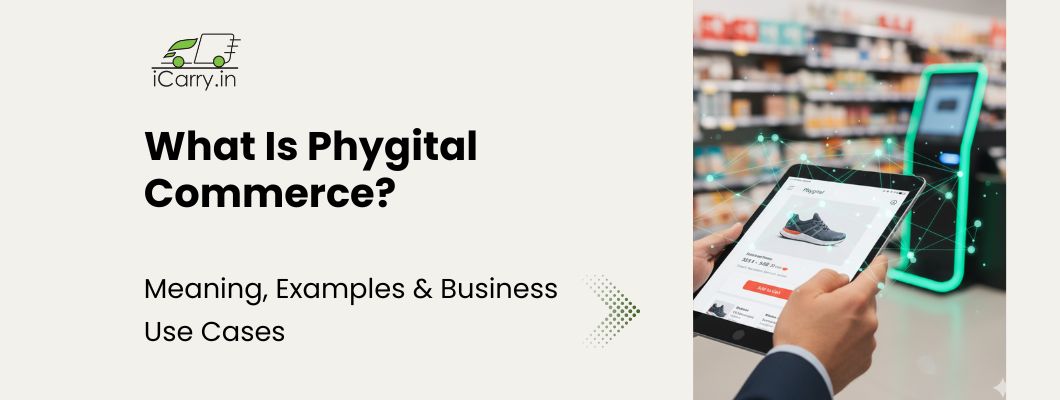
Customers today don't think in terms of online or offline. They simply expect a smooth, connected shopping experience.
A customer might discover a product on Instagram or Facebook, check it in a physical store, place an order online, and receive delivery at their doorstep with real-time tracking and support. This seamless blend of physical and digital touchpoints is known as phygital commerce, and it is quickly becoming the standard for modern businesses.
This guide explains what phygital commerce really means, why it matters, and how businesses are using it effectively, especially when supported by smart logistics and shipping platforms and courier aggregators. When fast order processing, reliable shipping, and transparent delivery tracking are added to the experience through logistics platforms, customer satisfaction increases significantly.
What Is Phygital Commerce?
Phygital commerce is the integration of physical experiences with digital technology to create a unified and seamless customer journey.
In simple terms, phygital means physical plus digital.
It removes boundaries between online stores, physical retail outlets, mobile apps, and social commerce platforms. The objective is to let customers move effortlessly between online discovery, offline interaction, and digital fulfillment without friction.
Why Phygital Commerce Is Growing Fast
Customer behavior has changed permanently. Today's consumers expect online convenience, offline trust, instant product information, and flexible buying and delivery options.
Businesses that adopt phygital commerce models often see higher engagement, improved conversion rates, and stronger brand loyalty. When fast order processing, reliable shipping, and transparent delivery tracking are added to the experience through logistics platforms like iCarry.in, customer satisfaction and hence sales increases significantly.
How Phygital Commerce Works
Phygital commerce connects digital discovery, physical interaction, online transactions, and omnichannel customer support into one smooth journey.
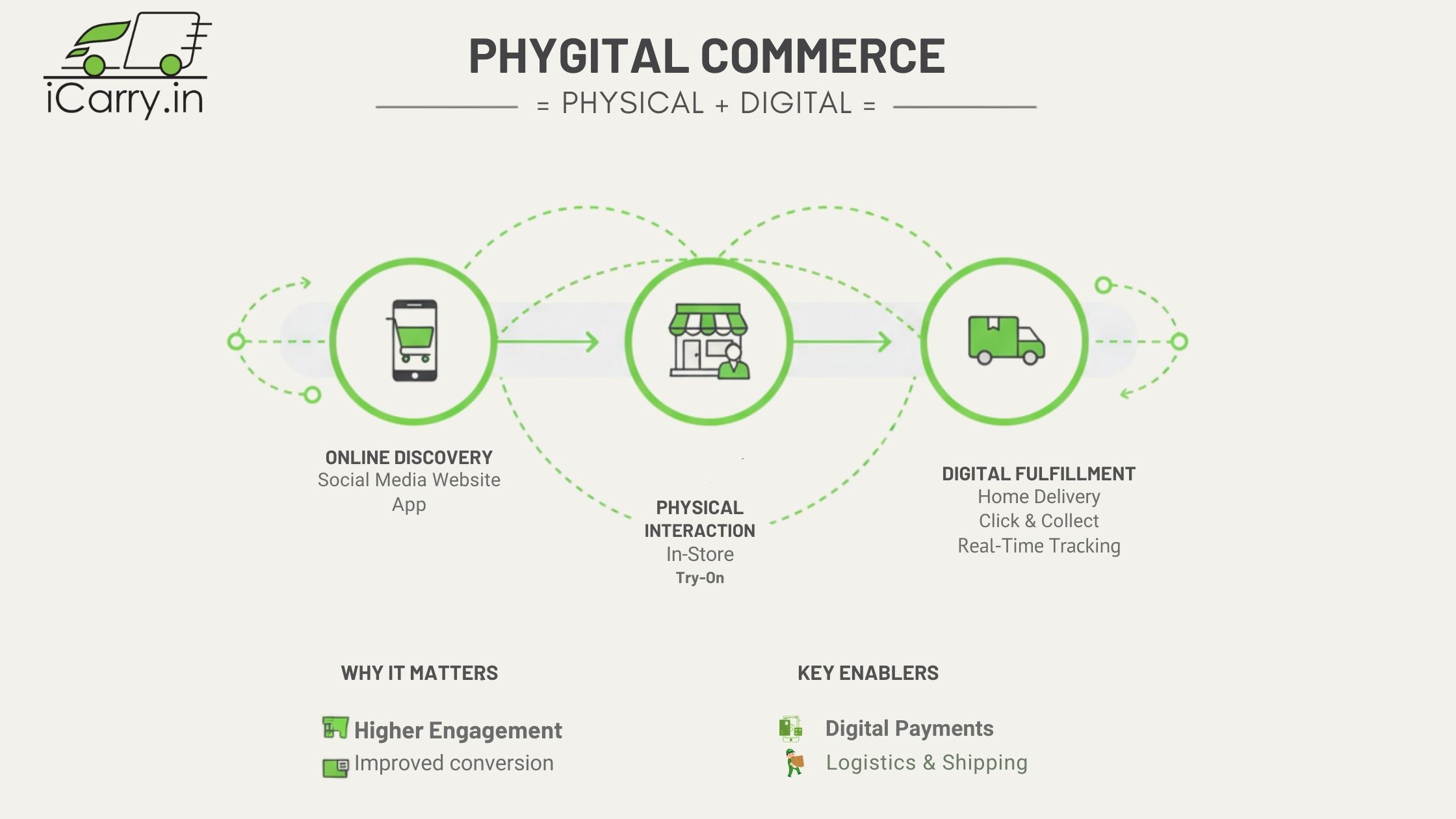
It is not about replacing physical stores with technology. Instead, it enhances physical retail by integrating inventory management systems, digital payment solutions, and courier aggregation platforms that enable faster and more reliable delivery.
Real-World Examples Of Phygital Commerce
Click and Collect (Buy Online, Pick Up In Store)
Customers place orders online and collect them from a nearby store. This approach enables faster fulfillment, reduced delivery costs, and increased in-store foot traffic. Many retailers also extend this option by offering home delivery through integrated shipping partners, giving customers more flexibility.
QR Codes in Physical Stores
QR codes placed inside stores allow shoppers to view detailed product information, read online reviews, check stock availability, and place orders online if certain sizes or colors are unavailable. This turns physical shelves into interactive digital touchpoints.
Endless Aisle Shopping
When a product is not available in-store, customers can place a digital order using tablets or kiosks and have the item delivered to their home. With dependable courier platforms managing last-mile delivery, businesses can prevent lost sales and maintain high customer satisfaction.
Virtual Try Ons and AR Experiences
Customers can digitally try products before purchasing, either online or inside the store. Common examples include virtual eyewear trials, makeup filters, and furniture placement previews. These experiences increase purchase confidence and reduce product returns.
WhatsApp and In Store Assisted Selling
Sales associates use digital tools to check real-time inventory, place online orders, share digital payment links, and arrange doorstep delivery. Platforms like iCarry.in support this model by enabling businesses to compare courier rates, choose reliable shipping partners, and offer shipment tracking through WhatsApp to customers.
Business Use Cases Of Phygital Commerce
Retail and Fashion
Customers can try products in-store and complete purchases online later. Digital mirrors, smart fitting rooms, unified loyalty programs, and home delivery options enhance the overall shopping experience.
Electronics
In-store demos are supported by online reviews and digital product comparisons. Customers can opt for store-to-home delivery using courier aggregation services.
Grocery and FMCG
Mobile app ordering, subscription refills, smart checkout systems, and fast local or national shipping help improve convenience and encourage repeat purchases.
Luxury and High Value Products
Personalized in-store consultations, digital catalogs, and appointment-based selling combine with secure and reliable delivery to preserve exclusivity and trust. Phygital commerce adds convenience without compromising the premium experience.
Benefits of Phygital Commerce For Businesses
Phygital commerce helps businesses achieve higher conversion rates because customers feel more confident when physical interaction is supported by digital convenience and reliable delivery. According to Deloitte's research on omnichannel journeys, businesses that successfully integrate physical and digital touchpoints see significant improvements in customer satisfaction and revenue.
It improves the overall customer experience by removing friction between sales channels, payments, and shipping.
Businesses gain access to richer customer data by tracking behavior across both online and offline touchpoints.
Consistent experiences supported by transparent logistics and dependable shipping help build long-term brand loyalty.
Challenges In Phygital Commerce
Common challenges include integrating POS systems, CRM tools, inventory platforms, and logistics operations. Businesses also need to train staff to use digital tools effectively, maintain consistent pricing and messaging, and ensure secure handling of customer data.
Successful phygital commerce depends on alignment between technology, operations, and fulfillment partners.
How Businesses Can Get Started With Phygital Commerce
Businesses do not need to implement everything at once. A practical starting point includes unified inventory visibility, click and collect services, QR-based product information, digital payments across all channels, and dependable shipping support through courier aggregation platforms.
Solutions like iCarry.in help simplify order fulfillment by offering courier comparisons, cost-effective shipping options, and centralized shipment tracking. Businesses can also integrate shipping capabilities through API integration for seamless order processing across channels.
Phygital Commerce Vs Omnichannel
Omnichannel focuses on ensuring multiple channels work together smoothly. Phygital commerce focuses on blending physical and digital experiences within the same customer journey.
Phygital commerce is experiential, while omnichannel is structural. When combined, they create powerful customer-first commerce ecosystems.
Future Of Phygital Commerce
Phygital commerce will become the standard as augmented reality and artificial intelligence mature, mobile-first shopping increases, customer expectations for faster fulfillment grow, and offline retail continues to evolve.
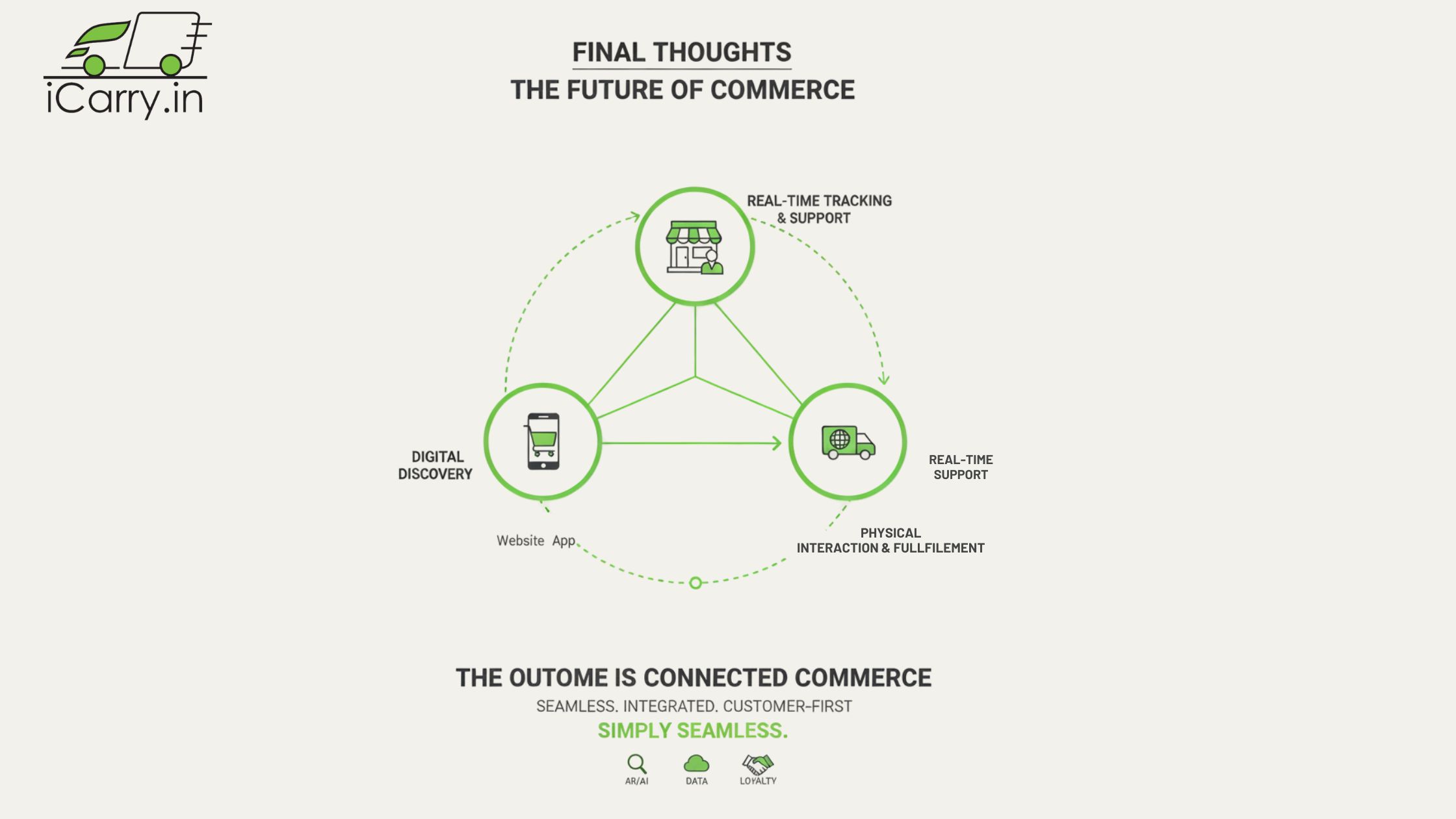
The future of commerce is not online or offline. It is seamlessly connected.
How iCarry.in Fits into the Phygital Commerce Journey
A successful phygital commerce strategy depends not just on discovery and in-store experiences, but also on how reliably and transparently orders are fulfilled once a customer decides to buy. This is where logistics plays a critical role.
iCarry.in supports businesses adopting phygital commerce by simplifying and strengthening the fulfillment layer across online and offline touchpoints - whether orders are placed through websites, in-store assisted selling, or social channels.
With data-driven courier recommendations, transparent rate visibility, accurate billing reconciliation, and centralized shipment tracking, businesses can deliver consistent customer experiences without hidden costs or operational complexity. This allows brands to focus on customer engagement while logistics runs smoothly in the background.
Summary
Phygital commerce reflects how people actually shop today - moving seamlessly between digital discovery and physical interaction, expecting convenience at every touchpoint. Businesses that successfully blend physical retail with digital technology see improved conversion rates, stronger customer loyalty, and operational efficiency.
The key to successful phygital commerce is removing friction between sales channels, payment systems, and fulfillment operations. Whether through click-and-collect services, QR code experiences, or WhatsApp-enabled assisted selling, the goal remains the same: creating a unified customer journey.
For Indian businesses looking to adopt phygital commerce, starting with unified inventory visibility, digital payments, and reliable shipping infrastructure provides a strong foundation. When logistics works seamlessly in the background - supported by transparent courier comparisons and real-time tracking - brands can focus on what matters most: delivering exceptional customer experiences.
The real winners in commerce will not be those who choose online or offline, but those who connect every touchpoint from discovery to delivery seamlessly.