Pre-orders aren't just about selling early.
When done right, they help brands:
- Validate demand
- Improve cash flow
- Reduce inventory risk
- Build excitement before launch
When done wrong, they destroy trust.
This guide explains what pre-orders are, when they make sense, and how to launch, manage, and scale them successfully.
What Are Pre-Orders in eCommerce?
A pre-order allows customers to purchase a product before it is officially available for delivery.
Pre-orders are commonly used in product launches to validate demand before mass production, a practice widely discussed in modern eCommerce strategy.
In simple words:
Customers pay now (or commit now) and receive the product later.
Pre-orders are common for:
- New product launches
- Limited editions
- High-demand items
- Custom or made-to-order products
Why Brands Use Pre-Orders
Pre-orders solve multiple business problems at once.
Key benefits:
- Demand validation before production
- Better cash-flow planning
- Reduced overstock risk
- Predictable inventory planning
- Early customer feedback
Pre-orders turn uncertainty into data.
When Pre-Orders Make Sense (And When They Don't)
Good Use Cases
- New product launches
- Seasonal collections
- Customised products
- Crowdfunded or community-led brands
Bad Use Cases
- Commoditised products
- Long, uncertain delivery timelines
- Poor supply chain control
Pre-orders require confidence in execution.
How to Launch Pre-Orders Successfully
1. Set Clear Expectations
Never be vague.
Communicate clearly:
- Expected delivery date
- Possible delays
- Refund and cancellation policy
Transparency builds patience.
2. Choose the Right Payment Approach
Options include:
- Full payment upfront
- Partial payment or deposit
- Pay later (BNPL)
Match payment method to customer trust level.
3. Limit Pre-Order Quantity
Scarcity creates urgency - but also protects you.
Benefits:
- Easier fulfillment
- Better quality control
- Lower customer risk
Unlimited pre-orders can backfire.
4. Use Pre-Orders as a Launch Story
Pre-orders are a marketing moment.
Use:
- Email waitlists
- Countdown timers
- Early-bird benefits
- Behind-the-scenes content
Sell the journey, not just the product.
Managing Pre-Orders Without Breaking Trust
5. Track Production & Supply Closely
Pre-orders expose weak operations.
You must:
- Monitor suppliers
- Buffer timelines
- Plan for delays
Execution matters more than hype.
6. Communicate Proactively
Silence kills trust.
Send updates about:
- Manufacturing progress
- Shipping timelines
- Unexpected delays
Customers are patient when informed.
7. Handle Delays Honestly
Delays happen.
What matters:
- Acknowledge early
- Offer compensation (discounts, freebies)
- Provide easy refunds
Honesty retains customers.
Scaling Pre-Orders the Right Way
8. Analyse Pre-Order Data
Track:
- Conversion rate
- Cancellation rate
- Delivery satisfaction
- Repeat purchase behaviour
Pre-order data predicts future demand.
9. Improve Supply Chain Reliability
As you scale:
- Add backup suppliers
- Improve forecasting
- Reduce dependency on one vendor
Pre-orders magnify supply chain issues, making courier diversification and fallback options critical as order volumes grow.
10. Turn Pre-Orders Into a Repeat Model
Some brands make pre-orders a core strategy:
- Drops
- Seasonal collections
- Community launches
Consistency builds anticipation.
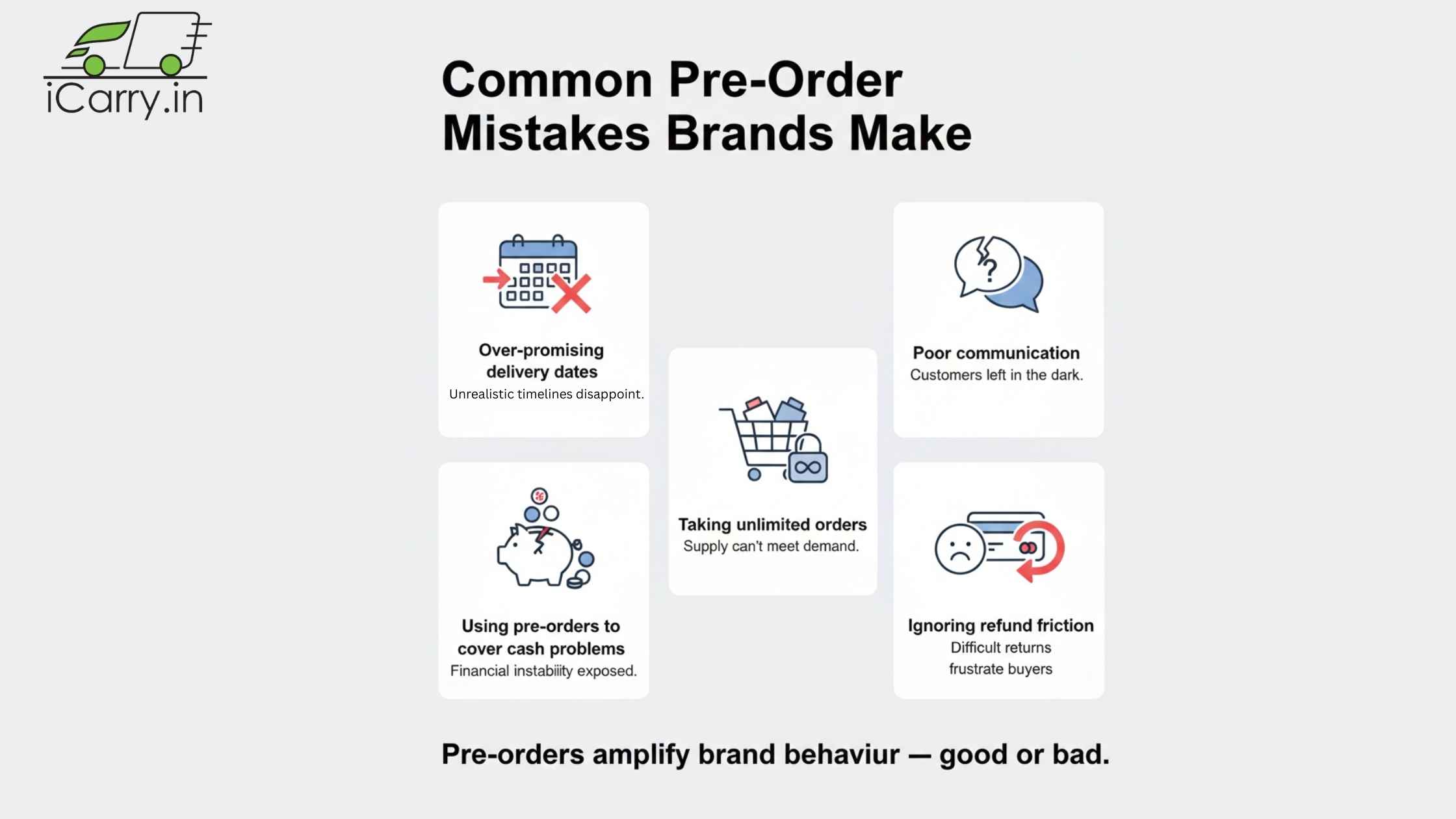
Common Pre-Order Mistakes Brands Make
- Over-promising delivery dates
- Poor communication
- Taking unlimited orders
- Using pre-orders to cover cash problems
- Ignoring refund friction
Pre-orders amplify brand behaviour - good or bad.
Pre-Orders vs Backorders (Quick Difference)
Clarity prevents complaints.
Customer Experience in Pre-Orders
A good pre-order experience feels like:
- Being part of something early
- Supporting a brand's journey
- Getting rewarded for patience
A bad one feels like:
- Being ignored
- Being misled
- Being trapped
Experience decides loyalty - and most trust is won or lost during delivery, not at checkout.
Final Thoughts
Pre-orders are not shortcuts.
They are trust contracts between brands and customers.
When executed with transparency, discipline, and communication, pre-orders can:
- Reduce risk
- Improve cash flow
- Build strong brand communities
Trust is the most fragile asset in commerce. Once it's broken, no discount, promotion, or apology can fully restore it. Customers may give a second chance-but they rarely forget a failed promise.
Pre-orders, in particular, are built entirely on trust. They are not just about selling early or testing demand. They represent a commitment-customers agree to wait because they believe the product will arrive as promised, on time, and without complications.
When pre-order fulfillment falls short-through delays, missed updates, or unclear delivery timelines-confidence erodes quickly. The damage extends beyond a single order, affecting brand perception and long-term loyalty.
That's why successful brands treat pre-order logistics with exceptional care. Reliable fulfillment, proactive communication, and end-to-end delivery visibility ensure that patience is rewarded, not tested.
Platforms like iCarry.in help businesses manage pre-order fulfillment with consistency and control-reducing delivery risk while keeping customers informed as order volumes scale.
Understand pre-orders for what they truly are: a trust contract. Honor it carefully. And make sure every delayed shipment still delivers confidence.
Pre-orders are trust contracts requiring transparency, proactive communication, and reliable fulfillment—when executed well, they validate demand, improve cash flow, and build brand loyalty; when done poorly, they destroy customer confidence.