
Every product has features. But not every feature creates value.
Some features make a product easier to use. Some help customers decide faster. Others quietly drive retention, efficiency and loyalty.
This guide explains what product features really are, the main types of product features, and how they're used in real-world products to solve real problems. It also includes practical examples from SaaS platforms, ecommerce tools, and logistics and courier aggregator platforms in India, such as iCarry.in, where features directly impact shipping success, cost control, and customer experience.
What Are Product Features?
Product features are specific functionalities, characteristics, or capabilities that help a product perform a task or deliver value to users.
In simple terms:
- Features describe what a product can do
- Benefits describe why that matters to the user
For example: "One-click checkout" is a feature. "Faster purchase with less effort" is the benefit.
In a logistics or courier aggregator platform like icarry.in, examples of product features include:
- Multi-courier shipping management
- Real-time rate calculator
- Order tracking dashboard
- API integrations with Shopify, WooCommerce, Unicommerce etc.
Each feature exists to solve a specific shipping or operations problem.
In complex platforms like ecommerce logistics software or shipping aggregators, product features often operate behind the scenes. Users may not actively notice them, but they directly affect outcomes such as delivery speed, failed shipments, customer satisfaction, and operational costs. This makes feature design especially critical in infrastructure platforms like iCarry.in.
Why Product Features Matter
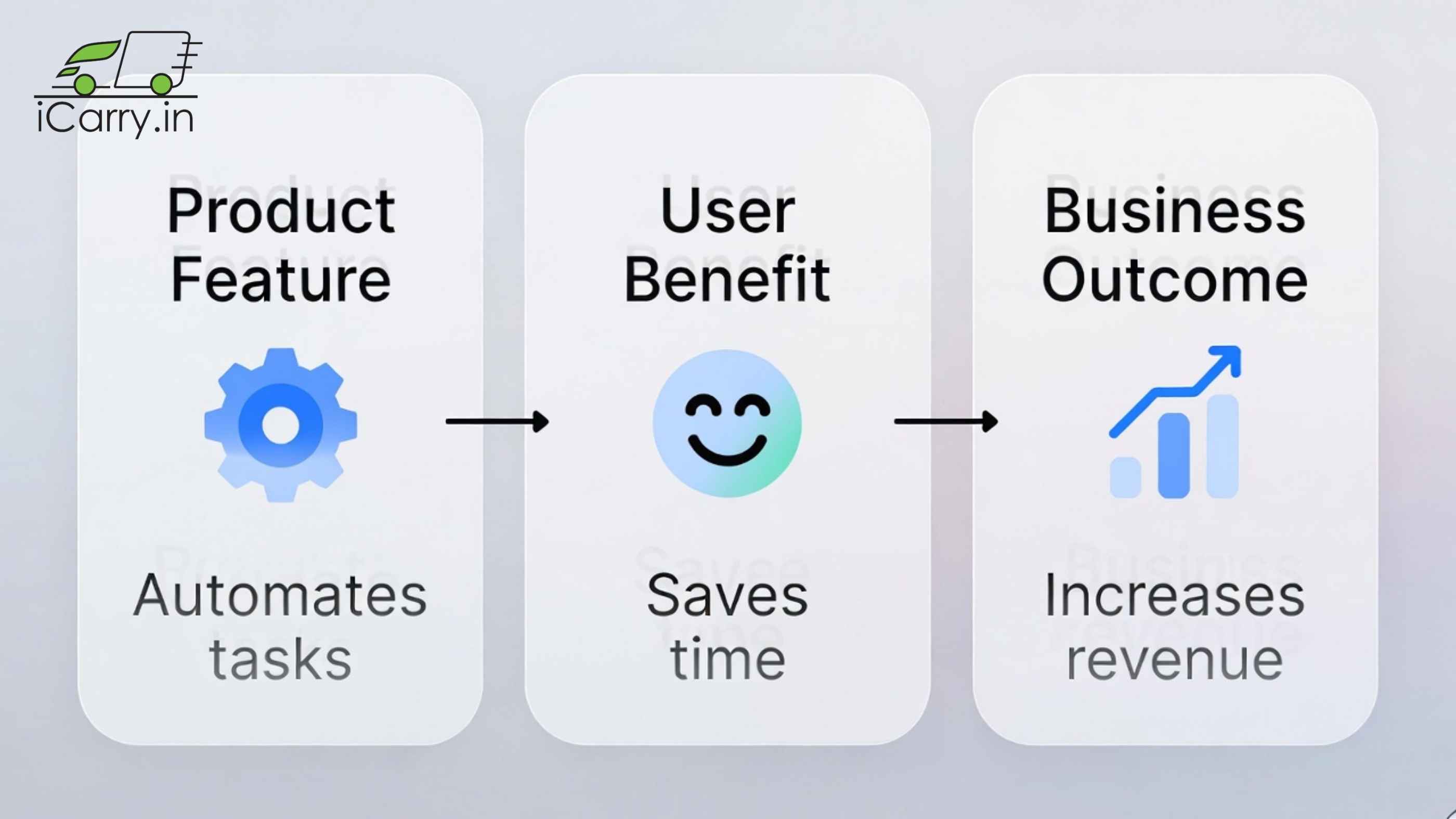
Features shape how users:
- Experience the product
- Compare alternatives
- Decide whether to buy
- Continue using it
In SaaS platforms and ecommerce tools, clearly communicated features strongly influence adoption, conversion, and long-term retention.
For example, a logistics platform in India like iCarry.in highlights features such as:
- Centralized courier management
- Automated shipping workflows
- RTO reduction tools
- WhatsApp engagement for deliveries
- Early COD Remittances
- NDR Management
- Delivery Boost
These features directly connect to business outcomes like delivery success, customer experience, and operational efficiency for clients.
Product Features as Growth Levers in SaaS & Logistics Platforms
In SaaS products, features are not just functional checkboxes - they are growth levers.
The right features help:
- Reduce onboarding friction
- Increase daily active usage
- Lower operational errors
- Improve customer retention
In logistics and courier aggregation platforms, feature impact is even more visible. A single feature - such as automated courier selection or real-time tracking can:
- Improve delivery success rates
- Reduce customer support queries
- Lower return-to-origin (RTO) losses
That's why platforms like iCarry.in focus on purely outcome-driven features, not feature volume.
Types of Product Features
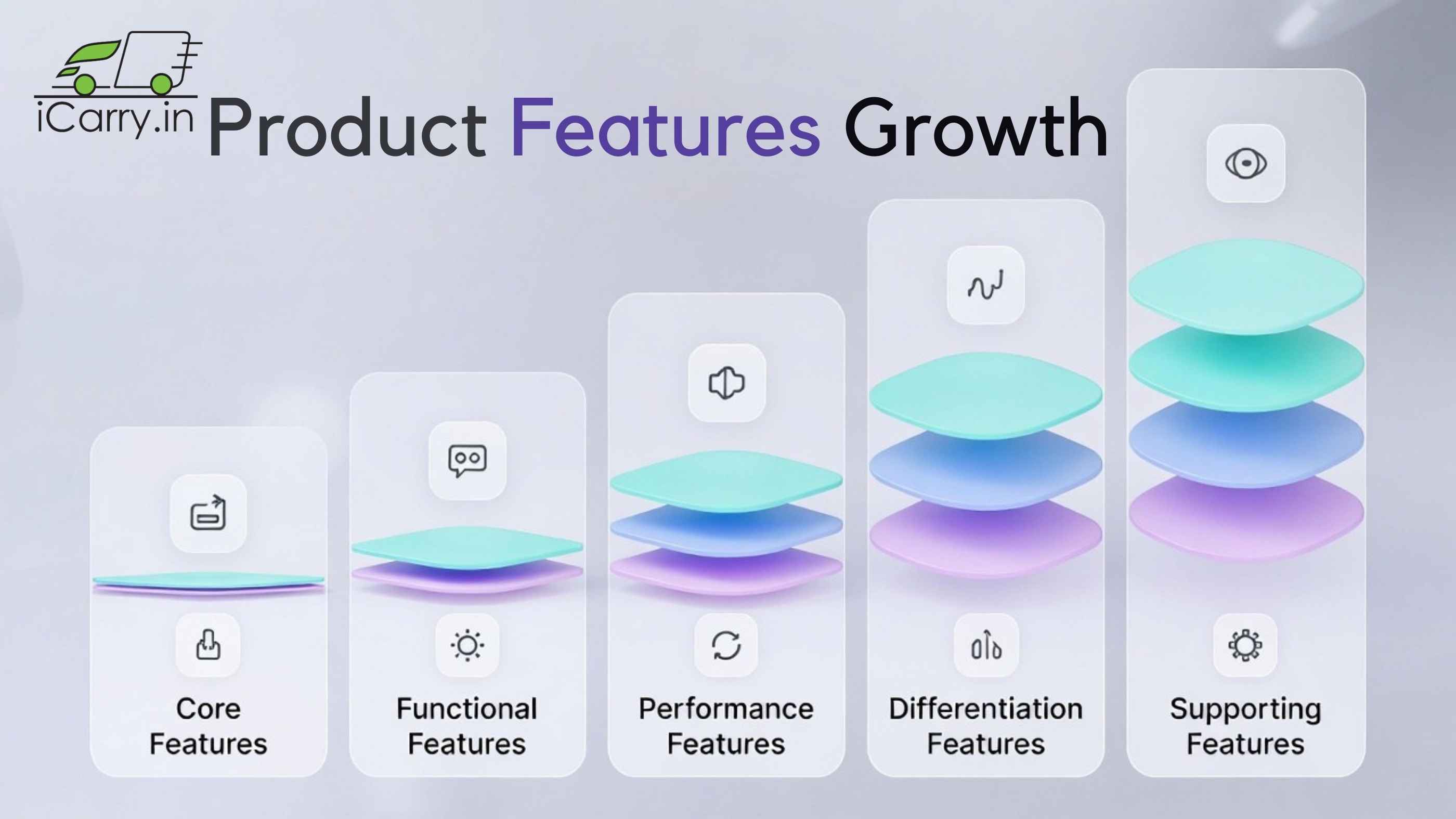
1. Core Features
These are the essential functions without which the product wouldn't exist.
Examples:
- Calling in a phone
- Payments in a wallet app
- Search on an ecommerce website
- Courier allocation and shipment processing in a shipping aggregator platform
For iCarry-type logistics software, core features include:
- Creating shipments
- Assigning courier partners
- Generating shipping labels
- Tracking orders across multiple carriers
If core features fail, the product fails.
In logistics platforms, core features must work flawlessly at scale. Creating shipments, assigning courier partners, and generating shipping labels are not optional capabilities - they are the foundation of the business. Any failure in these features directly impacts revenue, customer trust, and brand reputation.
2. Functional Features
These improve usability and day-to-day experience.
Examples:
- Filters and sorting
- Auto-save
- Notifications
- Offline access
In ecommerce shipping platforms, functional features often include:
- Bulk upload of orders
- Address validation
- COD management tools
- Dashboard analytics
- WhatsApp shipping updates
They make the product smoother, faster, and easier to operate.
Functional features often decide whether users adopt or abandon a product. In ecommerce platforms, tools like bulk uploads, address validation, and WhatsApp shipping updates reduce manual effort and errors - especially for small and mid-sized businesses managing high order volumes.
3. Performance Features
These focus on speed, reliability, and system stability.
Examples:
- Fast load times
- Low latency
- High uptime
- Accurate data sync
In API-driven platforms like iCarry.in, performance features include:
- Real-time rate calculation
- Fast courier response handling
- Stable shipping API connections
- Reliable tracking updates
Users may not notice performance features when they work, but they notice immediately when they don't.
Performance features are especially critical in API-driven logistics platforms. Delayed rate calculations, unstable courier responses, or broken tracking updates can disrupt entire order flows. Platforms like iCarry.in invest heavily in performance reliability because even milliseconds can impact checkout conversions and dispatch timelines.
4. Differentiation Features
These set a product apart from competitors and influence buying decisions.
Examples:
- AI-powered recommendations
- Smart automation
- Advanced analytics
- Custom workflow controls
In courier aggregation and logistics platforms, differentiation features may include:
- RTO reduction systems (Delivery Boost)
- Automated courier selection
- WhatsApp engagement tools
- Smart shipping rules
- Multi-platform API and plugin support
These features help platforms like iCarry.in stand out in the ecommerce shipping ecosystem.
Differentiation features often become the reason users switch platforms. In courier aggregation, features such as intelligent courier allocation, Delivery Boost for RTO reduction, and WhatsApp engagement tools give businesses measurable advantages in delivery success and customer communication.
5. Supporting Features
These add completeness, confidence, and polish.
Examples:
- Help centers
- Live chat or ticketing
- Integrations
- Developer documentation
For SaaS logistics tools, this includes:
- Shipping API documentation
- Ecommerce plugins and extensions
- Self-service dashboards
- Onboarding tools and guides
Supporting features improve trust and long-term product adoption.
Supporting features play a critical role in enterprise and SMB adoption. Clear API documentation, onboarding workflows, and self-service dashboards reduce dependency on support teams and build long-term trust - especially in complex tools like shipping aggregators and ecommerce logistics systems.
Real-World Examples of Product Features
eCommerce Platforms
- Product recommendations
- Wishlist
- Multiple payment options
- Order tracking
Each feature reduces friction and improves purchase experience.
When integrated with shipping aggregators like iCarry.in, ecommerce platforms gain features such as:
- Automated order sync
- Courier partner access
- Shipment tracking dashboards
- Delivery communication tools
SaaS Products
- Role-based access
- Analytics dashboards
- API integrations
In logistics SaaS tools, API integration is a critical feature that allows:
- Website to shipping system connectivity
- Real-time shipment creation
- Courier service automation
- Scalable business operations
This is why shipping APIs and plugin ecosystems are considered high-value features.
Logistics & Shipping Platforms
In logistics platforms, product features directly affect physical outcomes.
Examples include:
- Rate comparison engines that optimize shipping costs
- Courier performance analytics by pincode
- RTO and NDR management tools
- Automated delivery communication via WhatsApp or SMS
- Risk & Fraud protection mechanisms
When ecommerce platforms integrate with shipping aggregators like iCarry.in, they extend their feature set without building logistics infrastructure from scratch - saving time, cost, and operational complexity.
Mobile Apps
- Biometric login
- Push notifications
- Dark mode
In delivery and ecommerce ecosystems, push notifications and WhatsApp engagement features support:
- Order confirmations
- Delivery updates
- Failed delivery prevention
- Customer trust building
How Product Features Solve Real Problems
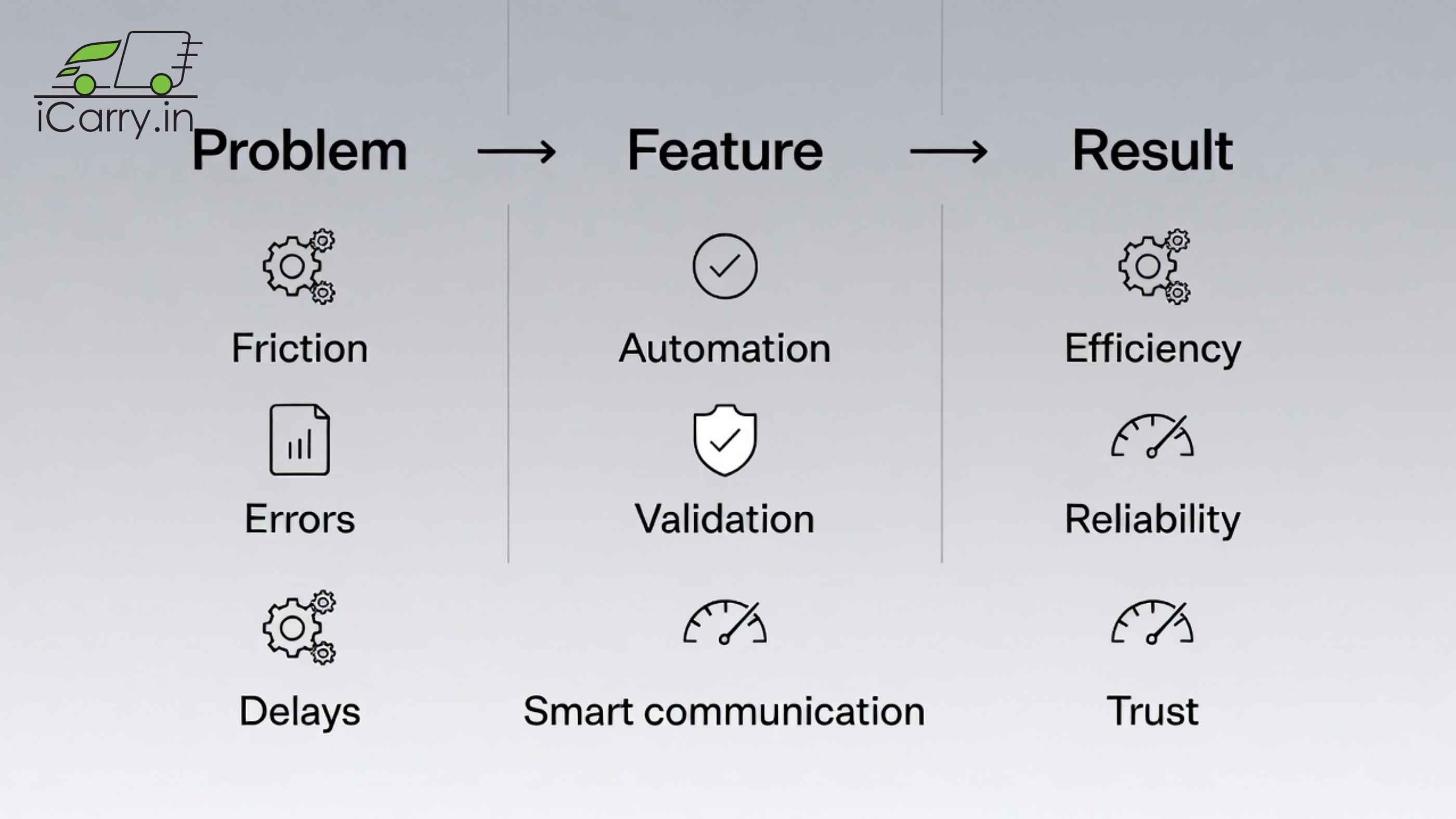
Good features are problem-driven.
Examples:
- Abandoned carts → Saved carts and reminders
- Slow checkout → Express checkout
- High support load → In-app help and FAQs
- Delivery failures → Smart communication and address verification
- High RTO → RTO reduction and delivery confirmation tools
In logistics platforms like iCarry.in, many features exist specifically to:
- Improve delivery success
- Reduce return-to-origin rates
- Simplify shipping operations
- Support business scalability
The best features always reduce time, effort, risk, or confusion.
In logistics and ecommerce operations, poorly designed features lead to real financial losses. Failed deliveries, incorrect addresses, or delayed updates increase RTO rates and support costs. That's why platforms like iCarry.in focus feature development on reducing operational risk, not just adding surface-level functionality.
Feature Bloat vs Feature Impact
One of the biggest risks in SaaS and platform products is feature bloat - adding too many features without clear outcomes.
High-performing products:
- Build fewer, high-impact features
- Measure success through usage and outcomes
- Remove or refine features that don't solve real problems
This discipline is especially important in logistics platforms, where every feature touches live orders, customer expectations, and revenue flow.
Common Mistakes Teams Make with Features
- Adding features without user validation
- Confusing features with benefits in marketing
- Shipping too many features at once
- Ignoring performance and reliability
- Building tools users don't actually need
In SaaS and ecommerce tools, poorly chosen features increase complexity without improving outcomes.
How to Decide Which Features to Build
Strong product teams prioritize features based on:
- Real user pain points
- Behavioral and usage data
- Business impact
- Technical feasibility
- Support and operations feedback
This is especially important in platforms like shipping aggregators and ecommerce logistics systems, where every feature directly affects order flow, customer experience, and revenue operations.
Communicating Product Features Effectively
Features should be explained:
- In simple language
- With real-world use cases
- With business impact
- Focused on outcomes, not just functions
For example, instead of saying: "WhatsApp engagement system"
Say: "A feature that helps businesses confirm orders, update customers, and improve delivery success."
Clear feature communication improves trust, onboarding, and conversions.
Final Thoughts
Product features are not just technical components, they are solutions to real user problems.
The best products focus on well-designed, high-impact features that deliver clear outcomes.
Whether it's an ecommerce platform, SaaS tool, or a shipping aggregator like iCarry.in, success depends on building and communicating features that truly help users work faster, scale better, and operate smarter.
When features align with real needs, products become easier to adopt, trust, use, and grow.
Product features are solutions to real user problems—the best products focus on well-designed, high-impact features that help users work faster, scale better, and operate smarter.