Every month, great products share product highlights - a summary of what's new, improved, or released. These updates help users and teams stay informed, engaged, and ready to use the product more effectively.
Whether you're building a SaaS tool, an eCommerce platform, or an app, communicating monthly product updates boosts:
- Adoption
- Customer trust
- Feature usage
- Retention
This guide explains what product highlights are, why they matter, and how best to share them.
Clear product communication also reduces confusion and operational friction.
What Are Product Highlights?
Product highlights are monthly summaries of:
- New features
- UI/UX improvements
- Performance enhancements
- Bug fixes
- Integrations and releases
These updates are often shared through:
- In-product banners
- Email newsletters
- Blog posts
- Help center updates
When done right, they show users that your product is actively improving and listening.
Why Monthly Product Highlights Matter
Modern users expect continuous improvement.
According to product communication best practices from the Intercom blog, regular updates help reduce churn and improve adoption because customers:
- Learn about features they didn't know existed
- See value in improvements they might have missed
- Stay engaged with the product roadmap
Highlights keep users informed without overwhelming them.
Transparent communication is also critical in logistics and operations. For logistics platforms like iCarry.in, monthly product highlights play an important role in keeping sellers informed about updates that directly affect daily operations such as courier performance improvements, billing transparency, delivery optimization tools, or payout-related enhancements. Clear updates help businesses adapt faster and avoid surprises.
What to Include in Monthly Product Highlights
Products evolve every month - but not all updates are equally important. A good product recap typically includes:
1. New Features
Describe what's new, why it matters, and how users can access it.
Example: If you release an AI-built personalization engine, explain what it does and which users benefit most.
2. Improvements
These are upgrades to existing functionality - often based on user feedback.
Example: Faster loading times for dashboards or improved filter options in analytics.
3. Bug Fixes
Not glamorous - but users care that their pain points are being resolved.
Example: "Resolved login timeouts when switching devices."
4. Integrations
New systems your product connects with - like adding integration with Google Analytics 4 or a new payment gateway.
5. Performance Updates
Mention backend or speed improvements that make the product faster or more reliable.
Examples:
- "Search results now load 35% faster"
- "Improved courier allocation logic to reduce RTO in select pin codes"
- "Faster COD remittance cycles enabled for eligible sellers."
Updates like these, commonly shared by shipping platforms such as iCarry.in, help users immediately understand how product changes impact cost control, cash flow, and delivery success.
Performance improvements play a major role in reducing operational inefficiencies.
How to Share Product Highlights Effectively
1. Dedicated Monthly Email Newsletter
Email is still the most effective channel for monthly updates. Tools like Klaviyo and Omnisend are designed for clear newsletter delivery.
Include:
- A short intro
- Headlines of updates
- Links to full details
- "What's next" teaser
This keeps users engaged and curious.
2. In-Product Announcement Banners
These appear the moment users log in.
Banners work especially well for:
- Major feature launches
- Urgent fixes
- High-impact upgrades
In-product messages ensure no update gets missed.
Centralized dashboards make in-product communication more effective.
3. Blog Post with Details
Some teams publish a detailed monthly changelog or product highlights post.
This is useful for:
- SEO
- Transparency
- Documentation
It also helps users self-service without support tickets.
Detailed update posts also reduce confusion around logistics changes.
4. Social Media Highlights
Short versions on platforms like LinkedIn, Instagram or X (Ex Twitter) help reinforce visibility.
For example:
- "New checkout flow speeds up orders by 20%!"
- "Dark mode now live 🎉"
Social shares bring awareness beyond just current users.
How Monthly Highlights Benefit Your Business
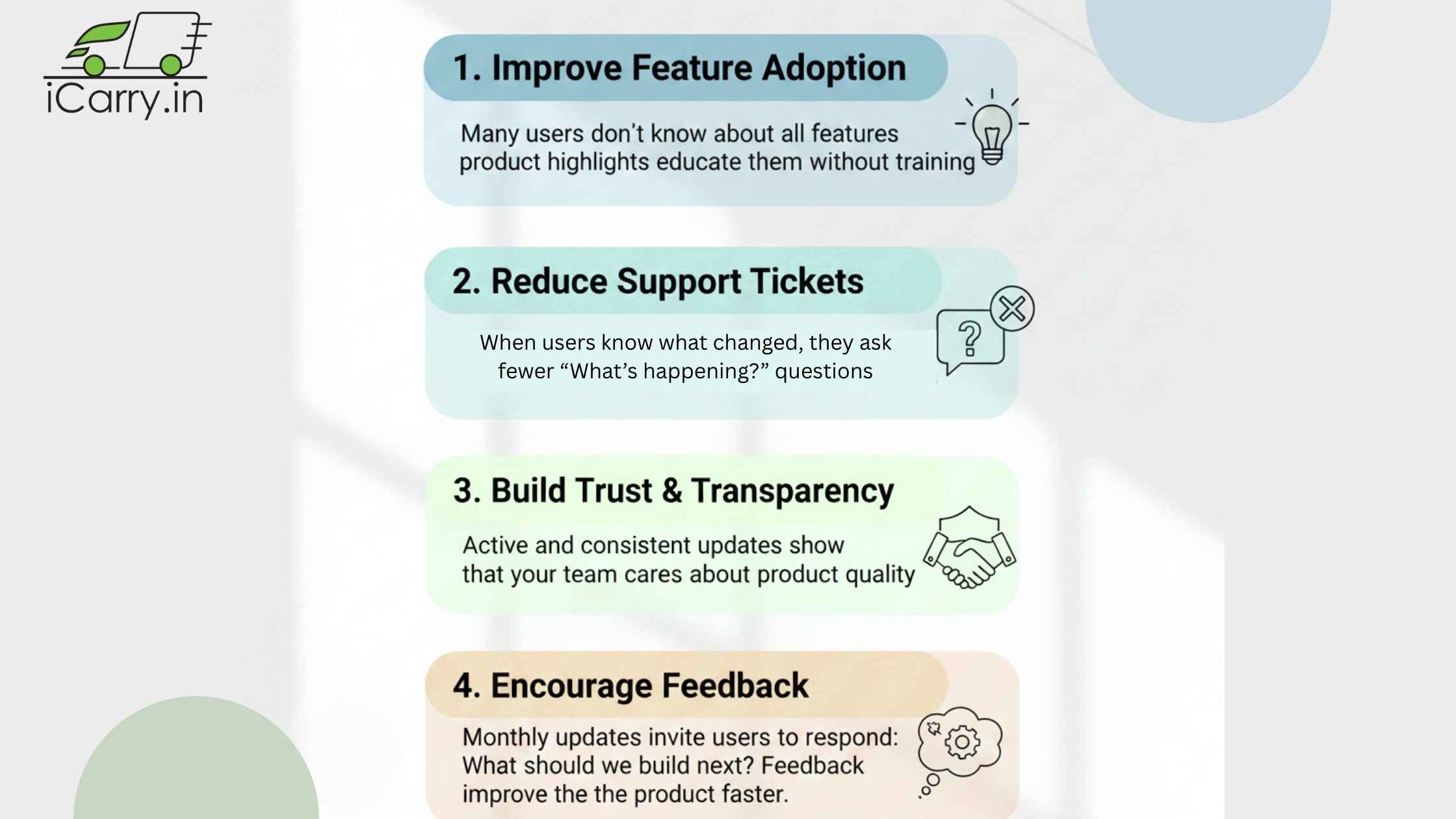
1. Improve Feature Adoption
Many users don't know about all features - product highlights educate them without training.
2. Reduce Support Tickets
When users know what changed, they ask fewer "What's happening?" questions.
3. Build Trust & Transparency
Active and consistent updates show that your team cares about product quality.
4. Encourage Feedback
Monthly updates invite users to respond: What should we build next? Feedback loops improve the product faster.
As businesses scale, structured updates become even more important.
Best Practices for Creating Monthly Product Highlights
Keep it Customer-Focused
Explain why an update matters, not just what changed.
Example:
- ❌ "Updated UI for product page"
- ✅ "Product page now loads 30% faster, making checkout smoother"
Use Visuals
Screenshots or short demo clips show the update instantly.
Platforms like Loom and Canva help create quick visuals without tech skills.
Group by Impact
Organize highlights into categories such as:
- Must-know updates
- Nice-to-have improvements
- Technical fixes
This improves readability.
Include Calls to Action
"Try it now," "Learn more," or "Give feedback" help users take the next step.
Example Structure of a Product Highlights Update
Title: Product Highlights - March 2026
Intro: This month we focused on speed and usability improvements users requested most.
New Features:
• Personalized dashboard launched
Improvements:
• Faster search and saved filter options
Bug Fixes:
• Resolved login delays
Integrations:
• Now connected with ___ platform
What's Next:
• Dark mode preview coming in April
Final Thoughts
Monthly product highlights aren't just for transparency - they are a communication strategy that improves engagement, trust, and retention.
By consistently sharing what's new and why it matters, your users stay informed, your support tickets go down, and your product value becomes clear.
Transparent product updates work best when paired with transparent operations - especially in logistics, where visibility into shipping performance, costs, and payouts matters. Platforms like iCarry.in use regular product updates to keep businesses aligned with operational improvements that support growth.
👉 Sign up on iCarry to manage shipping, performance, and updates from one dashboard.
Monthly product highlights are a communication strategy that improves engagement, trust, and retention—consistent updates keep users informed, reduce support tickets, and make product value clear.