
Shipping isn't just a backend task. It directly affects conversion rates, margins, repeat purchases, and brand trust.
Slow delivery, high shipping charges, or failed deliveries can kill sales, even if your product is great.
This guide explains how online stores can optimize shipping across cost, speed, and customer experience using smarter systems, better courier strategies, and scalable tools like shipping automation platforms such as iCarry.
Why Shipping Optimization Matters in eCommerce
Shipping directly impacts:
- Cart abandonment
- Return-to-origin (RTO) rates
- Customer satisfaction
- Customer lifetime value
In most ecommerce websites, shipping costs and delivery speed are among the top reasons for cart abandonment.
In competitive markets, the shipping experience becomes part of the product experience. This is why brands increasingly rely on eCommerce shipping systems instead of manual processes.
Step 1: Understand Your Shipping Cost Structure
Before optimizing, break down every shipping cost:
- Courier charges
- Packaging material
- COD handling fees
- RTO and reverse logistics
- Fuel and remote area surcharges
Hidden shipping leaks quietly destroy margins. Fuel price fluctuations also significantly impact logistics costs in India. Studying inefficient shipping costs helps sellers identify where profits are being lost.
Step 2: Choose the Right Courier Strategy
Single courier vs multi-courier
Single courier setups are simple but risky. Multi-courier setups give better:
- Coverage
- Cost flexibility
- Zone-based performance
- Delivery reliability
India's logistics ecosystem is evolving rapidly with a focus on efficiency and scale. Using a courier aggregator system allows sellers to assign the best courier automatically based on pincode, price, and performance.
Step 3: Optimize Delivery Speed Strategically
Fast delivery improves conversions, but only when it is planned.
Smart speed optimization includes:
- Offering standard and express options
- Faster delivery in high-density zones
- Region-based courier allocation
- Stock placement closer to buyers
Delivery speed and reliability directly influence customer experience and brand perception. Not every order needs same-day delivery. Speed should support margins, not destroy them. Delivery performance tools help monitor promises and outcomes.
Step 4: Reduce Failed Deliveries and RTO
Failed deliveries are silent profit killers.
To reduce losses, focus on:
- Address validation
- COD order verification
- Pre-delivery confirmations
- NDR follow-up workflows
India's eCommerce market continues to face higher RTO rates, especially in COD orders. Advanced sellers use RTO reduction tools to control delivery failures and apply proven methods to reduce RTO rates.
Step 5: Improve Packaging Without Increasing Cost
Good packaging should:
- Protect the product
- Reduce transit damage
- Prevent weight discrepancies
- Support brand trust
Optimizing size and material lowers freight charges and avoids disputes. Sellers also work to reduce weight discrepancy issues.
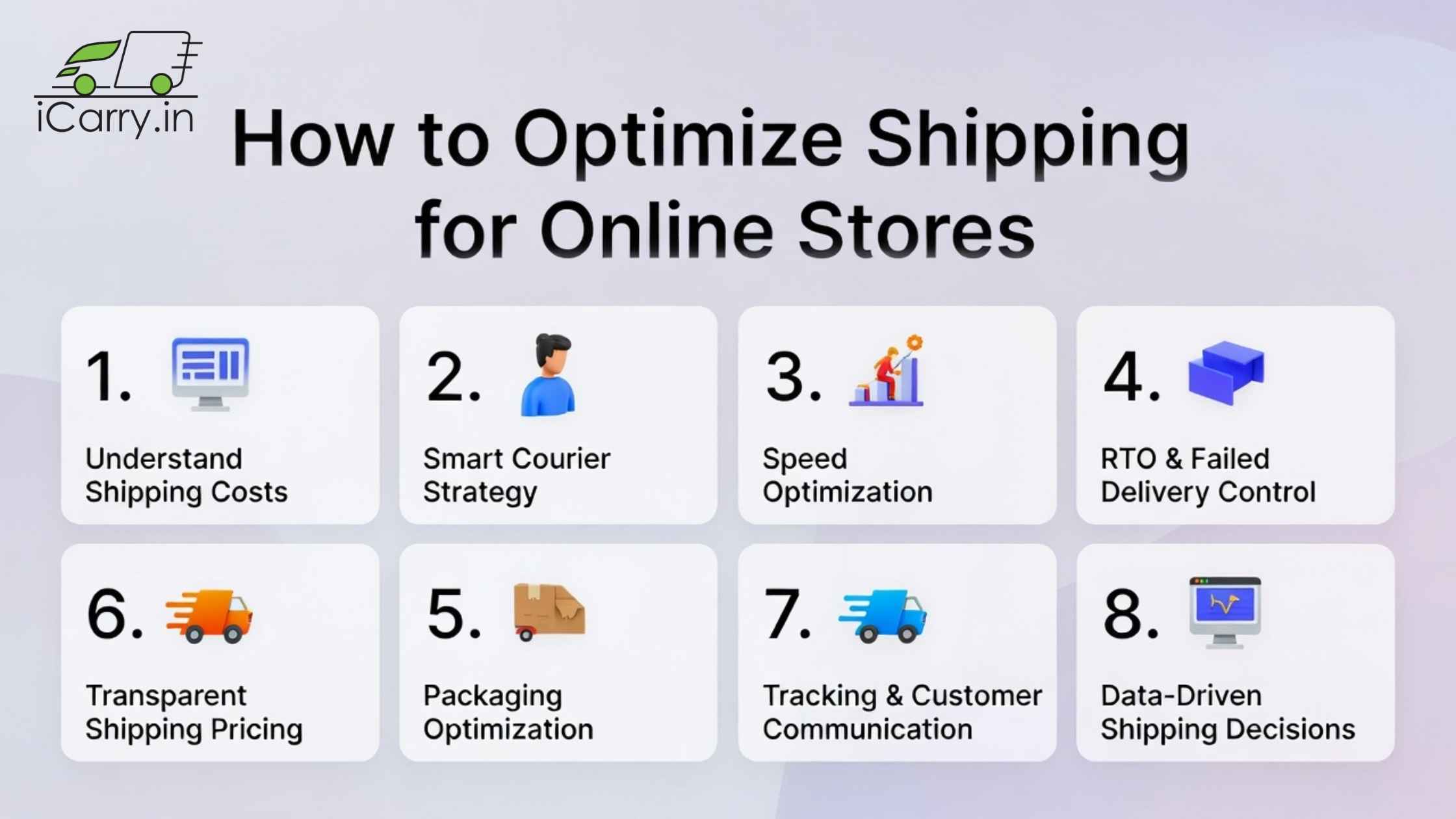
Step 6: Offer Transparent Shipping Pricing
Customers abandon carts when shipping feels unclear.
Best practices include:
- Showing delivery charges upfront
- Offering free shipping above AOV thresholds
- Displaying realistic delivery timelines
Brands that focus on seamless delivery experiences see higher checkout confidence and lower support load.
Step 7: Track, Communicate, and Update
Proactive shipping communication reduces anxiety and support tickets.
Strong systems provide:
- Real-time tracking links
- Automated delay notifications
- Delivery confirmation messages
Modern sellers integrate WhatsApp order communication and centralized delivery tracking tools.
Step 8: Use Data & AI to Optimize Continuously
Winning brands track:
- Delivery success rate
- Average delivery time
- Cost per shipment
- RTO percentage
- Courier performance by zone
AI-driven logistics analytics are helping businesses reduce costs and improve delivery outcomes. Many sellers now use AI-powered logistics insights to improve courier selection and planning.
How Shipping Impacts Customer Experience
Great shipping builds:
- Confidence at checkout
- Trust after purchase
- Willingness to reorder
Logistics is increasingly a growth engine. Many founders study how shipping supports business growth.
Common Shipping Mistakes Online Stores Make
- Choosing couriers only on price
- Ignoring delivery performance data
- Over-promising timelines
- Weak return and NDR handling
Shipping failures are remembered longer than discounts.
How to Scale Shipping as Order Volume Grows
As order volume increases:
- Renegotiate courier contracts
- Automate label generation
- Batch pickups
- Improve route density
- Integrate APIs and plugins
Scaling brands use shipping API integrations and courier plugins and extensions.
Final Thoughts
Shipping optimization is not about finding the lowest rate. It is about balancing:
- Cost for profitability
- Speed for competitiveness
- Customer experience for retention
Online stores that master shipping don't just deliver products. They deliver trust, reliability, and long-term growth.
Build your shipping system with a centralized shipping platform - start shipping with iCarry.in.
Shipping optimization is about balancing cost, speed, and customer experience—online stores that master shipping deliver trust, reliability, and long-term growth.