Many small sellers, home businesses, and first-time eCommerce entrepreneurs ask the same question: "Can I ship products without GST?"
The short answer is - sometimes yes, sometimes no. It depends on what you sell, where you sell, and how you ship.
This guide explains when shipping without GST is legally allowed, when it isn't, and how sellers can operate safely without running into compliance issues.
GST confusion is one of the most common challenges faced by small sellers and first-time eCommerce businesses.
What Does "Shipping Without GST" Actually Mean?
Shipping without GST usually refers to selling and delivering products without having a GST registration or without charging GST on invoices. GST regulations in India, as explained on the official GST Portal, focus on taxability, turnover thresholds, and interstate supply - not just shipping itself.
Understanding this difference is critical, as small documentation mistakes often lead to unexpected costs, shipment delays, or order returns later.
When Can Sellers Legally Ship Without GST?
1. If Your Annual Turnover Is Below the GST Threshold
As per GST law, businesses with turnover below the prescribed threshold are not required to register for GST. The Central Board of Indirect Taxes and Customs (CBIC) clarifies that small businesses below this limit can operate without GST registration as long as other conditions are met.
This is common for:
- Home-based businesses
- Local sellers
- Early-stage D2C brands
Currently, the GST Exemption Limit is set at Rs. 40 lakhs for goods and Rs. 20 lakhs for services. Businesses with annual revenues below these limits are not mandated to register for GST; however, they may opt to do so voluntarily.
2. If You Sell Only Within Your State (Intrastate Sales)
GST rules require mandatory registration for interstate sales, even if turnover is low.
However, sellers who sell and ship only within their own state may operate without GST (subject to turnover limits). This distinction is clearly explained in GST guidelines published by CBIC.
Local deliveries, same-city shipping, and state-level orders often fall under this category, especially when sellers choose the correct shipping mode for smaller parcels.
3. If You Sell Exempt or Non-GST Goods
Certain products are exempt from GST or attract nil GST. These include specific handicrafts, unbranded food items, and agricultural products.
The official GST exemption list outlines which goods can be sold without charging GST, even when shipped.
When Shipping Without GST Is NOT Allowed
Interstate eCommerce Sales
If you sell on marketplaces like Amazon, Flipkart, Meesho or ShopHealthy, GST registration is mandatory, regardless of turnover. Marketplace policies align with GST law and require sellers to upload GST details before listing products.
This applies even if you're a small seller, and ignoring documentation requirements can expose businesses to courier disputes or fraudulent delivery practices.
Using Courier Aggregators & Invoicing
Most courier partners require tax invoices or delivery challans with GST details for interstate shipments. Shipping without proper documentation increases the risk of shipment holds, penalties, or returns.
Courier guidelines clearly state that incomplete invoices can lead to delays or seizure.
What Documents Are Required If You Don't Have GST?
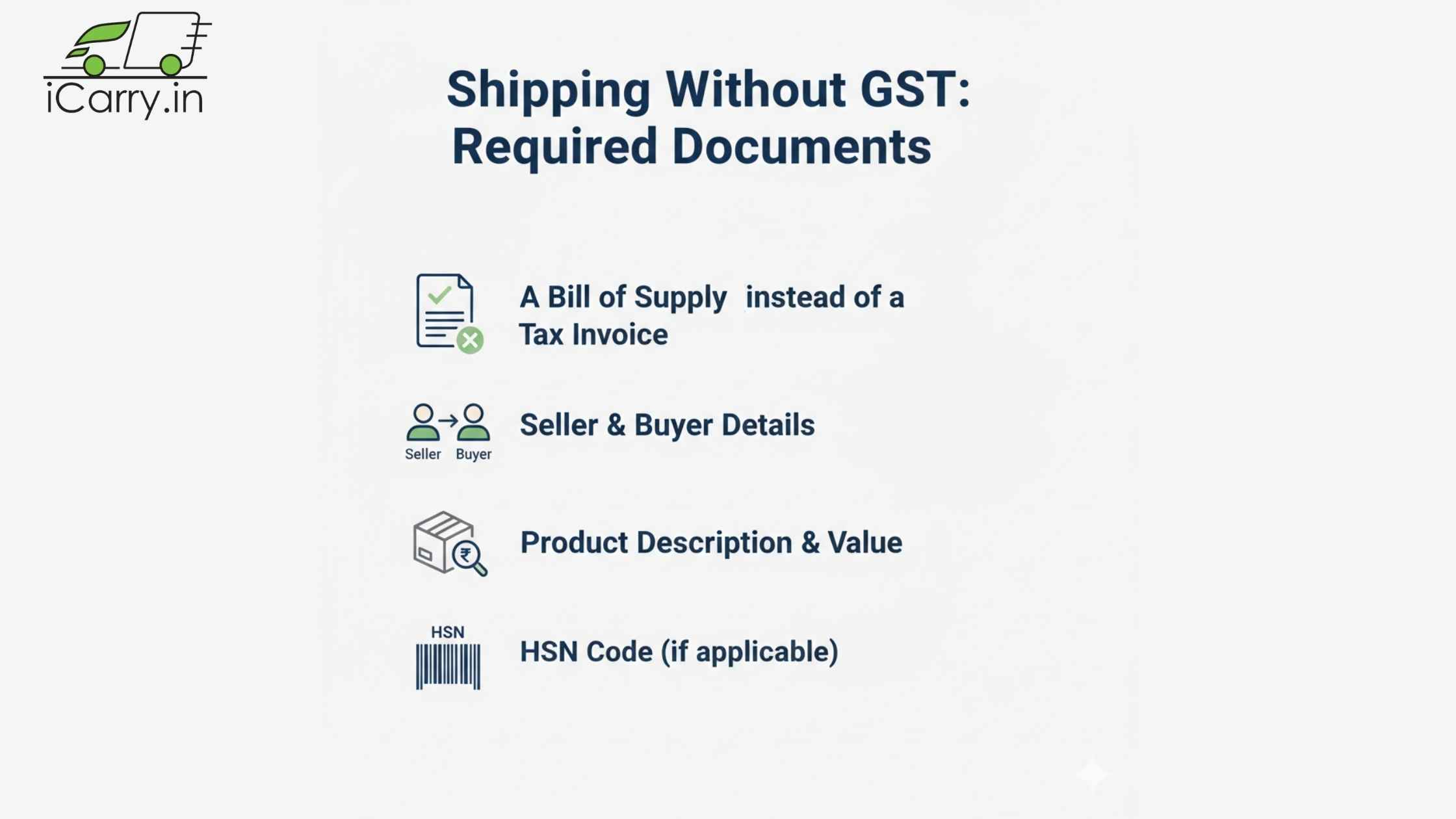
If you are legally shipping without GST, you still need:
- A bill of supply instead of a tax invoice
- Seller and buyer details
- Product description and value
- HSN (if applicable)
The GST Portal explains the difference between a tax invoice and a bill of supply for non-registered sellers.
Risks of Shipping Without GST (If Done Incorrectly)
Many sellers unknowingly violate GST rules and face:
- Shipment seizure
- Courier rejection
- Marketplace account suspension
- GST notices or penalties
Most of these issues arise due to interstate shipping without registration or incorrect documentation, which often results in higher return rates and avoidable losses.
Practical Tips for Small Sellers
To stay safe:
- Limit sales to your state if you're not GST registered
- Avoid selling on marketplaces without GST
- Use clear billing documents
- Track turnover regularly, and keep logistics costs under control to protect already thin margins
- Consult a GST professional before scaling
Government advisories often stress early compliance to avoid future legal complications.
When Should You Get GST Registration?
You should strongly consider GST registration if:
- You plan to sell pan-India
- You want to list on marketplaces
- Your turnover is increasing
- You want input tax credit benefits
GST registration also improves brand credibility and simplifies logistics at scale, especially when shipments need to be routed efficiently across multiple regions.
Final Thoughts
Shipping products without GST is legally possible - but only under specific conditions.
For small sellers and home businesses, understanding GST rules early helps avoid penalties, shipment delays, and business disruptions. Compliance may feel complex at first, but it protects your business as you grow - especially when shipping workflows, documentation, and courier selection are managed in one place.
If you're unsure, it's always safer to clarify before shipping than to fix issues later.
Whether you ship with or without GST, transparent documentation and reliable couriers are critical.
Shipping without GST is legally possible under specific conditions—understanding GST thresholds, state limits, and documentation requirements helps small sellers avoid penalties and shipment delays as they grow.