A textile manufacturer in Tirupur has a container of garments ready for a buyer in Hamburg. A machinery parts exporter in Coimbatore needs to move 12 pallets to a client in Dubai. A spice trader in Kochi has a consolidated shipment heading to multiple buyers across Southeast Asia.
None of these are jobs for a standard courier. They require freight forwarding - the coordination layer that moves cargo across international borders through ocean, air, and inland transport, with all the customs, documentation, and carrier booking that comes with it.
India's export economy spans manufacturing, agriculture, textiles, pharmaceuticals, and a growing base of D2C and digital-first brands selling internationally. As Indian exports continue to diversify across sectors and destinations, understanding how freight forwarding works - and when a business needs one versus a courier - is essential knowledge for any Indian exporter.
This guide explains what a freight forwarder does, how the process works, the difference between freight forwarding and courier shipping, and what Indian exporters need to know before their first international shipment.
What Is a Freight Forwarder?
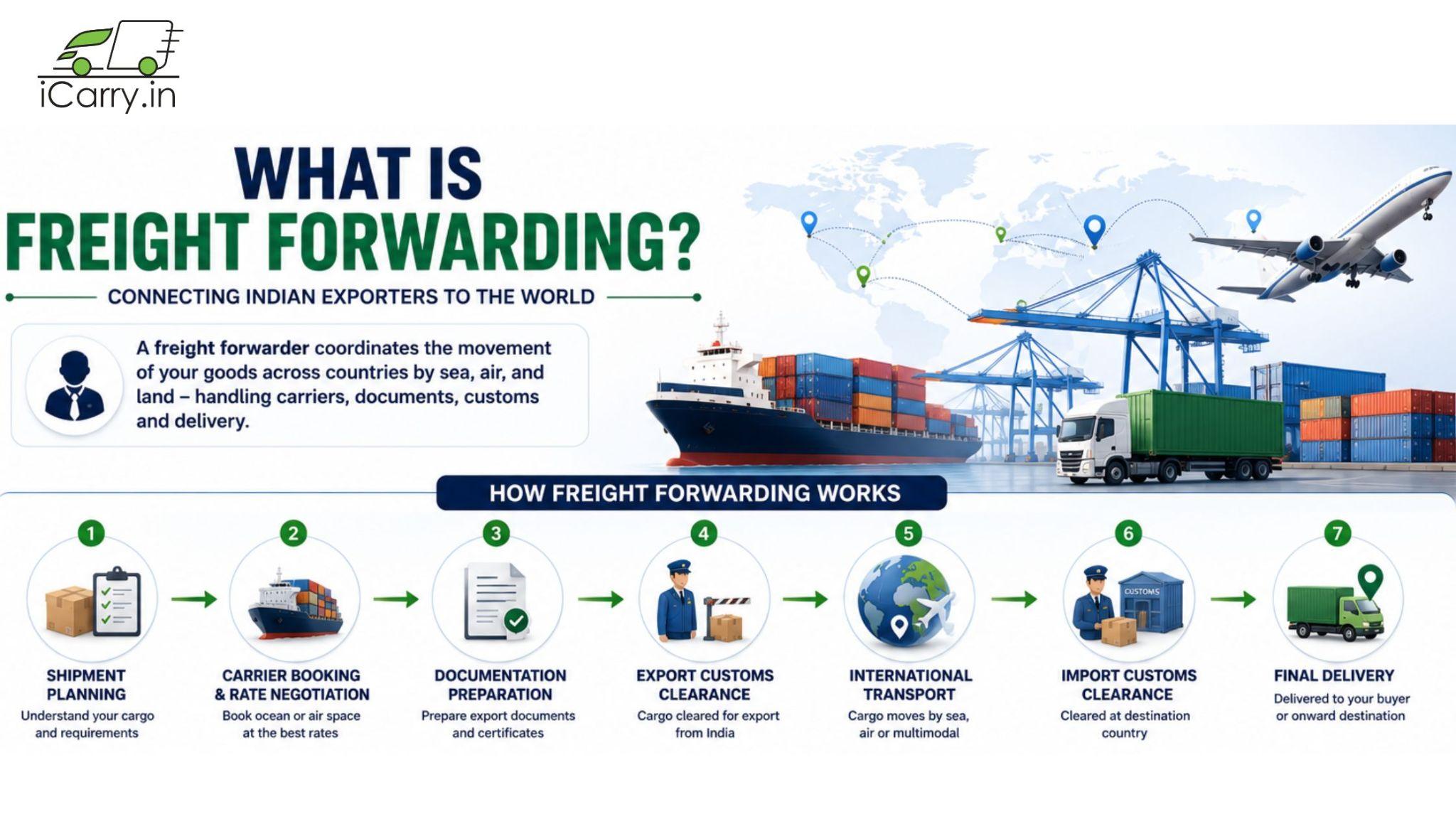
A freight forwarder is a company or individual that organises the shipment of goods on behalf of shippers, acting as an intermediary between the shipper and various transportation services - ocean carriers, airlines, trucking companies, and customs brokers. The freight forwarder does not typically move the cargo itself; it arranges and coordinates the movement across multiple carriers and modes.
Freight forwarder, as defined by the Council of Supply Chain Management Professionals, handle the logistics complexity that a single shipper would otherwise have to manage directly - booking cargo space, consolidating shipments, preparing export documentation, coordinating customs clearance at both ends, and arranging final delivery to the buyer.
Think of a freight forwarder as a travel agent for cargo - they do not own the ships, planes, or trucks, but they have relationships with carriers and the expertise to route a shipment through the most efficient and compliant path.
How to Tell If You Need a Freight Forwarder
- Are you shipping cargo too large or heavy for standard express courier service - pallets, containers, or bulk consignments?
- Do you need both ocean and air freight options depending on shipment urgency and cost?
- Are you exporting to multiple countries with varying customs and documentation requirements?
- Do you need warehousing or consolidation services at the port of origin or destination?
- Is your shipment volume large enough that freight forwarder-negotiated rates would beat standard parcel courier rates?
What Does a Freight Forwarder Actually Do?
1. Carrier Booking and Rate Negotiation
Freight forwarders maintain relationships with multiple ocean carriers, airlines, and trucking companies. They negotiate bulk rates based on their aggregated shipping volume across all clients - similar in principle to how a courier aggregator negotiates domestic parcel rates, but for ocean and air freight capacity.
2. Documentation Preparation
International freight requires extensive documentation: commercial invoice, packing list, bill of lading (for ocean) or air waybill (for air), certificate of origin, letter of credit documentation (for trade finance), and any product-specific certificates. Freight forwarders prepare and verify this documentation to prevent customs delays.
3. Customs Clearance Coordination
Freight forwarders work with licensed customs brokers - sometimes in-house, sometimes partnered - to clear cargo through Indian export customs and the destination country's import customs. This includes ensuring correct HS code classification, calculating applicable duties, and managing any inspection requirements. Indian customs requirements for export documentation are managed through this process.
4. Cargo Consolidation
For shippers with cargo volume too small to fill a full container (Less than Container Load, or LCL), freight forwarders consolidate multiple shippers' cargo into one container, sharing the cost. This is significantly cheaper than booking a full container for a partial load.
5. Insurance Arrangement
Freight forwarders typically offer cargo insurance options covering loss or damage during international transit - particularly important for high-value or fragile export consignments where standard carrier liability limits are insufficient.
6. Warehousing and Inland Transport
Many freight forwarders provide warehousing at the port of origin (for consolidation before shipment) and at the destination (for distribution after arrival), along with inland trucking to and from ports and airports.
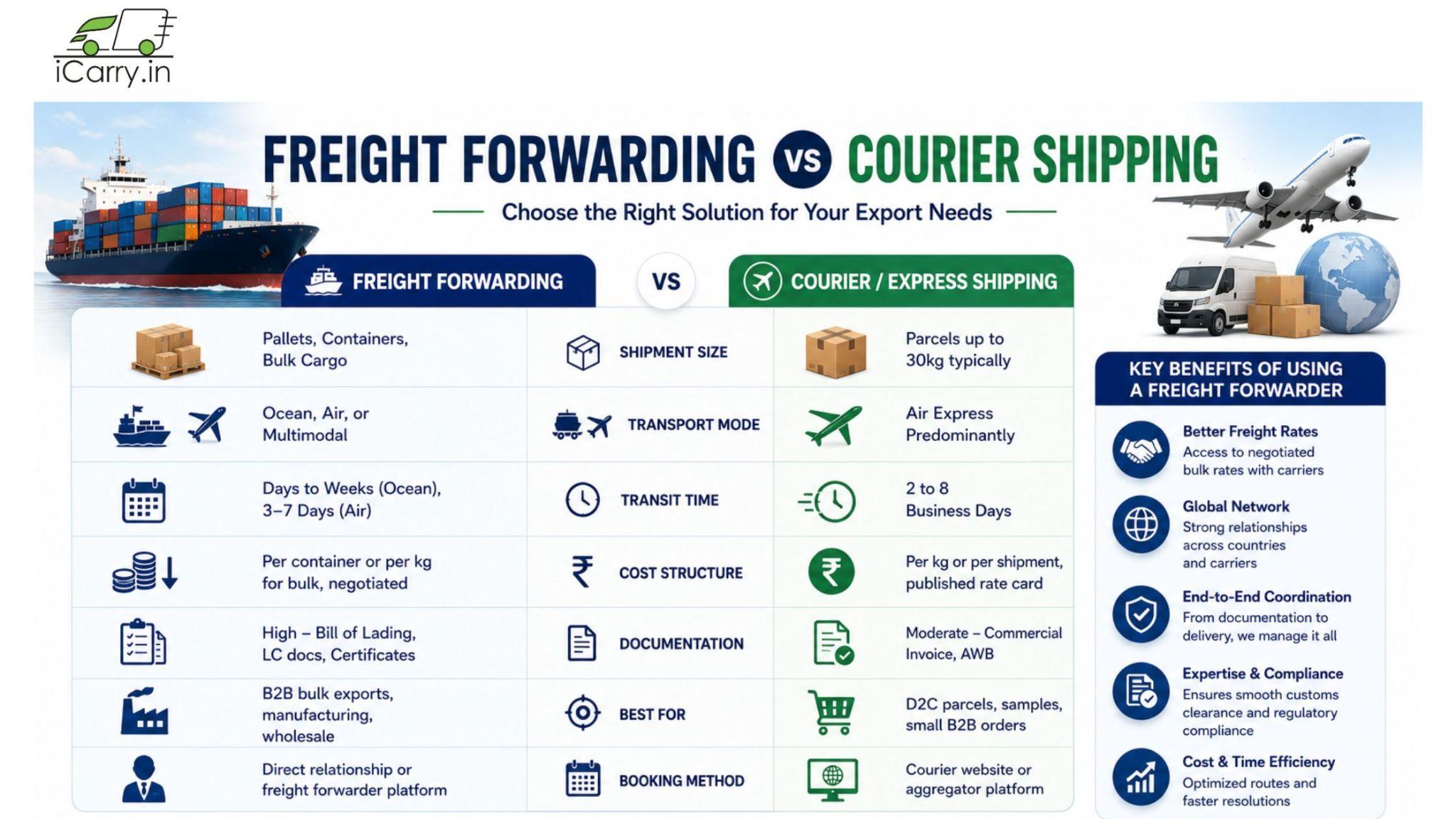
Freight Forwarding vs Courier Shipping - Key Differences
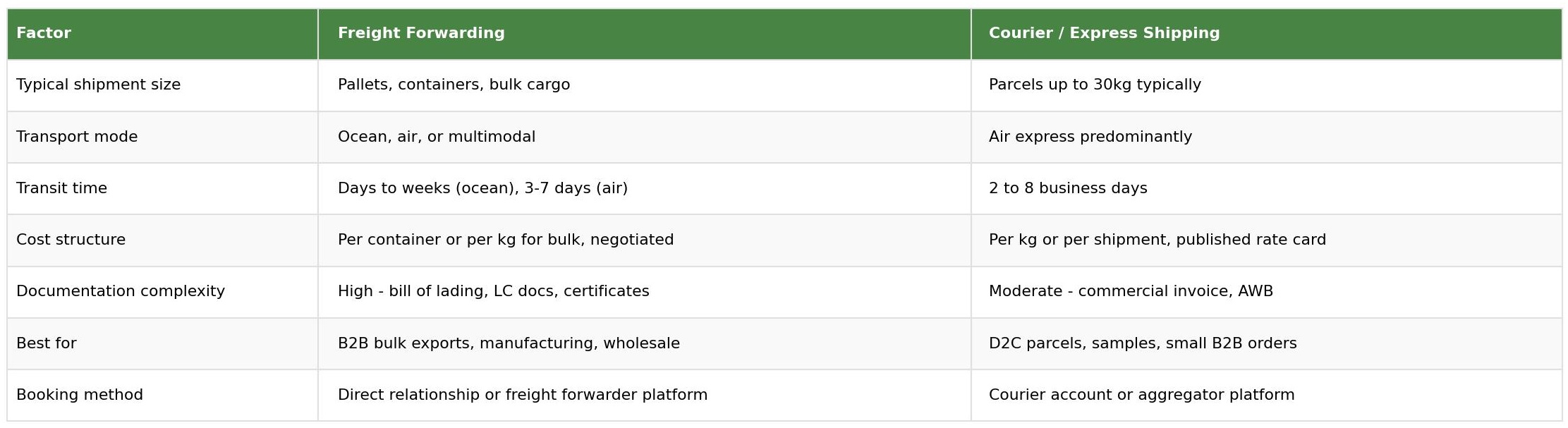
For Indian D2C brands and small businesses shipping individual customer orders internationally, standard international courier service through a courier aggregator is almost always the right choice - not freight forwarding. Freight forwarding becomes relevant when shipment size, volume, or cost economics shift toward bulk ocean or air freight.
When Indian Exporters Need a Freight Forwarder
Bulk B2B Export Orders
A manufacturer shipping a full container of finished goods to an overseas distributor needs ocean freight - and a freight forwarder to book container space, handle the bill of lading, and coordinate customs clearance at both ends.
Less Than Container Load (LCL) Shipments
A mid-sized exporter with cargo that does not fill a full container benefits from a freight forwarder's consolidation service - sharing container space with other shippers' cargo to access ocean freight rates without paying for a full container.
Multimodal and Complex Routing
Shipments that require coordination across multiple transport modes - inland trucking to port, ocean freight, then inland trucking again at destination - benefit from a freight forwarder managing the full chain rather than the exporter coordinating each leg separately.
Trade Finance Documentation
Exports involving letters of credit require precise documentation matching the LC terms exactly. Freight forwarders experienced in trade finance documentation reduce the risk of discrepancies that delay payment release.
Project Cargo and Heavy Machinery
Oversized, overweight, or specialised cargo - industrial machinery, project equipment - requires freight forwarders with specific expertise in heavy lift and out-of-gauge cargo handling.
When Indian Exporters Should Use Courier Shipping Instead
D2C international orders: Individual customer parcels - fashion, handicrafts, wellness products shipped directly to international buyers
Sample shipments: Product samples sent to potential B2B buyers for evaluation before larger orders
Small B2B orders: Orders under approximately 30kg that do not justify container or LCL freight forwarding costs and complexity
Time-critical shipments: Express courier (3-7 days) significantly outpaces ocean freight (2-6 weeks) for urgent international deliveries
Low documentation complexity needs: Standard commercial shipments without letter of credit requirements or complex multimodal routing
For these scenarios, an international courier accessible through a courier aggregator - such as FedEx or Aramex - provides faster transit, simpler documentation, and lower minimum shipment thresholds than engaging a freight forwarder. You can check your own international courier rates before deciding which route makes sense for a given shipment.
Documentation Required for Freight Forwarding
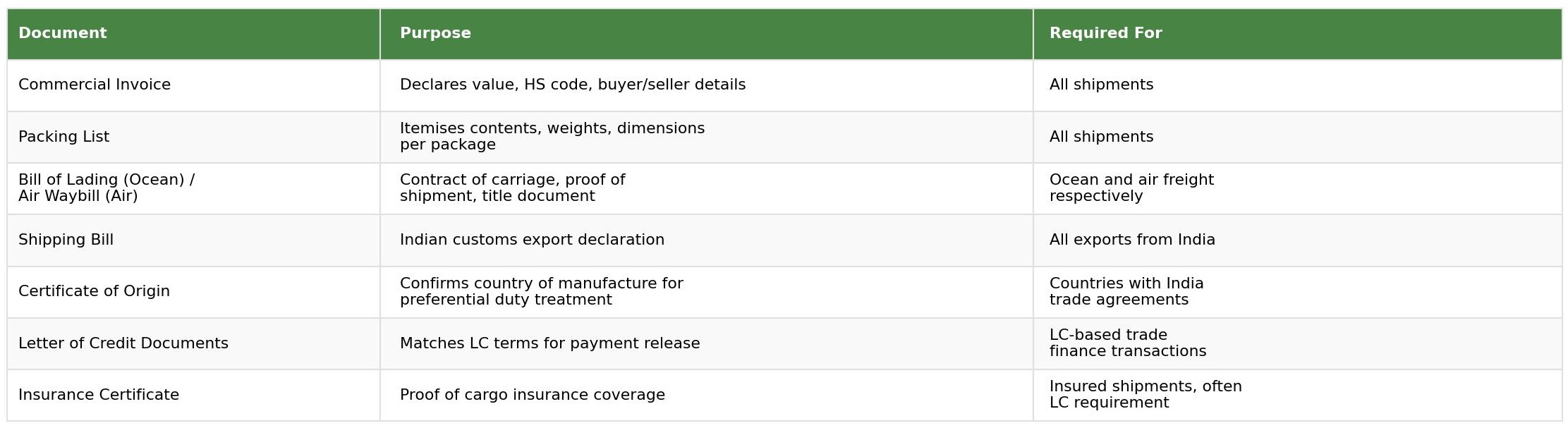
All Indian commercial exports require an IEC (Import Export Code) from DGFT regardless of whether shipping via freight forwarder or courier. Verify registration at DGFT's portal before any international shipment.
Freight Forwarding Costs - What Indian Exporters Should Expect
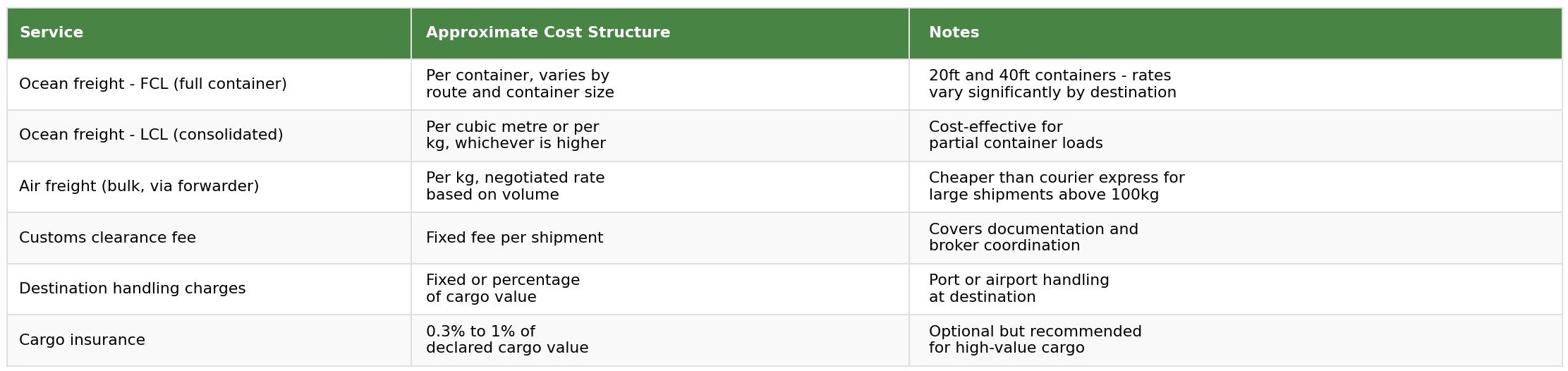
Understanding the full cost structure - not just the headline freight rate - is essential for accurate export pricing. Hidden charges in shipping apply to freight forwarding as much as domestic courier shipping - destination handling, documentation fees, and customs charges all add to the base freight quote.
Choosing Between Freight Forwarding and Courier for Mixed Export Operations
Many Indian exporters need both services simultaneously - bulk B2B orders via freight forwarder, and individual D2C or sample shipments via international courier. Managing both relationships separately creates operational overhead: different booking systems, different documentation processes, different invoicing.
For the courier portion of mixed export operations, using a platform that gives access to international courier services alongside domestic shipping consolidates at least one side of the operation. iCarry® provides FedEx and Aramex access for international courier shipments - suitable for D2C orders, samples, and smaller B2B consignments - alongside multiple domestic courier partners from one account.
Watch How to Estimate International Shipping Cost to see how international rate comparison works for courier-mode export shipments via iCarry®.
How to Evaluate a Freight Forwarder in India
Licensing and accreditation: Verify the forwarder is registered and accredited with relevant Indian and international logistics bodies
Network and carrier relationships: Established forwarders with direct carrier relationships typically secure better rates and priority booking during peak season
Destination expertise: A forwarder experienced in your specific export destination understands the customs nuances and documentation requirements of that market
Technology and tracking: Modern forwarders provide online tracking and shipment visibility - avoid forwarders relying solely on email and phone updates
Customs brokerage capability: In-house or closely partnered customs brokerage reduces coordination friction and clearance delays
References from similar exporters: A forwarder experienced with your product category and shipment profile reduces the risk of documentation or handling errors specific to your goods
Understanding India's broader trade infrastructure also helps when evaluating a forwarder's fit for your goods - the Indian Trade Portal provides tariff and regulatory information by destination country that is useful context before finalising a forwarder or route.
Final Thoughts
Freight forwarding and courier shipping serve different purposes in an Indian exporter's logistics toolkit. Freight forwarders handle the complexity of bulk ocean and air cargo, multimodal routing, and trade finance documentation that bulk B2B exports require. International couriers handle the speed and simplicity that individual D2C orders, samples, and smaller B2B shipments need.
Most growing Indian export businesses eventually need both. The decision for any given shipment comes down to size, urgency, and documentation complexity - not a fixed rule for the business as a whole.
For the courier side of international shipping - D2C orders, samples, and smaller export consignments - iCarry® provides FedEx and Aramex access alongside domestic multi-courier shipping from one platform. Register now at iCarry®
Frequently Asked Questions (FAQs)
What is the difference between a freight forwarder and a courier company?
A freight forwarder coordinates bulk cargo shipments via ocean, air, and inland transport, handling complex documentation, customs clearance, and consolidation for shipments typically larger than standard parcels. A courier company moves individual parcels via express air transport with simpler documentation, suitable for D2C orders and smaller B2B shipments.
Do I need a freight forwarder for small export orders from India?
No. For individual D2C orders, samples, or small B2B shipments under approximately 30kg, an international courier accessed through a courier aggregator is faster, simpler, and more cost-effective than engaging a freight forwarder. Freight forwarding becomes relevant for bulk container or pallet-level shipments.
What documents does a freight forwarder need for export shipments?
Commercial invoice, packing list, bill of lading (ocean) or air waybill (air), shipping bill for Indian customs, and certificate of origin where applicable. Letter of credit transactions require additional documentation matching the LC terms exactly.
How much does freight forwarding cost from India?
Costs vary significantly by mode, route, and cargo volume. Ocean freight is priced per container (FCL) or per cubic metre (LCL). Air freight through a forwarder is priced per kg at negotiated bulk rates, typically cheaper than courier express for shipments above 100kg. Additional costs include customs clearance, destination handling, and optional cargo insurance.
Can I use iCarry® for international shipping instead of a freight forwarder?
iCarry® provides international courier access via FedEx and Aramex - suitable for D2C orders, product samples, and smaller B2B export consignments. For bulk container or pallet-level cargo requiring ocean freight, a dedicated freight forwarder is the appropriate choice rather than courier service.
What is LCL shipping and when should I use it?
LCL (Less than Container Load) is a freight forwarding service where multiple shippers' cargo is consolidated into one shared container. It is cost-effective for exporters whose cargo volume does not fill a full container, avoiding the cost of booking an entire container for a partial load.
Freight forwarding and courier shipping serve different purposes in an Indian exporter's logistics toolkit. Freight forwarders handle the complexity of bulk ocean and air cargo, multimodal routing, and trade finance documentation that bulk B2B exports require. International couriers handle the speed and simplicity that individual D2C orders, samples, and smaller B2B shipments need. Most growing Indian export businesses eventually need both.