You're Probably Paying More for Shipping Than You Think
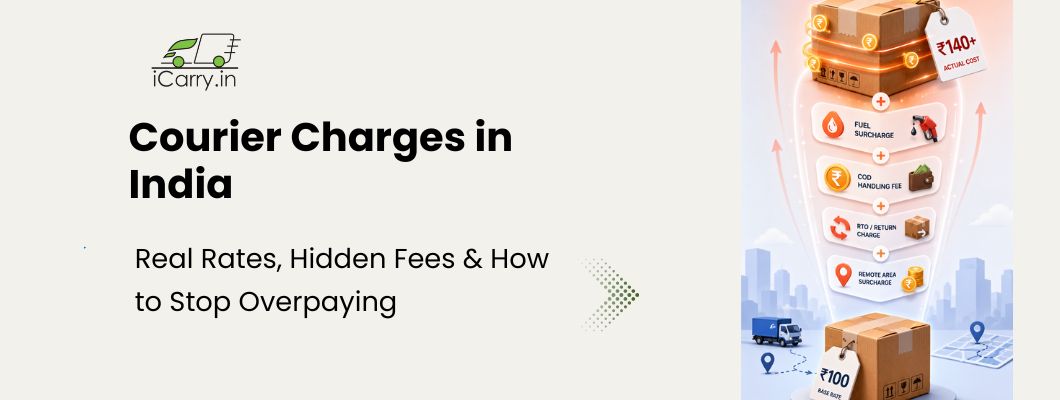
You check your courier invoice. The rate looks right. But by the time you add fuel surcharge, COD handling fee, and a return charge - the actual cost is 30-40% higher than expected.
This happens to most eCommerce sellers in India. Not because they're careless - but because courier pricing in India is genuinely complex.
Many sellers search for shipping charges in India assuming courier rates are fixed. But your actual eCommerce shipping charges depend on multiple variables: shipment weight, delivery zone, payment mode, and courier partner. Base rate is just the starting point. Here's what you actually pay - and how to bring it down.
What Are Courier Charges in India?
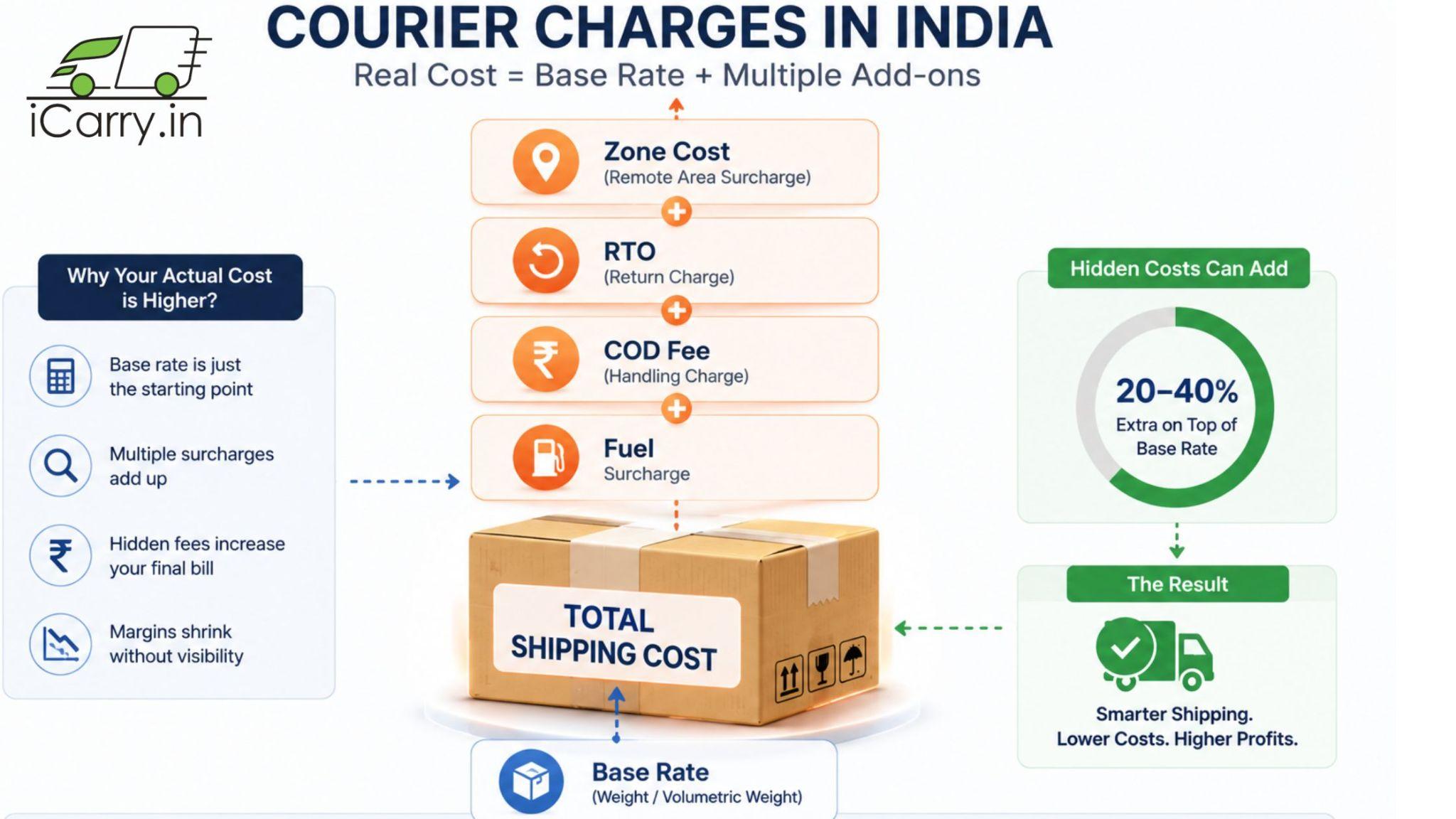
Courier charges in India are calculated based on the higher of actual weight or volumetric weight, plus applicable surcharges. For eCommerce shipments, the total shipping cost includes a base rate, fuel surcharge, COD handling fee, and return/RTO charge. Hidden fees can add 20-40% on top of the base rate - which is why your actual courier rates in India are almost always higher than the quoted figure.
How Courier Charges Are Calculated in India
Every shipment cost has these components:
- Base rate - Charged per kg or per 500g slab. Always based on the higher of actual weight or volumetric weight. Some couriers also offer minimum 250g slab.
- Volumetric weight - Formula: (L x W x H in cm) / 5000. A 1 kg package in a large box may bill as 3 kg. This is the most common source of surprise charges.
- Fuel surcharge - Typically 10-20% of base rate. Varies by courier and fluctuates monthly with fuel prices.
- COD handling charge - Usually ₹20-50 flat or 1-2% of order value per COD shipment - whichever is higher.
- RTO/return charge - If the order does not get delivered and comes back (RTO means Return to Origin), you pay full return freight - often equal to the forward rate.
- Remote area surcharge - Extra charge for pincodes outside standard delivery zones. Can add ₹20-80 per shipment.
How Courier Charges Vary by Zone in India
Courier charges also vary significantly by shipping zone. Most courier companies in India divide the country into 4-5 zones (Zone A through Zone D or E), with metro-to-metro shipments being the cheapest and remote/Zone D deliveries being the most expensive.
| Zone Type | Example Routes | Typical Premium | Why It Costs More |
|---|---|---|---|
| Metro-to-Metro (Zone A) | Mumbai → Delhi, Bengaluru → Chennai | Base rate | High-density, short-haul routes |
| Metro to Tier 2 (Zone B) | Delhi → Jaipur, Mumbai → Pune | Base + 10-20% | Additional line-haul distance |
| Metro to Tier 3 (Zone C) | Bengaluru → Gulbarga, Pune → Nashik | Base + 20-35% | Fewer direct connections |
| Remote / Rural (Zone D) | Hill stations, NE India, island areas | Base + 40-80% | Limited carrier coverage, multiple transfers |
Zone-wise shipping charges are one of the most under-checked variables when sellers calculate their per-order margins. A rate that works for metro delivery can become unprofitable on Zone C or D shipments if you haven't factored in the premium. Most sellers discover this only when their freight bill arrives.
Average Courier Charges in India by Weight (2026)
| Weight | Surface (Economy) | Air (Express) | Notes |
|---|---|---|---|
| 0.5 kg | ₹40-80 | ₹80-150 | Check volumetric first - box size matters |
| 1 kg | ₹60-120 | ₹120-250 | Most standard eCommerce orders |
| 2 kg | ₹100-200 | ₹200-400 | Add fuel surcharge to all figures |
| 3 kg | ₹140-260 | ₹280-520 | COD adds ₹20-50 per shipment |
| 5 kg | ₹200-380 | ₹400-750 | Remote area may add 20-30% more |
Note: All figures above are base rates only. Add fuel surcharge (10-20%) and COD handling (if applicable) to get your real per-shipment cost. Remote area deliveries add a further premium on top.
According to Economic Times reporting on logistics costs for Indian eCommerce brands, logistics accounts for 10-15% of total revenue for mid-size D2C businesses - making it one of the most controllable cost lines after manufacturing.
Hidden Costs Sellers Miss
- Fuel surcharge - 10-20% on top of base rate. Not always clearly listed in rate cards.
- COD collection fee - Usually ₹20-50 per shipment or 1-2% of order value whichever is higher.
- RTO charge - Full return freight on every failed order. At 20% RTO on 500 orders, this doubles freight cost on 100 shipments.
- Handling surcharge - Some couriers charge extra for fragile or irregular packaging.
- Remote area surcharge - Pincodes outside standard zones attract ₹20-80 extra per shipment.
These can increase your total shipping cost by 20-40% over the base rate.
For a deeper breakdown of what these fees look like on an actual invoice, this analysis of India's eCommerce logistics cost structure is worth reading. Hidden surcharges are one of the most under-tracked cost lines for Indian D2C brands.
India's logistics costs remain relatively high compared to global benchmarks. As the NITI Aayog National Logistics Policy framework notes, logistics as a share of GDP is significantly higher in India than in comparable economies - a gap driven partly by fragmented carrier networks and the hidden costs of inefficient last-mile operations.
How to Reduce Your Courier Charges
- Reduce box size - Volumetric weight is the single biggest source of unexpected charges. A box 2x the right size may bill at 3x the actual weight.
- Use multiple courier partners - Different couriers have better rates for different pincodes and zones. Intelligent routing can cut average cost by 8-15%.
- Reduce RTO aggressively - Every return costs you double freight. Cutting RTO from 25% to 15% on 500 orders saves 50 double-charges a month. See our full guide on how to reduce RTO for eCommerce sellers in India.
- Negotiate slab rates - Once you cross 300-500 shipments/month, most couriers will offer negotiated rates - ask for them.
- Use surface over air where SLA allows - Surface is 30-50% cheaper. For non-urgent orders, it's worth the 1-2 extra days. If you're unsure which mode suits your shipments, this breakdown of surface vs air shipping for eCommerce explains the trade-offs clearly.
If you want a quick sense of what your orders are costing you across different couriers and zones, a shipping cost calculator that accounts for volumetric weight and surcharges will give you a much more accurate figure than a standard rate card. iCarry®'s rate calculator does exactly this - for single box, multi box, same day and even international shipments - across multiple couriers in real time.
Who Should Read This?
- D2C sellers who want to understand exactly what's on their courier invoice
- Shopify or WooCommerce stores sending 50+ orders a month
- Sellers who suspect they're overpaying but aren't sure where
- Anyone whose per-order shipping cost is above 10% of order value
Conclusion
Shipping cost is not fixed. It's controllable.
Most eCommerce sellers in India overpay on every shipment - not because couriers are dishonest, but because they don't have visibility into the real components of their freight bill. Volumetric weight, fuel surcharges, zone premiums, COD fees, and RTO charges are all eating into margins that could be protected.
The sellers who scale profitably understand their cost per delivered order - not just their headline rate. They optimise packaging, route intelligently across couriers, and reduce RTO before it compounds.
If you want to go deeper on this, our breakdown of how multi-courier allocation reduces both cost and RTO for Indian sellers covers exactly how smarter routing translates into lower spend per order. And if you're looking for a more comprehensive starting point, the full guide on how to reduce shipping costs for eCommerce in India walks through every lever available - from packaging to courier selection to payment mode.
For sellers at higher order volumes who want to automate courier selection and booking entirely, it's worth exploring how courier API integration works for eCommerce platforms - iCarry®'s API connects your store directly to multiple courier partners without any manual intervention.
iCarry® gives you a single dashboard to compare rates, book across multiple couriers, and track what you're actually spending per shipment - so you always know your real cost, not just your headline rate. You can start for free and pay only for what you ship - no monthly fee.
Frequently Asked Questions
What is the average courier charge per kg in India?
Surface averages ₹50-150/kg depending on the distance it has to travel (classified as Zones by couriers). Air/express is ₹120-250/kg. Add 20-40% for fuel, COD, and other surcharges to get your real per-kg shipping cost.
What is volumetric weight and why does it matter?
Volumetric weight = (L x W x H in cm) / 5000. Couriers charge based on whichever is higher - actual (also called dead weight) or volumetric weight. A lightweight product in a large box is often billed at 2-3x its actual weight due to the volume it occupies (volumetric weight). Right-sizing your packaging is one of the fastest ways to reduce courier charges.
How can I reduce courier charges in India?
Use right-sized packaging to reduce volumetric weight, route orders to the cheapest courier per pincode and zone, reduce COD dependency where possible, and cut RTO - which doubles your shipping cost on every failed delivery. You can also read more tips here.
To get the lowest rates from courier companies, they expect businesses to commit a certain number of shipments per month so that they can offer bulk rates. If this is not possible for your business, consider tying up with courier aggregators such as iCarry® where you get lowest rates and the best service nationwide. The rate calculator and the rate chart are openly published on their website.
How much do courier companies charge for COD orders in India?
COD handling charges are typically ₹20-50 per shipment or 1-2% of order value, depending on the courier and your shipment volume. On top of this, if a COD order is rejected and returned, you also pay the full return freight. At any meaningful order volume, reducing your COD ratio is one of the highest-leverage cost levers available.
Why are my actual courier charges higher than the quoted rate?
Quoted rates typically exclude fuel surcharge (10-20%), COD handling fees, remote-area surcharges, and RTO return charges. These additions can push your actual per-shipment cost 30-40% above the base rate. Always ask your courier for an all-inclusive rate card that includes these components before comparing.
Courier charges in India always include more than the headline rate. Fuel surcharges, COD fees, zone premiums and RTO charges can add 20-40% on top. The sellers who control shipping costs understand each component - and use multi-courier routing, right-sized packaging, and RTO reduction to keep their real cost per delivered order as low as possible.