Introduction
You shipped 300 orders last month. Deliveries went through. But when you reviewed your P&L, shipping had quietly eaten 25% of your revenue. No alarms. No single big expense. Just lots of small charges adding up every day - volumetric weight, fuel surcharges, COD fees, RTO freight.
This is the reality for most eCommerce sellers in India.
Logistics can account for 20-30% of the total order value in India, especially in low-margin categories like fashion, home decor, and consumer electronics. And unlike rent or salaries, shipping costs scale directly with your order volume. Global supply chain research also highlights that logistics costs significantly impact overall business profitability and operational efficiency.
At the same time, your customers expect free or low-cost shipping, fast delivery, and real-time tracking.
Managing that gap - between what shipping costs you and what customers expect - is one of the hardest parts of running an eCommerce business in India.
This guide covers practical strategies you can act on now - from packaging tweaks to courier selection to RTO management - without needing a logistics team or enterprise software.
How to Reduce Shipping Costs - Quick Checklist
Start here. These 7 steps cover the biggest wins most sellers miss:
- Right-size your packaging. Oversized boxes mean higher volumetric weight billing.
- Use multiple courier partners. Route each order to the cheapest, most reliable option by region.
- Access pre-negotiated rates. Use a courier aggregator like iCarry® to get bulk rates you cannot get directly.
- Reduce RTO actively. Validate addresses, confirm COD orders, and follow up on NDRs.
- Shift COD orders to prepaid where possible. COD adds collection fees, higher RTO risk, and double shipping costs on returns.
- Weigh and measure after sealing. Weight discrepancy charges disappear when you declare accurately.
- Set a minimum order value for free shipping. Blanket free shipping destroys margins. Use a threshold instead.
What Is Shipping Cost Optimization?
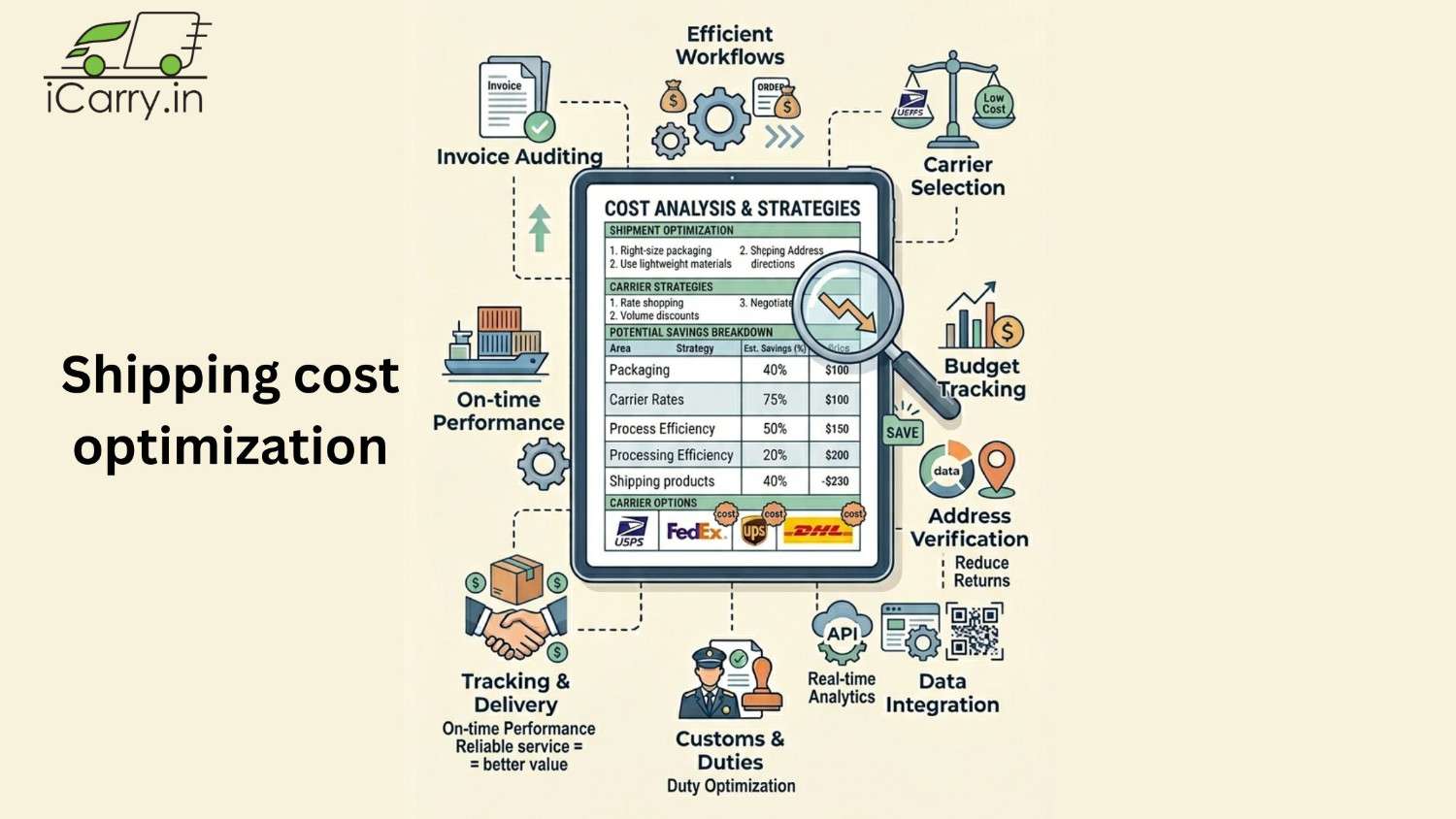
Shipping cost optimization means reducing what you pay for logistics - without slowing down delivery or hurting the customer experience.
It covers:
- Packaging
- Courier selection
- Delivery routes
- Inventory placement
- Shipping methods
In simple terms: It is about delivering orders faster and cheaper without hurting customer satisfaction. For a full picture of where the costs hide, read how inefficient shipping costs accumulate for Indian eCommerce sellers.
Why Reducing Shipping Costs Matters
Here is what improving your shipping efficiency actually does for your business:
- Better margins: Every Rs saved on shipping goes directly to your bottom line - without raising product prices.
- Competitive pricing: Lower shipping costs let you offer free or discounted shipping without eating into profit.
- Scalability: When volumes grow, optimized shipping keeps costs from scaling proportionally.
- Fewer cart abandonments: High shipping fees are one of the top reasons customers do not complete a purchase.
Core Shipping Cost Components
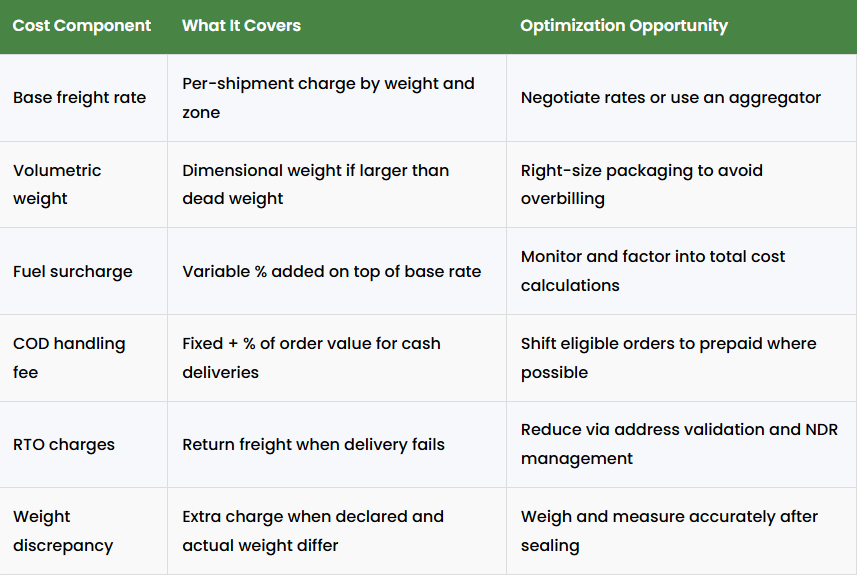
To reduce shipping costs, you first need to know what you are actually paying for. Here is a breakdown:
Compare shipping rates across 10 courier partners before every booking. Use iCarry®'s free rate calculator.
Video Tutorial: How to Estimate Shipment Cost on iCarry.in
Want to see what shipping should actually cost you? Check live rates on iCarry® - free, no login needed.
Key Strategies to Reduce Shipping Costs
1. Optimize Your Packaging
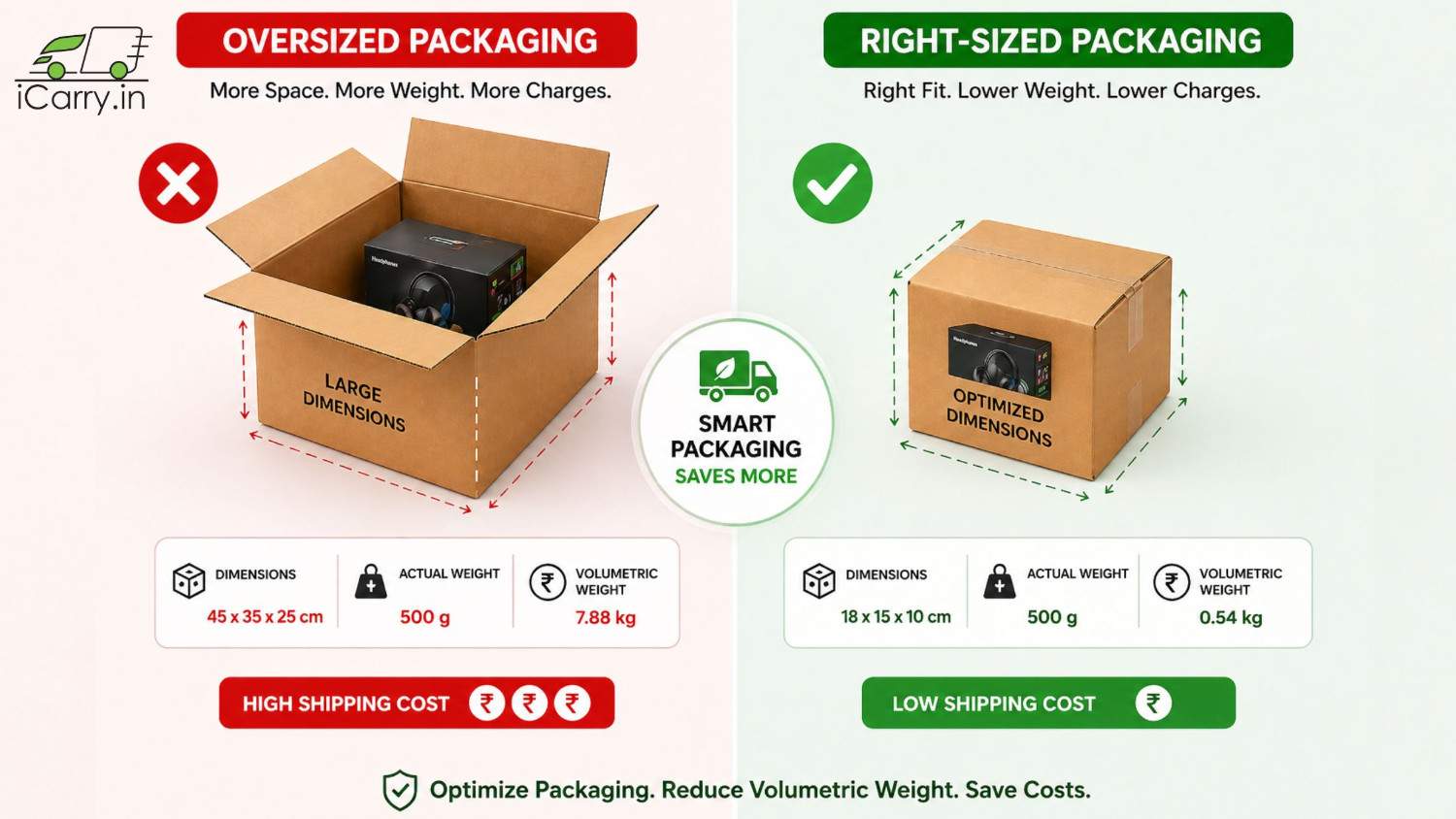
Most couriers in India use volumetric (dimensional) weight pricing. If your box is bigger than it needs to be, you pay more - even if the product inside is light.
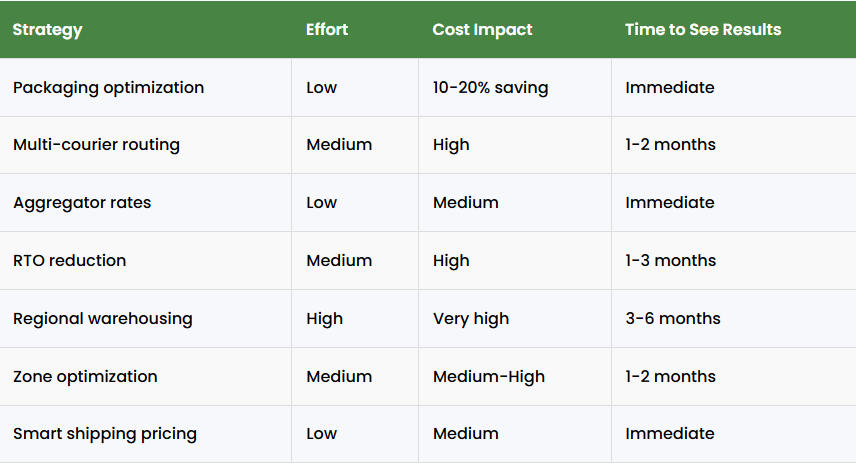
Switch to right-sized boxes. Minimize air gaps. Use lightweight filler materials. Sellers who do this consistently see 10-20% lower shipping costs per order.
Not sure how volumetric weight is calculated? Read the guide on understanding volumetric weight in shipping for the formula with real examples.
2. Use a Multi-Courier Strategy
Relying on one courier partner is risky - and expensive. Different couriers perform better in different regions and have different pricing structures.
By routing each order to the most cost-effective courier for that pin code and zone, you can lower your blended freight cost while improving delivery performance.
Read the full guide on how multi-courier allocation works in practice and how to set up automatic routing rules.
Video: How to Book a Shipment and Compare Courier Options on iCarry®
3. Access Pre-Negotiated Rates Through an Aggregator
You do not need to negotiate with every courier individually. iCarry® aggregates shipments from thousands of sellers - so the platform already has bulk rates locked in with all major courier partners.
Sellers access these rates from day one, even on the free plan. No contracts, no minimum volumes.
Video: Bulk Shipment Upload on iCarry.in
4. Reduce RTO (Return-to-Origin)
RTO is one of the biggest hidden costs in Indian eCommerce. When a delivery fails, you pay for outgoing shipping AND return shipping. For products under Rs 500, that often wipes out the entire profit on an order.
Common RTO triggers: wrong address, COD refusal, customer unavailability, and fake delivery attempts.
- Use address validation at checkout to catch errors before dispatch.
- Confirm COD orders via WhatsApp or SMS before shipping.
- Follow up on NDRs within 24 hours - do not let undelivered parcels sit.
Quick Win: iCarry®'s WhatsApp Engagement feature sends automated delivery notifications from iCarry®'s official number, reducing missed deliveries and fake NDRs. Read: Using NDR data to identify and fix delivery failure patterns.
5. Implement Regional Warehousing
Shipping from one central warehouse means every order going to a different state is a Zone D or Zone E shipment - which costs significantly more.
Moving inventory closer to your high-demand regions shortens average shipping distance, lowers zone-based charges, and speeds up delivery. It also reduces RTO because faster delivery means fewer missed attempts.
6. Optimize Shipping Zones
Classify your orders into local, regional, and national segments. Analyse where most of your demand comes from - and place inventory accordingly.
Even shifting 20-30% of orders from Zone D/E to Zone B/C can meaningfully reduce your average cost per shipment.
7. Offer Smart Shipping Pricing
Free shipping on every order sounds good to customers - but it can quietly kill your margins.
Better options:
- Setting a minimum order value for free shipping
- Offering conditional discounts
- Using flat-rate shipping models
8. Use a Shipping Aggregator Platform
Aggregator platforms like iCarry® let you compare rates, book shipments, track orders, and manage NDRs - all in one place. Instead of juggling 3-4 courier logins, you manage everything from a single dashboard. Read what a courier aggregator does and how it differs from booking direct.
Video tutorial: Bulk Shipment Upload to Book Multiple Orders at Once on iCarry.in
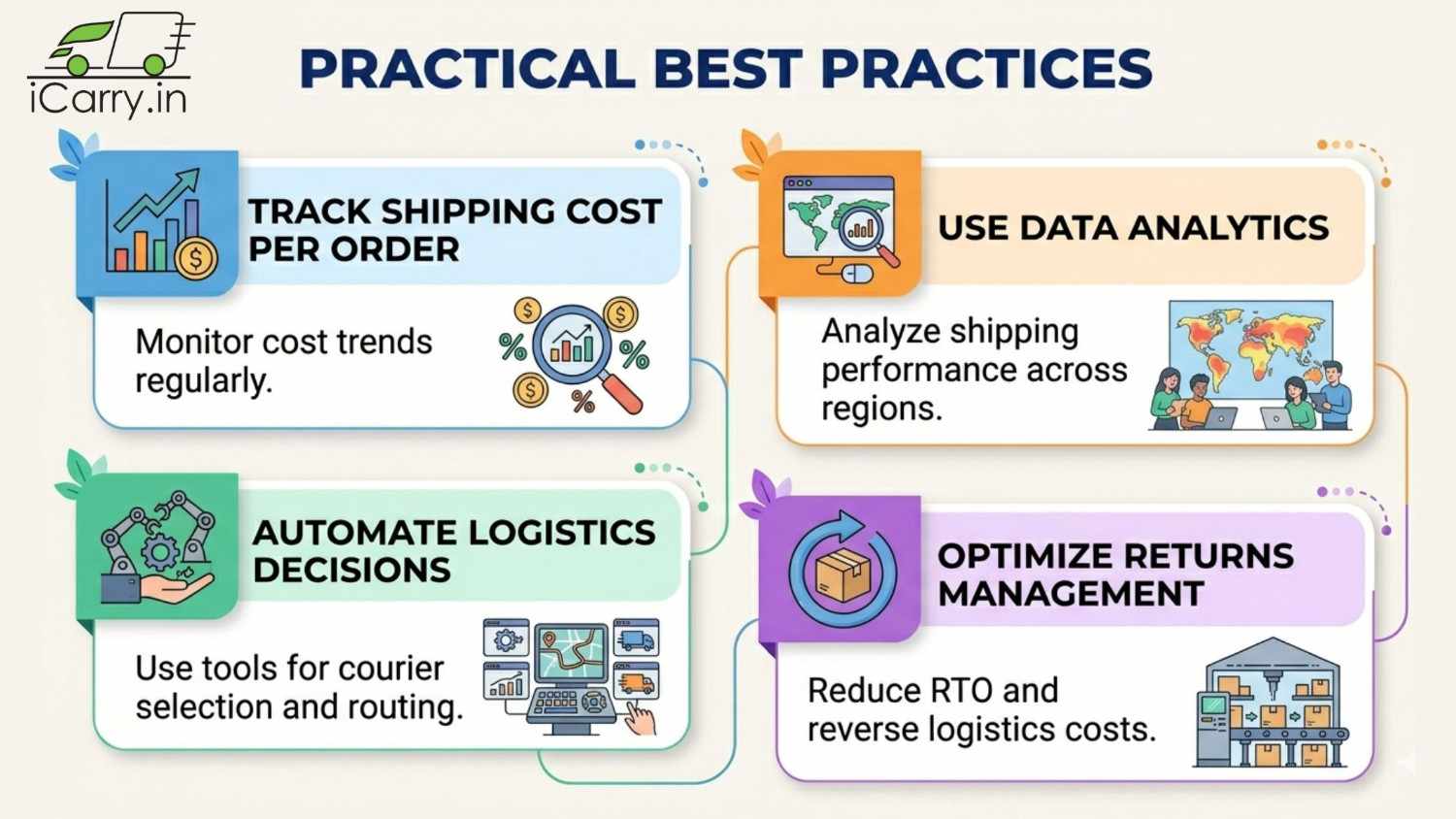
Step-by-Step Shipping Cost Optimization Process
Follow this framework to reduce shipping costs in a structured, measurable way:
- Analyse current shipping costs. Break down your monthly logistics spend by component - freight, RTO, COD fees, weight discrepancy. Identify your top 2-3 cost drivers.
- Identify the biggest leaks. Is your RTO rate above 15%? Are you getting weight discrepancy charges on 1 in 10 shipments? Start where the losses are biggest.
- Implement targeted fixes. Right-size packaging, switch to multi-courier routing, activate NDR follow-ups. Do one at a time so you can measure impact.
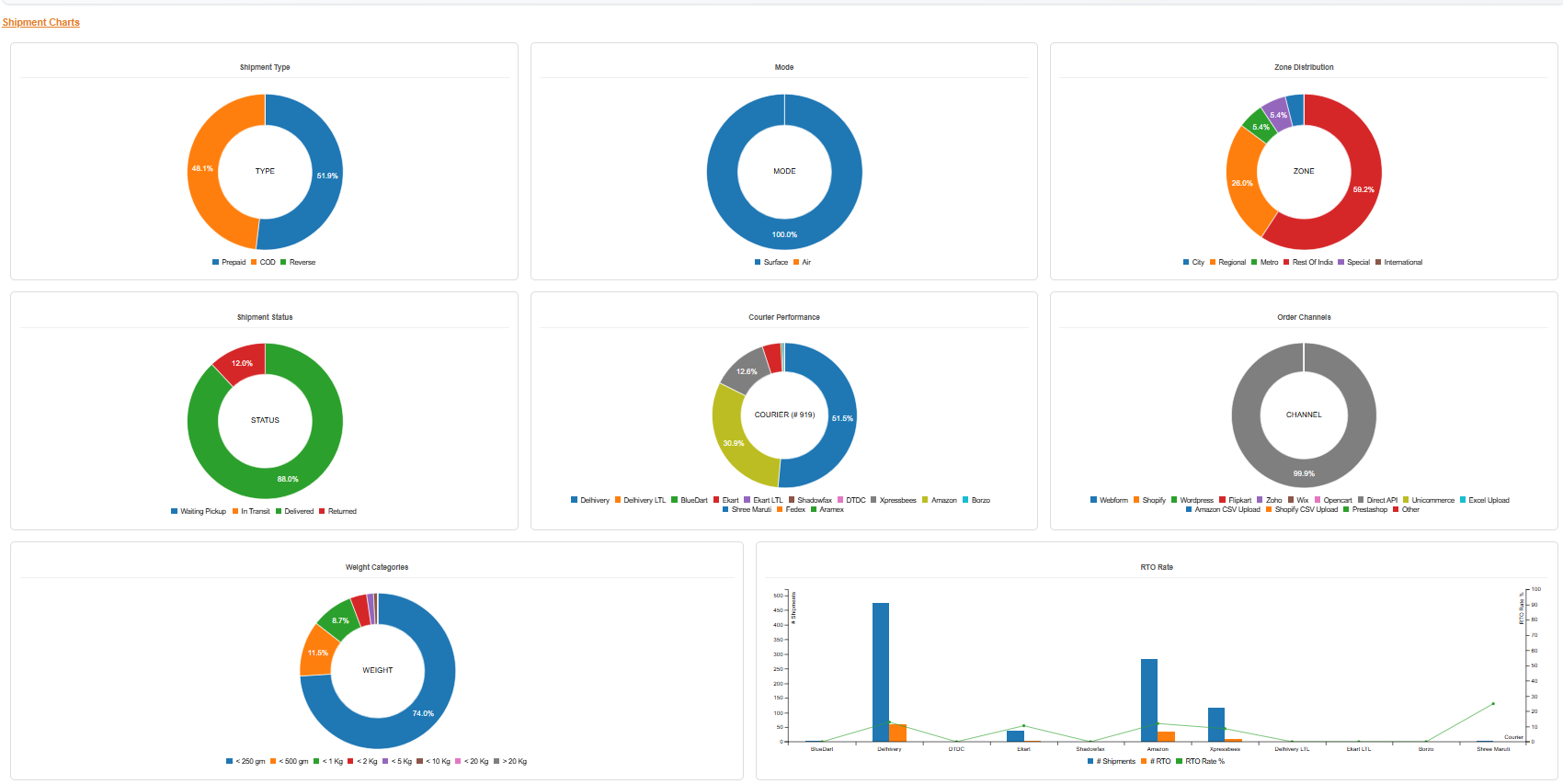
- Track key metrics weekly. Monitor: cost per shipment, RTO%, delivery success rate, weight discrepancy frequency. Use iCarry®'s My Shipments dashboard for real-time visibility.
- Refine continuously. Shipping costs are not a one-time fix. Review your numbers monthly and adjust courier mix, packaging, or zones as your order volume grows.
For how data and automation are changing this process in 2025, read: AI in logistics and how it is changing shipping decisions.
Real-World Examples of Shipping Cost Reduction
Packaging Optimization
An online fashion brand reduced its shipping costs by 15% in 60 days - just by switching to smaller boxes. The savings came from lower volumetric weight billing, fewer weight discrepancy charges, and less material cost per order. No courier negotiation needed.
Multi-Courier Routing
A D2C brand that routed North India orders to one courier and South India orders to another saw fewer delivery failures and a lower blended freight rate within 6 weeks. Delivery performance improved and the blended rate dropped by around 12%.
Regional Warehousing
A seller added a second dispatch point closer to their Tier 2 demand clusters. Zone D and E shipments - previously their largest cost category - dropped by nearly 30%. Delivery time improved too, which reduced NDRs.
Shipping Cost Strategy Comparison
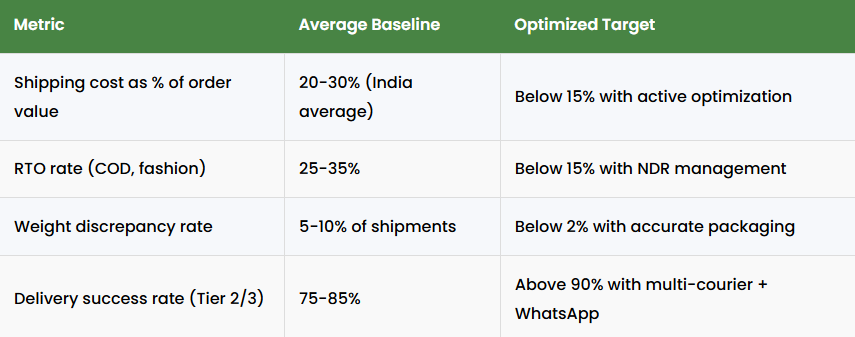
Shipping Performance Benchmarks
Here is where most Indian eCommerce sellers sit today - and what is achievable with active optimization:
iCarry® is built for sellers who want a smarter, simpler way to manage shipping without enterprise complexity. See how building a customer-centric growth strategy alongside cost optimization compounds the advantage over time.
Ready to see your actual shipping costs vs the best available rates? Use iCarry®'s free rate calculator - no signup needed.
Common Mistakes That Push Up Shipping Costs
- Ignoring volumetric weight. Large packaging increases shipping cost even for lightweight products. Measure after sealing, not before.
- Using a single courier for everything. No one courier is cheapest or most reliable across all regions. A single-partner strategy always leaves money on the table.
- Offering free shipping on all orders. Without a threshold or prepaid condition, this can quietly reduce net margins by 5-8% per order.
- Not tracking logistics KPIs. If you do not know your RTO rate, your average cost per shipment, or your weight discrepancy frequency - you cannot improve them.
- Declaring wrong weight at booking. If declared weight does not match actual weight, you get billed extra. Always weigh accurately.
Video: How to Dispute Weight Discrepancy Charges on iCarry®
Conclusion
Shipping cost optimization is not a one-time project. It is an ongoing practice - and even small improvements compound over time.
Start with packaging. Then fix your RTO. Then look at courier mix. Each lever you pull reduces your cost per order, and those savings add up fast once order volumes grow.
In India's competitive eCommerce market, sellers who manage shipping smartly protect their margins, offer better prices, and build stronger customer relationships. iCarry® is designed to make that easier - from day one. Check how the My Shipments dashboard gives you full visibility across all shipments by status, NDR, and COD remittance.
Frequently Asked Questions (FAQs)
How can eCommerce businesses reduce shipping costs in India?
Optimize packaging to reduce volumetric weight, use a courier aggregator platform like iCarry® for pre-negotiated rates, reduce RTO through address validation and NDR management, and move eligible COD orders to prepaid.
What is the biggest factor affecting shipping cost in India?
Volumetric weight, shipping zone (distance), and RTO are the biggest drivers. Read how inefficient shipping costs accumulate for Indian sellers to see where losses happen before they compound.
How does packaging affect shipping costs?
Larger packages increase volumetric weight billing even if the product is light. Right-sizing saves 10-20% per shipment for most sellers. The volumetric weight calculation guide walks through the formula with examples.
What is RTO and how does it increase costs?
RTO (Return-to-Origin) is when a delivery fails and the parcel comes back to you. You pay both outgoing and return freight. For orders under Rs 500, that often means zero profit. Proactive NDR management and delivery data analysis are the most effective ways to bring RTO rates down.
Is free shipping a good strategy?
It can improve conversion rates - but only if used selectively. Set a minimum order value, offer it only on prepaid orders, or factor the cost into product pricing. Blanket free shipping without analysis is one of the most common margin killers for growing sellers.
What is the benefit of using multiple courier partners?
Different couriers perform better in different regions and pin codes. Multi-courier allocation strategies let you route each shipment automatically to the best available option - lower cost, better delivery rate, fewer failed attempts.
Shipping costs in India average 20-30% of order value - but sellers who actively optimize packaging, use multi-courier routing, access aggregator rates, and manage RTO can bring this below 15% - with packaging optimization alone delivering 10-20% savings immediately and RTO reduction delivering high impact within 1-3 months.