
For many small eCommerce businesses, failed deliveries feel like an unavoidable cost of doing business. Customers don't answer calls, addresses are incomplete, and orders come back as RTO (Return to Origin).
What most sellers don't realize is that hidden inside these failures is powerful information called NDR data - and using it correctly can dramatically improve delivery success and customer experience.
Let's understand how.
What Is NDR Data?
NDR stands for Non-Delivery Report. It's generated when a courier is unable to deliver an order due to reasons like:
- Customer unavailable
- Incorrect or incomplete address
- Customer refused delivery
- Payment issues in COD orders
Courier partners share NDR updates through dashboards or notifications, allowing sellers to take corrective action before an order is returned.
Logistics platforms explain NDR as a critical feedback loop between courier, seller, and customer.
Why NDRs Hurt Small Businesses the Most
Every failed delivery costs money - forward shipping, reverse logistics, blocked inventory, and wasted time.
According to industry insights on logistics, high NDR and RTO rates are among the biggest margin killers for small and medium sellers.
Beyond money, repeated delivery failures damage:
- Customer trust
- Brand reputation
- Marketplace ratings
High NDR rates often translate into hidden logistics costs that sellers only notice at billing time. Learn more in The Hidden Costs of Inefficient Shipping.
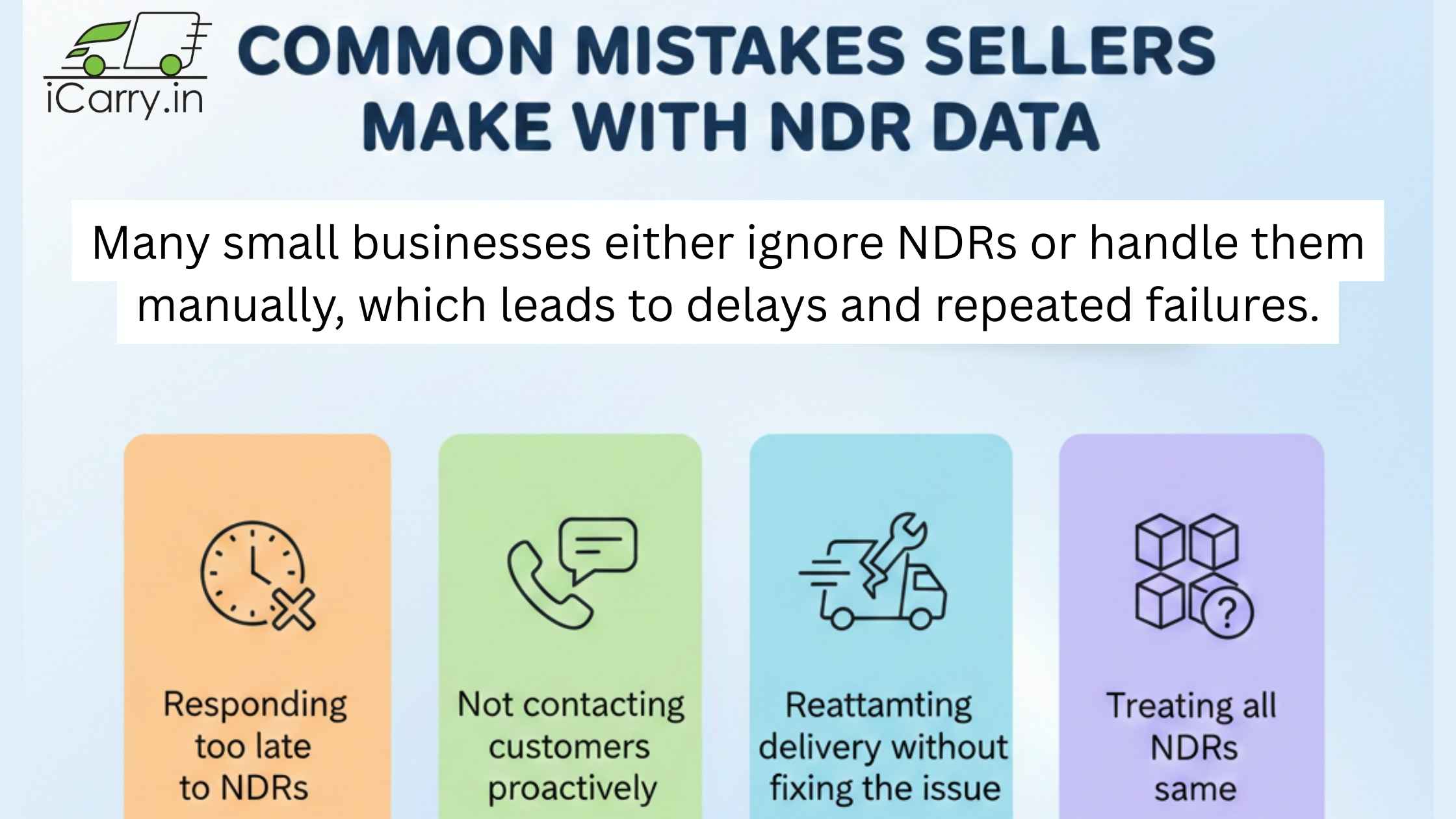
Common Mistakes Sellers Make With NDR Data
Many small businesses either ignore NDRs or handle them manually, which leads to delays and repeated failures.
Typical mistakes include:
- Responding too late to NDRs
- Not contacting customers proactively
- Reattempting delivery without fixing the issue
- Treating all NDRs the same
These mistakes directly contribute to higher returns.
Effective sellers classify and act on NDRs instead of reacting blindly to reduce returns. Better yet - they delegate this NDR service to the platform itself to reduce returns so that it is most efficient and the sellers can focus on their own business growth rather than operations.
How Using NDR Data Improves Delivery Success
When used properly, NDR data helps sellers identify patterns and fix root causes.
For example:
- Frequent "customer unavailable" NDRs may indicate wrong delivery timing
- Address-related NDRs highlight poor checkout data collection
- COD refusals reveal high-risk customers or regions
Courier dashboards and shipping tools allow sellers to track NDR reasons and performance across locations.
Courier performance varies significantly by region and order type. Choosing the right courier mix is crucial. According to Shopify's official best practices, streamlining checkout flows - such as validating addresses - reduces errors and delivery challenges.
Proactive Customer Communication Makes the Difference
One of the most effective ways to reduce RTO is fast customer follow-up.
Using WhatsApp or SMS to confirm address details, delivery timing, or payment readiness significantly increases successful deliveries. WhatsApp Business tools enable quick replies and automated messages, helping small teams handle communication efficiently.
Many sellers see improved delivery success simply by contacting customers within hours of an NDR update.
Proactive communication is a key part of a smooth delivery journey. Learn how logistics impacts brand trust in Creating a Seamless Delivery Experience: Tips for E-Commerce Businesses.
Insights from Salesforce research show that proactive communication and customer engagement directly improve satisfaction and repeat purchase rates.
Tools like WhatsApp Business allow sellers to automate messages and provide real-time customer updates - a key step in reducing failed deliveries.
Using NDR Insights to Improve Checkout Experience
NDR data doesn't just fix deliveries - it improves your website too.
If NDRs show address issues, sellers can:
- Add address validation fields
- Request landmarks
- Use mandatory phone number verification
Platforms like Shopify encourage optimizing checkout flows based on delivery feedback to reduce post-order issues.
Delivery failures often originate at checkout. You may also explore 10 Must-Have E-commerce Website Features for High-Performance Stores to strengthen data accuracy from the start.
Reducing COD Failures Using NDR Trends
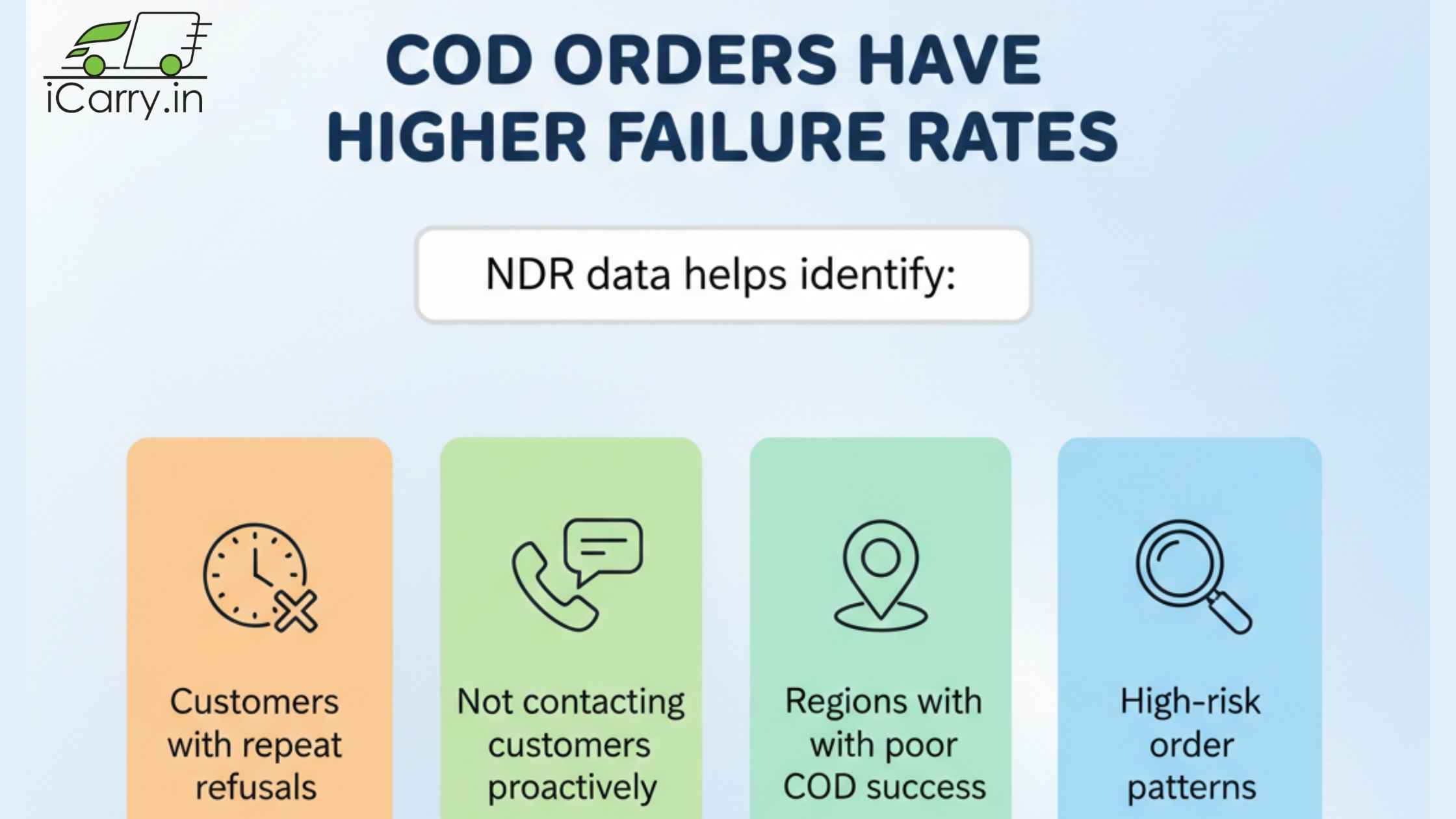
COD orders have higher failure rates. NDR data helps identify:
- Customers with repeat refusals
- Regions with poor COD success
- High-risk order patterns
Many sellers use this data to limit COD in certain areas or request partial prepaid payments - a common practice among growing D2C brands.
Automating NDR Management for Small Teams
Manually handling NDRs becomes overwhelming as orders grow. Courier dashboards and logistics platforms now offer automated NDR workflows that:
- Alert sellers in real time
- Suggest actions
- Track resolution status
Automation allows small businesses to handle logistics like larger brands without expanding support teams.
Automation becomes easier when logistics are centralized.
Better NDR Handling = Better Customer Experience
When sellers act quickly on NDRs:
- Customers feel cared for
- Delivery frustration reduces
- Trust improves
- Repeat orders increase
Clear communication and successful reattempts turn a negative experience into a positive one.
As order volumes increase, manual courier dependency often breaks down. Automation and not depending on a single courier improves reliability and efficiency.
Final Thoughts
NDR data is often ignored, but it's one of the most powerful tools small eCommerce businesses already have access to.
By analyzing NDR reasons, responding quickly, and improving internal processes, sellers can reduce RTO, save money, and deliver a better customer experience - without increasing marketing spend.
For small businesses looking to scale sustainably, using NDR data effectively isn't optional anymore - it's essential.
NDRs don't have to turn into losses.
👉 Sign up on iCarry to track NDRs in real time, automate follow-ups, and reduce RTO without increasing support workload.
NDR data is a powerful tool small eCommerce businesses already have—analyzing reasons, responding quickly, and improving processes can reduce RTO and enhance customer experience without increasing marketing spend.