eCommerce never stands still.
What worked in 2024 or 2025 may stop working in 2026.
Customer expectations are rising, competition is tighter, and technology is moving fast. Sellers who prepare early will win. Those who don't will struggle to keep up.
This guide breaks down the most important eCommerce trends for 2026 and what sellers should do now to stay competitive, especially in logistics, delivery performance, and customer experience.
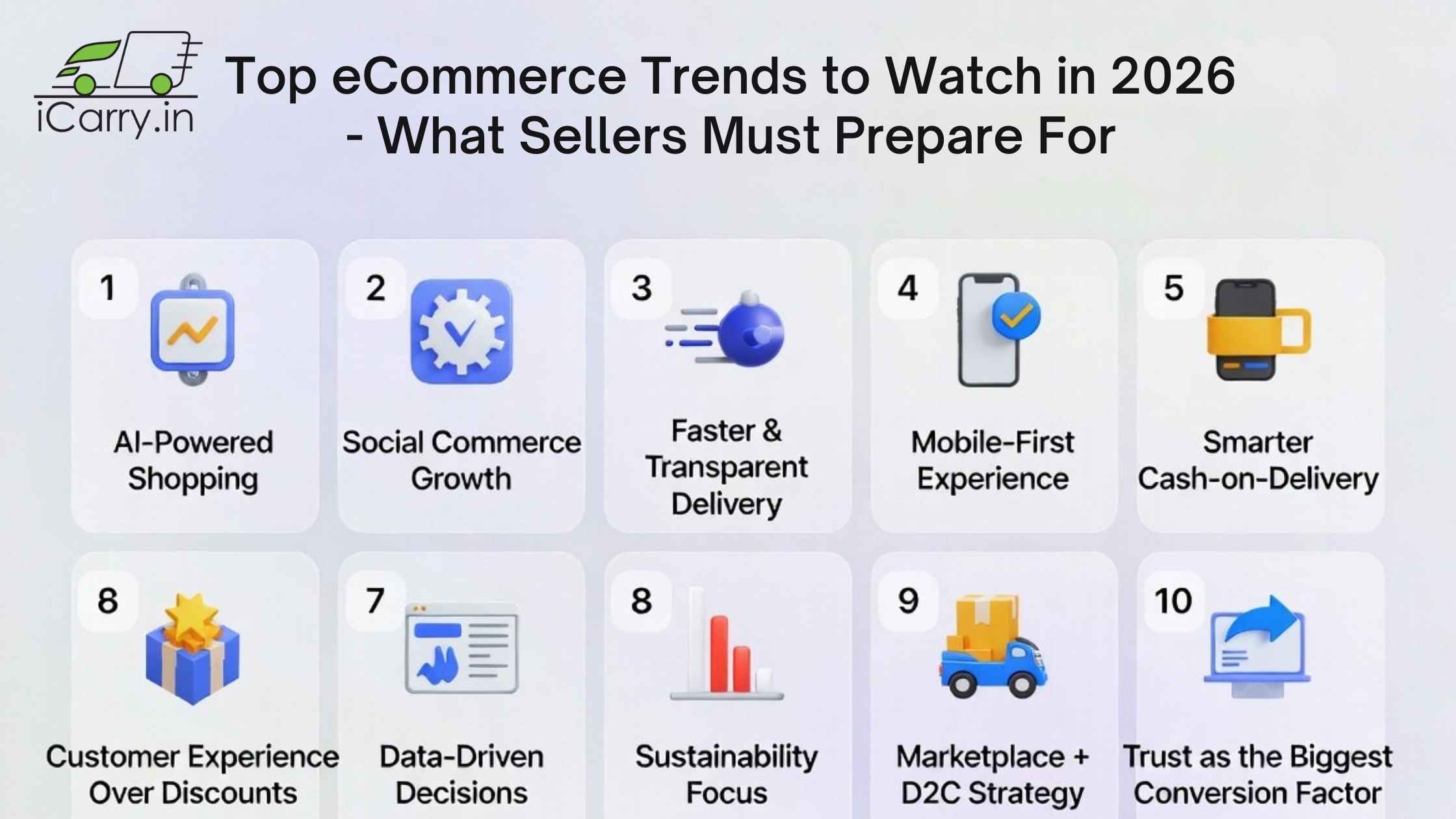
1. AI-Powered Shopping Will Become the Default
AI is no longer a "nice-to-have."
In 2026, AI will power:
- Personalized product recommendations
- Dynamic pricing
- Chatbots handling sales and support
- Demand forecasting and inventory planning
AI-driven stores will convert better because they understand users, not just traffic.
What Sellers Should Do
- Use AI tools for smarter product recommendations
- Automate customer support with human-like chat
- Analyze buying behavior, not just visits
- Connect sales data with delivery and return data
Personalization will directly impact conversion rates and retention.
2. Social Commerce Will Drive a Big Share of Sales
Shopping will continue shifting away from websites alone.
Platforms like Instagram, WhatsApp, and YouTube will function as full sales channels, not just promotion tools.
What Sellers Should Do
- Set up DM-based selling workflows
- Automate order confirmations and follow-ups
- Use WhatsApp updates for order and delivery communication
- Train teams to close sales inside conversations
Social trust will matter more than visual design.
3. Faster and More Transparent Delivery Expectations
Customers now expect:
- Same-day or next-day delivery
- Live shipment tracking
- Clear delivery communication
- Proactive delay updates
Late deliveries and vague updates hurt trust instantly.
What Sellers Should Do
- Use multi-courier shipping setups instead of a single partner
- Offer real-time delivery tracking dashboards
- Reduce fake delivery attempts and RTO losses
- Improve post-order communication
In 2026, logistics experience becomes brand experience. This is where shipping aggregators like iCarry.in play a critical role by helping sellers manage multiple couriers, track performance, and control delivery quality from one system.
4. Mobile-First Experience Will Decide Conversions
Most online purchases will happen on mobile.
Poor mobile experience leads to:
- High bounce rates
- Lower Google rankings
- Abandoned checkouts
What Sellers Should Do
- Improve mobile site speed
- Simplify navigation
- Optimize checkout for one-hand use
- Reduce form fields and friction
Mobile optimization directly impacts revenue growth.
5. Cash-on-Delivery Will Still Matter (But Smarter)
Despite digital payments, Cash-on-Delivery will remain important, especially in India.
However, COD misuse and RTO losses will push sellers to:
- Verify COD orders
- Restrict COD on risky pincodes
- Encourage prepaid conversions
- Choose the right courier for improving deliverability of COD orders
What Sellers Should Do
- Apply data-driven COD rules
- Use RTO reduction systems
- Automate order confirmations
- Offer prepaid incentives
COD will be controlled, not removed.
6. Customer Experience Will Beat Discounts
Heavy discounting is becoming unsustainable.
Winning brands will grow through:
- Faster support
- Clear policies
- Honest delivery timelines
- Smooth returns
- Proactive communication
What Sellers Should Do
- Invest in post-purchase experience
- Reduce response time
- Improve delivery updates
- Build trust through transparency
In 2026, experience replaces price wars.
7. Data-Driven Decisions Will Separate Winners from Losers
Gut feelings won't scale.
Top sellers will track:
- Conversion rates
- Delivery success rates
- RTO percentages
- Courier performance
- Customer lifetime value
What Sellers Should Do
- Use analytics dashboards
- Review logistics data weekly
- Fix operational leaks before scaling
- Connect sales metrics with shipping metrics
Growth without data is risky.
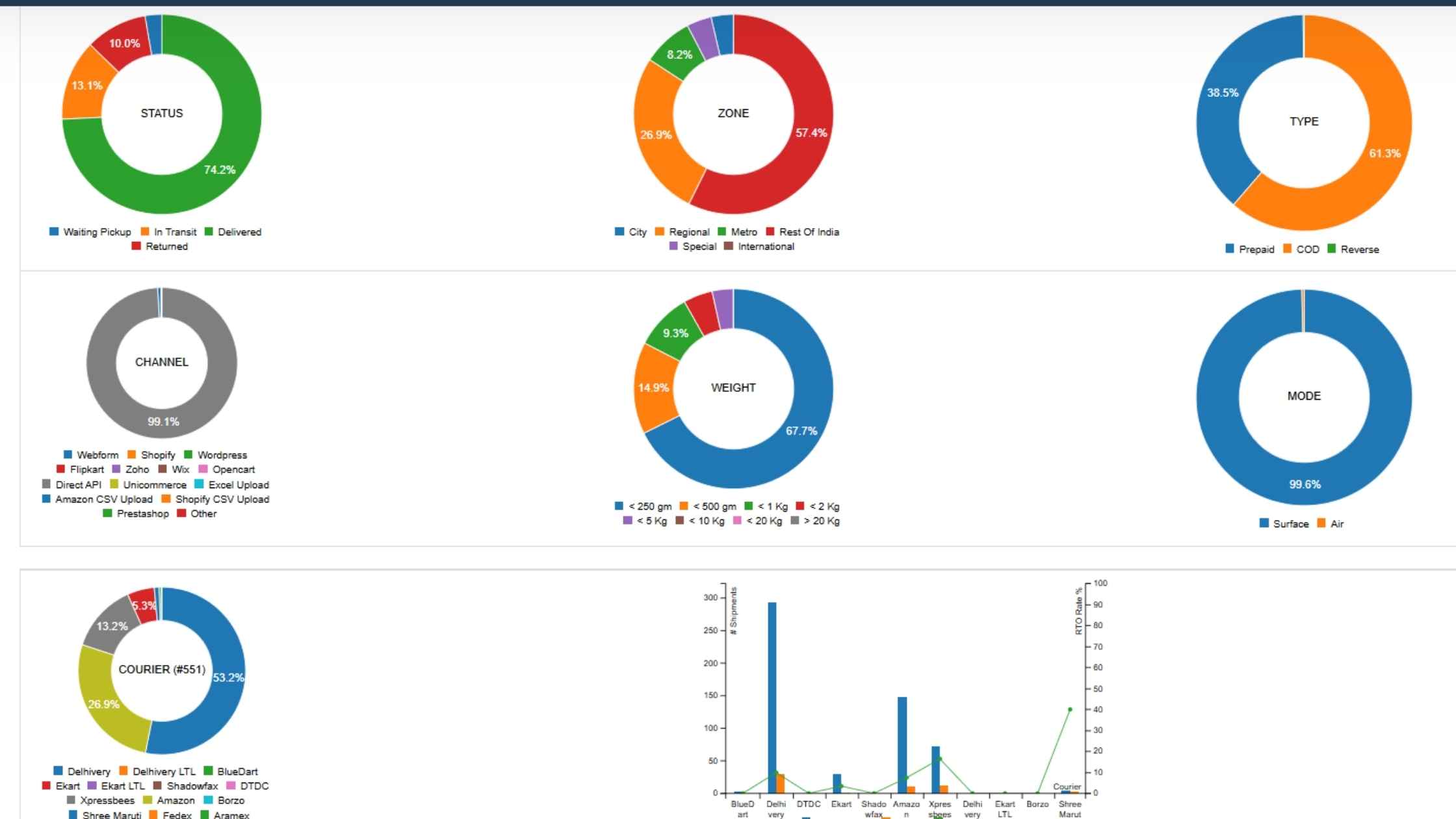
Snapshot of the Analytics Dashboard at iCarry.in
8. Sustainability Will Influence Buying Decisions
Customers are becoming more conscious.
They increasingly care about:
- Eco-friendly packaging
- Ethical sourcing
- Reduced waste
- Responsible logistics
What Sellers Should Do
- Reduce unnecessary packaging
- Optimize shipment sizes
- Communicate sustainability efforts honestly
- Avoid false green claims
Transparency builds long-term brand loyalty.
9. Marketplaces and D2C Will Co-Exist
Future sellers will not depend on one channel.
Winning brands will:
- Sell on marketplaces
- Build their own D2C store
- Use social platforms
- Maintain direct customer communication
What Sellers Should Do
- Diversify sales channels
- Maintain pricing consistency
- Own customer data
- Centralize shipping and tracking
Control reduces business risk.
10. Trust Will Become the Biggest Conversion Factor
In 2026, trust will influence buying decisions more than ads.
Trust is built through:
- Reviews and social proof
- Delivery reliability
- Easy returns
- Clear communication
- Secure shipping systems
What Sellers Should Do
- Showcase customer feedback
- Fix logistics failures
- Improve delivery success rates
- Be honest in marketing
Trust compounds faster than traffic.
Final Thoughts
2026 eCommerce is not about chasing trends.
It is about building strong systems, efficient operations, and customer-first processes.
Sellers who focus on:
- Experience
- Speed
- Trust
- Data
- Delivery reliability
will grow sustainably, even in a competitive market.
With platforms like iCarry.in, sellers can prepare early by strengthening shipping, tracking, courier management, RTO control, and post-order experience.
Prepare early.
Adapt fast.
Win long-term.
2026 belongs to sellers who build better systems, not just better ads. Focus on experience, data, and delivery reliability to win long-term.