
Few things frustrate eCommerce sellers more than seeing an order marked as "delivery attempted" when the customer swears no one showed up. These fake delivery attempts quietly hurt businesses through higher RTOs, angry customers, and damaged brand trust.
If you've faced unexplained delivery failures, this guide explains what fake delivery attempts are, why they happen, and how sellers can protect their business from them.
Fake delivery attempts are often part of a larger operational issue sellers face.
What Is a Fake Delivery Attempt?
A fake delivery attempt occurs when a shipment is marked as "attempted" or "customer unavailable" without the delivery agent actually visiting the address.
These false updates are logged in courier systems and often trigger NDRs (Non-Delivery Reports), pushing orders toward return even though the customer was ready to receive them.
Logistics experts frequently identify incorrect attempt marking as a major cause of avoidable RTOs.
Why Do Fake Delivery Attempts Happen?
Fake attempts usually result from operational pressure rather than fraud by sellers or buyers.
Common reasons include:
- Overloaded delivery routes
- Unrealistic daily delivery targets
- Incorrect or incomplete addresses
- Poor last-mile accountability
Courier workforce challenges have been widely discussed in logistics industry analyses, especially during peak seasons.
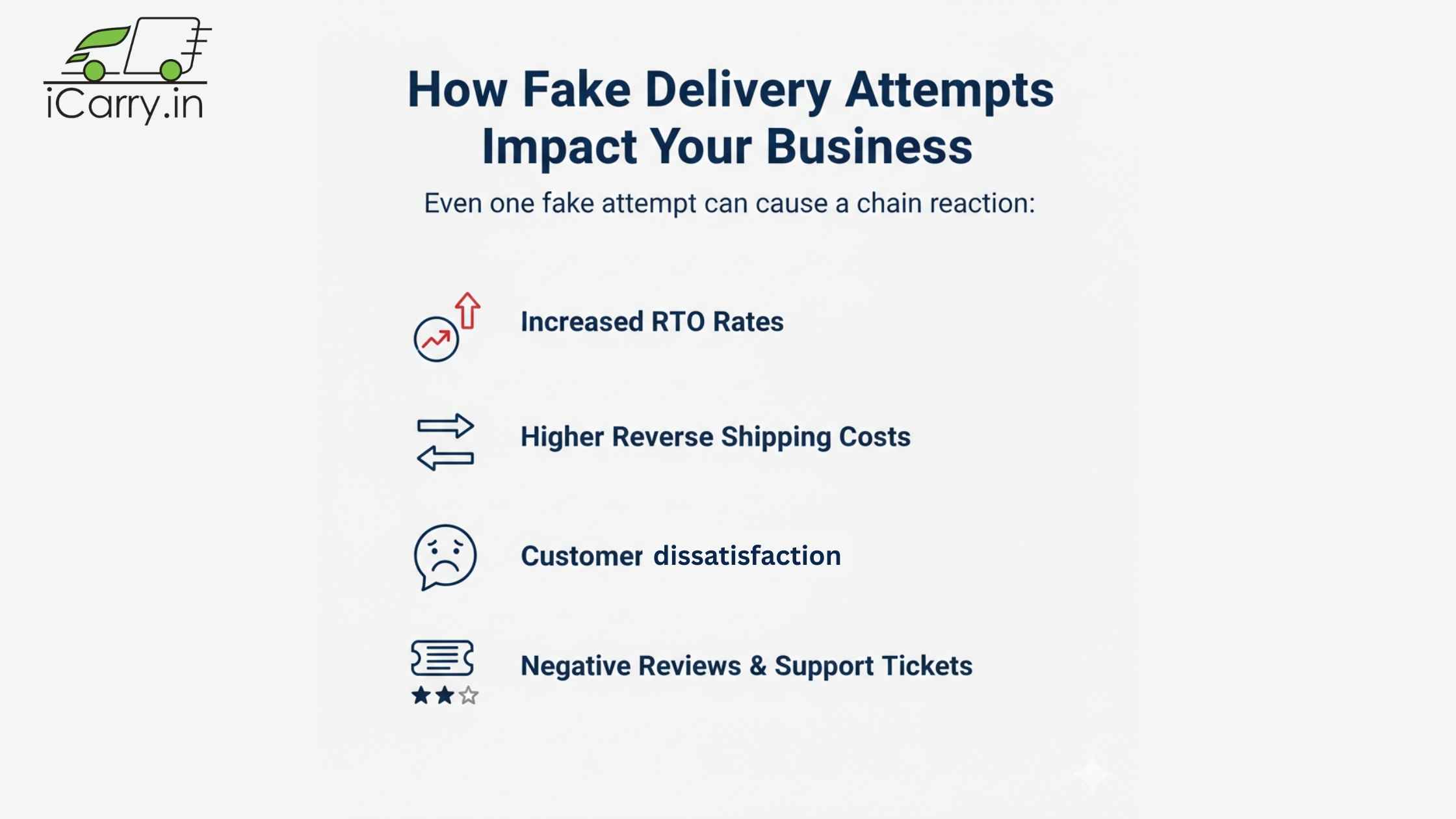
How Fake Delivery Attempts Impact Your Business
Even one fake attempt can cause a chain reaction:
- Increased RTO rates
- Higher reverse shipping costs
- Customer dissatisfaction
- Negative reviews and support tickets
According to industry logistics performance insights, repeated fake attempts significantly reduce COD success rates and increase avoidable RTOs. Industry studies on last-mile delivery performance also highlight that inaccurate attempt marking is one of the top contributors to return shipments and customer dissatisfaction.
Failed attempts also increase hidden logistics costs that sellers only see at billing time.
How to Identify Fake Delivery Attempts
Sellers should watch for patterns such as:
- Multiple "customer unavailable" updates without calls
- Attempts marked late in the evening
- Customers reporting no contact from delivery agents
- Same courier showing repeated failures in specific areas
Courier dashboards and tracking systems help sellers monitor these trends.
Repeated failures in the same areas often indicate courier performance issues.
How NDR Data Helps Spot the Problem
NDR data provides visibility into why deliveries fail. When sellers notice a high percentage of NDRs caused by "customer unavailable" or "address issues" in certain regions, it often signals fake or rushed attempts.
Analyzing NDR trends helps sellers separate genuine delivery issues from operational gaps.
iCarry.in provides sellers with a dedicated NDR management section that clearly highlights all non-delivery shipments requiring attention. Sellers can review NDR reasons, take action where needed, and rely on iCarry's active coordination with courier partners to push for timely reattempts. Unless explicitly marked as "on hold," shipments continue moving while escalation and resolution efforts run in parallel. This proactive NDR follow-up reduces unnecessary returns caused by fake or rushed delivery attempts and helps sellers recover orders that would otherwise turn into RTOs.
Practical Steps to Reduce Fake Delivery Attempts
Improve Address Quality
Clear addresses, landmarks, and verified phone numbers reduce excuses for missed attempts. E-commerce checkout best practices recommend address validation to improve last-mile success.
Proactive Customer Communication
Confirming delivery availability via WhatsApp or SMS before the expected delivery date increases successful handovers. Tools like WhatsApp Business allow sellers to automate these confirmations.
Tools like WhatsApp Business help sellers confirm delivery availability and reduce failed attempts through proactive communication.
Use Multi-Courier Allocation
Relying on a single courier increases risk. Multi-courier setups allow sellers to route shipments through partners with better last-mile performance in specific pincodes - a strategy supported by logistics platforms.
Sellers who rely on one courier are more exposed to fake attempts.
Raise Escalations Quickly
If a fake attempt is suspected, raising a ticket immediately increases chances of reattempt before return. Courier SLAs usually allow limited time for intervention.
Protecting COD Orders from Fake Attempts
COD orders are more vulnerable. Sellers can:
- Confirm COD readiness before shipping
- Block repeat high-risk pincodes
- Switch to prepaid incentives
COD management strategies are widely recommended by Indian eCommerce logistics experts.
COD orders are especially vulnerable to delivery manipulation.
Building Accountability Over Time
Tracking courier performance over weeks and months helps sellers identify underperforming partners. Sellers who use data-driven courier selection consistently report lower RTO and higher delivery success.
Accountability improves when performance is measured.
Supply chain analytics, as explained by IBM, help businesses measure partner performance, identify delivery failures, and improve accountability over time.
Tracking courier performance becomes easier with centralized dashboards.
Final Thoughts
Fake delivery attempts aren't always intentional, but their impact on sellers is very real.
By improving address quality, using NDR data, communicating proactively, and diversifying courier partners, businesses can significantly reduce fake attempts and protect customer trust.
In eCommerce, delivery is part of the brand experience - and every honest delivery attempt matters.
Fake delivery attempts cost money, time, and trust.
Fake delivery attempts hurt businesses through higher RTOs and damaged trust—improving address quality, using NDR data, and tracking courier performance helps sellers protect deliveries and reduce avoidable returns.