Finding the right product is only half the battle.
Sourcing it correctly decides your margins, quality, delivery timelines, and customer trust.
Many online sellers fail not because of marketing - but because of poor suppliers, inconsistent quality, or bad sourcing decisions.
This guide explains how to source products for online selling, covering both domestic and international options, with practical tips you can actually use.
Successful online selling depends not only on sourcing but also on building a strong store foundation. You may also explore our guide on 10 Must-Have E-commerce Website Features for High-Converting Online Stores.
What Is Product Sourcing?
Product sourcing is the process of:
- Finding suppliers or manufacturers
- Negotiating prices and MOQs
- Ensuring quality and consistency
- Managing logistics and timelines
Good sourcing protects your brand. Bad sourcing damages it fast.
Before You Start Sourcing: Ask These Questions
Before contacting suppliers, be clear about:
- Target selling price
- Expected margin
- Quality standards
- Packaging needs
- Monthly order quantity
Suppliers respect clarity.
Domestic Sourcing (Within Your Country)
Domestic sourcing means buying or manufacturing products locally.
Why Domestic Sourcing Works Well
- Faster delivery
- Easier communication
- Lower logistics risk
- Better quality control
- Easier compliance
It's ideal for beginners and brands focused on reliability.
If your products are bulky or heavy, logistics planning becomes even more critical. Learn best practices in How to Ship Heavy Items across India?
Where to Find Domestic Suppliers
1. Wholesale Markets
Physical wholesale hubs offer direct access to manufacturers and distributors.
Great for:
- Home goods
- Apparel
- Accessories
- Local products
Seeing products in person reduces risk.
2. Trade Shows & Exhibitions
Industry exhibitions connect you with verified manufacturers.
Best for:
- Long-term partnerships
- Private labeling
- Bulk sourcing
You can compare suppliers side by side.
Platforms like Global Sources also connect buyers with verified manufacturers and international trade exhibitions, especially for electronics, hardware, and consumer goods.
3. Online B2B Marketplaces
Domestic B2B platforms list verified suppliers with catalogs and MOQs.
Good for:
- Quick comparisons
- Small test orders
- Price benchmarking
Always ask for samples.
For domestic sourcing in India, platforms like IndiaMART help businesses discover verified wholesalers, manufacturers, and distributors across product categories.
Global marketplaces like Alibaba allow sellers to connect with verified manufacturers, compare pricing, and filter suppliers based on certifications and trade assurance.
4. Direct Manufacturers
Contact factories directly for:
- Better pricing
- Customization
- Branding
Best for sellers planning to scale.
International Sourcing (Global Suppliers)
International sourcing helps reduce cost and expand product variety.
Tools like Google Market Finder help sellers evaluate international demand before investing in overseas sourcing.
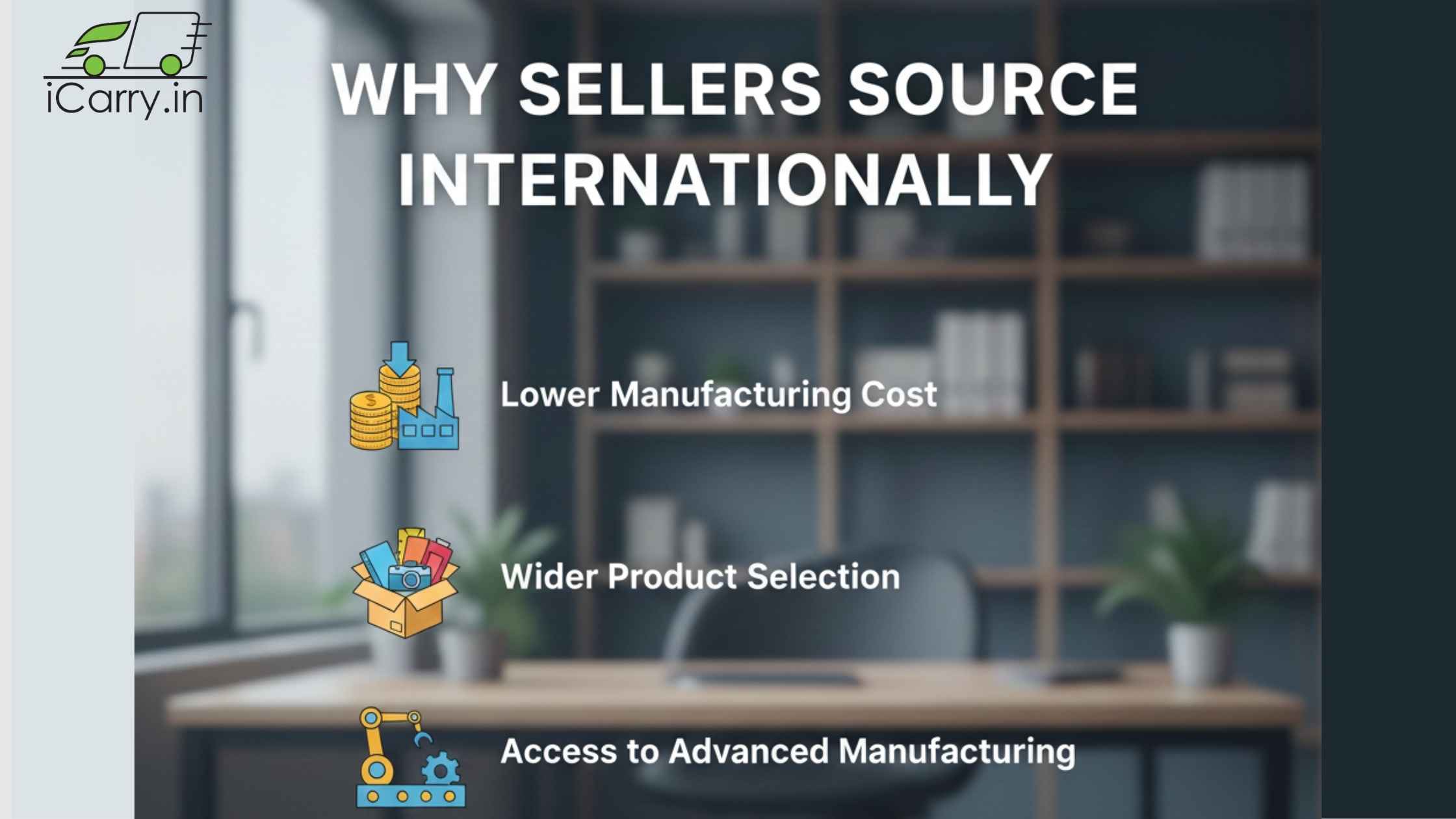
Why Sellers Source Internationally
- Lower manufacturing cost
- Wider product selection
- Access to advanced manufacturing
But it comes with risks.
Popular International Sourcing Regions
- China: Large-scale manufacturing and variety
- Vietnam: Apparel and home goods
- Bangladesh: Garments
- Turkey: Textiles and décor
- Italy: Premium goods
Each region specializes differently.
Many internationally sourced products carry higher value and require secure logistics handling. Read our guide on How to Ship High-Value Items Across India.
How to Find International Suppliers
1. Global B2B Platforms
International B2B marketplaces list suppliers across countries.
Use filters for:
- Trade assurance
- Verified factories
- Minimum order quantity
Always check reviews and history.
2. Sourcing Agents
Agents help:
- Find suppliers
- Negotiate prices
- Manage inspections
- Handle shipping
They charge a fee but reduce risk.
3. Factory Visits (If Possible)
For high-volume sourcing, factory visits help ensure:
- Production capability
- Ethical practices
- Quality consistency
Not always necessary - but valuable.
Quality Control: Non-Negotiable
Before placing bulk orders:
- Order samples
- Test packaging
- Check materials and finish
- Validate compliance
For international sourcing, third-party inspections are highly recommended.
Third-party inspection agencies such as SGS or Bureau Veritas help verify factory quality, compliance, and shipment integrity before dispatch.
Understanding MOQs & Pricing
- Lower MOQs = higher cost per unit
- Higher MOQs = better margins
Start small. Scale after validation.
Never lock capital in untested inventory.
Logistics & Shipping Considerations
Domestic Sourcing
- Courier partnerships
- Local warehousing
- Faster delivery
International Sourcing
- Freight cost (air vs sea)
- Customs duties
- Import documentation
- Lead time planning
Logistics cost can kill margins if ignored.
Exporters and sourcing professionals can also use insights from the International Trade Centre (ITC) to analyze supplier markets, trade flows, and sourcing opportunities.
How iCarry.in Supports Sellers After Product Sourcing
Sourcing the right products is only effective when your shipping and logistics are equally reliable. This is where platforms like iCarry.in help online sellers simplify the post-sourcing journey.
Whether you source domestically or internationally, iCarry.in allows businesses to compare courier partners, shipping rates, and delivery timelines transparently in one place. Sellers benefit from no hidden charges, accurate billing reconciliation, and error-proof invoices, which is especially important when managing thin margins after sourcing costs.
For growing eCommerce brands, iCarry.in also helps optimize shipping decisions based on delivery speed, cost efficiency, COD performance, and serviceability, ensuring that sourcing gains are not lost due to logistics inefficiencies. With centralized tracking, dispute-free billing, and scalable shipping options, sellers can focus on growth instead of courier coordination.
Private Label vs Reselling
Reselling
- Faster launch
- Lower setup cost
- Limited differentiation
Private Label
- Higher margins
- Strong branding
- Better long-term value
Choose based on goals, not trends.
Common Sourcing Mistakes
- Chasing the cheapest supplier
- Skipping samples
- Ignoring MOQs and lead times
- Not having backup suppliers
- Overordering early
Good sourcing is cautious, not rushed.
How to Build Long-Term Supplier Relationships
- Communicate clearly
- Pay on time
- Give feedback
- Plan orders in advance
Strong relationships lead to better pricing and priority.
As businesses scale, centralized logistics management helps maintain consistency and performance. Learn how this works in What is a Courier Aggregator or Shipping Aggregator?
Summary
Sourcing isn't just procurement - it's brand protection.
The right supplier:
- Protects your margins
- Maintains quality
- Supports scaling
Start local if possible. Go global when ready.
Always test before trusting.
Once your product sourcing is optimized, efficient courier selection becomes critical for customer satisfaction and cost control.
In a nutshell, efficient sourcing paired with optimized shipping creates a stronger, more profitable eCommerce operation.
Smart sourcing isn't about finding the cheapest supplier—it's about finding the right partner who protects your brand, maintains consistency, and grows with your business.