Introduction
International expansion is becoming increasingly common for eCommerce businesses. However, global shipping involves more than simply sending products across borders. Companies must clearly define responsibilities for transportation, insurance, customs clearance, and risk during shipment.
This is where Incoterms (International Commercial Terms) become essential.
Published by the International Chamber of Commerce, Incoterms provide globally recognized rules that define the responsibilities of buyers and sellers in international trade transactions.
In this guide, we explain Incoterms 2020 rules, responsibilities, examples, and best practices so eCommerce businesses can manage international shipping more effectively.
What are Incoterms?
Incoterms (International Commercial Terms) are standardized trade rules used in international commerce to define the responsibilities of buyers and sellers for shipping goods.
They specify:
- Who arranges transportation
- Who pays for freight costs
- Who handles export and import customs clearance
- Who bears the risk of loss or damage during transit
In simple terms:
Incoterms determine who does what in an international shipment.
The latest version, Incoterms 2020, is published by the International Chamber of Commerce and is used globally in trade agreements.
Why Incoterms Matter for eCommerce Businesses?
For businesses involved in international shipping, Incoterms play a major role in defining logistics responsibilities.
1. Avoids Shipping Disputes
Incoterms clearly define responsibilities, reducing misunderstandings between buyers and sellers.
2. Clarifies Cost Allocation
They specify who pays for:
- Freight charges
- Customs duties
- Insurance
- Handling fees
3. Defines Risk Transfer
Incoterms specify the exact point where risk shifts from seller to buyer during transportation.
4. Simplifies Global Trade
Standardized terms help businesses transact with international partners without renegotiating logistics responsibilities for every order.
5. Improves Supply Chain Planning
Clear shipping responsibilities allow businesses to plan costs, lead times, and logistics workflows more accurately while improving overall shipping optimization strategies for online stores.
Quick Comparison of Common Incoterms
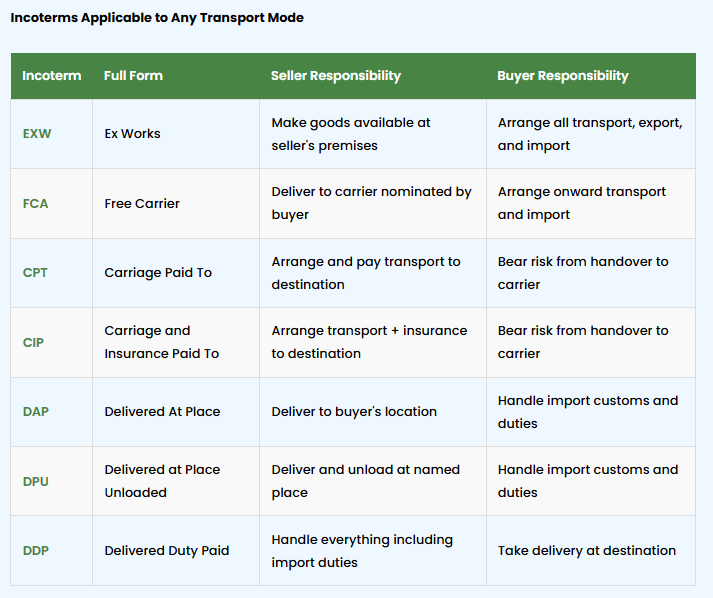
There are 11 Incoterms 2020 rules used in international trade. These rules define how transportation responsibilities, shipping costs, and risk transfer are divided between buyers and sellers during global shipments.
The table below provides a simplified comparison of how responsibilities are typically divided between buyers and sellers for commonly used Incoterms.
Challenges of Using Incoterms in Global Trade
While Incoterms help standardize international shipping agreements, businesses may still face operational challenges if these rules are not properly understood or implemented. These issues often arise from incorrect usage, lack of logistics knowledge, or misunderstanding of responsibilities between buyers and sellers.
1. Misunderstanding Incoterms Responsibilities
One of the most common challenges in international logistics is misunderstanding which party is responsible for shipping, insurance, customs clearance, or delivery.
Such confusion can lead to shipment delays, unexpected costs, and trade disputes. Businesses must clearly understand the responsibilities assigned under each Incoterm before finalizing international trade agreements.
2. Hidden Logistics Costs in International Shipping
Even when Incoterms are defined in contracts, additional logistics costs may arise during international shipments.
These may include:
- Import duties and taxes
- Port handling charges
- Local delivery fees
- Terminal handling charges (THC)
Failing to anticipate these expenses can increase the total landed cost and impact profitability.
3. Complex Customs Regulations Across Countries
Each country follows different customs regulations and import procedures. Businesses involved in international trade must comply with documentation requirements, regulatory checks, and customs inspection procedures.
Failure to comply with these requirements can result in shipment delays, penalties, or customs holds.
4. Inadequate Shipping Documentation
Accurate documentation is essential for smooth international trade operations. Missing or incorrect paperwork can delay customs clearance and disrupt delivery schedules.
Common documents required for international shipments include:
- Commercial invoice
- Packing list
- Bill of lading or airway bill
- Export declaration forms
Proper documentation ensures efficient customs processing and smoother cross-border shipments.
Common Incoterms Mistakes Businesses Should Avoid
In addition to operational challenges, many companies also make strategic mistakes when selecting or applying Incoterms. Avoiding these errors can help businesses reduce costs and improve international shipping efficiency.
1. Choosing the Wrong Incoterm
Selecting an inappropriate Incoterm can shift unexpected costs, risks, or responsibilities to either the buyer or seller.
For example, choosing a term that requires handling unfamiliar customs procedures may increase operational complexity.
Businesses should always choose an Incoterm that aligns with their logistics capabilities, risk tolerance, and shipping strategy.
2. Ignoring Import Duties and Taxes
Many exporters underestimate the impact of import duties, VAT, and customs taxes in the destination country.
Failing to account for these costs can lead to pricing errors, unexpected expenses, or dissatisfied international customers.
3. Poor Coordination with Freight Forwarders
Freight forwarders play a critical role in international shipping. If shipment responsibilities are not clearly communicated, it can lead to logistics confusion, delays, or additional costs.
Businesses should ensure their freight forwarders clearly understand the selected Incoterm and its responsibilities.
4. Not Clarifying Insurance Coverage
Insurance requirements vary depending on the Incoterm used.
For example:
- Under CIF, the seller must arrange insurance.
- Under many other Incoterms, the buyer may need to secure insurance coverage.
Failing to clarify insurance responsibility can expose businesses to financial risk in case of cargo damage or loss during transit.
Practical Incoterms Best Practices for eCommerce Exporters
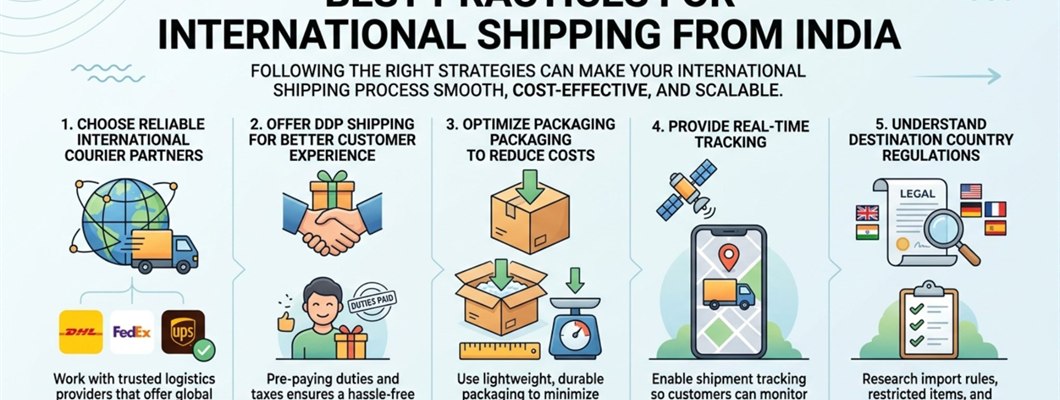
For businesses involved in cross-border eCommerce and international shipping, following the right logistics practices can significantly reduce risks, avoid customs issues, and improve delivery efficiency. Below are some practical Incoterms best practices that exporters should follow when managing global shipments.
1. Work with Experienced Freight Forwarders
International shipping involves multiple steps such as transportation planning, customs clearance, and documentation management. Partnering with experienced freight forwarders or logistics service providers helps businesses handle these complexities more efficiently.
Professional logistics partners and shipping aggregation platforms that coordinate multiple carriers can help optimize routes, reduce shipping costs, and ensure smoother delivery across international markets.
2. Choose Customer-Friendly Incoterms
Selecting the right Incoterm can significantly improve the international buying experience for customers.
For example:
- DDP (Delivered Duty Paid) offers a fully managed delivery experience where the seller handles shipping, duties, and taxes.
- DAP (Delivered At Place) simplifies delivery by bringing goods directly to the customer's location while the buyer handles import duties.
Using customer-friendly Incoterms helps reduce delivery friction and improves conversion rates in cross-border eCommerce.
3. Understand Import Regulations in Destination Countries
Every country has different customs regulations, import duties, and documentation requirements. Before shipping internationally, exporters should research the destination country's import rules to avoid unexpected delays or penalties.
This includes understanding:
- Product import restrictions
- Duty rates and taxes
- Customs compliance requirements
Proper regulatory knowledge ensures smoother international logistics operations.
4. Clearly Document Shipping Terms
To avoid confusion between buyers and sellers, businesses should clearly specify Incoterms in all international trade documents.
Shipping terms should be included in:
- Purchase contracts
- Commercial invoices
- Shipping agreements
- Order confirmations
Clear documentation helps prevent disputes and ensures both parties understand their logistics responsibilities.
5. Plan for Efficient Customs Clearance
Successful international shipments depend heavily on accurate documentation and customs preparation. Exporters should ensure that all required paperwork is prepared before shipping.
Common export documentation includes:
- Commercial invoices
- Packing lists
- Export declarations
- Shipping documents such as bills of lading or airway bills
Proper documentation reduces the risk of customs delays, shipment holds, or additional clearance charges.
Data-Driven Insights
According to reports from the World Trade Organization and the International Chamber of Commerce, standardized trade terms such as Incoterms are widely used in international shipping agreements to clarify responsibilities, reduce disputes, and streamline cross-border transactions.
Some industry insights include:
Many global marketplaces prefer DDP shipping because it simplifies the delivery process for international customers by handling duties and taxes before the shipment arrives.
Conclusion
Incoterms play a vital role in international trade by defining responsibilities, costs, and risk allocation between buyers and sellers. For eCommerce businesses expanding globally, understanding Incoterms 2020 helps avoid shipping disputes, manage logistics costs, and improve supply chain efficiency.
By choosing the right Incoterms and working with reliable logistics partners, businesses can streamline cross-border shipping operations and deliver better experiences to international customers.
As global eCommerce continues to grow, mastering Incoterms will remain a key requirement for businesses involved in international trade.
Improve Global Shipping with Smarter Logistics
Successful international shipping depends on well-defined trade terms, dependable logistics partners, and strong visibility across the entire shipping process. When businesses clearly understand Incoterms and streamline their shipping operations, they can minimize cross-border risks and maintain consistent delivery performance.
In this process, iCarry enables businesses to coordinate shipments across multiple carriers while keeping logistics operations organized in one place. This helps brands manage orders more efficiently, simplify shipping workflows, and improve overall fulfillment efficiency.
Frequently Asked Questions (FAQs)
What are Incoterms in international trade?
Incoterms are standardized trade rules that define the responsibilities of buyers and sellers in international shipping, including transportation costs, customs clearance, and risk transfer.
Who created Incoterms?
Incoterms are published and maintained by the International Chamber of Commerce, a global organization that develops international trade standards.
What is the difference between FOB and CIF?
Under FOB (Free On Board), the seller is responsible until goods are loaded onto the ship, while under CIF (Cost, Insurance, and Freight) the seller also pays for shipping and insurance until the goods reach the destination port.
Which Incoterm is best for eCommerce sellers?
For direct-to-consumer international shipping, DDP (Delivered Duty Paid) and DAP (Delivered At Place) are commonly used because they simplify the delivery experience for customers.
Do Incoterms include customs duties?
Some Incoterms include customs duties, while others do not. For example, DDP includes import duties, while DAP requires the buyer to pay import duties.
Are Incoterms legally binding?
Incoterms themselves are not laws but become legally binding when included in international sales contracts or purchase agreements.
What are the 11 Incoterms 2020 rules?
The Incoterms 2020 rules are standardized international trade terms published by the International Chamber of Commerce that define responsibilities between buyers and sellers in global shipping.
The 11 rules are:
- EXW – Ex Works
- FCA – Free Carrier
- CPT – Carriage Paid To
- CIP – Carriage and Insurance Paid To
- DAP – Delivered At Place
- DPU – Delivered at Place Unloaded
- DDP – Delivered Duty Paid
- FAS – Free Alongside Ship
- FOB – Free On Board
- CFR – Cost and Freight
- CIF – Cost, Insurance and Freight
These rules determine who handles transportation, customs clearance, insurance, and when the risk transfers during international trade.
What is the difference between DDP and DAP?
The main difference between DDP (Delivered Duty Paid) and DAP (Delivered At Place) is who pays import duties and taxes.
Under DDP, the seller is responsible for the entire shipping process, including transportation, customs clearance, and import duties in the destination country.
Under DAP, the seller delivers the goods to the buyer's location, but the buyer must handle import customs clearance and pay duties and taxes.
Who pays customs duties under Incoterms?
The responsibility for paying customs duties depends on the specific Incoterm used in the trade agreement.
In DDP (Delivered Duty Paid), the seller pays all import duties, taxes, and customs charges.
In most other Incoterms such as DAP, FOB, or CIF, the buyer is responsible for paying import duties and taxes when the goods arrive in the destination country.
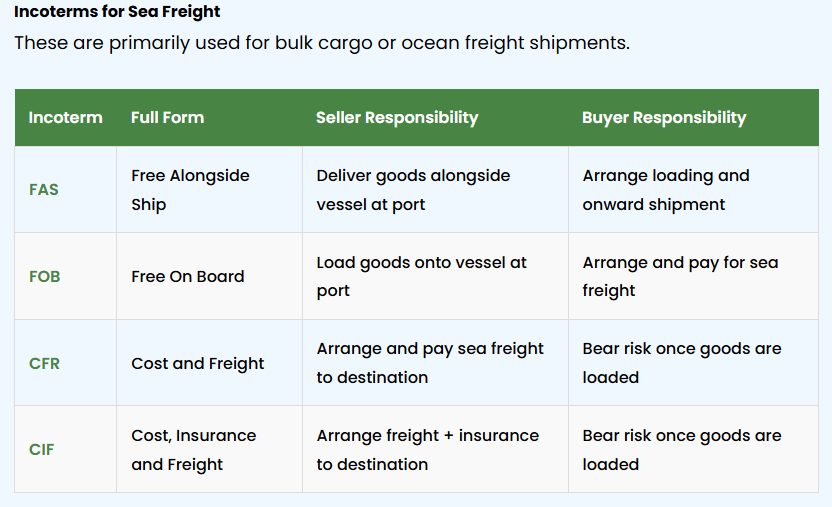
Which Incoterms are used for sea freight?
Some Incoterms are specifically designed for sea and inland waterway transport.
The Incoterms commonly used for ocean freight are:
- FAS – Free Alongside Ship
- FOB – Free On Board
- CFR – Cost and Freight
- CIF – Cost, Insurance and Freight
These terms are typically used for bulk cargo and maritime shipments where goods are transported by vessel between international ports.
Incoterms 2020 are standardized international trade rules published by the ICC that define shipping responsibilities, cost allocation, risk transfer, and customs duties between buyers and sellers—helping eCommerce businesses avoid disputes, manage logistics costs, and streamline global shipping operations through clear contractual terms.