Key Metrics to Measure Shipping Performance and Improve Delivery Efficiency
Introduction
In the fast-growing Indian eCommerce ecosystem, logistics performance often determines whether a brand scales successfully or struggles with customer complaints and rising operational costs. Tracking the right logistics KPIs for eCommerce businesses has become essential for managing shipping performance, delivery reliability, and operational efficiency.
While product quality and marketing drive sales, logistics execution directly affects customer satisfaction, delivery experience, and profitability. For eCommerce brands shipping hundreds or thousands of orders every month, understanding logistics performance is critical for maintaining operational control.
Many online businesses depend on multi-courier shipping strategies to improve delivery coverage and reduce delays. However, without structured logistics metrics, it becomes difficult to measure courier performance, fulfillment speed, and shipping cost efficiency.
This is where Logistics Key Performance Indicators (KPIs) play an important role. These measurable metrics help businesses evaluate shipping speed, delivery success rates, warehouse productivity, and logistics costs.
Companies that actively monitor logistics performance metrics often achieve higher operational efficiency and better customer satisfaction. These insights allow businesses to identify operational bottlenecks, improve fulfillment processes, and optimize delivery performance.
With India's competitive eCommerce landscape-where customers expect 2-3 day deliveries, real-time shipment tracking, and seamless returns-tracking logistics KPIs has become a strategic requirement rather than just an operational activity.
India's rapidly expanding digital commerce ecosystem continues to increase demand for faster and more reliable logistics infrastructure according to industry reports from IBEF.
This guide explains the most important logistics KPIs every eCommerce brand should track, including industry benchmarks, real-world examples, and strategies to improve logistics performance.
What Are Logistics KPIs?
Logistics KPIs are measurable performance metrics used to evaluate how efficiently a business manages shipping, order fulfillment, inventory operations, and delivery performance.
These metrics help businesses track how effectively they:
- Process customer orders
- Manage inventory
- Deliver shipments
- Control logistics costs
- Handle returns and delivery failures
In simple terms, logistics KPIs help businesses determine whether their shipping and fulfillment operations are performing efficiently or require improvement.
For eCommerce brands, these metrics provide visibility into key operational areas such as:
- Order fulfillment speed
- Delivery success rate
- Shipping cost efficiency
- Warehouse productivity
- Customer satisfaction
Without these metrics, logistics decisions often become reactive instead of data-driven, making it harder to scale operations efficiently.
Why Logistics KPIs Matter for eCommerce Operations
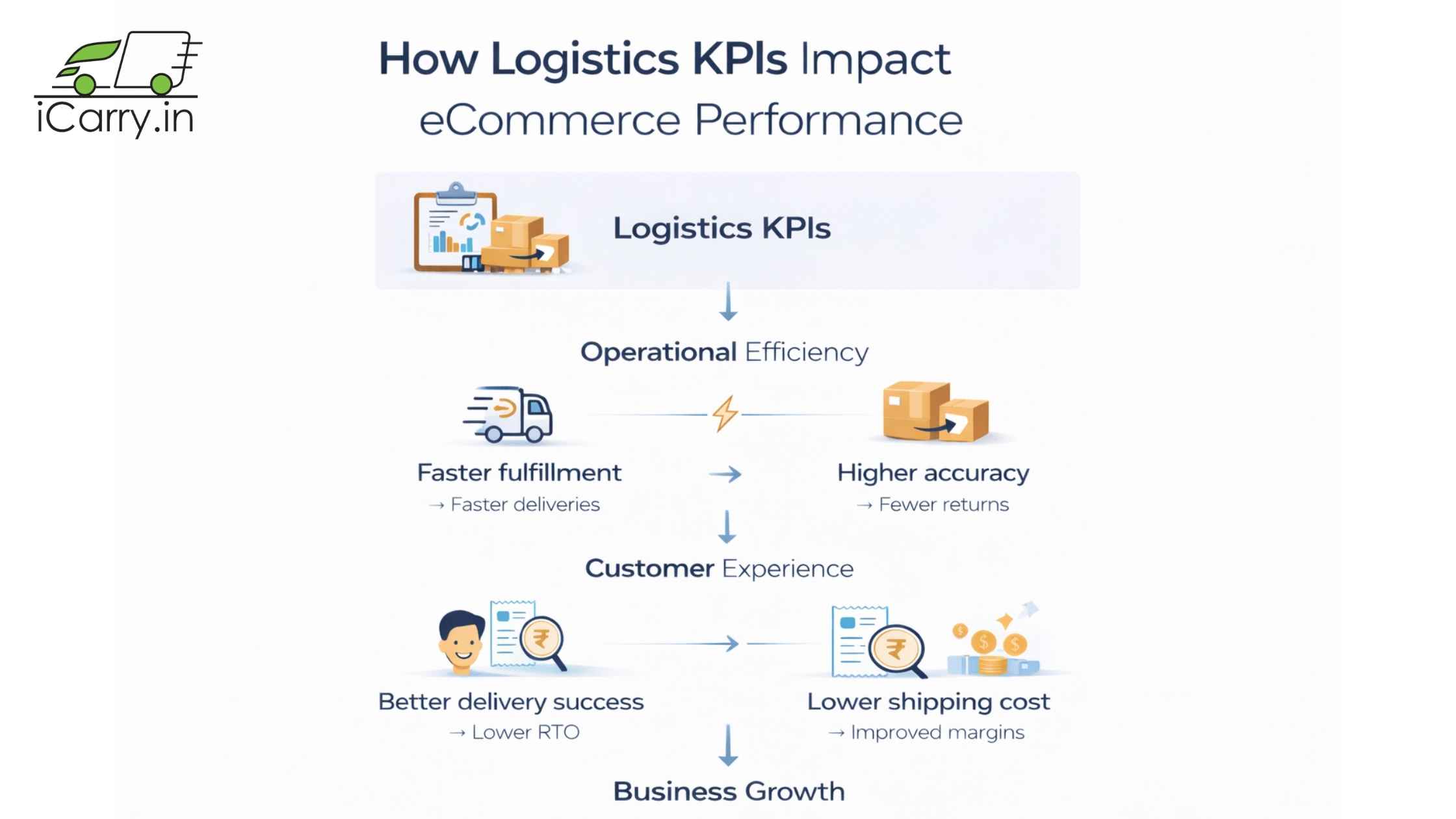
Logistics performance metrics influence several important aspects of an eCommerce business, including delivery speed, operational efficiency, cost control, and customer experience.
Customer Experience
Fast and reliable deliveries significantly improve customer satisfaction and increase repeat purchases. Customers expect accurate delivery timelines and transparent shipment tracking.
Operational Efficiency
Logistics KPIs help businesses identify inefficiencies across multiple operational areas such as:
- Warehouse operations
- Courier performance
- Inventory management
- Order processing workflows
By monitoring these metrics, businesses can optimize fulfillment speed and reduce operational delays.
Cost Control
Shipping and fulfillment often represent 20-30% of total operational costs for eCommerce brands. Tracking logistics KPIs helps businesses optimize courier selection, improve packaging strategies, and reduce shipping expenses.
Research from McKinsey on supply chain management emphasizes how technology-enabled logistics visibility directly improves cost control and operational performance.
Businesses that use logistics infrastructure platforms such as iCarry can also gain better visibility into courier performance and shipping data.
Business Scalability
Brands that monitor logistics performance metrics are better equipped to scale order volumes without losing operational control. As order volumes increase, KPI monitoring helps maintain consistent delivery performance.
Key Logistics KPIs Every eCommerce Brand Should Track
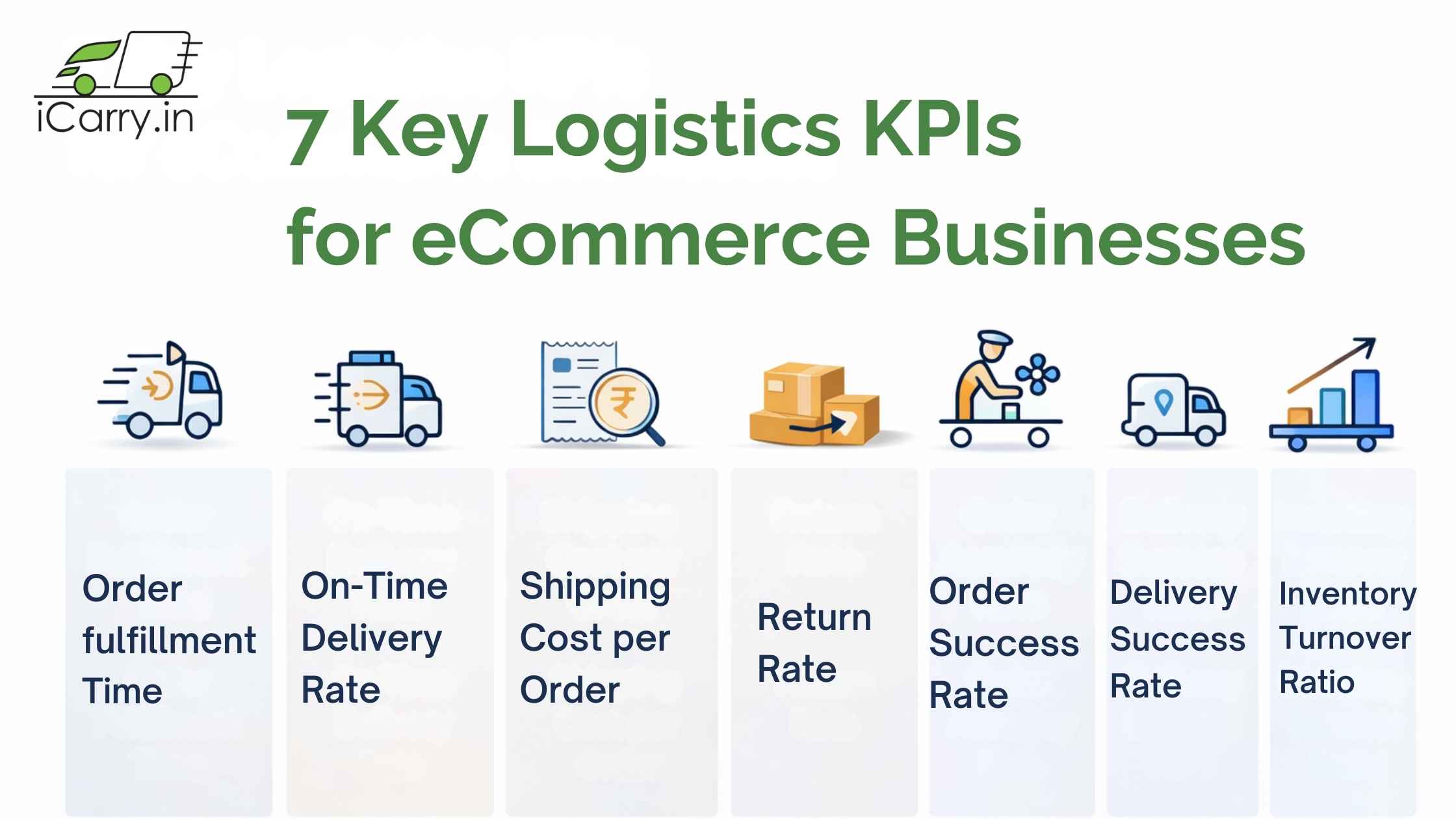
These KPIs provide a structured overview of how efficiently eCommerce businesses manage shipping operations, warehouse performance, and delivery reliability.
Core Logistics KPIs Every eCommerce Brand Should Monitor
1. Order Fulfillment Time
Definition
Order fulfillment time measures the duration between when a customer places an order and when the order is shipped from the warehouse. This KPI reflects warehouse efficiency and order processing speed.
Formula
Order Fulfillment Time = Order Ship Time − Order Placement Time
Typical Benchmark
Lower fulfillment times allow businesses to offer faster deliveries and improved customer satisfaction.
2. On-Time Delivery Rate
Definition
On-time delivery rate measures the percentage of shipments delivered within the promised delivery timeline.
Formula
On-Time Delivery Rate = (On-Time Deliveries / Total Deliveries) × 100
Benchmark
Businesses integrating courier systems through shipping API plugins and integrations can monitor courier performance across multiple logistics partners and regions.
3. Order Accuracy Rate
Definition
Order accuracy rate measures the percentage of orders delivered correctly without picking or packing errors.
Formula
Order Accuracy = (Correct Orders / Total Orders) × 100
Benchmark
Maintaining high accuracy significantly reduces returns and improves customer trust.
4. Shipping Cost per Order
Definition
Shipping cost per order measures the average logistics expense required to deliver each order.
Formula
Shipping Cost per Order = Total Shipping Costs / Total Orders
Typical Range in Indian eCommerce
Delivery optimization tools such as Delivery Boost Settings help businesses improve delivery performance while managing shipping costs across different regions.
5. Return Rate
Definition
Return rate measures the percentage of orders returned by customers.
Formula
Return Rate = (Returned Orders / Total Orders) × 100
Typical Benchmarks
High return rates may indicate product quality issues, inaccurate product descriptions, or delivery challenges.
6. Delivery Success Rate (First Attempt)
Definition
Delivery success rate measures the percentage of orders successfully delivered on the first attempt.
Formula
First Attempt Delivery Rate = (Successful First Deliveries / Total Deliveries) × 100
Benchmark
Low first-attempt success rates increase Return-to-Origin (RTO) costs, which can significantly affect logistics profitability especially in last-mile delivery challenges in India.
7. Inventory Turnover Ratio
Definition
Inventory turnover ratio measures how frequently inventory is sold and replenished during a given period.
Formula
Inventory Turnover = Cost of Goods Sold / Average Inventory
Benchmark
Higher turnover indicates efficient inventory management and stronger cash flow.
Step-by-Step Process to Track Logistics KPIs
Businesses can follow a structured approach to monitor logistics performance effectively.
1. Identify Critical KPIs
Select KPIs aligned with operational goals such as faster deliveries, cost reduction, and inventory optimization.
2. Integrate Order and Logistics Data
Connect systems including:
- Order management systems
- Warehouse management systems
- Courier tracking systems
3. Build KPI Dashboards
Dashboards allow operations teams to monitor delivery performance, order processing speed, and shipping costs.
4. Set Benchmarks
Define performance targets based on industry benchmarks and operational goals.
5. Monitor Trends Regularly
Weekly and monthly analysis helps identify operational issues early.
Real-World Logistics KPI Examples
Reducing Delivery Delays
An Indian D2C brand discovered that 25% of shipments were delayed due to courier inefficiencies. After implementing a multi-courier shipping strategy, the brand improved its on-time delivery rate from 88% to 96%.
Improving Warehouse Efficiency
A beauty brand reduced order fulfillment time from 36 hours to 12 hours by improving warehouse picking processes.
Lowering Shipping Costs
A home décor brand optimized packaging sizes and negotiated courier rates, reducing shipping cost per order by 18%.
Benefits of Tracking Logistics KPIs
Businesses that monitor logistics performance metrics gain several operational advantages.
Better Operational Visibility
KPI dashboards provide clear insights into logistics performance.
Improved Customer Experience
Reliable deliveries increase customer satisfaction and loyalty.
Reduced Logistics Costs
Performance data helps identify cost-saving opportunities.
Scalable Operations
Structured KPI monitoring enables businesses to scale order volumes without losing operational control.
Operational Insight
As eCommerce order volumes grow, logistics complexity increases significantly. Businesses that consistently monitor fulfillment speed, courier reliability, shipping costs, and delivery success rates gain deeper operational visibility into their logistics operations.
Over time, structured KPI monitoring becomes the foundation for building a scalable and reliable logistics infrastructure capable of supporting long-term eCommerce growth.
Frequently Asked Questions (FAQs)
What are logistics KPIs in eCommerce?
Logistics KPIs are measurable metrics used to evaluate shipping performance, order fulfillment efficiency, inventory management, and delivery operations in eCommerce businesses.
Why are logistics KPIs important for eCommerce brands?
These metrics help businesses monitor delivery performance, reduce logistics costs, improve operational efficiency, and enhance customer satisfaction.
What is the most important logistics KPI?
On-time delivery rate and order fulfillment time are among the most critical KPIs because they directly impact customer experience.
What is a good on-time delivery rate for eCommerce?
A strong on-time delivery rate for eCommerce businesses is typically above 95%.
How can eCommerce brands reduce shipping costs?
Businesses can reduce shipping costs by optimizing packaging, negotiating courier rates, using multiple courier partners, and improving inventory placement.
What is a good order accuracy rate in logistics?
A strong order accuracy rate is typically 99% or higher, ensuring customers receive the correct products without errors.
Tracking 7 core logistics KPIs—order fulfillment time, on-time delivery rate (95%+ target), order accuracy (99%+), shipping cost per order, return rate, first-attempt delivery success, and inventory turnover—provides eCommerce businesses with data-driven visibility to optimize warehouse efficiency, reduce costs, and scale operations reliably.