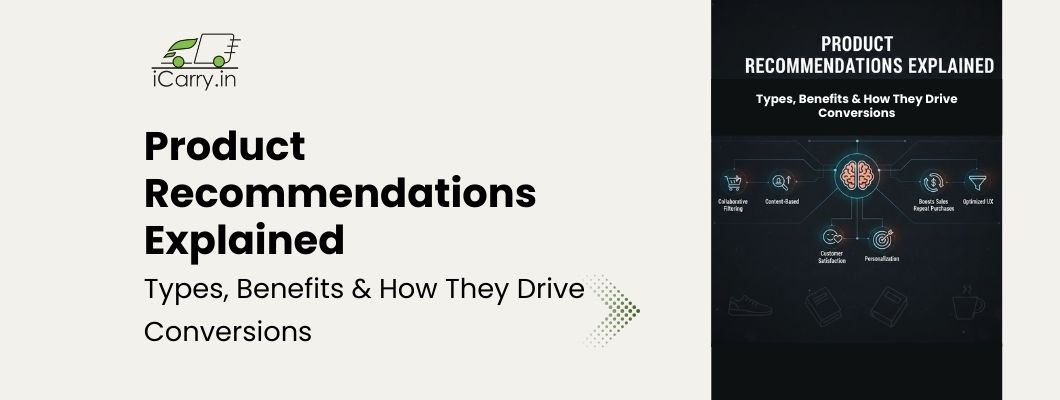
Ever noticed how eCommerce websites seem to know exactly what you might want next? That's not coincidence - it's product recommendations working behind the scenes.
When done right, product recommendations don't feel pushy. They feel helpful. And for online businesses, they quietly increase conversion rate, average order value, and customer retention.
This guide explains what product recommendations are, the main types, and how they actually drive conversions.
Product recommendations are one of many levers that improve conversions. However, most stores struggle with multiple operational gaps.
What Are Product Recommendations?
Product recommendations are personalized or rule-based product suggestions shown to customers during their shopping journey.
You'll typically see them as:
- "Recommended for you"
- "Frequently bought together"
- "You may also like"
Major eCommerce platforms like Shopify explain product recommendations as tools that help customers discover relevant products faster - reducing decision fatigue.
Platforms like Shopify explain product recommendations as tools that help customers discover relevant products faster, improving user experience and conversions.
Why Product Recommendations Matter
Online shoppers are overwhelmed with choice. Recommendations help by:
- Guiding customers to relevant products
- Reducing bounce rates
- Increasing basket size
Research shared by Google on eCommerce UX highlights that personalized experiences significantly improve user engagement and conversions.
Recommendations work best when paired with a smooth buying journey.
Types of Product Recommendations (Explained Simply)
1. Related Products
These suggestions show items similar to the product being viewed - such as different colors, sizes, or styles.
They work well on product pages by keeping users engaged instead of letting them exit.
2. Frequently Bought Together
These recommendations encourage bundling by showing complementary products.
Amazon popularized this format, and many stores now use it to increase average order value without heavy discounts.
Bundling strategies work best when shipping costs stay predictable.
3. Personalized Recommendations
These are based on user behavior like browsing history, past purchases, or location.
AI-powered recommendation engines analyze data patterns to suggest products customers are most likely to buy.
4. Trending or Best-Selling Products
Showing what others are buying builds trust and urgency.
E-commerce UX best practices recommend using best-seller sections to reduce hesitation, especially for first-time visitors.
Highlighting what others buy builds trust - similar to how social proof works in content-led selling.
5. Recently Viewed Items
These reminders help customers return to products they showed interest in earlier - especially useful for longer buying cycles.
How Product Recommendations Drive Conversions
According to McKinsey, effective personalization can significantly increase revenue by guiding customers toward relevant products at the right moment.
They Reduce Decision Fatigue
Too many options overwhelm users. Recommendations narrow choices and guide decisions.
They Increase Average Order Value
By showing complementary products at the right moment, stores encourage customers to add more to cart naturally.
They Improve User Experience
Relevant suggestions make shopping feel easier and more personalized - which builds trust and loyalty.
They Boost Repeat Purchases
Personalized recommendations bring customers back by showing relevant items based on past behavior.
Where to Place Product Recommendations
Placement matters as much as logic.
High-performing stores place recommendations:
- On product pages
- In the cart
- During checkout
- In post-purchase emails
Shopify's conversion optimization guides highlight cart and checkout as high-impact areas for recommendations.
Recommendation placement works best on high-performing websites.
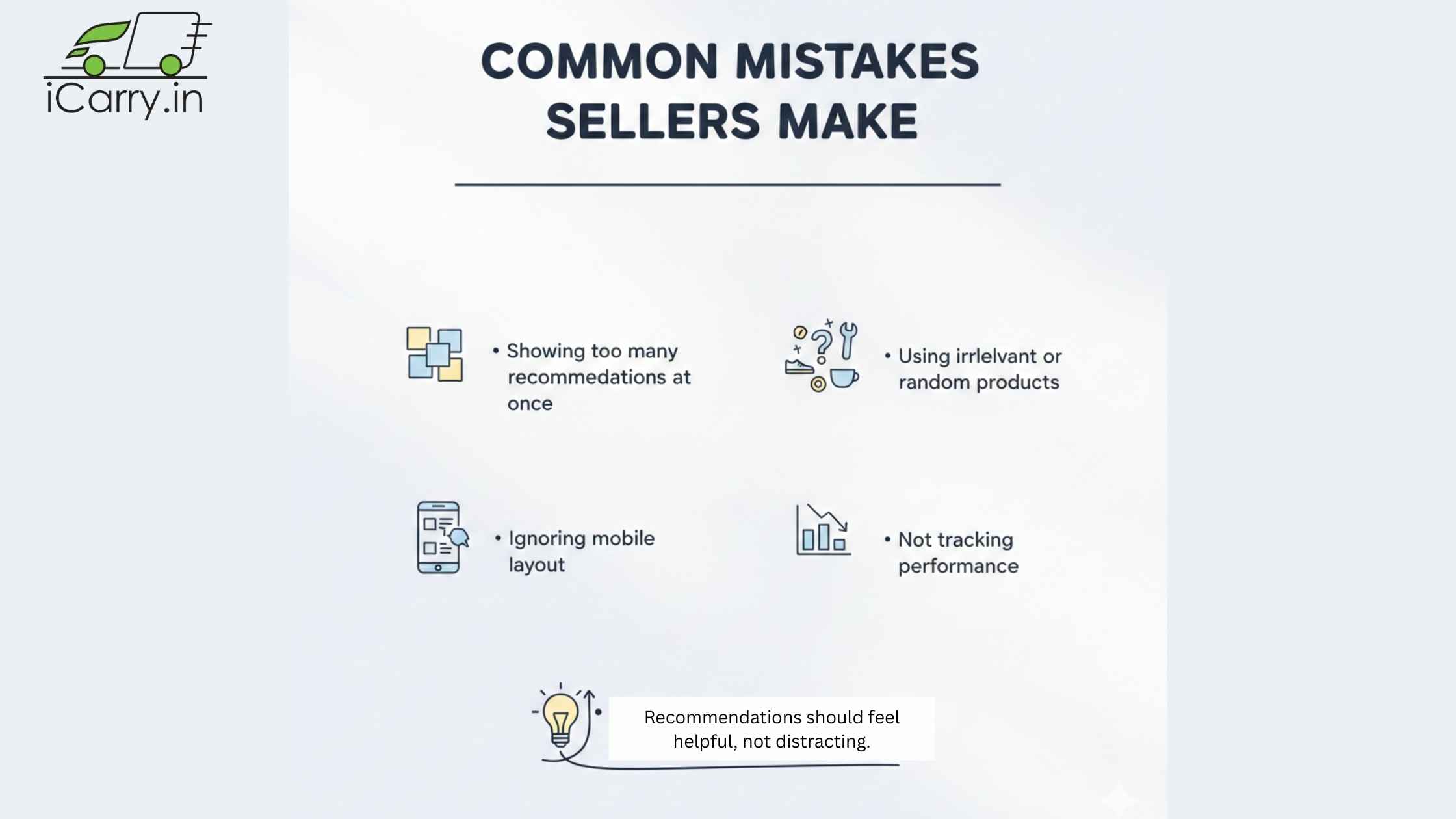
Common Mistakes Sellers Make
- Showing too many recommendations at once
- Using irrelevant or random products
- Ignoring mobile layout
- Not tracking performance
Recommendations should feel helpful, not distracting.
Measuring Recommendation Performance
Key metrics to track:
- Click-through rate
- Conversion rate
- Average order value
- Revenue per visitor
Analytics tools help identify which recommendation types actually perform - and which don't.
Tools like Google Analytics help track click-through rates, conversions, and revenue impact from recommendation widgets.
As order volume grows, operational efficiency becomes just as important as analytics.
Final Thoughts
Product recommendations aren't just a "nice-to-have" feature - they're a proven conversion driver when implemented thoughtfully.
Whether rule-based or AI-powered, the goal is the same: help customers find the right product faster.
When recommendations feel natural and relevant, conversions follow.
High conversions don't stop at checkout - they depend on reliable delivery.
👉 Ship smarter with iCarry and support growth driven by better product discovery.
Product recommendations aren't just nice-to-have—they're proven conversion drivers. When suggestions feel natural and relevant, they reduce decision fatigue, increase AOV, and build customer loyalty.