Month one: twenty orders, shipped from a founder's living room using three different courier apps because none of them will offer negotiated rates at that volume. Month three: shipping has quietly become 18% of revenue, and nobody planned for that - it just happened, order by order, while everyone was focused on the product.
This is what logistics looks like when it gets added on instead of designed in. Startups need the same shipping infrastructure as an established business - reliable couriers, same packaging costs, working compliance - but without the order volume to negotiate any of it directly. Every rupee spent getting this wrong competes with product development and marketing for the same limited runway.
What Is Startup Logistics Setup?
Startup logistics setup is the process of establishing courier access, packaging standards, and cost tracking for a business's first year of shipping - typically before it has the volume to negotiate rates directly with any single courier. For most Indian startups, this means using a courier aggregator for pre-negotiated multi-courier rates instead of approaching couriers individually, setting a packaging budget before it becomes an afterthought, and tracking cost per delivered order from the first sale so scaling decisions are based on real numbers, not guesses.
How to Set Up Shipping for Your Startup in Year One
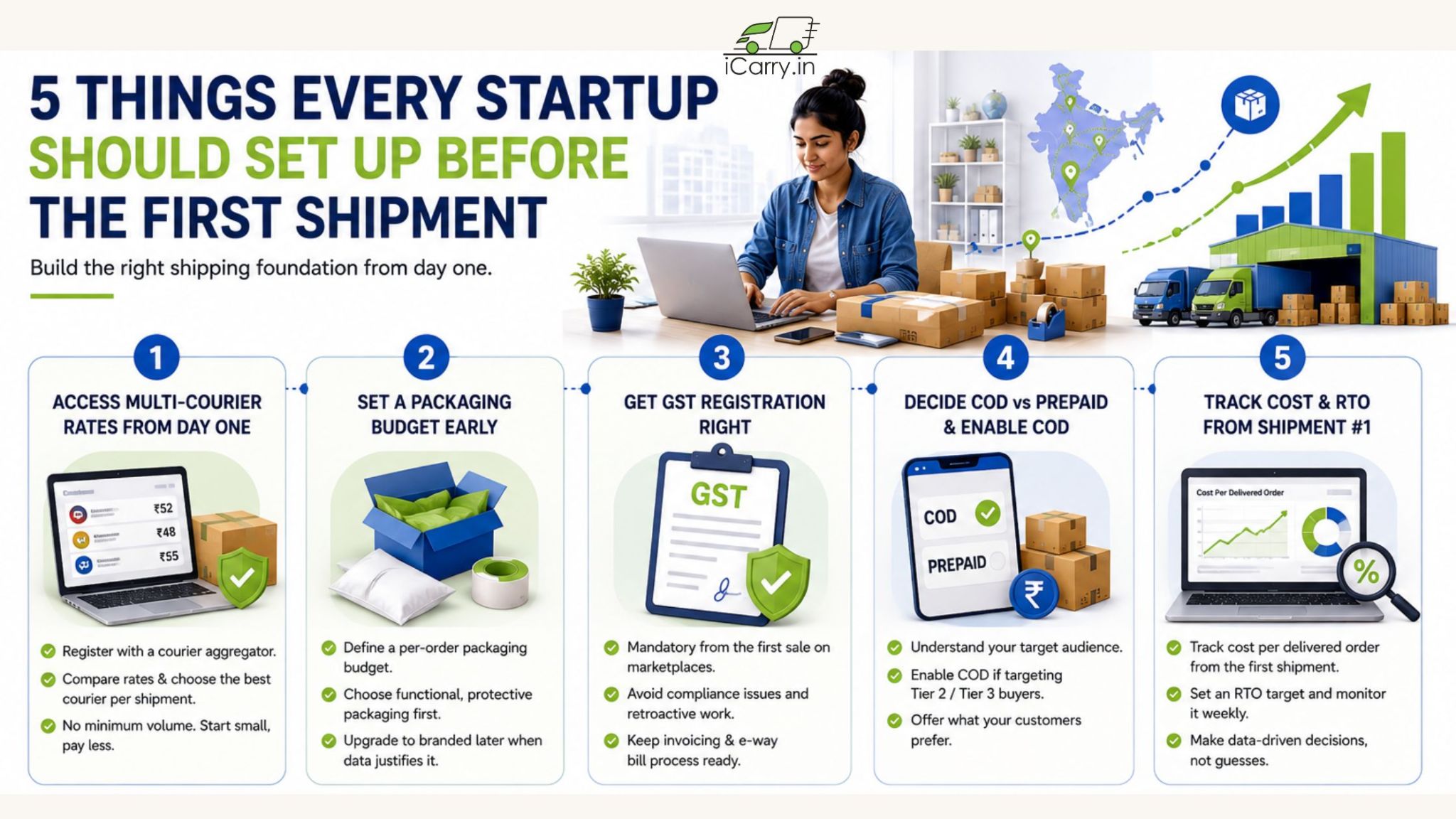
- Register with a courier aggregator that gives multi-courier rate access with no minimum volume
- Set a per-order packaging budget before your first bulk packaging purchase
- Register for GST before your first sale if you're selling through a marketplace
- Decide your COD vs prepaid mix, and enable COD before launch if targeting Tier 2/3 buyers
- Track cost per delivered order from your very first shipment, not after the first 100
- Set a target RTO rate and check it weekly, not monthly
- Confirm your e-way bill process for any single shipment above ₹50,000
Why Startup Shipping Needs a Different Approach
India's startup ecosystem is large enough that this is a well-worn problem, not a niche one - DPIIT has recognised over 1.4 lakh startups, generating more than 1.55 million direct jobs (IBEF). Most of that ecosystem goes through the exact same first-year logistics gap: real infrastructure needs, no volume to negotiate it.
- No volume for direct courier negotiation - most couriers want 500+ shipments a month before offering negotiated rates
- Every cost decision hits runway directly, not just margin - there's no cushion to absorb an overpriced courier contract
- Compliance mistakes compound - a missed GST registration or e-way bill gets more expensive to fix the longer it's ignored
- Team bandwidth is founder time - there's rarely a dedicated ops hire to catch problems early
Courier Aggregator vs Direct Courier Tie-Up
The biggest early decision is how you access courier capacity in the first place. A direct tie-up with one courier can look simpler, but it usually isn't the right fit yet:
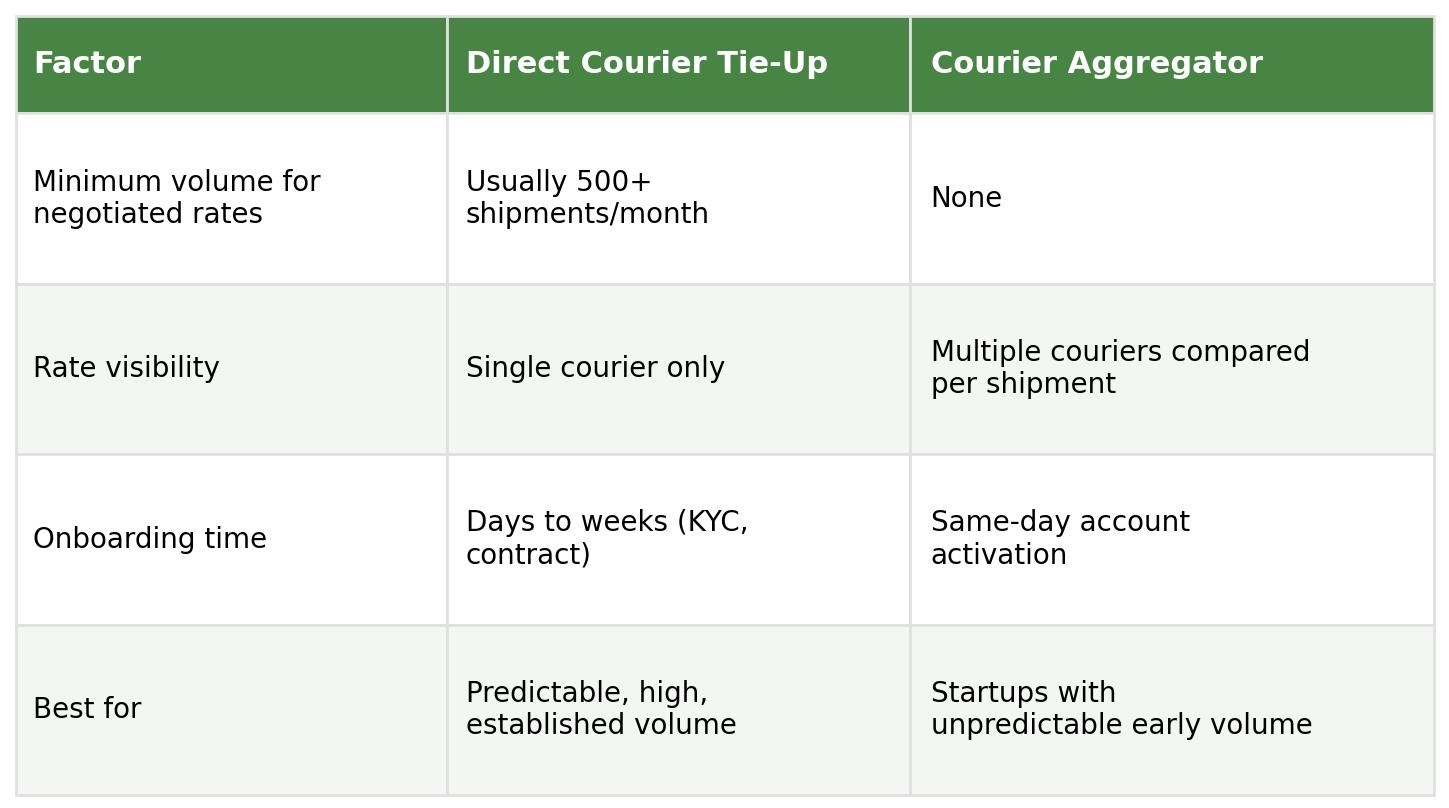
A courier aggregator gives a pre-launch or early-stage business the same rate access a larger seller would negotiate directly, without the volume commitment. On a 500g Zone D shipment, a founder with no negotiating leverage might pay a courier's standard retail rate of around ₹95. The same shipment through an aggregator's pre-negotiated plan can run closer to ₹52. At 50 orders a month, that gap alone is ₹2,150 - money that stays in the runway instead of freight.
Setting a Realistic Packaging Budget
Packaging is one of the easiest places to overspend before you have the data to justify it. For a startup shipping a 300g product, a basic poly mailer with tape runs about ₹5 per order. A branded box with tissue paper and a thank-you card runs closer to ₹22. At 50 orders a month, that difference is ₹850 - a real cost when every rupee is runway.
Most pre-product-market-fit startups are better off sticking to functional, protective packaging and revisiting branded presentation once repeat-purchase or unboxing-driven referral data actually justifies the spend. Presentation matters more once you know customers are coming back.
Getting Compliance Right From Day One
- GST registration: mandatory from your first sale if you're selling through a marketplace like Amazon or Flipkart, regardless of turnover. Selling only through your own website still triggers the standard turnover threshold, but registering early avoids retrofitting invoicing and e-way bill processes later.
- E-way bill: required for any single consignment valued above ₹50,000 moving between states - the threshold is uniform across India for interstate movement (CBIC). Several states also require one for intra-state movement above their own local threshold.
- IEC (Import Export Code): needed only if you're shipping internationally. Apply for it before your first export order - it isn't instant, and a delayed IEC is a common reason a founder's first international sale gets stuck.
The Metrics That Actually Matter in Year One
It's tempting to track nothing until volume feels "high enough to matter." That's backwards - year one is when bad habits get set. Three numbers are worth watching from shipment one:
- Cost per delivered order: (freight + packaging + COD fee + RTO losses) divided by orders actually delivered - not orders shipped. This is the number that tells you if you're actually profitable per order, not just on paper.
- RTO rate by pincode cluster: a blended RTO number hides which regions are actually the problem. Breaking it out early means you can fix a bad delivery zone before it's baked into your unit economics.
- First-attempt delivery success rate: a leading indicator for RTO. If first-attempt success is falling, RTO is about to rise - catching it here is cheaper than fixing it after the return.
A concrete example: at a 20% RTO rate on 60 monthly COD orders with ₹75 average round-trip freight, RTO costs ₹900 a month before you even count the lost product value. That's not a rounding error for a pre-seed business - it's a number worth checking weekly.
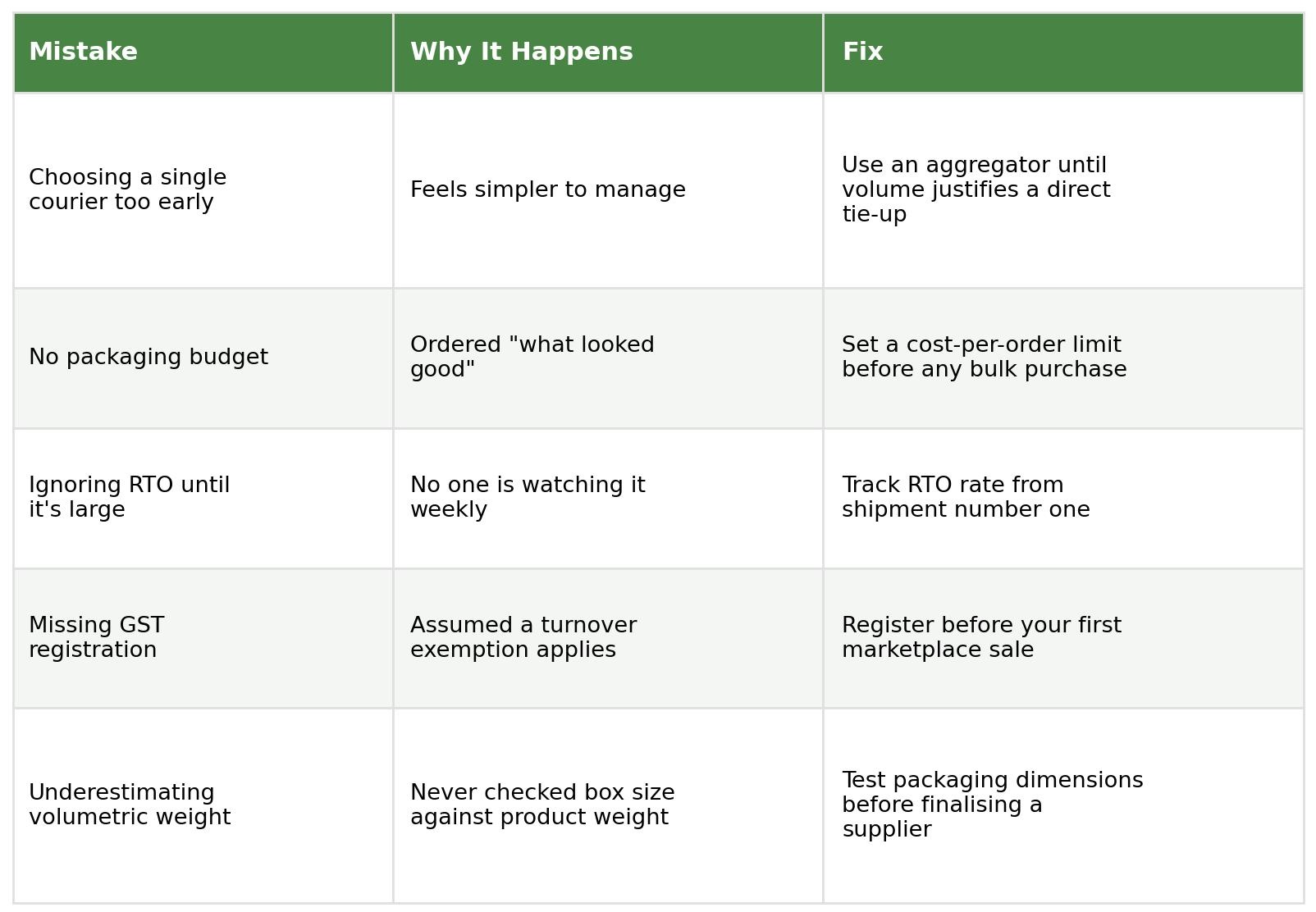
Common First-Year Shipping Mistakes
How iCarry® Supports Startups
iCarry® is built for exactly this stage - businesses that need real courier infrastructure before they have the volume to negotiate it themselves.
- Free Bronze plan: no minimum shipment volume, multi-courier rate access from your very first order.
- Compare live rates across couriers before every dispatch using iCarry®'s rate calculator - takes under a minute and shows the cheapest reliable option for each shipment.
- Cost per delivered order: visible directly in your dashboard, so you're tracking the metric that matters from day one instead of reconstructing it later in a spreadsheet.
- Two-way WhatsApp engagement: confirm delivery details and reduce failed attempts without needing a support team to manage every conversation manually.
- Delivery Boost: Pre-delivery customer contact, NDR auditing, fake delivery investigation - specifically designed for high-risk COD orders
Final Thoughts
Startup shipping doesn't need to be perfect in year one - it needs to be deliberate. Use an aggregator instead of guessing which single courier to commit to, set a packaging budget before your first bulk order, get GST and e-way bill compliance right from the first sale, and track cost per delivered order from shipment one instead of shipment one hundred.
The founders who get this right aren't the ones with the fanciest unboxing experience in month one. They're the ones who know their real cost per order, catch a bad RTO trend in week two instead of month six, and haven't quietly burned a chunk of their runway on logistics nobody was watching.
Frequently Asked Questions (FAQs)
Do I need a dedicated logistics person in my startup's first year?
Usually not. Most startups run shipping through the founder or a generalist ops hire in year one, using a courier aggregator to handle rate access and multi-courier routing so you're not managing individual courier relationships manually. A dedicated logistics hire typically starts to make sense past 150 to 200 orders a month.
Should I use a single courier or multiple couriers when I'm just starting out?
Multiple, through an aggregator. A single courier tie-up only pays off once you have consistent monthly volume to negotiate with directly - usually 500 or more shipments. Before that, an aggregator gives you pre-negotiated rates across several couriers with no minimum volume, so you're not locked into one network's coverage gaps or pricing.
When should I register for GST if I'm selling online?
Before your first sale if you're selling through a marketplace like Amazon or Flipkart - registration is mandatory for ecommerce sellers regardless of turnover in most cases. If you're selling only through your own website or social channels, the standard turnover threshold applies, but registering early avoids retrofitting invoicing and e-way bill processes later.
How much should I budget for packaging as a percentage of order value?
For most early-stage D2C startups, functional packaging - a mailer or basic box, tape, minimal branding - should run 2 to 4% of average order value. Branded, presentation-heavy packaging can push that to 6 to 8%, and is usually worth deferring until repeat-purchase data shows customers actually value the unboxing experience.
What RTO rate should concern me as a new business?
Above 15 to 20% for COD orders is worth investigating immediately, and even a 10% rate is worth tracking weekly rather than monthly. RTO compounds fast in year one because every returned order costs the outbound freight, the return freight, and the lost sale - and a small business absorbs that as a direct hit to limited runway, not just a line-item.
Startup shipping doesn't need to be perfect in year one - it needs to be deliberate. Use an aggregator instead of guessing which single courier to commit to, set a packaging budget before your first bulk order, get GST and e-way bill compliance right from the first sale, and track cost per delivered order from shipment one instead of shipment one hundred. The founders who get this right are the ones who know their real cost per order and catch a bad RTO trend in week two instead of month six.