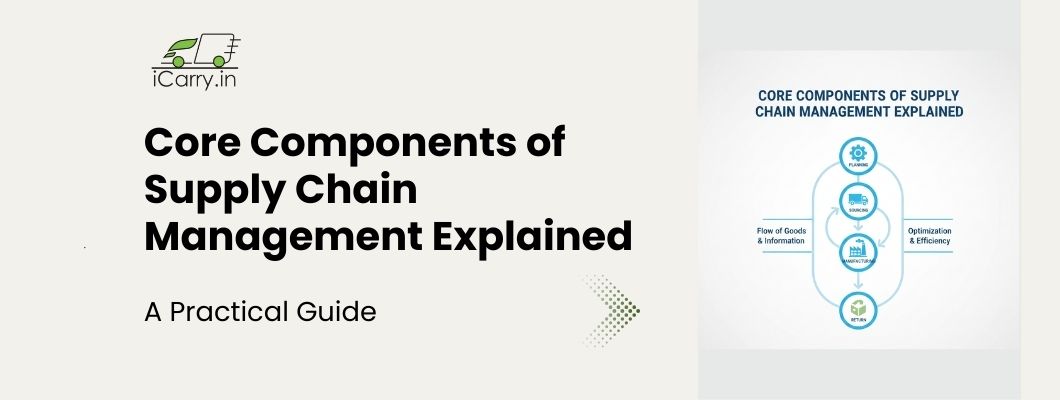
Supply Chain Management (SCM) is not just about moving goods from Point A to Point B.
It's about planning, coordinating, and optimizing everything that happens from raw material sourcing to final customer delivery - efficiently and profitably.
This guide breaks down the core components of supply chain management, explains what each one does, and shows how they work together in real life.
What Is Supply Chain Management?
Supply Chain Management is the process of managing the flow of goods, information, and money across suppliers, manufacturers, warehouses, logistics partners, and customers.
In simple words:
SCM ensures the right product reaches the right customer, at the right time, at the right cost.
Why Understanding SCM Components Matters
When businesses fail at scale, the reason is often delayed deliveries and rising logistics costs that quietly erode margins.
- Poor planning
- Inventory mismatch
- Delayed deliveries
- High logistics costs
Understanding SCM components helps you:
- Reduce waste
- Improve service levels
- Control costs
- Scale sustainably
1. Planning (The Brain of the Supply Chain)
What It Involves
- Demand forecasting
- Supply planning
- Capacity planning
- Inventory planning
Why It Matters
Planning decides:
- How much to produce
- When to produce
- Where to stock
Bad planning creates stockouts or overstock - both expensive.
2. Sourcing (Supplier & Procurement Management)
Supplier reliability and procurement strategy directly affect cost control and operational continuity.
What It Involves
- Supplier selection
- Vendor negotiation
- Purchase orders
- Contract management
Why It Matters
Reliable sourcing ensures:
- Consistent quality
- On-time raw material supply
- Cost control
A weak supplier can break the entire chain.
3. Manufacturing / Production
What It Involves
- Production scheduling
- Quality control
- Work-in-progress management
- Capacity utilization
Why It Matters
Production converts demand into real products.
Inefficient production causes:
- Delays
- Quality issues
- Cost overruns
4. Inventory Management
What It Involves
- Raw material inventory
- Work-in-progress inventory
- Finished goods inventory
Why It Matters
Inventory is money sitting on shelves.
Good inventory management improves order fulfillment only when courier performance and delivery reliability are consistent.
- Reduces holding costs
- Improves order fulfillment
- Prevents stockouts
Balance is key.
5. Warehousing & Storage
What It Involves
- Storage layout
- Picking & packing
- Warehouse operations
- Safety & handling
Why It Matters
Warehouses are not just storage - they are fulfillment engines.
Poor warehouse design slows everything down.
6. Transportation & Logistics
Transportation decisions often account for the largest share of total supply chain cost.
What It Involves
- Inbound transportation
- Outbound delivery
- Route planning
- Carrier selection
Why It Matters
Logistics affects:
- Delivery speed
- Customer satisfaction
- Total supply chain cost
The last mile is often the most expensive mile.
7. Order Management & Fulfillment
Order fulfillment is where supply chain performance becomes visible to customers.
What It Involves
- Order processing
- Allocation & dispatch
- Delivery coordination
- Proof of delivery
Why It Matters
This is where customers experience your supply chain.
Mistakes here directly hurt brand trust, especially when failed attempts, delays, or poor delivery communication occur.
8. Information Flow & Technology
What It Involves
- ERP systems
- Inventory software
- Order tracking
- Data integration
Why It Matters
Supply chains fail without visibility.
Technology ensures:
- Real-time tracking
- Data-driven decisions
- Faster issue resolution
9. Returns & Reverse Logistics
What It Involves
- Returns processing
- Repairs or replacements
- Restocking or disposal
Why It Matters
Returns are unavoidable - and inefficient return handling can significantly increase shipping losses and operational costs.
Efficient reverse logistics:
- Reduces losses
- Improves customer trust
- Protects margins
10. Performance Measurement & Control
What It Involves
- KPIs and metrics
- Cost tracking
- Service level monitoring
- Continuous improvement
Why It Matters
You can't improve what you don't measure.
Key metrics include:
- Order fulfillment rate
- Inventory turnover
- On-time delivery
- Cost per order
How These Components Work Together
Think of SCM as a connected system, not separate silos.
Example:
Each component affects the next.
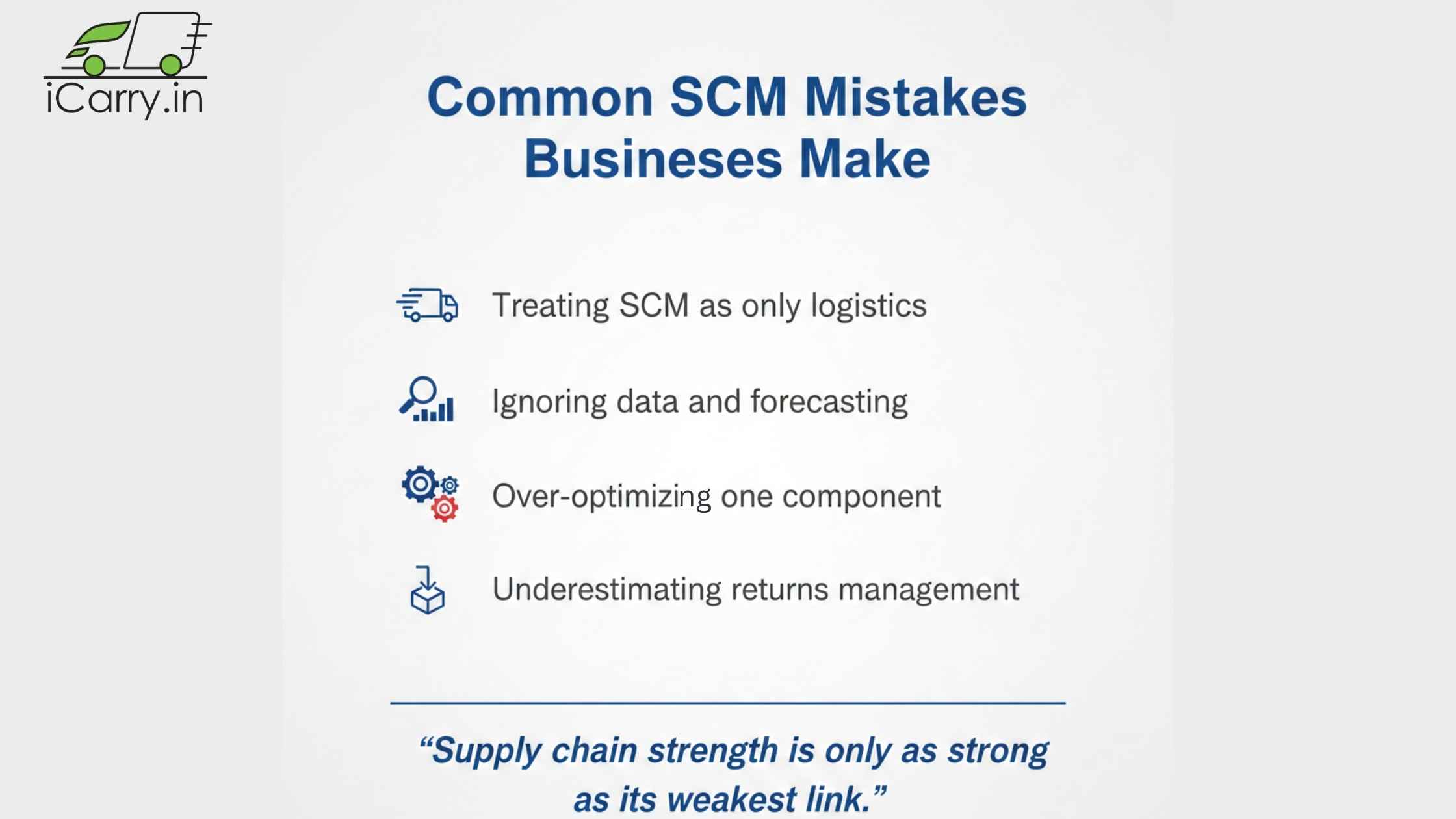
Common SCM Mistakes Businesses Make
- Treating SCM as only logistics
- Ignoring data and forecasting
- Over-optimizing one component
- Underestimating returns management
Supply chain strength is only as strong as its weakest link.
SCM in Modern Businesses
Today's supply chains focus on:
- Speed
- Flexibility
- Visibility
- Resilience
Especially after global disruptions, adaptive supply chains win.
Final Thoughts
Supply Chain Management is not a department - it's a business capability.
Businesses that understand and strengthen each SCM component:
- Scale faster
- Control costs better
- Deliver consistently
- Retain customers longer
Supply chains are where product promises are either fulfilled-or quietly broken. They determine whether a great idea reaches customers smoothly or gets lost between warehouses, couriers, and last-mile delays. Without a strong supply chain, even the best products struggle to scale.
At the same time, a well-aligned supply chain can elevate an average product by delivering consistency, reliability, and speed. Customers may forget features, but they remember experiences-especially delivery experiences.
Supply chains rarely fail in isolation. They fail at the exact point where planning meets execution-when demand forecasts don't align with inventory, courier performance varies by region, or delivery visibility disappears after dispatch. This gap is where customer trust erodes.
That's why growing businesses look beyond isolated logistics tasks and focus on end-to-end fulfillment strength. Reliable shipping, intelligent courier allocation, and real-time delivery visibility ensure that operational execution matches business intent.
Platforms like iCarry help brands centralize courier management and maintain fulfillment consistency as order volumes grow-so execution supports growth instead of slowing it down.
Understand supply chains for what they are: a performance multiplier. Strengthen them deliberately. And make sure every delivery reinforces the value your product promises.
Supply chain management coordinates planning, sourcing, production, inventory, warehousing, logistics, and fulfillment—each component affects the next, and business success depends on the entire system working together, not isolated optimization.