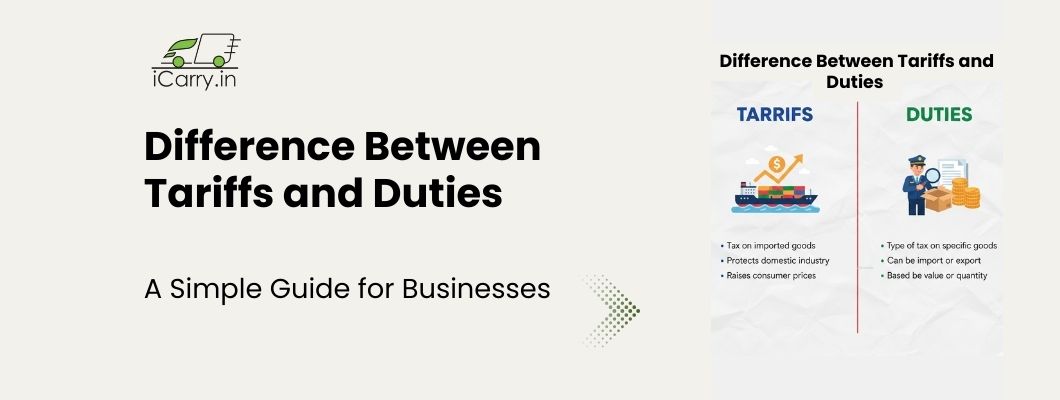
When businesses trade across borders, two words come up again and again: tariffs and duties.
They're often used interchangeably - but they are not the same.
Understanding the difference between tariffs and duties is essential for:
- Pricing exports and imports
- Calculating landed cost
- Avoiding compliance mistakes
- Protecting profit margins
This guide explains tariffs vs duties in simple terms, with examples you can relate to.
Pricing accuracy and cost control are critical in logistics operations. You may also explore our guide on How to Reduce Shipping Cost? to understand how businesses optimize operational expenses.
What Are Tariffs?
A tariff is a tax imposed by a government on imported (and sometimes exported) goods.
In simple words:
Tariffs make foreign products more expensive.
Governments use tariffs mainly to:
- Protect domestic industries
- Control imports
- Influence trade relationships
Tariffs are usually applied as a percentage of the product value or a fixed amount per unit.
For official definitions and explanations of tariff rates and trade policy tools, the best place to refer to is the World Trade Organization (WTO) tariffs overview.
What Are Duties?
Duties are fees or charges levied on goods when they cross a country's border.
In simple words:
Duties are charges collected by customs during import or export.
Duties include:
- Customs duty
- Excise duty (where applicable)
- Countervailing duty
- Anti-dumping duty
Duties are part of the customs clearance process.
The WTO Customs Valuation Agreement outlines international standards for how customs duties should be assessed.
Customs charges and clearance inefficiencies can significantly impact delivery timelines and profitability. Learn more about operational risks in The Hidden Costs of Inefficient Shipping.
Key Difference Between Tariffs and Duties
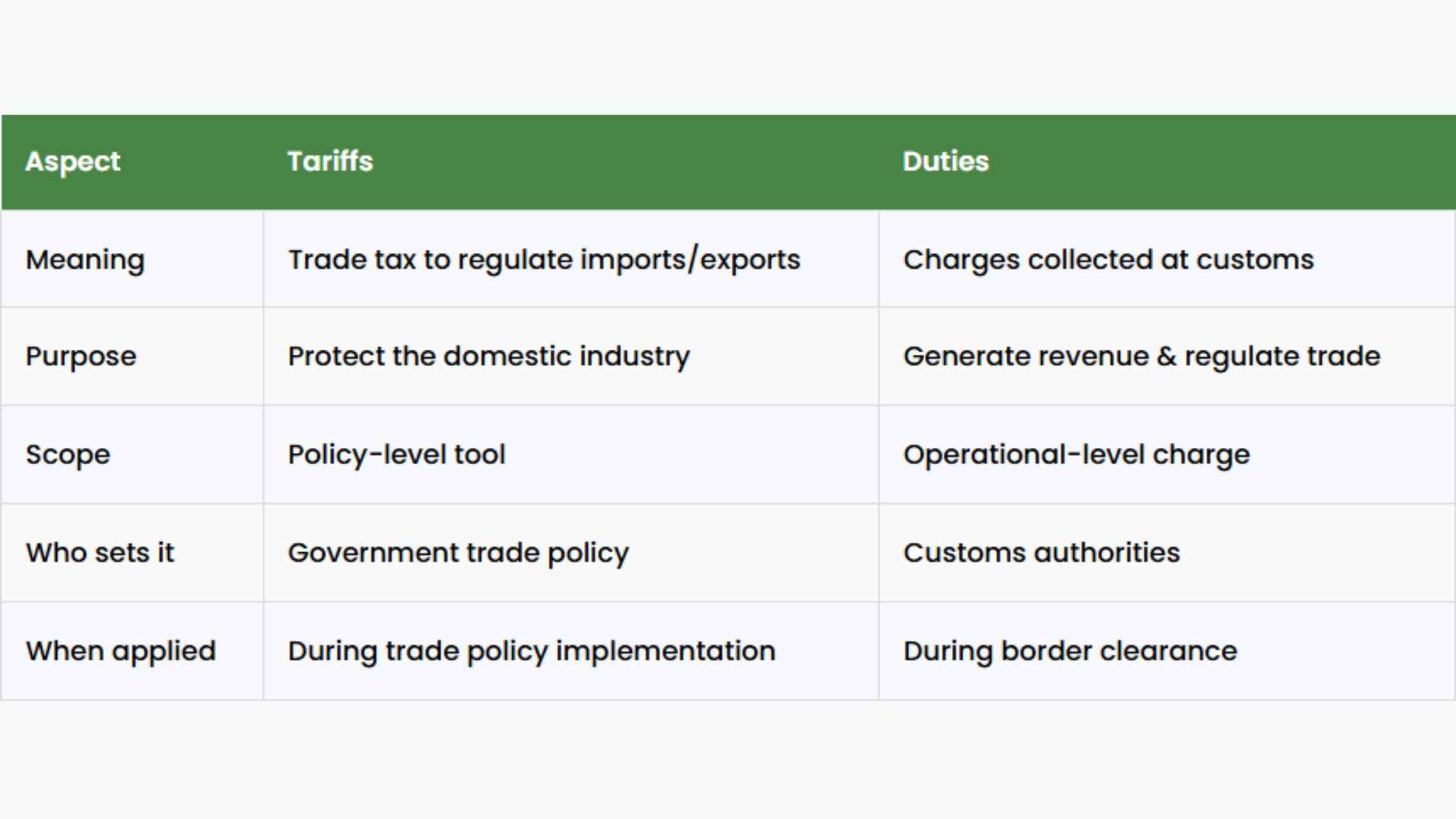
How Tariffs and Duties Work Together
In practice:
- Tariffs define the tax rate
- Duties are the actual charges paid
Example:
A country announces a 10% tariff on imported shoes.
At customs, the importer pays import duty based on that tariff rate.
Tariffs set the rule.
Duties collect the money.
For India-specific duty rules and customs procedures, exporters can refer to Central Board of Indirect Taxes and Customs (CBIC).
Real-World Example
Importing Electronics
- Government imposes a tariff to protect local manufacturers
- Customs applies duties when goods arrive
- Importer pays duty before release
The tariff exists on paper; the duty is paid in reality.
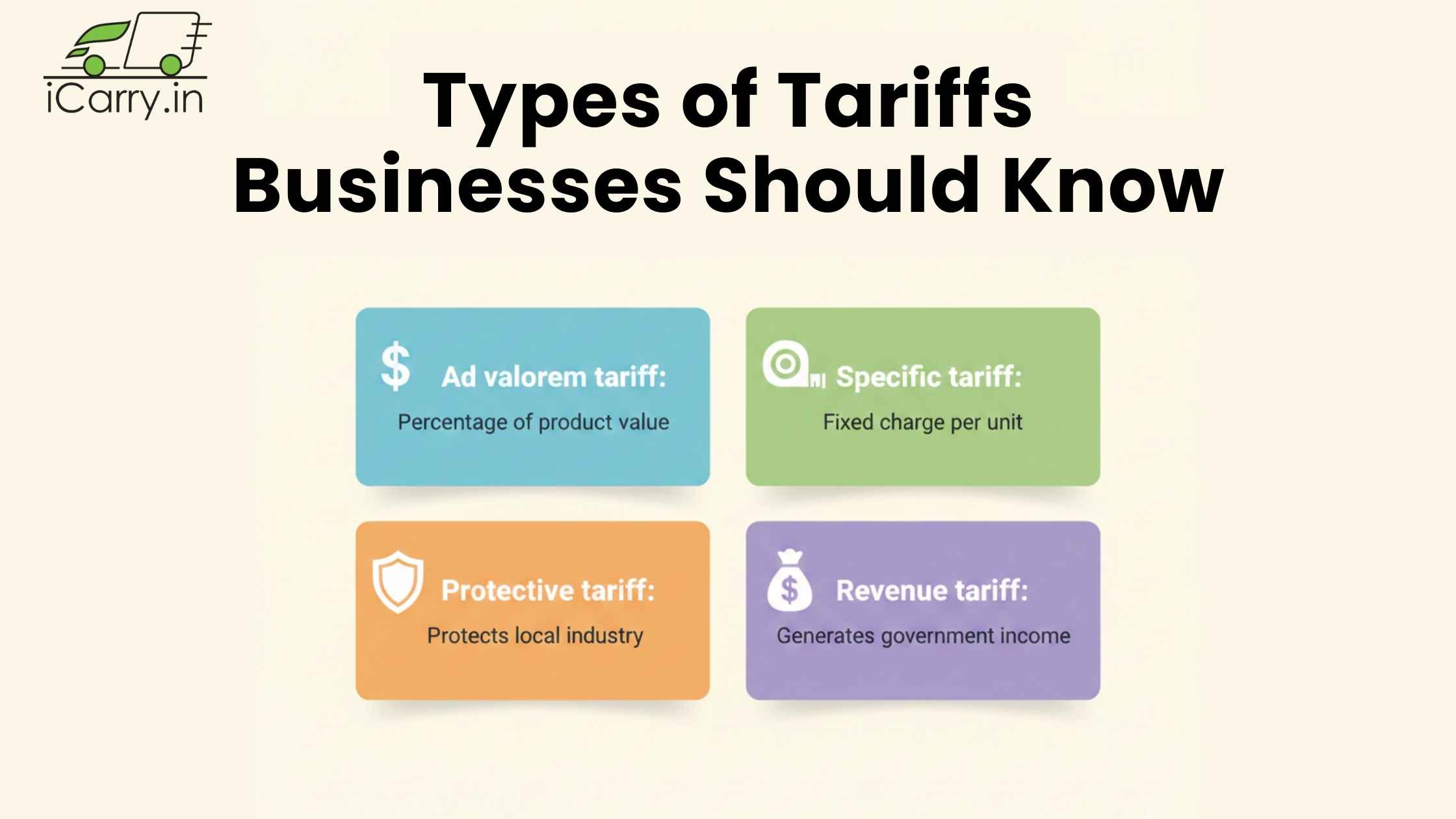
Types of Tariffs Businesses Should Know
- Ad valorem tariff: Percentage of product value
- Specific tariff: Fixed charge per unit
- Protective tariff: Protects local industry
- Revenue tariff: Generates government income
Each affects pricing differently.
Types of Duties Businesses Encounter
- Basic Customs Duty
- Countervailing Duty (to offset subsidies)
- Anti-Dumping Duty (to prevent unfair pricing)
- Safeguard Duty (temporary protection)
Duties directly impact landed cost.
Unexpected duties and clearance issues can also lead to delivery failures and higher returns. Learn how sellers reduce losses in How to Reduce Returns (RTO)?
Why the Difference Matters for Businesses
Misunderstanding tariffs and duties can lead to:
- Underpricing exports
- Margin erosion
- Unexpected costs
- Customs delays
Clear understanding = better pricing and planning.
Global trade data and tariff structures can be explored in detail through UNCTAD's trade and tariff analysis resources.
Cost confusion and documentation gaps can expose sellers to fraud and operational risks. Learn how to safeguard yourself as a business owner in India.
Tariffs vs Duties in International Trade Agreements
Trade agreements often:
- Reduce or eliminate tariffs
- Simplify duty structures
- Improve market access
But customs duties still apply based on agreed terms.
The OECD provides valuable insights into tariff classifications and how trade policy tools are used across economies.
Common Misconceptions
- ❌ Tariffs and duties are the same
- ❌ Duties only apply to imports
- ❌ Tariffs always mean higher prices
Understanding nuance prevents costly mistakes.
How Businesses Can Manage Tariffs & Duties
- Classify products correctly (HS codes)
- Understand trade agreements
- Factor duties into pricing
- Use customs consultants
- Plan sourcing strategically
Smart planning protects margins.
Summary
Tariffs and duties may sound similar - but they play different roles in global trade.
- Tariffs shape trade policy
- Duties affect your invoice
For businesses trading internationally, understanding both is not optional - it's essential.
As your business scales, choosing the right courier partners also impacts cost control and compliance execution.
Tariffs set the rules, duties collect the money. Understanding both protects your margins and prevents costly compliance mistakes in international trade.