When it comes to baby products, purchases are deeply emotional, trust-driven, and repeatable. Parents do not shop for baby items casually. They look for safety, quality, convenience, and value.
Whether you are building a baby products brand, selling on marketplaces such as Amazon or Flipkart or on WhatsApp or making it phygital, or exploring a new category, understanding trends and parent motivations is the real secret to selling at scale. Selling baby products online also requires a strong backend - right from website structure to checkout flow and fulfillment. Sellers can refer to our guide on must-have ecommerce website features to understand how store design, trust signals, and logistics readiness impact conversions.
Platforms that integrate reliable logistics, verified delivery, and automated notifications like iCarry.in can help ensure timely and safe delivery of baby products.
Why Baby Product Trends Matter More Now
Parents today make decisions based on safety first with trust and certifications, convenience for busy lifestyles, value and quality with long-lasting usability, and online trust signals such as reviews, ratings, and community validation. Parents increasingly look for safety certifications such as BIS standards for toys and FSSAI compliance for baby food products, especially when purchasing online.
In India, this behavior is amplified by rising digital adoption across cities and towns, COD preferences outside metros, and WhatsApp or social selling influence. Trend-aligned products sell faster and more consistently.
Logistics and Delivery Matter More in Baby Products
Baby products are among the most logistics-sensitive categories in eCommerce. Parents expect safe packaging, timely delivery, accurate COD handling, and real-time shipment updates - especially for essentials like diapers, feeding products, and skincare. Delays, damaged parcels, or poor delivery communication directly affect trust and repeat purchases. This is why baby brands and sellers increasingly rely on courier aggregation platforms like iCarry.in to ensure reliable delivery, transparent shipping costs, and consistent customer experience across pin codes.
Top Baby Product Categories Parents Love in 2026
Infant Nutrition and Feeding Essentials
Parents are buying ergonomic feeding bottles, anti-colic and BPA-free options, baby food makers and steamers, and easy-clean breast pump accessories. Safe, hygienic feeding and easier cleanup directly address real pain points. Trusted brands that emphasize safety, quality, and clear certifications dominate this category. Reliable delivery of these high-value items is enhanced by systems similar to iCarry.in's delivery tracking dashboards and automated notifications.
Diapers and Hygiene Products
Parents prefer eco-friendly or biodegradable diapers, sensitive skin wipes, rash creams, and gentle lotions. Everyday essentials with recurring demand drive consistent repeat orders. Hygiene and skin sensitivity topics spark reviews and repeat purchases. Global health organizations consistently emphasize hygiene, nutrition, and safety during early childhood - factors that strongly influence parental buying decisions. Fast, verified delivery through reliable courier integration improves trust and reduces RTO.
Baby Clothing and Accessories
Parents choose organic cotton sets, rompers, onesies, swaddles, sleepwear, and seasonal layers. Comfort, durability, and skin-friendly fabrics increase confidence in online purchases. Platforms with reliable shipping management like iCarry.in ensure that apparel and accessories reach customers safely and on time.
Safety and Nursery Essentials
Parents buy baby monitors, safety locks, anti-slip mats, cribs, and bassinets. Investment in child safety and sleep solutions grows when products are delivered reliably. Verified courier services and real-time tracking build trust.
Baby Grooming and Personal Care
Mild shampoos, baby wash, nail clippers, soft brushes, moisturizers, and baby-safe sunscreen are top purchases. Pediatrician-recommended formulas and tear-free products increase parent confidence. Automated order confirmation and delivery updates improve the overall experience.
Developmental Toys and Learning Products
Sensory toys, early learning boards, soft activity gyms, and teething toys rank high. Parents actively buy for development, and products supported by usage guides, educational videos, and age recommendations convert better. Reliable shipping and safe packaging are critical for fragile items.
On-the-Go Essentials
Diaper bags with compartments, travel cots, strollers, portable feeding sets, and car seat safety gear are popular. Parents prioritize convenience, durability, and portability. Consistent delivery performance and notifications, similar to iCarry.in's RTO reduction tools, enhance trust.
Fastest-Growing Baby Product Trends in 2026
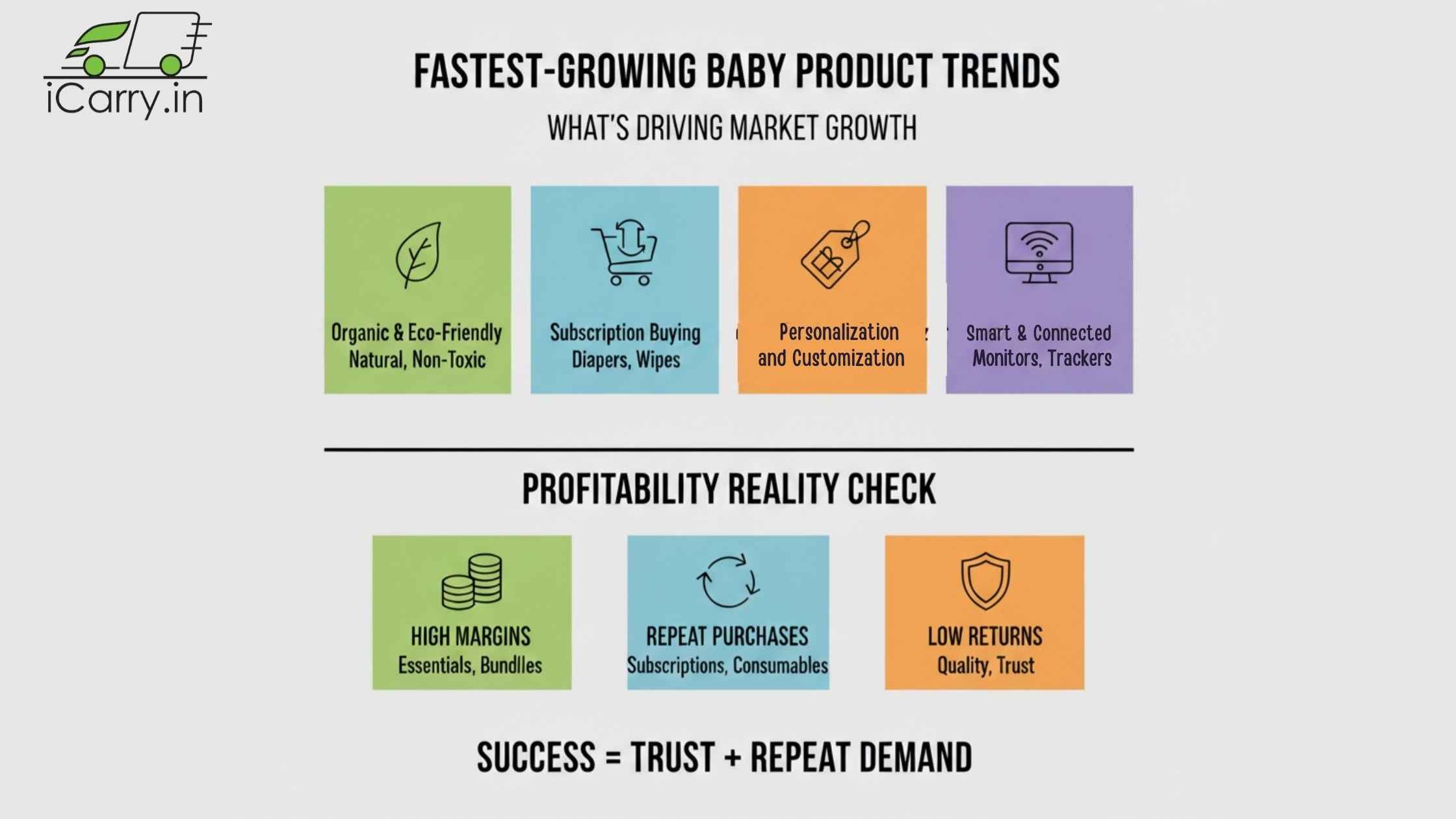
Organic and Eco-Friendly Products
Parents increasingly prefer organic cotton, natural skincare, biodegradable diapers, and non-toxic toys. Eco claims must be verifiable and clearly communicated.
Subscription Buying for Essentials
According to industry research on the Indian baby care market, recurring essentials such as diapers, feeding products, and personal care items are driving long-term category growth. Predictable demand ensures predictable revenue. To sustain this model, reliable delivery systems - such as automated shipping APIs and real-time tracking - are essential for maintaining subscription consistency and customer trust.
Personalization and Customization
Personalized blankets, milestone cards, and tailored feeding plans command higher margins due to emotional value and gifting demand.
Smart and Connected Baby Gear
Wi-Fi baby monitors, sleep trackers, and app-linked devices are becoming mainstream, especially among urban parents. Timely and safe delivery through trusted courier networks is critical for these high-value, tech-enabled items.
Why These Products Sell
Parents buy products they trust, solve real pain points, offer repeat value, and are easy to understand. Features like automated updates, delivery tracking, and secure shipping reinforce trust, reduce anxiety, and improve repeat purchases.
Profitability Reality Check for Baby Products
Successful baby products for online selling usually have healthy gross margins, repeat purchase cycles, low return rates, and niche brand appeal. Essentials like diapers, wipes, and feeding supplies are especially profitable. Items requiring sizing guesswork or heavy returns, like apparel, may reduce profitability. Reliable courier integration ensures timely delivery, reduces RTO, and preserves margins.
Since many baby product orders in India still happen on Cash on Delivery, sellers must actively manage risk and delivery verification. Our detailed breakdown on courier scams in India explains common fraud patterns and how to protect margins.
How to Validate Baby Product Demand Before Scaling
Check marketplace bestsellers and reviews, track search trends for baby terms, read negative reviews to find opportunities, test demand with small ad campaigns, and start with prepaid orders to limit COD risk. Validation before inventory helps protect capital and brand reputation.
What Baby Product Sellers Should Plan Before Scaling
As baby product brands scale, logistics complexity increases faster than sales. Sellers should plan for multi-location shipping, consistent delivery experience across metros and non-metros, COD risk management, and accurate order tracking. Choosing a shipping platform that offers courier comparison, transparent pricing, real-time tracking, and centralized dashboards - such as iCarry.in - helps sellers focus on growth while minimizing operational risks.
Final Thoughts
Baby products are emotional purchases, and emotional purchases convert well when trust is high. The best-selling categories in India and globally in 2026 combine utility, health and safety, repeat demand, clear value, and trustworthy branding. Parents want products that help them feel confident, not confused. Focus on solving real parental needs, build trust, and scale responsibly.
Brands that combine strong product-market fit with dependable logistics systems are better positioned to win parent confidence and repeat orders. As baby brands grow across marketplaces, websites, and social commerce, having transparent shipping, accurate billing, and reliable delivery infrastructure becomes a long-term competitive advantage.
Integrating secure delivery, tracking, and automated notifications like those provided at iCarry.in ensures high-value items reach parents safely and reliably thus building and maintaining trust.
Frequently Asked Questions (FAQs)
1. Which baby product categories sell the fastest online in India?
Diapers, wipes, feeding essentials, baby skincare, and hygiene products sell the fastest due to repeat demand and daily usage. These categories benefit most from subscription models and reliable delivery.
2. Are baby products profitable for online sellers?
Yes. Baby products often offer healthy margins, high repeat purchase rates, and strong customer lifetime value. Essentials like diapers and feeding products are especially profitable when logistics costs and returns are well managed.
3. What should sellers consider before launching a baby product brand?
Sellers should prioritize safety certifications, product quality, packaging integrity, and consistent delivery timelines. Trust and reliability matter more in baby products than aggressive pricing.
4. How can sellers reduce returns and delivery issues for baby products?
Clear product descriptions, accurate sizing information, secure packaging, prepaid order incentives, and dependable courier performance help reduce RTOs and delivery-related returns.
5. Do subscriptions work well for baby products?
Yes. Subscription models work extremely well for baby essentials because of predictable consumption cycles. Consistent delivery, automated tracking, and proactive customer communication are key to making subscriptions successful.
Baby products are emotional purchases that convert well when trust is high—focus on safety, quality, reliable delivery, and solving real parental needs to build lasting brand value.