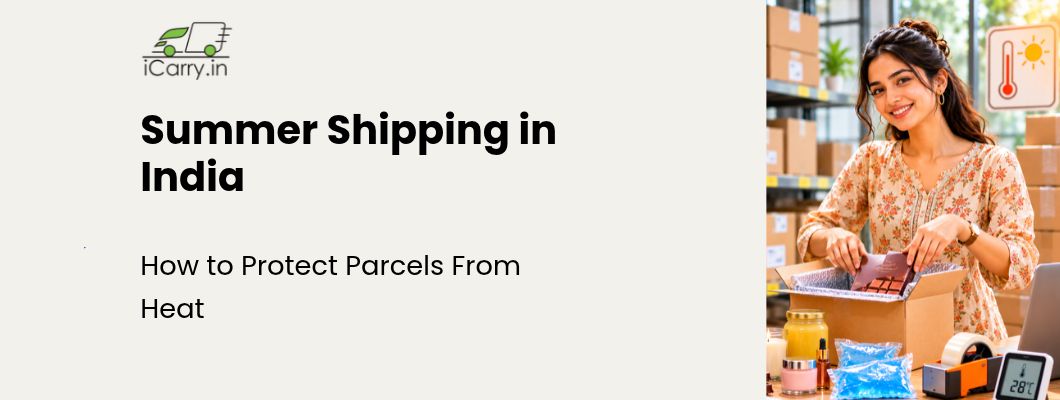
Why Summer Is a Shipping Risk
A parcel can spend hours in a loading dock, a hub with poor ventilation or a closed delivery vehicle in peak summer. The temperature inside a closed van or a parcel stack in direct sun can climb far above the outside air temperature. Products that are fine on a warehouse shelf can melt, warp, leak or spoil before they reach the customer.
Summer shipping problems are predictable and seasonal, hitting most sharply between April and June, especially in central, eastern and north-western India. Sellers who plan for heat avoid the damage claims, refused deliveries and negative reviews that arrive each year with the first heatwave.
What Is Summer Shipping in India?
Summer shipping in India is the practice of protecting parcels from heat between April and June, when hubs and delivery vehicles get hot enough to melt, warp or spoil products. It combines insulated packing, morning pickups, zone limits and clear customer messages.
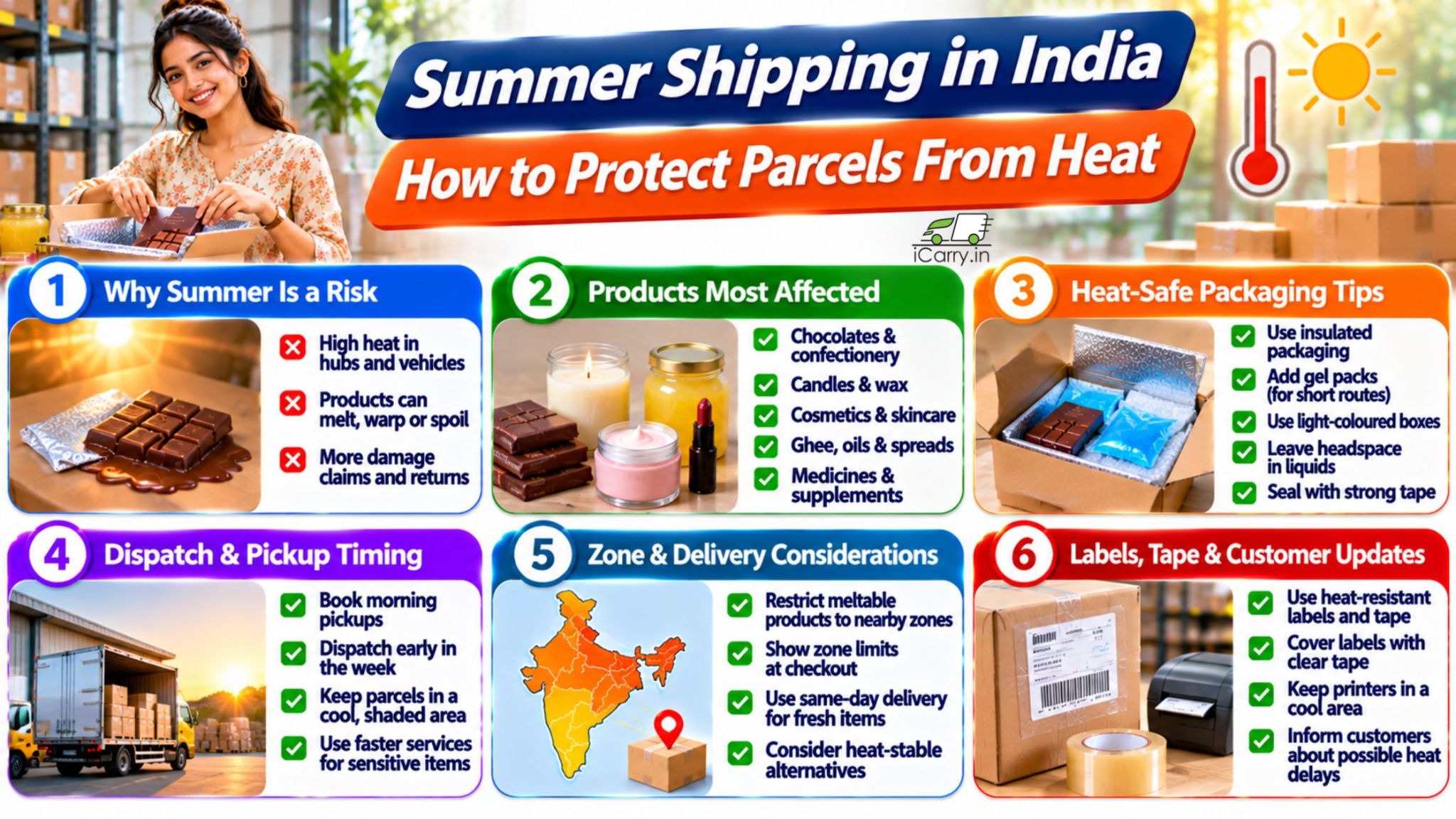
Products Most Affected by Heat
- Chocolates and Confectionery: Can soften or melt, causing chocolate to bloom, become sticky or stick to its wrapper.
- Candles and Wax Products: Can soften, sweat, lose their shape or stick to their containers.
- Cosmetics and Skincare: Lipsticks, balms and creams may melt, separate or change texture.
- Ghee, Oils and Spreads: May soften, leak or separate. Heat can also put additional pressure on packaging seals.
- Medicines and Supplements: Some products are temperature-sensitive. Gummies may melt and stick together. Always follow the storage conditions mentioned on the product label.
- Adhesives and Chemicals: Heat can increase internal pressure and make leakage more likely.
- Batteries and Electronics: High temperatures can put stress on batteries. Avoid leaving battery-containing parcels in hot storage areas.
- Plastic and Rubber Items: May warp, stick together or lose their shape when exposed to high temperatures.
- Fresh Food and Bakery Products: Can spoil faster in hot conditions. Fresh items should be shipped using suitable same-day delivery services.
How to Package Products to Reduce Heat Damage
- Use Insulated Packaging for Sensitive Products: Foil-lined mailers, insulated boxes and thermal liners help slow heat transfer and protect temperature-sensitive items.
- Add Cooling for Short Routes: Gel packs can help maintain suitable temperatures during same-day or next-day delivery, where the product and shipping requirements allow. Keep gel packs away from items that must remain dry.
- Choose Light-Coloured or Reflective Outer Packaging: Light-coloured or reflective packaging absorbs less heat than dark cartons.
- Leave Headspace in Liquid Containers: Avoid filling containers to the brim, as liquid contents can expand when exposed to heat.
- Seal Packaging Properly: Use induction seals and leak-proof bags for oils, ghee and sauces to reduce the risk of leakage.
- Separate Heat-Sensitive Items: Avoid packing chocolates alongside candles, electronics or other products that may be affected by heat in the same carton.
- Use Strong Packaging Tape: Low-quality tape may lose adhesion in high temperatures. Use good-quality packaging tape and check all carton seams before dispatch.
Dispatch and Pickup Timing
- Book morning pickups: Pickups in the cooler part of the day reduce the time parcels sit in heat
- Dispatch early in the week: Monday to Wednesday dispatches avoid weekend storage in hot hubs
- Do not leave parcels in the sun: Keep packed cartons in a cool, shaded area until pickup
- Avoid long waiting at the dispatch point: Pack close to pickup time instead of pre-packing in a hot room
- Use faster services for sensitive items: Fewer handling points and shorter transit reduce exposure
Compare faster courier options by zone with the iCarry® domestic rate calculator before you ship heat-sensitive products.
Zone Restrictions in Peak Summer
A product that is safe for a 2-day delivery may not be safe for a 7-day one.
- Restrict meltable products to nearby zones in April to June, or stop shipping them during the hottest weeks
- Show delivery restrictions clearly on product pages and at checkout
- Use hyperlocal same-day delivery for items such as chocolates, cakes and fresh products
- Consider seasonal alternatives, such as heat-stable formulations or different products for peak summer
Labels, Tape and Equipment in Heat
- Direct thermal labels darken with heat. Store label rolls cool and away from sun
- Cover labels with clear tape so they stay readable in heat and abrasion
- Check that adhesive labels stick on warm cartons, and press them firmly
- Keep thermal printers away from direct sunlight and poor ventilation
Delivery Failures and Heat
- Heat waves can slow deliveries: Delivery agents may start earlier and finish earlier, and some areas are slower
- Customers are often away at peak hours: Offer delivery slots in the morning or evening where possible
- Returned parcels suffer too: An RTO that spends days in transit in summer may be unusable. Act on NDRs quickly
- Do not restock heat-damaged goods: Inspect returns before putting them back into inventory
Communicate Before the Heat Becomes a Complaint
- Add a summer notice to product pages: 'During peak summer we ship this product only to selected cities'
- Tell customers what to do on arrival, for example: 'Store in a cool place. If the product has softened in transit, refrigerate before use'
- Send out-for-delivery messages so a customer is home to receive heat-sensitive parcels
- Set a clear replacement policy for heat damage, with photo evidence. Under the Consumer Protection (E-Commerce) Rules, 2020, sellers must display return, refund and exchange information
Cut transit time and failed deliveries with a free iCarry® account.
How iCarry® Supports Summer Shipping
iCarry® is a courier aggregator that gives sellers access to multiple courier partners and shipping tools to help manage deliveries during peak summer. For heat-sensitive products, sellers can compare available services, choose suitable delivery options and coordinate with customers to reduce avoidable delays.
- Multiple Courier Partners: Compare available courier services by destination, rates and transit options. Use the iCarry® Domestic Rate Calculator to compare available options and delivery timelines before booking.
- Borzo for Same-Day City Delivery: Use Borzo for eligible same-day deliveries within supported city service areas. This can be useful for products such as chocolates, cakes and other heat-sensitive items that need shorter delivery times.
- Delivery Boost and Two-Way WhatsApp Engagement: Support pre-delivery coordination through Delivery Boost and WhatsApp Engagement. Agents contact customers to confirm delivery, while customers can respond to updates or coordinate delivery. Conversation history and call records are available for reference.
- Address Quality Scoring: Use Address Quality Scoring to identify incomplete or potentially problematic addresses before dispatch and help prevent avoidable delivery delays.
- Transit Loss Insurance: Add Transit Loss Insurance during booking for eligible shipments. Review the applicable fee, coverage details and terms before confirming.
For guidance on courier options and shipping heat-sensitive products, contact iCarry® customer support.
The Free Bronze plan has no minimum shipment volume. Register at iCarry.in to get started.
Frequently Asked Questions (FAQs)
Which products should I not ship in peak summer?
Highly heat-sensitive products such as chocolates, wax products, lipsticks, gummies and fresh food are at the greatest risk. Restrict them to nearby zones, use insulation and faster delivery, or stop shipping them in the hottest weeks of April to June.
Does insulated packaging really help?
It slows heat transfer, which helps for short transits of one to three days. It does not make a product safe on a long journey in a hot vehicle, so combine insulation with faster services and zone restrictions.
When is the best time to dispatch in summer?
Book morning pickups, and dispatch early in the week, Monday to Wednesday, so parcels do not sit in a hot hub over the weekend. Keep packed cartons in the shade until pickup.
How do I handle customers who receive melted products?
Ask for photos of the parcel and product, replace or refund quickly, and learn from the pattern. Update product pages with summer delivery notes and restrict zones where heat damage repeats.
Use insulated packaging, light-coloured outer cartons and properly sealed liquids for sensitive products, book morning pickups and dispatch early in the week, restrict meltable products to nearby zones in peak summer, and tell customers about delays before the heat becomes a complaint.