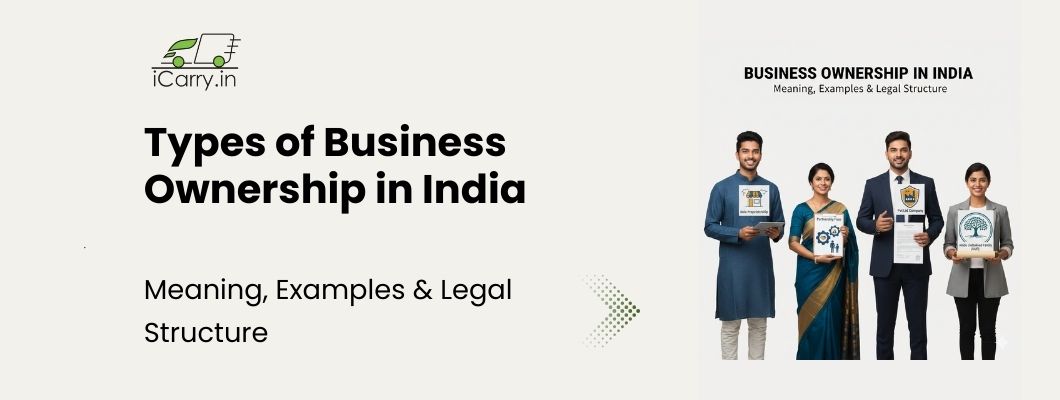
Before starting a business in India, one decision matters more than the product, logo, or marketing:
What type of business ownership should you choose?
Your ownership structure affects legal liability, taxation, compliance burden, and even how smoothly you can handle documentation and shipping operations as your business grows.
This guide explains the main types of business ownership in India, their meaning, real-world examples, and legal structure - in simple language.
What Is Business Ownership?
Business ownership defines:
- Who owns the business
- Who controls decisions
- Who bears profits and losses
- Who is legally responsible for debts
In short:
Ownership decides risk, control, and responsibility.
Main Types of Business Ownership in India
India broadly recognizes five common forms of business ownership.
1. Sole Proprietorship
Meaning
A business owned, managed, and controlled by one individual.
The business and owner are legally the same.
Examples
- Local shops
- Freelancers
- Small traders
- Home-based businesses
Legal Structure
- No separate legal entity
- Owner bears unlimited liability
- Minimal registration (GST, Shop Act if applicable)
Pros
- Easy to start
- Low cost
- Full control
Cons
- Unlimited personal liability
- Limited growth
- Hard to raise funds
This structure works well for individual sellers and home-based businesses that are just starting out and testing logistics on a small scale.
2. Partnership Firm
Meaning
A business owned by two or more people who share profits and responsibilities.
Governed by a Partnership Deed.
Examples
- Small manufacturing units
- Family businesses
- Professional firms
Legal Structure
- Governed by the Indian Partnership Act
- Partners have unlimited liability
- Registration is optional (but recommended)
Pros
- Shared responsibility
- Easy to form
- More capital than sole proprietorship
Cons
- Unlimited liability
- Partner disputes risk
- Limited scalability
Best for: Small businesses run by trusted partners.
3. Limited Liability Partnership (LLP)
Meaning
A hybrid of partnership and company, where partners have limited liability.
Examples
- Consulting firms
- Professional services
- Startups wanting flexibility
Legal Structure
- Separate legal entity
- Governed by the LLP Act
- Liability limited to contribution
Pros
- Limited liability
- Flexible management
- Lower compliance than companies
Cons
- Not ideal for large fundraising
- More compliance than partnership
Best for: Professionals and small scalable businesses.
4. Private Limited Company
Meaning
A business registered as a separate legal entity, owned by shareholders.
This structure is widely used by startups that plan to scale operations, manage higher order volumes, and streamline multi-location deliveries.
Examples
- Startups
- Manufacturing companies
- Tech companies
- Funded businesses
Legal Structure
- Governed by the Companies Act
- Separate legal identity
- Limited liability
- Requires registration with MCA
Pros
- Limited liability
- Easy to raise funds
- High credibility
- Scalable
Cons
- Higher compliance
- More regulatory requirements
- Costly to maintain
Best for: Growth-oriented and funded businesses.
5. Public Limited Company
Meaning
A company that can offer shares to the public and list on stock exchanges.
Examples
- Large corporations
- Listed companies
- Government companies
Legal Structure
- Governed by the Companies Act
- Separate legal entity
- Strict compliance and disclosure rules
Pros
- Large capital raising ability
- High market credibility
- Share liquidity
Cons
- Heavy regulations
- Less control for founders
- High compliance cost
Best for: Large-scale enterprises.
How to Choose the Right Ownership Type
Ask yourself:
- How much risk can I take?
- Do I need external funding?
- How big do I want to scale?
- Can I handle compliance?
Small start → Sole proprietorship / Partnership
Professional services → LLP
Startup & scale → Private Limited Company
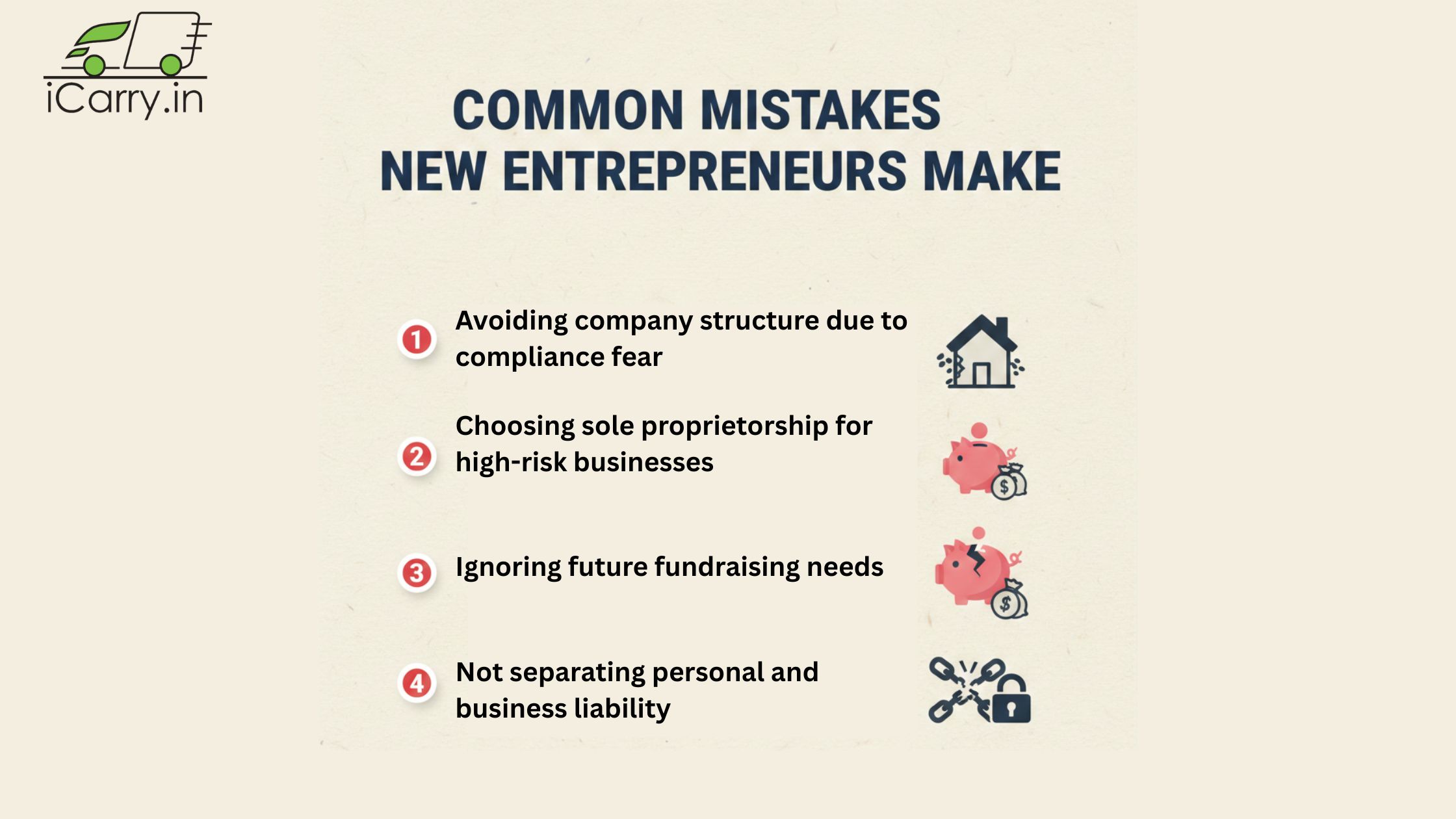
Common Mistakes New Entrepreneurs Make
- Choosing sole proprietorship for high-risk businesses
- Avoiding company structure due to compliance fear
- Ignoring future fundraising needs
- Not separating personal and business liability
Ownership mistakes are hard to fix later and often lead to compliance gaps that slow down shipping, refunds, and delivery timelines.
Ownership Type & Taxation (High Level)
Ownership Type & Taxation (High Level)
- Sole proprietorship: Taxed as individual
- Partnership/LLP: Flat tax rate (as per law)
- Companies: Corporate tax rates
Tax planning should follow business goals - not fear.
Final Thoughts
Choosing the right business ownership structure is a strategic decision, not a formality.
Each structure balances risk, control, compliance, and how consistently you can deliver a reliable customer experience.
The right ownership structure is a strategic decision, not an administrative formality. It should support where your business is going-not just where it is today. What feels convenient at the start can become restrictive as operations expand, compliance increases, and customer expectations rise.
Choosing an ownership type is only the beginning. Real execution begins when that structure is tested by scale-higher order volumes, multi-location operations, regulatory responsibilities, and delivery complexity. If operations can't grow alongside the business, structural advantages quickly lose their value.
That's why sustainable businesses align ownership decisions with operational readiness. Smooth fulfillment, compliant shipping, and predictable delivery processes ensure that growth doesn't introduce friction or risk.
As businesses move from early traction to sustained expansion, logistics becomes a quiet but critical enabler. Standardized workflows, courier reliability, and delivery visibility help transform a legal structure into a scalable operation.
Platforms like iCarry support businesses from day one by reducing delivery friction and enabling compliant, consistent shipping as they grow.
Understand ownership for what it truly is: a long-term commitment. Plan beyond convenience. And make sure your operations are built to support the vision you're investing in.
Business ownership structure affects legal liability, taxation, and operational scalability—choosing the right structure early helps businesses handle compliance, fundraising, and delivery consistency as they grow.