Introduction
Starting an eCommerce business traditionally required heavy investment in inventory, warehousing, and logistics. Entrepreneurs had to manage stock, storage, and delivery, making it both risky and expensive.
Dropshipping in India has grown rapidly due to low entry barriers, making it one of the most popular ways for beginners to start an online business with minimal investment according to Forbes' dropshipping analysis.
With dropshipping, you don't need to hold inventory. You can sell products online while suppliers handle storage and shipping. This makes it one of the easiest ways to start an online business as outlined in Shopify's dropshipping guide.
If you are planning to build your store, understanding logistics is equally important.
Efficient logistics becomes important as order volumes grow, especially when managing deliveries across different locations and courier partners. Structured shipping workflows help improve delivery reliability and reduce operational complexity.
Platforms like iCarry help businesses manage courier operations, reduce shipping costs, and streamline delivery workflows across India.
What is Dropshipping?
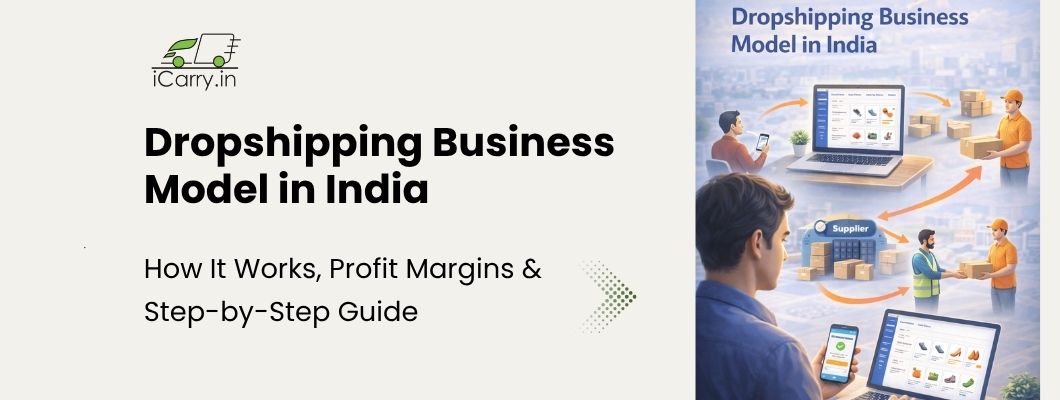
Dropshipping is a retail fulfillment model where the seller does not keep products in stock.
Instead:
- You list products on your store
- A customer places an order
- You forward the order to a supplier
- The supplier ships directly to the customer
This eliminates the need for warehousing and inventory management.
How Dropshipping Works (Step-by-Step Process)
- Customer places an order on your website or social media
- You send the order details to your supplier
- Supplier packs and ships the product
- Customer receives the order
Efficient delivery plays a major role in customer satisfaction. Choosing the right logistics partner like iCarry ensures faster and reliable shipping with optimized costs and better support.
Advantages of Dropshipping
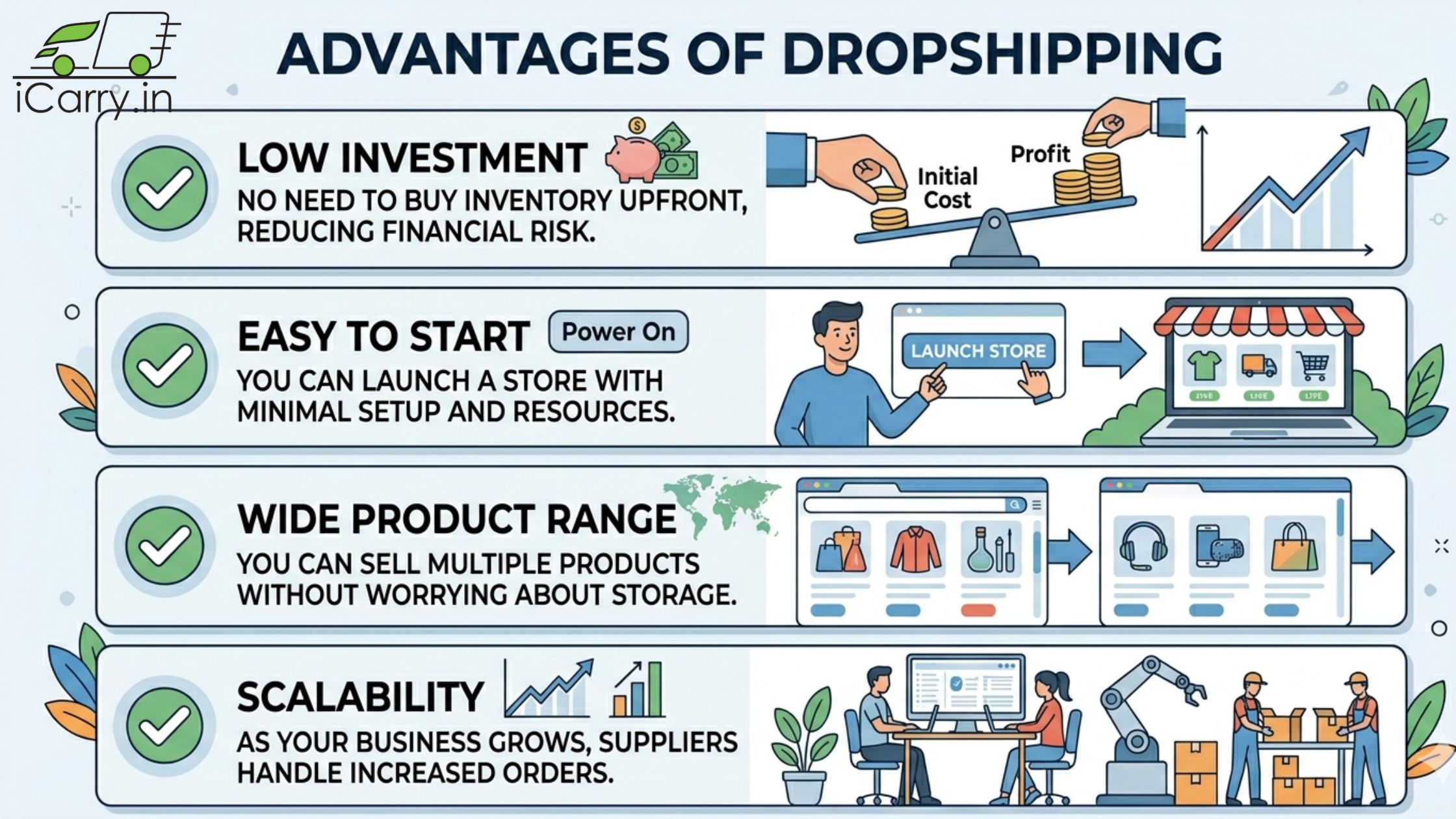
✅ Low Investment
No need to buy inventory upfront, reducing financial risk.
✅ Easy to Start
You can launch a store with minimal setup and resources.
✅ Wide Product Range
You can sell multiple products without worrying about storage.
✅ Scalability
As your business grows, suppliers handle increased orders.
Challenges of Dropshipping
⚠️ Low Profit Margins
Margins typically range between 10% - 30%.
⚠️ Supplier Dependency
You rely on suppliers for product quality and delivery timelines.
⚠️ Shipping Delays
Poor logistics can negatively impact customer experience.
To avoid delays and improve delivery speed, using features like multi-courier shipping platforms can help automate courier selection and improve delivery performance.
Profit Margins in Dropshipping
Dropshipping profit margins in India typically range from 10% to 30%, depending on:
- Product niche
- Supplier pricing
- Marketing expenses
- Shipping efficiency
How to Maximize Profits
- Choose high-demand, low-competition products
- Optimize shipping costs using courier aggregation tools
- Focus on branding and customer experience
- Reduce RTO using better delivery communication
You can also explore strategies to reduce return-related losses.
Best Growth Strategies for Dropshipping
🚀 1. Choose a Profitable Niche
Avoid generic products. Focus on specific audiences.
🚀 2. Build a Strong Brand
Customers trust branded stores more than random sellers.
🚀 3. Optimize Marketing
Use:
- Facebook Ads
- Google Ads
- Influencer marketing
🚀 4. Improve Delivery Experience
Fast and reliable delivery directly impacts customer satisfaction and repeat purchases.
You can reduce delivery issues by understanding last-mile delivery challenges in India.
How Logistics Impacts Dropshipping Success
As your business grows, managing multiple courier partners, tracking shipments, and handling delivery issues manually becomes complex.
Operational efficiency improves when shipping workflows, courier allocation, and tracking systems are centralized.
iCarry helps streamline this by enabling:
- Multi-courier shipping from a single dashboard
- Automated courier selection based on cost and performance
- Real-time tracking and shipment visibility
- Better delivery coordination to reduce RTO
This improves delivery reliability, reduces operational effort, and helps businesses scale efficiently.
Conclusion
Dropshipping lowers the barrier to entry in eCommerce, but long-term success depends on how well operations are managed behind the scenes.
As competition increases, factors like delivery speed, shipping reliability, and customer experience play a bigger role than just product selection or pricing.
Businesses that focus on improving fulfillment efficiency and reducing delivery issues are more likely to build sustainable growth.
In practice, better outcomes come when order processing, shipping coordination, and delivery performance are handled in a structured and visible way.
Using iCarry, businesses can centralize logistics operations, improve shipping performance, and create a more reliable post-purchase experience as they scale.
Frequently Asked Questions (FAQ)
1. What is dropshipping in India?
Dropshipping is an eCommerce business model where sellers do not hold inventory. Instead, suppliers ship products directly to customers.
2. Is dropshipping profitable in India?
Yes, dropshipping can be profitable with margins between 10% to 30%, depending on product selection, marketing, and logistics efficiency.
3. What are the biggest challenges in dropshipping?
The main challenges include low margins, supplier dependency, and shipping delays, especially in COD-heavy markets.
4. How can I reduce shipping costs in dropshipping?
You can reduce costs by using multi-courier platforms, optimizing packaging, and improving delivery success rates. Learn more.
5. How does logistics impact dropshipping success?
Logistics affects delivery speed, customer satisfaction, and return rates. Better logistics leads to higher conversion and repeat orders.
6. How can I reduce RTO in dropshipping?
You can reduce RTO by confirming orders, improving delivery communication, and using better courier selection strategies. Read more.
Dropshipping is a retail fulfillment model where sellers list products without holding inventory—customers place orders, suppliers ship directly, eliminating warehousing costs—with profit margins of 10-30% in India, success depends on choosing profitable niches, optimizing logistics through multi-courier platforms, reducing RTO rates, and building strong brands that prioritize delivery reliability and customer experience over price alone.