A publisher ships 500 textbooks to schools across Rajasthan. A stationery brand ships premium notebooks to corporate gifting clients in Mumbai. An art supplies retailer ships watercolour paper pads and brush sets to customers in Tier 2 cities. A self-published author ships copies directly to readers across India.
Books, stationery, and paper products are some of the most widely shipped categories in India - but they carry specific logistics challenges that catch many businesses off guard. Dense actual weight that exceeds volumetric weight thresholds. Moisture sensitivity that standard packaging does not address. Corner and spine damage from inadequate protection during multi-point courier handling. And for heavy multi-book orders, freight costs that can erode margins significantly if not managed carefully.
India's book market alone is worth USD 5.13 billion and is projected to reach USD 7.31 billion by 2034, as digital commerce expands access to paper-based products (IMARC Group, India Book Market Report) across geographies that physical retail never reached. Getting the logistics right for this category is the difference between a profitable delivery and one that absorbs the margin in freight, damage claims, and returns.
This guide covers the specific packaging, weight management, and courier strategies for books, stationery, and paper products shipped in India.
What is Book, Stationery and Paper Product Shipping in India?
Shipping books, stationery and paper products in India means managing dense actual weight against volumetric weight billing, protecting paper from moisture and corner damage during multi-point courier handling, and choosing the right courier and packaging for each sub-category - from single paperbacks to bulk institutional orders. Done right, it keeps freight cost and damage claims low.
How to Prepare Paper Products for Shipping: Quick Checklist
- Have you weighed the sealed parcel including all packaging materials - not just the product?
- Is your packaging moisture-proof? Paper products are more humidity-sensitive than most sellers realise.
- Are book corners and spine protected from the compression damage that multi-point courier handling causes?
- Have you calculated volumetric weight for your standard packing configuration?
- Are multi-book or multi-product orders consolidated into the minimum number of parcels?
- Have you compared courier rates across multiple partners for your typical weight slab and delivery zone?
The Weight and Volumetric Challenge for Paper Products
Actual Weight vs Volumetric Weight
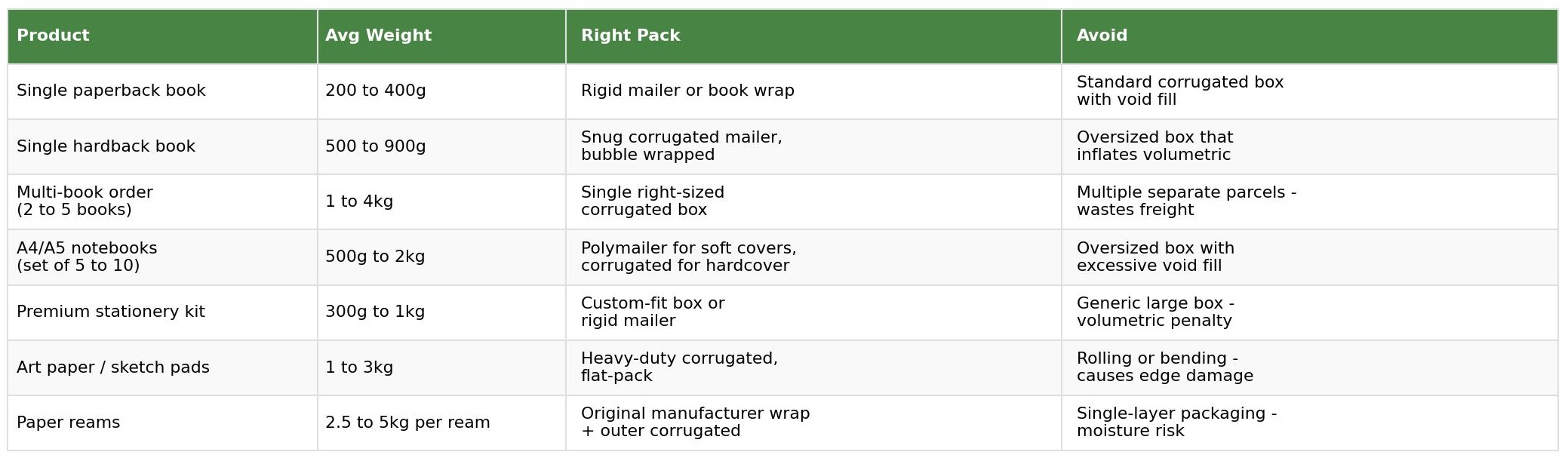
Paper products are dense. A standard hardback book weighs 500g to 900g. A set of 10 A4 notebooks weighs 1.5kg to 2kg. A ream of premium paper weighs 2.5kg. Unlike fashion or electronics accessories, paper products often bill at actual weight rather than volumetric weight - because the actual weight is high relative to the package dimensions.
Volumetric weight formula: L x B x H (in cm) / 5,000
A single textbook in a snug-fitting corrugated mailer: 22 x 15 x 4 cm = 1,320 / 5,000 = 264g volumetric weight. Actual weight: 700g. Bills at actual weight - 700g.
The same book in a generic 30 x 25 x 10 cm box: 7,500 / 5,000 = 1,500g volumetric weight. Actual weight: 700g. Bills at volumetric weight - 1,500g. A 700g book billed as 1.5kg because of the box choice.
This is the most common hidden shipping cost for paper product businesses. Right-sizing packaging to avoid volumetric weight billing on dense products like books is a direct margin improvement with zero additional spend.
Weight Optimisation by Product Type
Packaging Requirements for Books and Paper Products
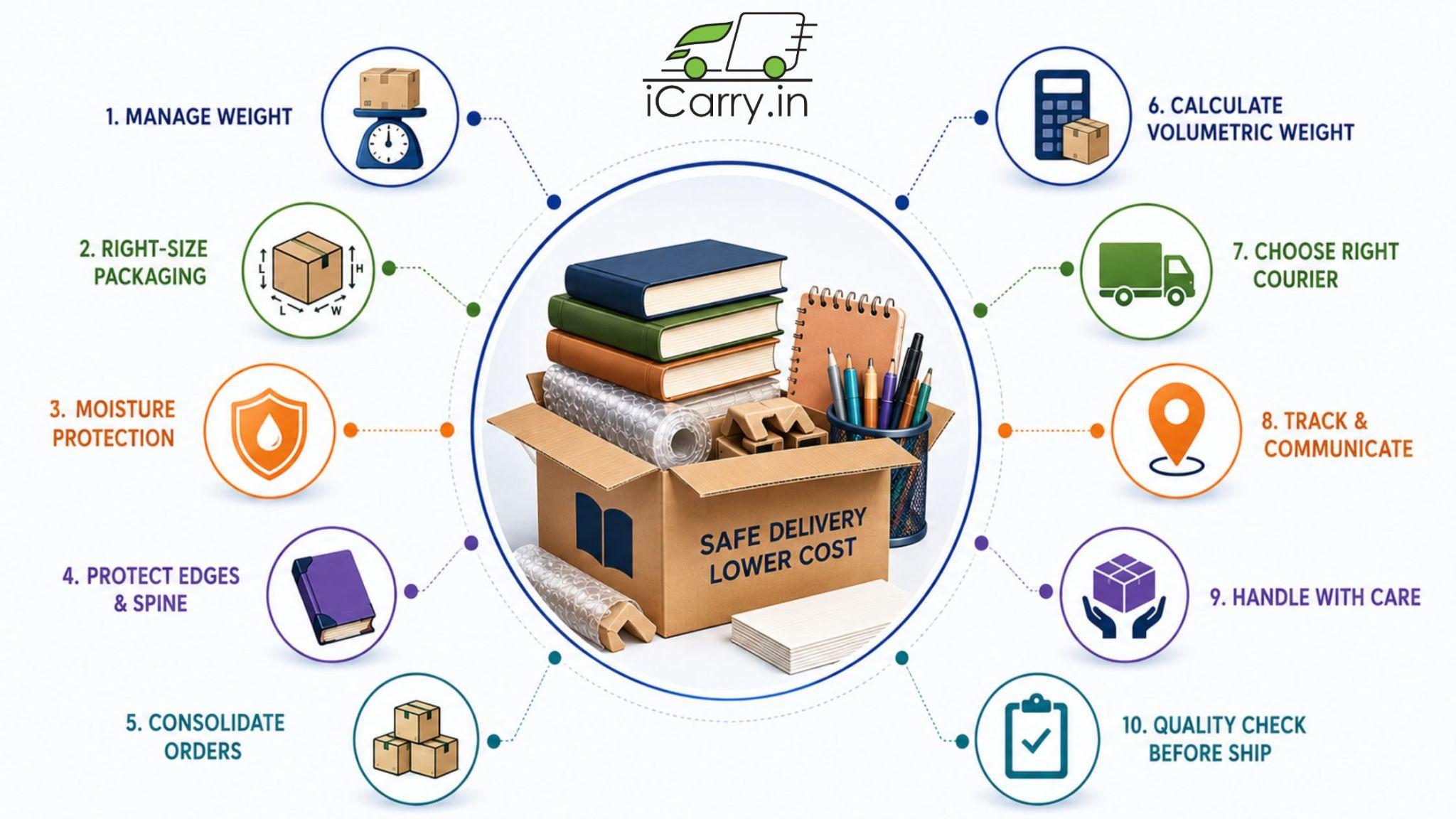
1. Moisture Protection - The Most Overlooked Risk
Paper absorbs moisture during transit - particularly in monsoon months and in humid coastal transit routes. A book or paper product that arrives with wavy, swollen, or mould-spotted pages is not returnable, not resalable, and generates a refund and a negative review simultaneously.
Moisture protection layers:
First layer: Wrap the product in a polythene bag or cling film. This is the primary moisture barrier and costs less than ₹1 per unit.
Second layer: Bubble wrap for books - particularly hardbacks and premium editions. Protects corners and spine from compression.
Outer layer: Corrugated box or rigid mailer. Corrugated provides better moisture resistance than polymailers for paper products in most transit conditions.
2. Corner and Spine Protection
The most common damage complaint for books shipped in India is bent corners and cracked spines. Both happen when a book shifts inside its packaging during the multiple handling points of courier transit - typically 4 to 6 drops and transfers for a Zone D shipment.
Prevention:
Fit the packaging snugly to the book. No movement inside the package means no corner impact damage.
Use corner boards or foam corner protectors for premium hardbacks and art books where presentation quality matters.
For multi-book orders, wrap each book individually before packing together - books should not rub against each other in transit.
Mark the outer package 'DO NOT BEND' in large text. While not always respected, it reduces casual mishandling at some handling points.
3. Packaging by Product Sub-Category
Standard books and textbooks: Book wrap (corrugated wrap that folds around the book) or a snug corrugated mailer is the most cost-effective option for single volumes. Cheaper than a box, protects against corner damage, and keeps dimensions tight to avoid volumetric penalties.
Premium and collectible books: Add bubble wrap before placing in a rigid corrugated box. For very high-value editions, foam inserts cut to the book's shape provide the highest protection level.
Notebooks and journals: Soft-cover notebooks can go in polymailers with a stiff cardboard backing to prevent bending. Hard-cover notebooks should be corrugated - either individual mailers for premium products or a shared box for bulk orders.
Art paper and sketch pads: Must be packed flat - never rolled or bent. Use a flat corrugated parcel with the sheets / pads sandwiched between rigid boards. For large format paper (A3, A2), custom flat-pack corrugated is the only reliable option.
Stationery kits and gift sets: Custom-fit boxes prevent internal movement. Items in a kit should be individually wrapped or separated by card dividers so they do not scratch or damage each other. A stationery set that arrives with bent pen nibs or scratched ruler surfaces generates a return regardless of how well the outer packaging survived.
Greeting cards and photo prints: Rigid mailers only - never polymailers. A bent or creased greeting card or photo print has zero commercial value. Pair the rigid mailer with a 'DO NOT BEND' marking and consider placing two stiff cardboard boards on either side of the item inside the mailer.
Courier Selection for Books and Paper Products in India
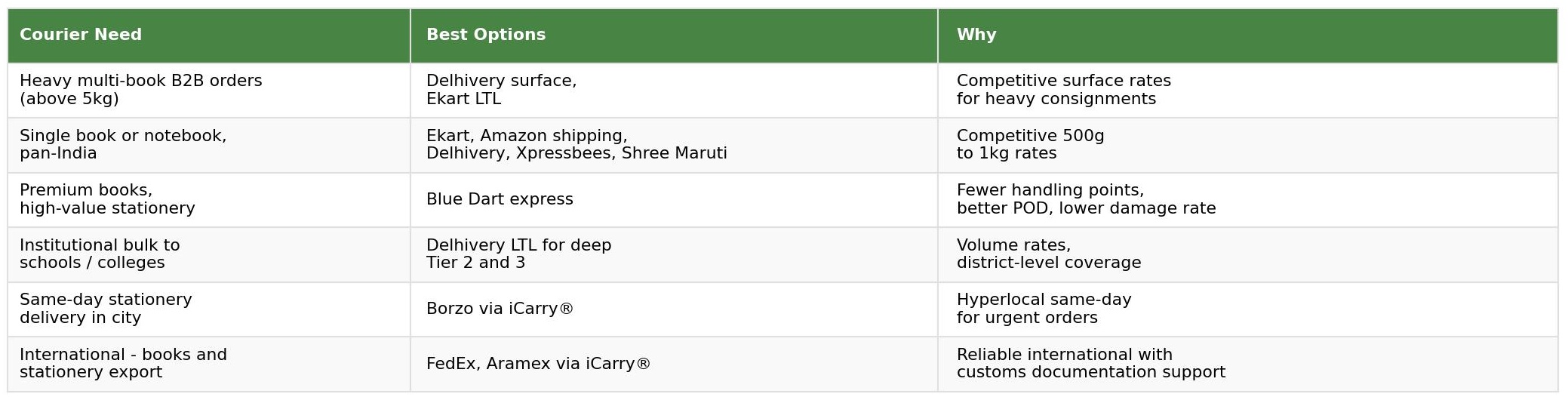
Book and paper product shipping has specific courier requirements that differ from general parcel delivery:
Weight Slab Strategy - How to Reduce Freight Cost on Paper Products
Consolidate Multi-Item Orders Into One Parcel
The biggest freight mistake for book and stationery sellers is shipping logistics best practices multiple items in separate parcels when they could go together. Two 500g books in separate parcels: 2 x Zone D rate for 500g = ₹150 to ₹210 combined. The same two books in one 1kg parcel: 1 x Zone D rate for 1kg = ₹75 to ₹105. Consolidation saves ₹75 to ₹105 on every two-book order.
Always consolidate multi-item orders into the minimum number of parcels. The only reason to split is if the combined weight exceeds a freight slab threshold where two lighter parcels cost less than one heavier parcel - which only occurs at very high weights (typically above 10kg).
Use Weight-Appropriate Packaging
For books specifically, avoid adding unnecessary packaging weight. Excessive bubble wrap on a dense 800g book adds 50 to 100g of packaging weight and pushes the parcel into the next 500g slab. One layer of bubble wrap is sufficient for most standard books. Use foam only where genuine impact protection is needed - premium hardbacks, art books, and collectible editions. Weight discrepancy disputes are particularly common for paper products where actual weight exceeds declared weight - always weigh after sealing.
Air vs Surface for Heavy Paper Orders
For orders above 2kg - textbook sets, paper reams, bulk stationery kits - surface freight is almost always the right choice. Air rates for heavy paper products are significantly higher and rarely justified unless the delivery is time-critical. Surface transit for Zone D is 3 to 5 days - acceptable for most book and stationery orders.
Use iCarry®'s rate calculator to compare surface and air rates for your specific weight and destination before booking. For heavy paper products, the surface vs air rate difference is often ₹60 to ₹120 per parcel - always worth checking.
Institutional and B2B Book Shipping in India
Publishers, educational suppliers, and stationery distributors shipping to schools, colleges, libraries, and corporate clients have different requirements from consumer shipping:
Bulk dispatch: Institutional orders often involve 20 to 500 copies of the same title or product. Consolidate into master cartons for B2B LTL shipping rather than individual consumer parcels
Documentation: B2B shipments to institutions require delivery challans, purchase order references, and sometimes GSTIN on the shipping label. Prepare documentation before dispatch
Delivery time window: Institutions have specific receiving hours and receiving personnel. Coordinate delivery windows before dispatch for large institutional orders to prevent failed first attempts
Proof of delivery: Institutional clients often require stamped delivery confirmation. Request POD explicitly at booking and follow up if the courier's standard delivery record does not meet the buyer's documentation requirement
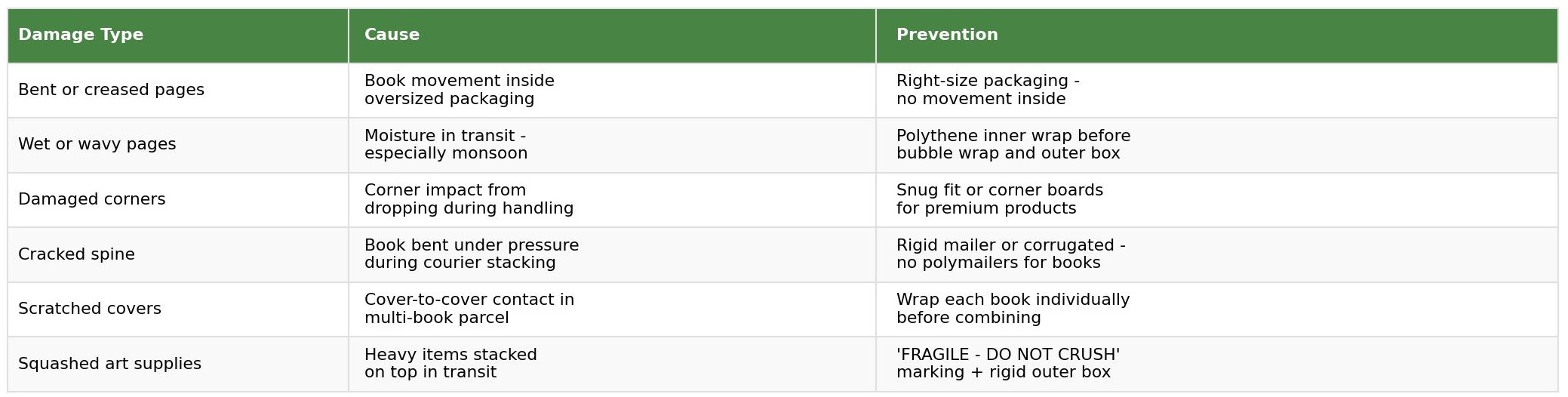
Common Damage Claims and How to Prevent Them
How iCarry® Supports Books, Stationery and Paper Product Businesses
iCarry® is a courier aggregator that serves all types of Indian businesses shipping paper-based products - from individual self-published authors to large publishers, stationery brands, art supply retailers, and institutional distributors.
Multiple courier partners: Access to multiple courier partners like Delhivery, Amazon shipping, Ekart, Blue Dart, Xpressbees, Shree Maruti, FedEx, and Aramex from one account. Compare surface vs express rates for every weight and zone before booking
Delivery Boost: For institutional deliveries where coordinating receipt timing and personnel is important, Delivery Boost agents call consignees before delivery in their regional language - ensuring the delivery executive reaches the right person at the right time
Two-way WhatsApp engagement: Consignees can reply to confirm receipt availability, update delivery instructions, or flag access requirements. Particularly useful for deliveries to educational institutions and corporate offices with specific receiving protocols. Two-way WhatsApp engagement
Weight discrepancy management: Pre-upload standard product images for each SKU. When a courier raises a weight discrepancy on a book or stationery shipment, the dispute is triggered automatically within the 5-day window
Free Bronze plan: No monthly fee, no minimum volume. An independent bookseller shipping 20 orders per month accesses the same multi-courier rates as a large publisher shipping 20,000 monthly - register free and check the rates
See all active shipments, weight discrepancy statuses, and delivery performance across every courier partner in one view - watch Overview of My Account > My Shipments for clear understanding.
Final Thoughts
Books, stationery, and paper products look simple to ship - but the combination of dense actual weight, moisture sensitivity, corner and spine vulnerability, and the freight cost implications of multi-book orders makes this category more demanding than it first appears.
The businesses that ship paper products profitably do three things consistently: they right-size packaging to avoid volumetric weight penalties on oversized boxes, they use moisture barriers as standard practice regardless of season, and they consolidate multi-item orders to minimise per-unit freight cost.
iCarry® supports paper product businesses of every scale with multi-courier rate comparison, weight discrepancy dispute management, and delivery coordination tools that protect the last mile. Register for free on iCarry® and start shipping today - no monthly fee, no minimum shipments.
Frequently Asked Questions (FAQs)
How should books be packed for shipping in India?
Single books: wrap in polythene for moisture protection, then bubble wrap, then place in a snug-fitting corrugated mailer or book wrap. The packaging should be tight enough that the book cannot move inside it. Multi-book orders: wrap each book individually and combine in one right-sized corrugated box. Never use polymailers for books - they offer no spine or corner protection.
What is the cheapest way to ship books in India?
Use surface freight via a courier aggregator. Right-size packaging to avoid volumetric weight billing. Consolidate multi-book orders into one parcel rather than shipping separately. For regular high-volume book shipments, compare rates across multiple courier partners before every booking.
How do I prevent moisture damage when shipping paper products?
Wrap every paper product in a polythene bag or cling film before any other packaging layer. This is the primary moisture barrier and adds less than ₹1 per parcel. For high-value paper products, use a moisture-resistant corrugated outer box rather than a standard corrugated box. During monsoon months, add silica gel packets inside the packaging for extra protection on multi-day transit.
What causes corner damage on books during shipping and how to prevent it?
Corner damage happens when the book moves inside its packaging during courier handling and the corners impact the inner walls. Prevention: use packaging that fits the book snugly so movement is impossible. For premium books, add foam or cardboard corner protectors before wrapping. The packaging should feel firm when pressed - if the book shifts, it is in the wrong packaging.
How are institutional bulk book orders shipped in India?
Institutional orders of 20 or more copies should be consolidated into master cartons and shipped as B2B LTL freight rather than individual consumer parcels. This significantly reduces per-unit freight cost. Coordinate delivery timing with the institution before dispatch. Request POD explicitly and ensure delivery challans and purchase order references are included with the shipment documentation.
Does iCarry® offer shipping for book publishers and stationery businesses?
Yes. iCarry® serves publishers, stationery brands, art supply retailers, and institutional distributors alongside all other business types. Multiple courier partners, competitive surface rates for heavy paper products, weight discrepancy dispute management, and delivery coordination tools are all available from the free Bronze plan with no minimum shipment volume.
Books, stationery, and paper products look simple to ship - but the combination of dense actual weight, moisture sensitivity, corner and spine vulnerability, and the freight cost implications of multi-book orders makes this category more demanding than it first appears. The businesses that ship paper products profitably do three things consistently: they right-size packaging to avoid volumetric weight penalties on oversized boxes, they use moisture barriers as standard practice regardless of season, and they consolidate multi-item orders to minimise per-unit freight cost.