Packaging looks simple - until products start getting damaged, returns increase, or shipping costs shoot up due to poor courier allocation and shipping inefficiencies.
One common confusion is cardboard vs corrugated boxes. They sound similar, but they are not interchangeable.
This guide explains what each one is, how strong they are, and when to use which - based on real-world shipping needs.
What Is Cardboard?
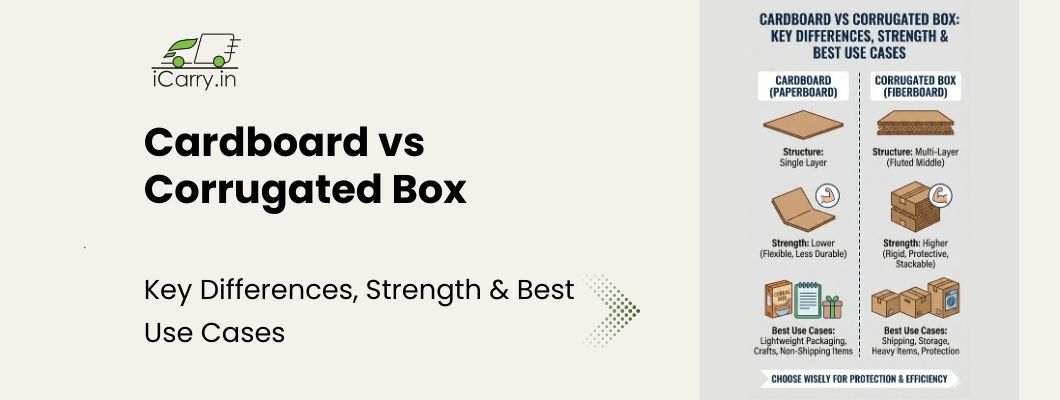
Cardboard usually refers to thin, single-layer paperboard.
In simple words:
Cardboard is lightweight, flexible, and best for basic packaging.
It's commonly used for:
- Product boxes
- Retail packaging
- Inner cartons
- Lightweight items
What Is a Corrugated Box?
A corrugated box is made of multiple layers:
- Two flat linerboards
- One wavy (fluted) layer in between
In simple words:
Corrugated boxes are designed for strength, protection, and reliable courier handling across multiple delivery touchpoints.
They are the standard choice for logistics and eCommerce deliveries.
According to the Fiber Box Association, corrugated packaging is engineered with fluted layers specifically to improve compression strength and shock resistance during transit.
Structural Difference (Why Strength Varies)
Cardboard: Single-layer, flat sheet
Corrugated: Multi-layer with air pockets (flutes)
The flutes act as shock absorbers.
Industry bodies like the Corrugated Packaging Alliance explain that the fluted medium between linerboards acts as a cushioning structure, increasing durability while keeping weight manageable.
Key Differences: Cardboard vs Corrugated Box
Strength Comparison (Practical View)
Cardboard Strength
- Bends easily
- Tears under pressure
- Not suitable for stacking
Packaging performance is often validated using standards set by the International Safe Transit Association (ISTA), which tests how well boxes withstand vibration, compression, and drop impact during shipping.
Corrugated Box Strength
- Handles weight and impact
- Maintains shape during transit
- Suitable for stacking in warehouses
For shipping, strength matters more than appearance - especially when trying to reduce return-to-origin (RTO) and optimize pre-orders in eCommerce caused by transit damage.
Best Use Cases for Cardboard
Use cardboard when:
- Product is lightweight
- No long-distance shipping is involved
- Packaging is mainly for display
- Item will go inside another outer box
Examples:
- Cosmetic boxes
- Food cartons
- Apparel packaging
- Retail display boxes
Best Use Cases for Corrugated Boxes
Use corrugated boxes when:
- Product needs protection
- Shipping is involved
- Item is fragile or heavy
- Multiple handling points exist
Examples:
- eCommerce orders
- Electronics
- Glassware
- Bulk shipping
- B2B logistics
Strong packaging also helps reduce weight discrepancies during transit billing.
Why eCommerce Almost Always Needs Corrugated Boxes
eCommerce shipments face:
- Multiple handovers
- Vehicle vibrations
- Stacking pressure
- Last-mile handling
Cardboard fails quickly in this environment. Corrugated boxes are designed for it - especially when integrated with multi-courier allocation strategies that protect customer trust.
Major couriers in India recommend using corrugated boxes for shipping because they provide the structural integrity needed for stacking, handling, and long-distance transport.
Cost vs Damage Trade-Off
Many sellers choose cardboard to save cost - and lose more later.
Bad packaging leads to:
- Product damage
- Returns & RTO
- Refunds
- Bad reviews
A slightly higher packaging cost often saves much larger losses.
Corrugated Box Variations (Quick Note)
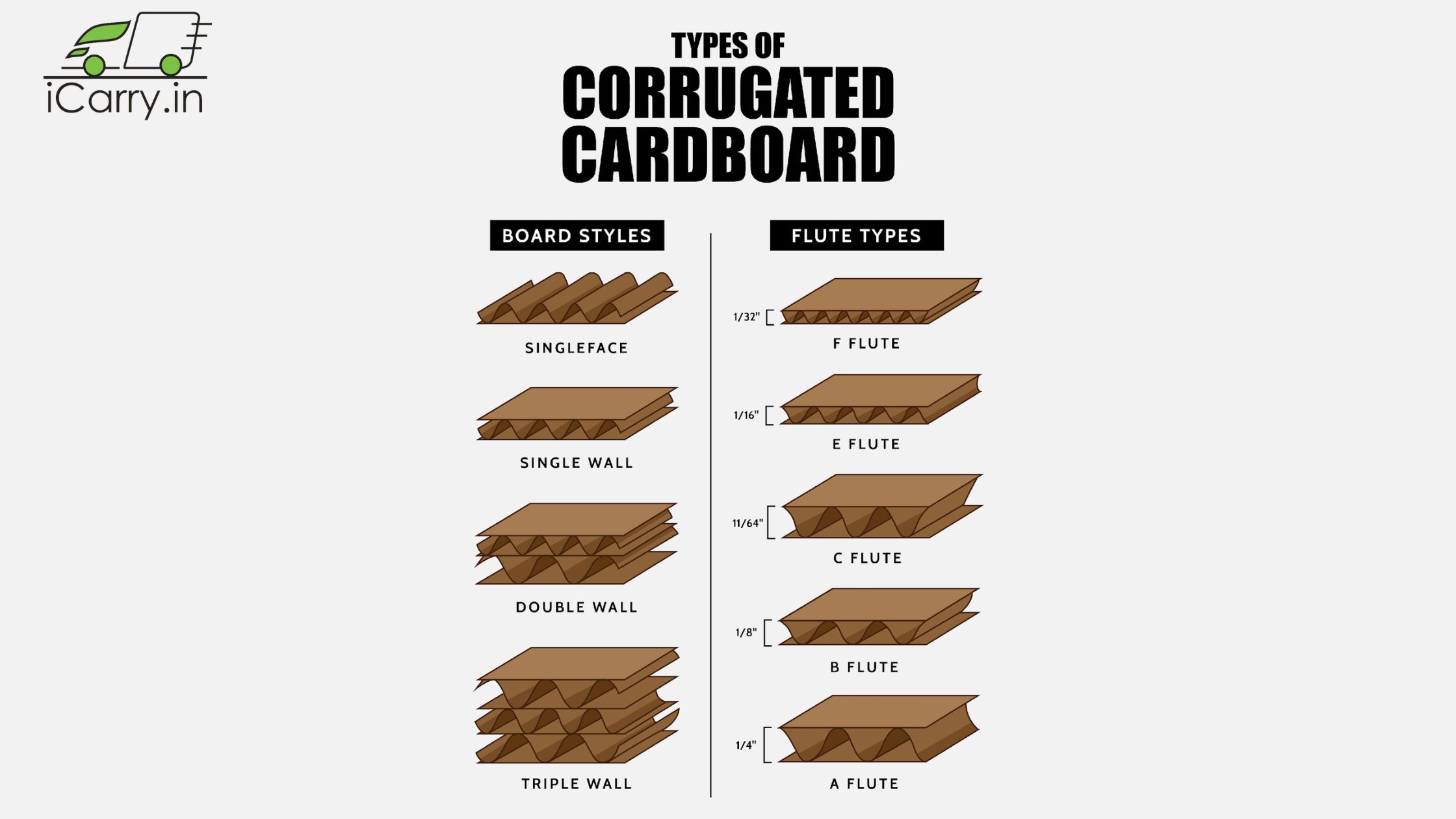
Corrugated boxes come in:
- Single-wall
- Double-wall
- Triple-wall
Higher walls = higher strength.
Choose based on:
- Product weight
- Fragility
- Shipping distance
Box compression strength and material performance are commonly measured using methods developed by ASTM International, which standardize how packaging durability is tested globally.
Common Packaging Mistakes
- Using cardboard for courier shipping
- Ignoring box strength ratings
- Oversizing boxes without cushioning
- Choosing packaging only on cost
Packaging failures often escalate into larger logistics issues that affect courier performance and delivery timelines.
How to Choose the Right Option (Quick Checklist)
Ask yourself:
- Is the product fragile or heavy? → Corrugated
- Will it be shipped by courier? → Corrugated
- Is it retail display only? → Cardboard
- Will it face stacking or transit stress? → Corrugated
When in doubt, choose protection.
Industry data published by the American Forest & Paper Association highlights that corrugated packaging remains one of the most recycled packaging materials globally.
Final Thoughts
In packaging, assumptions are expensive.
The box you choose determines whether your product arrives as a delight - or a complaint. It influences not just protection, but returns, reviews, and repeat purchases. And those outcomes directly impact profitability.
Smart businesses don't ask, "What's cheaper?" They ask, "What prevents loss?"
Because once a shipment is damaged, the cost isn't just the product. It's reverse logistics, customer frustration, operational time, and brand perception - all compounding quietly in the background.
Strong packaging strategy is proactive risk management. When material strength matches product vulnerability, and shipping partners handle consignments reliably, delivery becomes predictable instead of uncertain.
Solutions like iCarry help businesses pair smarter courier allocation with consistent shipping standards - reducing damage-related returns as volumes grow.
At scale, protection is not optional. It is an operational discipline.
Choose packaging the way you choose suppliers - based on reliability, not assumption.
Cardboard is single-layer paperboard ideal for lightweight retail packaging, while corrugated boxes use multi-layer fluted construction for superior strength—making them essential for eCommerce shipping where products face multiple handovers, stacking pressure, and transit stress that cardboard cannot withstand.