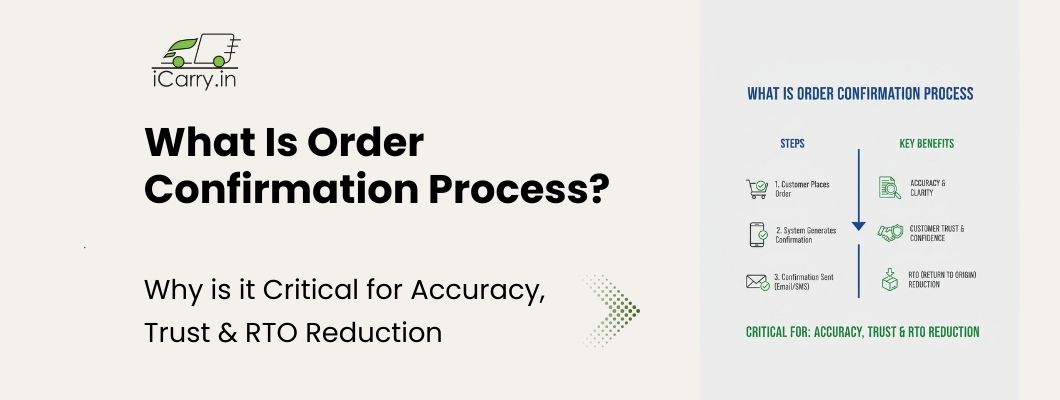
Order confirmation looks simple. But it quietly decides whether an order gets delivered or comes back.
A weak confirmation process leads to:
- Wrong addresses
- Customer refusals
- Fake COD orders
- High Return-to-Origin (RTO)
A strong one protects accuracy, trust, and margins.
This guide explains what the order confirmation process is, how it works, and why it's one of the highest-ROI fixes in eCommerce.
What Is the Order Confirmation Process?
Order confirmation is the step where a business verifies order details with the customer before dispatch.
In simple words:
It ensures the customer actually wants the order and that all details are correct.
Confirmation can be:
- Automated (SMS/WhatsApp/email)
- Manual (call-based)
- Hybrid (automation + human checks)
Why Order Confirmation Matters So Much
Order confirmation directly impacts:
- Delivery success rate
- Customer trust
- Support workload
- Logistics cost
- RTO percentage
Most RTOs are preventable before dispatch - especially when combined with structured pre-dispatch verification and smart RTO reduction strategies.
Common Problems Without Proper Confirmation
Without confirmation, businesses face:
- Incorrect phone numbers
- Incomplete or vague addresses
- Customer not expecting delivery
- Impulse COD orders
- Fake or test orders
Couriers fail - but the root cause is upstream.
How the Order Confirmation Process Works
Step 1: Order Placed on Website or Chat
Customer completes checkout (COD or prepaid).
Step 2: Confirmation Trigger
System sends:
- SMS / WhatsApp message
- Email confirmation
- Or flags order for call verification
Step 3: Customer Confirms
Customer:
- Replies "YES"
- Clicks a confirmation link
- Confirms on call
Unconfirmed orders are paused.
Step 4: Address & Details Verified
Check:
- Phone number
- Pincode serviceability
- Landmark & delivery instructions
Step 5: Order Approved for Dispatch
Only confirmed orders move to packing and shipping through a structured courier allocation system.
Why Order Confirmation Reduces RTO
1. Filters Out Low-Intent COD Orders
COD attracts impulse buyers - and without structured confirmation and courier selection, it can significantly increase return rates, especially during product launches and pre-order campaigns.
Confirmation:
- Tests seriousness
- Stops casual orders
- Reduces refusals
Low intent = high RTO.
2. Fixes Address Errors Early
Customers often miss house numbers, enter wrong pin codes, or use unclear landmarks - which is why structured delivery data analysis and exception handling become critical.
Fixing this before shipping saves double logistics cost.
Google's address validation and location accuracy guidelines emphasize that incomplete address data is a major cause of failed deliveries and operational inefficiencies.
3. Aligns Delivery Expectations
Confirmation reminds customers:
- What they ordered
- When it will arrive
- How much to pay
Surprise deliveries fail more often. Which is why iCarry.in also provides a facility for WhatsApp Engagement to keep customers informed every step of the way. This is especially useful for COD orders. The messages go to customers from the iCarry official whatsapp support number. So if there are any problems in delivering, the consignee can also respond back immediately. This saves time and customer support cost for the shippers and also provides traceability via message logs in case of disputes.
4. Builds Customer Trust
Customers feel:
- Informed
- Respected
- In control
Trust reduces refusal at the doorstep.
Manual vs Automated Order Confirmation
Most growing brands use automation first, calls only for risky orders.
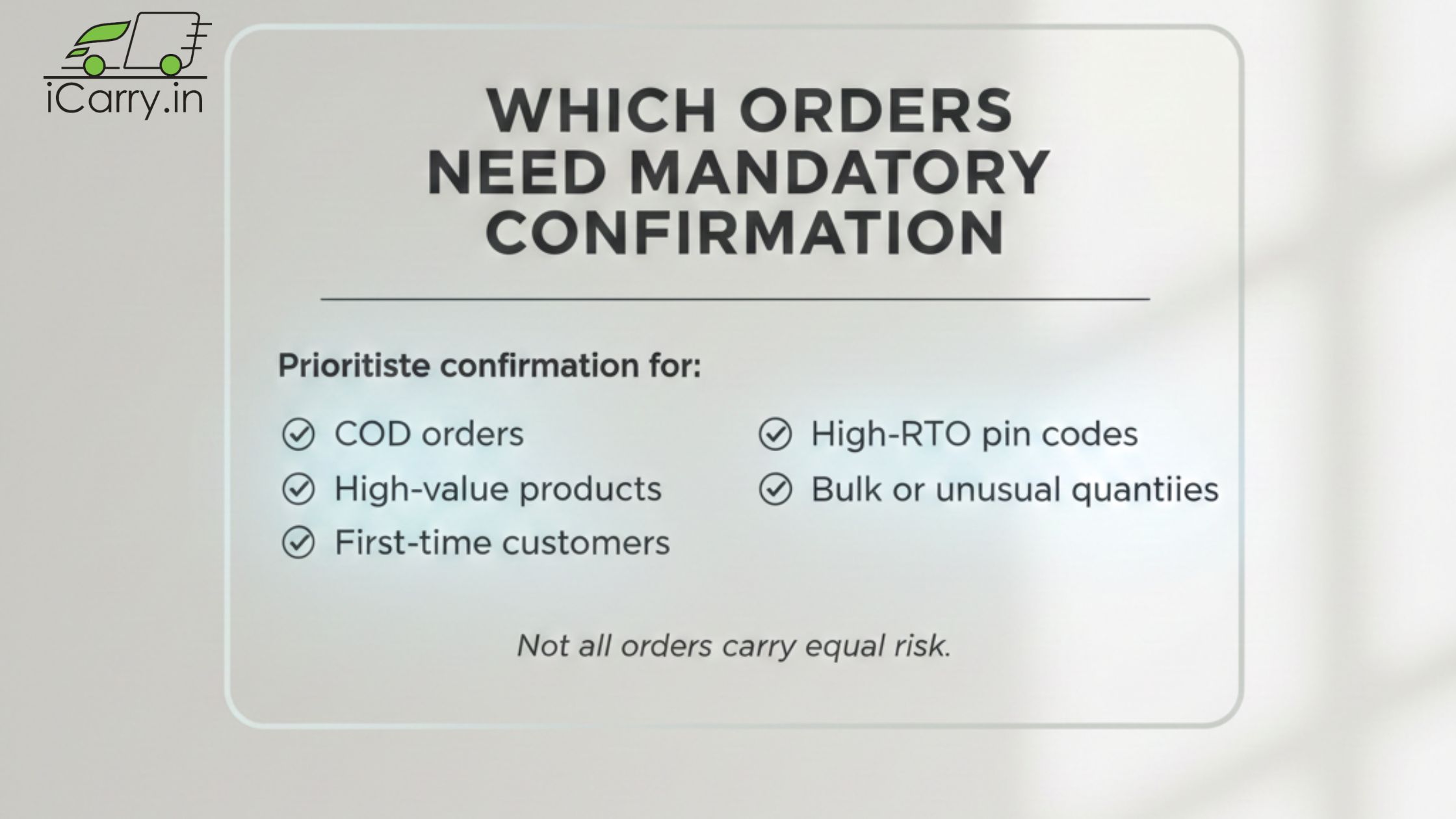
Which Orders Need Mandatory Confirmation
Prioritise confirmation for:
- COD orders
- High-value products
- First-time customers
- High-RTO pin codes
- Bulk or unusual quantities
Not all orders carry equal risk.
Best Practices for Effective Order Confirmation
1. Keep Messages Short & Clear
Avoid long explanations.
Example:
"Your order #123 is scheduled for delivery. Reply YES to confirm."
2. Use WhatsApp Where Possible
Higher open and response rates than SMS or email.
Meta's official WhatsApp Business documentation highlights how interactive messaging improves response rates and customer engagement compared to traditional SMS.
3. Set a Time Limit
If no response within:
12–24 hours → auto-cancel or call
Unresponsive orders often fail delivery.
4. Combine with RTO Risk Scoring
Confirm only high-risk orders to save time and cost.
5. Log Confirmation Status
Track:
- Confirmed
- Unconfirmed
- Cancelled
Data improves future decisions.
Common Mistakes Businesses Make
- Skipping confirmation to ship faster
- Calling every order manually
- Sending unclear messages
- Dispatching unconfirmed COD orders
- Not analysing confirmation data
Speed without confirmation creates chaos later.
Order Confirmation & Customer Experience
Done right, confirmation:
- Reduces surprises
- Lowers anxiety
- Improves delivery satisfaction
Done poorly, it feels like:
- Spam
- Harassment
- Lack of trust
Tone matters.
Impact on Logistics & Cost
Effective confirmation leads to fewer failed delivery attempts - strengthening the overall delivery experience and reducing avoidable friction.
One confirmation saves two shipments - and prevents the hidden cost multipliers often seen in inefficient shipping setups where courier allocation isn't optimized.
Final Thoughts
Order confirmation is not friction. It is insurance. It is protection for your margins and your reputation.
For eCommerce brands:
- Accuracy saves money
- Trust saves reputation
- Confirmation saves both
If you want to reduce RTO, start before dispatch - not after return.
For growing eCommerce brands, building a structured confirmation workflow with the right logistics setup makes all the difference. Platforms like iCarry.in help brands streamline verification, improve courier allocation, and dispatch with greater confidence - without adding operational complexity.
Order confirmation verifies customer intent and delivery details before dispatch—filtering low-intent COD orders, fixing address errors early, aligning delivery expectations, and building trust that reduces RTO rates by 30-50% while protecting profit margins.