Why Tea, Coffee and Spices Are About Freshness, Not Fragility
These products rarely break. They fail in other ways: they absorb moisture, lose aroma, pick up odours from nearby parcels, or arrive with burst pouches and spilled powder. A beautiful tea or masala that arrives dull-smelling or damp is a lost repeat customer.
Online sales of specialty tea, single-origin coffee and regional spice blends are growing, helped by India's expanding online retail market. The logistics are simple compared with fragile goods, but the packaging details decide whether the customer tastes what you intended.
What Is Tea, Coffee and Spice Shipping in India?
Tea, coffee and spice shipping is the courier delivery of packaged food products that rarely break but easily lose freshness. Moisture, air and odour damage them, so airtight packaging, odour separation and fresh dispatch matter more than cushioning.
The Three Enemies: Moisture, Air and Odour
- Moisture: Humidity spoils tea leaves, clumps ground spices and ruins coffee. Monsoon is the highest-risk period
- Air: Oxygen dulls aroma. Ground coffee and ground spices lose freshness fastest after packing
- Odour: Tea, coffee and spices absorb and transfer smell. A parcel with strong spices next to tea can change the tea's taste
Packaging by Product
Tea
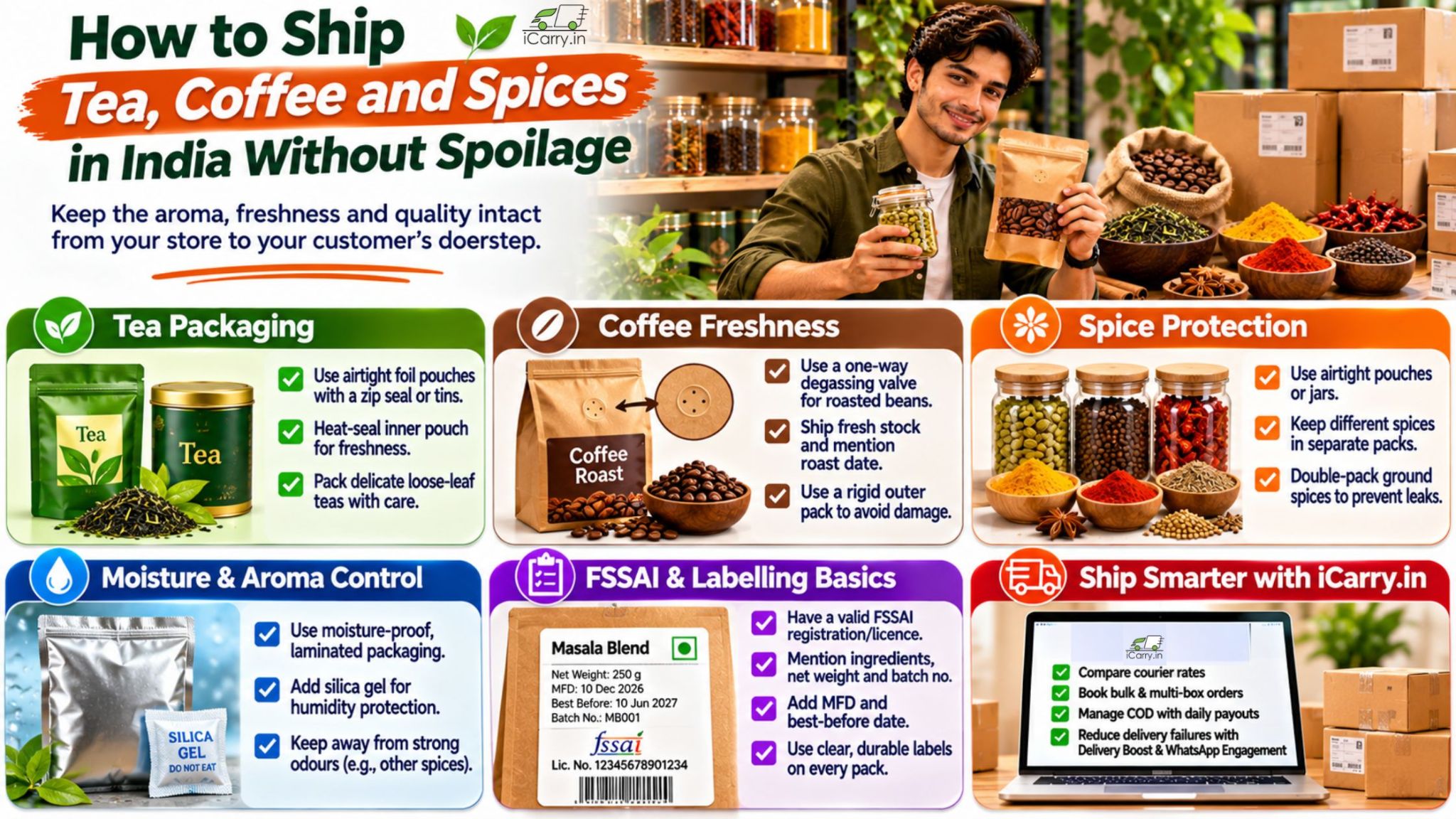
- Use laminated foil-lined pouches with a zip seal, or sealed tins, to block air, light and moisture
- Heat-seal the inner pouch, then add a resealable zip for customers
- Pack delicate loose-leaf teas such as white and green tea with care so leaves are not crushed
- Use a rigid carton or tin for premium gift packs
- Never place tea next to strongly scented items in the same carton
Coffee
- Use foil-lined pouches with a one-way degassing valve for fresh roasted beans, so gas can escape without letting air in
- Ground coffee loses freshness faster than whole beans, so keep dispatch time short
- State the roast date on the pack and ship fresh stock
- Use a rigid outer so the valve and pouch are not crushed
Whole Spices
- Use airtight pouches or jars. Whole spices travel better than ground, but still absorb moisture
- Keep different spices in separate sealed packs so aromas do not mix
- Use rigid boxes for sets and gift tins
Ground Spices and Masala Blends
- Use heat-sealed, laminated pouches with a strong seal. Ground spice powder leaks through weak seals
- Double-pack with an outer pouch or box to contain any leak
- Avoid overfilling pouches, which stresses the seal
- Use jars only if wrapped and cushioned, as glass jars add breakage risk and weight
Saffron and Other High-Value Spices
- Pack in small airtight tins or glass vials inside a rigid box
- Use tamper-evident seals and declared value coverage
- Photograph the sealed pack before dispatch
Freshness and Shelf Life Guide
Shelf life varies by product, quality and packaging. These are typical ranges, so use your own tested dates on the label.
- Tea: Typically long shelf life when sealed. Aroma is best when fresh, so avoid long storage in warm, humid conditions
- Roasted coffee: Best within a few weeks of roasting. Ground coffee fades faster than beans
- Whole spices: Generally keep longer than ground spices
- Ground spices and blends: Lose aroma sooner. Ship fresh batches and mark manufacture dates
Rule: Dispatch the stock that expires first (FEFO) and do not ship products close to the end of their best-before date.
Packing Bulk and Wholesale Orders
- Use strong 5-ply cartons for orders above 10 kg. Pouches and sacks are heavy when packed in bulk
- Inner polythene liners keep moisture out of bulk packs
- Keep cartons under 20 to 25 kg for easy handling and courier limits
- Number cartons, include a packing list, and use linked multi-box booking for B2B orders
- Separate strongly scented spices from tea and coffee into different cartons
Shipping a wholesale order in many cartons? See how to book a multi-box B2B shipment on iCarry®.
FSSAI and Labelling Basics
- FSSAI registration or licence is required to sell packaged food commercially, and the number must be on the label
- Label ingredients, net weight, batch number, manufacture and best-before dates, MRP, storage instructions and allergen details where relevant
- Print the veg symbol (green circle) and nutritional information on pre-packaged food, as set out in the FSSAI labelling rules
- Show the same label details on your product page before the buyer pays, because FSSAI requires mandatory label declarations to be given before sale on e-commerce
- Blends must list every ingredient. Do not use unapproved colours or additives
- Check whether any commodity board registration applies to your business, such as Tea Board or Spices Board, depending on what you do
Monsoon and Seasonal Tips
- Use foil-lined or laminated packs and a waterproof outer layer in monsoon
- Cover labels with clear tape so they do not peel in damp conditions
- Dispatch early in the week to avoid weekend depot storage
- Add silica gel inside outer cartons for bulk shipments
- Festive season gifting hampers need earlier dispatch dates and extra protection
COD, Returns and Evidence
- Tea, coffee and spice orders are usually low value, so COD RTO can erase margin. Offer a prepaid incentive and confirm COD orders on WhatsApp
- Photograph packed cartons and note batch numbers for quality disputes
- Handle leak complaints quickly with photos from the customer and a clear replacement policy
- Do not restock returned food products
Low-value COD orders tie up cash. Read how COD remittance works on iCarry®, including free T+7 settlement on every plan.
How to Ship Tea, Coffee and Spices in 6 Steps
- Match packaging to product: Use foil-lined pouches for tea, valve pouches for coffee and heat-sealed laminated pouches for ground spices
- Separate odours: Keep strong spices away from tea and coffee, since aroma transfers between packs
- Ship fresh: Dispatch the stock that expires first and print the roast or manufacture date on the pack
- Add a rigid outer: Use a rigid carton, or 5-ply for bulk, because crushed pouches and valves leak
- Print FSSAI details: Show the licence number, veg symbol, nutrition and dates on every label
- Protect against monsoon: Use a waterproof outer and silica gel, since humidity spoils all three products
How iCarry® Supports Tea, Coffee and Spice Sellers
iCarry® is a courier aggregator that gives tea, coffee and spice sellers access to multiple courier partners and shipping tools to manage recurring orders, wholesale shipments and festive demand.
- Rate Comparison at Packed Weight: Compare available courier options for parcels ranging from 250 g to 5 kg and choose a suitable service based on your shipment requirements.
- Bulk Booking: Create multiple shipments using Excel or supported CSV uploads to manage subscription orders and large festive batches more efficiently.
- Multi-Box B2B Booking: Book multi-box B2B shipments and link multiple cartons under one wholesale shipment.
- Delivery Boost: Get additional pre-delivery coordination to help reduce failed delivery attempts.
- Two-way WhatsApp Engagement: Let customers confirm availability, update delivery details or reschedule, while keeping the conversation history accessible.
- COD Remittance: Receive standard COD remittance through the T+7 settlement cycle, with faster payout options available for eligible shipments.
Start with the free Bronze plan, with no minimum shipment volume.
Frequently Asked Questions (FAQs)
How should I pack loose-leaf tea for courier delivery?
Use foil-lined, zip-seal laminated pouches or sealed tins to block air, light and moisture, place them in a rigid carton, and keep tea away from strongly scented items. For delicate leaves, avoid crushing by using a rigid outer. Add a waterproof layer in monsoon.
What packaging keeps coffee fresh in transit?
Use foil-lined pouches with a one-way degassing valve for freshly roasted beans, ship soon after roasting, and use a rigid outer so the valve and pouch are not crushed. Ground coffee loses freshness faster, so shorten the time between packing and delivery.
How do I stop ground spices from leaking?
Use strong heat-sealed laminated pouches, avoid overfilling, and double-pack with an outer pouch or box. Choose a rigid carton for blends, and avoid glass jars unless they are well cushioned and priced to cover the extra breakage risk.
Do I need FSSAI registration to sell tea, coffee or spices online?
Yes. Anyone selling packaged food commercially in India needs FSSAI registration or the appropriate licence, with the number printed on the label along with ingredients, net weight, batch number, dates, MRP and storage instructions. Also check whether Tea Board or Spices Board registrations apply to your business.
Tea, coffee and spices fail through moisture, air and odour rather than breakage, so pack for freshness: foil-lined zip pouches or tins for tea, one-way valve pouches for coffee, and heat-sealed laminated pouches (double-packed) for ground spices. Keep strong spices in separate cartons from tea and coffee, ship the stock that expires first, add a rigid outer and a waterproof layer in monsoon, and print the FSSAI licence number, veg symbol, nutrition and dates on every label.