You book two shipments. Same weight. Same courier. Same day. One costs ₹45. The other costs ₹110. You wonder if there was an error.
There was not. The difference is the shipping zone.
Every courier in India uses a zone-based pricing system to calculate freight charges. The further the delivery pincode is from your pickup location, the higher the zone - and the higher the rate. Understanding how zones work is not just useful knowledge. It directly affects how you price your products, which customers you can serve profitably, and which courier you choose for each order.
This guide explains India's shipping zone system clearly - what each zone means, how rates and transit times change across zones, and how eCommerce sellers use this knowledge to reduce shipping costs.
Quick Checklist - Do You Know Your Zone Costs?
- Do you know which zone most of your customer orders fall into?
- Are you accounting for Zone D and Zone E surcharges when pricing products for Tier 2 and Tier 3 customers?
- Do you compare rates across multiple courier partners before booking - since zone pricing varies by courier?
- Are you aware of ODA surcharges for remote pincodes within Zone E and F?
- Do you check zone-level delivery timelines before making promises to customers at checkout?
What Is a Shipping Zone?
A shipping zone is a geographic classification that Indian courier companies use to calculate freight charges. It is determined by the distance between the shipment's origin pincode (your pickup location) and the delivery pincode (your customer's address).
The further the distance, the higher the zone number - and the higher the freight rate per 500g slab.
This zone-based model is standard across the global logistics industry, consistent with supply chain management frameworks defined by CSCMP. Every major Indian courier - Delhivery, Blue Dart, Xpressbees, Ekart, Amazon shipping and others - uses a similar zone structure, though the exact zone boundaries and rates vary between couriers.
India's Courier Zone Classification
Most Indian courier companies use a zone-based classification system, commonly ranging from local zones to remote/special zones. Most commonly used is a 6-zone system for domestic surface shipping. Here is how the zones are typically defined:
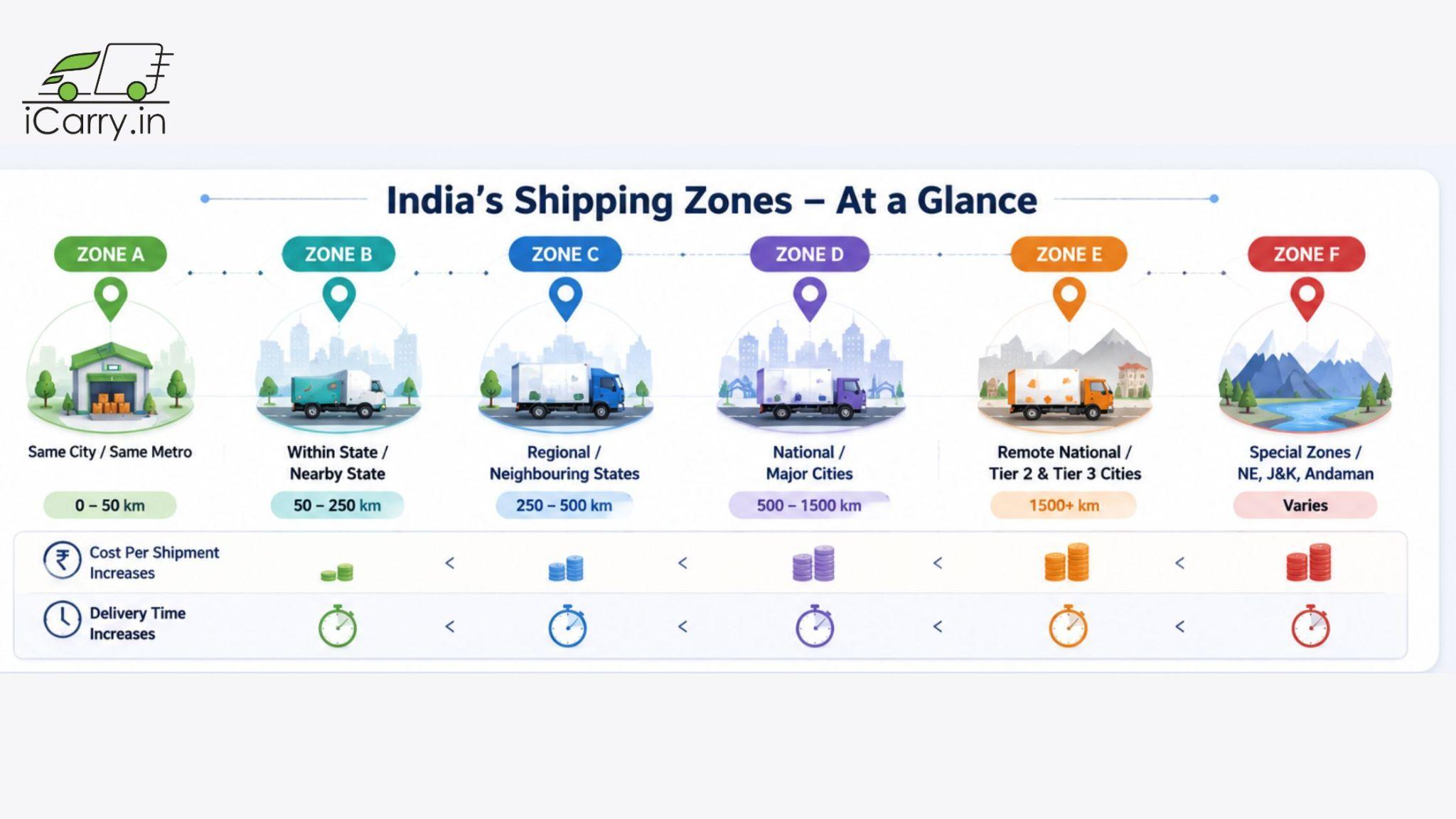
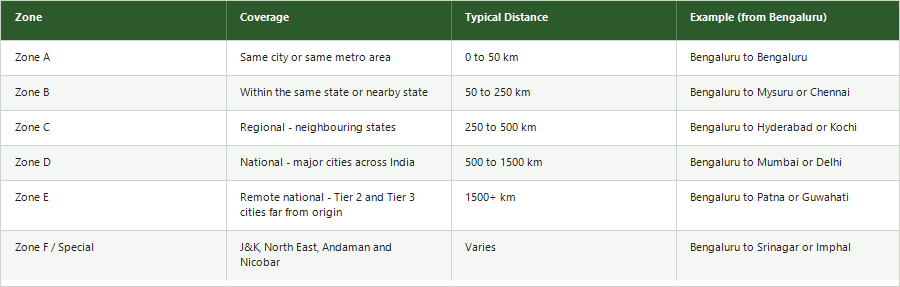
Important: Zone definitions are relative to your pickup location - not fixed geographically. A Delhi seller's Zone A is different from a Bengaluru seller's Zone A. The zone is always calculated from your origin pincode to the delivery pincode.
How Zones Affect Shipping Rates
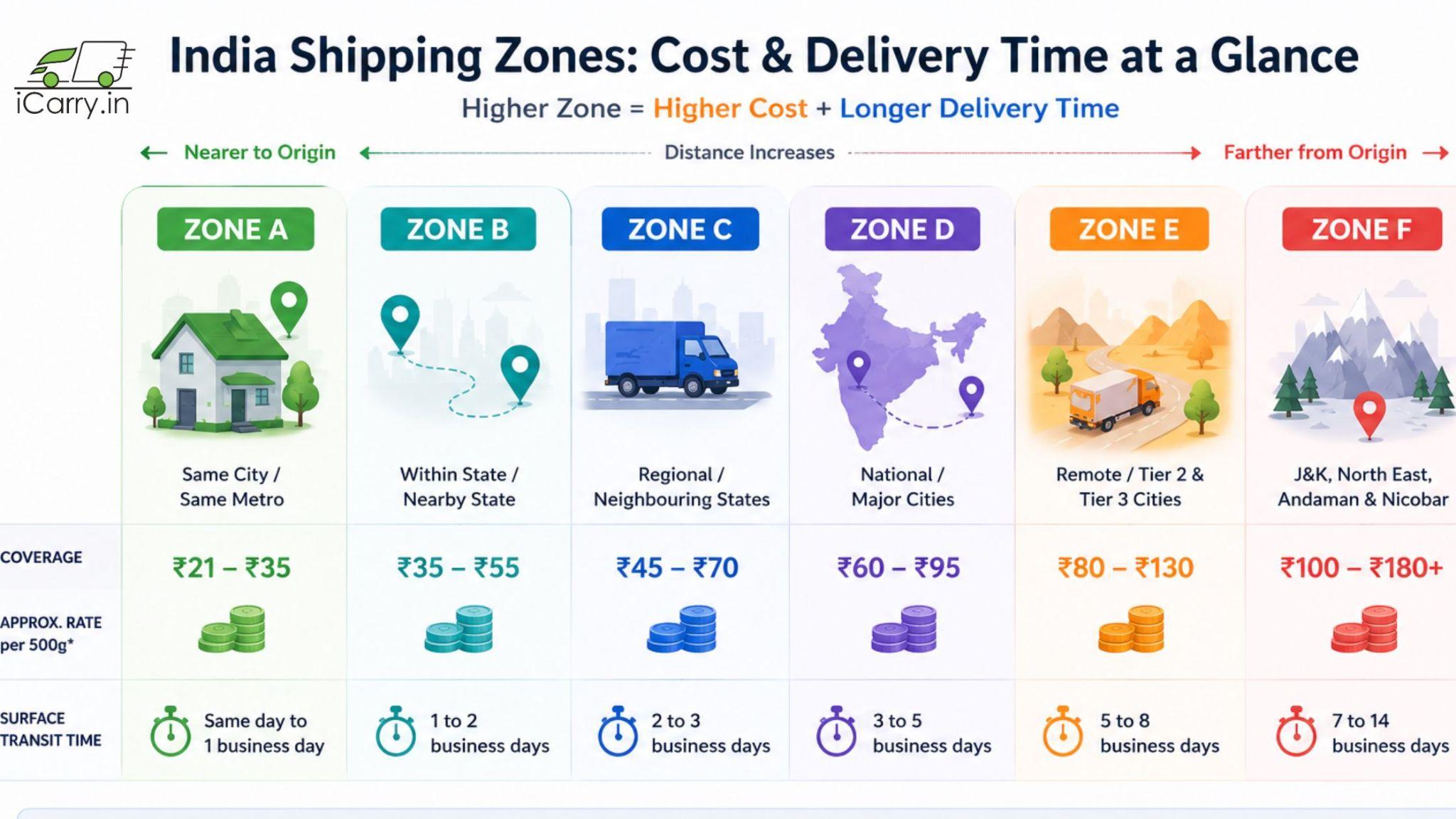
Every additional zone level adds a meaningful cost per shipment. Courier charges in India are calculated using the combination of zone, weight, dimensions, courier partner, and additional charges such as COD or ODA surcharges. This is why the same product and weight can have different shipping costs depending on the destination pincode.
How Zones Affect Delivery Time
Zone directly determines transit time. Zone A order might deliver the same day or next day. Zone E order might take 6 to 10 business days on surface mode.
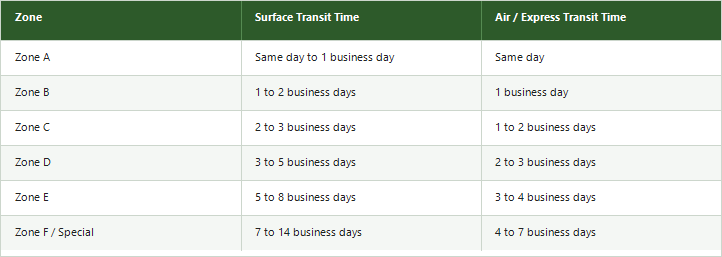
Note: Delivery timelines are estimates and vary by courier and pincode. Always verify actual transit estimates for your specific route before making delivery promises at checkout.
What Are ODA Surcharges and When Do They Apply?
Out of Delivery Area (ODA) surcharges are additional charges applied when a delivery pincode is outside a courier's standard service network - most commonly in Zone E and Zone F pincodes.
ODA surcharges typically add ₹30 to ₹100 per shipment on top of the base zonal rate. For sellers shipping to rural or remote pincodes across Bihar, Rajasthan, North East India, and J&K, ODA charges can make certain deliveries unprofitable if not accounted for in product pricing.
ODA surcharges are one of the most common hidden shipping charges that appear on courier invoices without clear advance notice. Always check ODA applicability before listing products to customers in remote pincodes.
How Zones Differ Between Couriers
Zone definitions and rates are not standardised across couriers. Delhivery, Blue Dart, Xpressbees, and Ekart all use slightly different zone boundary definitions and rate structures. A pincode that falls in Zone C for one courier might be Zone D for another - with a significant rate difference.
This is why comparing rates across multiple courier partners before every booking is so valuable. Multi-courier allocation allows sellers to automatically route each order to the courier with the best rate and transit time for that specific destination pincode - rather than defaulting to one courier whose zone pricing may not be optimal for every route.
How to Reduce Zonal Shipping Costs
1. Store Inventory Closer to Demand
The single most effective way to reduce zonal costs. If 40% of your orders ship to customers in Maharashtra and you are warehousing in Delhi, those orders are all Zone D. Moving inventory to a Mumbai-based fulfillment point makes those orders Zone A or Zone B - cutting the per-shipment rate by 40 to 60%.
2. Compare Couriers Before Every Booking
Different couriers define zone boundaries differently. A pincode that is Zone D on Delhivery might be Zone C on Xpressbees - a ₹15 to ₹20 per shipment difference. Always comparing rates before booking captures this saving automatically. Watch How to Estimate Shipment Cost to see how iCarry® shows live rates across all couriers for your exact pincode pair before any booking is confirmed.
3. Use Air Mode Strategically for High-Value Zone E Orders
For Zone E orders on products with high margins, air mode can deliver in 3 to 4 days vs 5 to 8 days for surface at a meaningful rate premium. For high-value prepaid orders where delivery speed improves customer experience and reduces NDR risk, the rate premium often pays for itself through lower return costs.
4. Check ODA Surcharges Before Listing
Before listing products to remote pincodes in Zone E and Zone F, calculate the total ODA-inclusive rate to confirm the delivery is profitable. iCarry® shows pincode serviceability and applicable surcharges before booking - preventing ODA surprises on invoices.
5. Reduce RTO - Especially on Zone D and E Orders
RTO on Zone D and E orders costs double freight at the higher zonal rate. An RTO from Zone E costs the forward Zone E rate plus the return Zone E rate - often ₹200 to ₹260 in pure freight loss per failed delivery. Reducing RTO on long-zone deliveries - through Delivery Boost, address validation, and active NDR management - has the highest financial impact precisely where zone rates are highest.
How iCarry® Makes Zone Management Simple
iCarry® shows the applicable shipping zone, rate, and estimated transit time for every order before booking - across multiple courier partners simultaneously.
- Rate calculator: Enter origin pincode, delivery pincode, weight, and dimensions. You can also see Zone classification and rates across all available couriers instantly via the rate chart.
- Pincode serviceability check: Verify ODA applicability and courier coverage for any pincode before creating a listing or accepting an order.
- Bulk booking: Process all orders in one action with automatic courier assignment by zone and performance.
Monitor all active shipments by zone and courier performance from the My Shipments dashboard - watch Overview of My Account > My Shipments for a complete walkthrough.
Here is a screenshot of the current iCarry rate chart for surface B2C shipping for a 500g parcel:
Note - High-volume sellers using multi-courier platforms can often access rates lower than standard published rates because pricing also depends on shipment volume, courier mix, and negotiated commercial agreements.
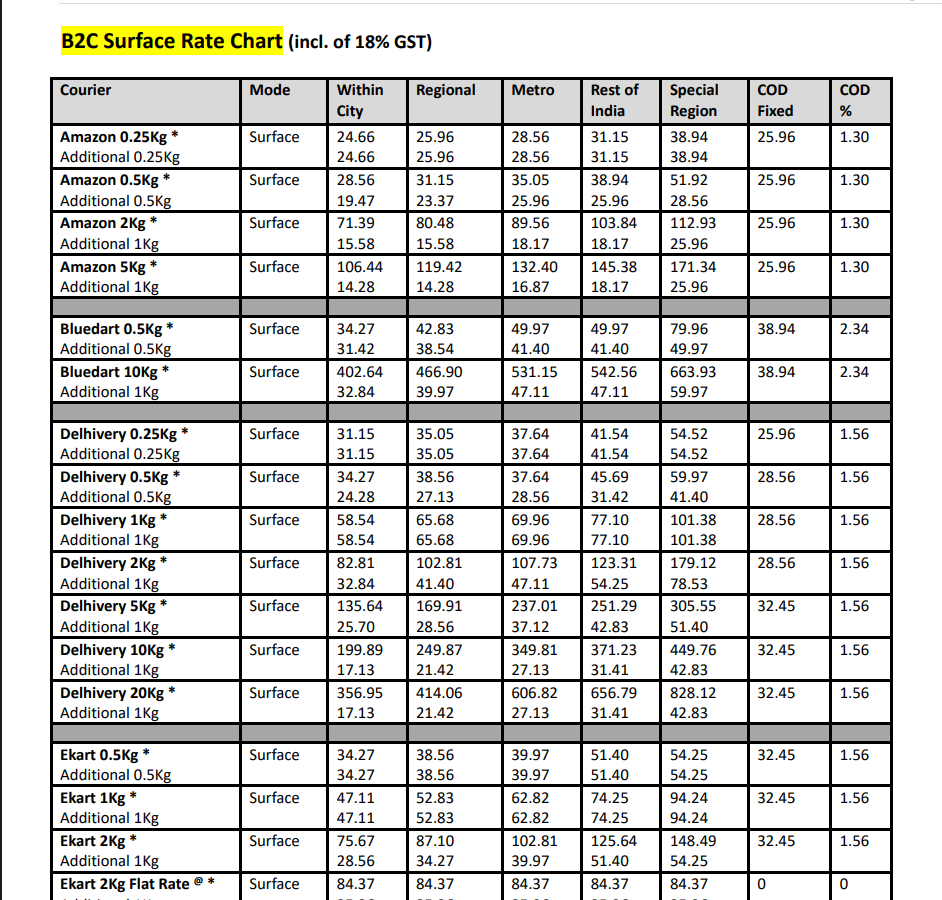
*Rates are subject to change by the company. Actual standard rates on iCarry may be lower - refer to the latest rate chart published on the website.
Compare live rates across multiple courier partners for your exact origin and delivery pincode using iCarry®'s free rate calculator before every booking. You can watch How to Estimate Shipment Cost for a step-by-step walkthrough.
Final Thoughts
Shipping zones are one of the most important concepts in Indian eCommerce logistics - and one of the least understood by new sellers. Every rupee difference in your per-order shipping cost traces back to zone classification, ODA surcharges, courier selection, or a combination of all three.
Understanding your zone distribution - where your customers actually are relative to your inventory location - is the starting point for every meaningful shipping cost reduction.
iCarry® shows live zone-based rates across multiple courier partners before every booking. Compare rates for free - no login required.
Frequently Asked Questions (FAQs)
What is a shipping zone in India?
A shipping zone is a geographic classification used by Indian couriers to calculate freight charges. It is based on the distance between your pickup pincode and the delivery pincode. Zones typically range from Zone A (same city) to Zone F (remote or special areas like J&K and North East India).
How many shipping zones are there in India?
Most Indian couriers use 5 to 6 zones - Zone A through Zone E or F. Zone A covers same-city deliveries at the lowest rate. Zone E and Zone F cover remote national deliveries at the highest rate. Zone definitions vary slightly between couriers.
How do I find out which zone my customer's pincode falls in?
Enter your origin pincode and the customer's delivery pincode in iCarry®'s free rate calculator. The tool shows the applicable zone, rate, and estimated transit time across multiple couriers before you book.
Why do different couriers charge different rates for the same zone?
Each courier defines zone boundaries differently and negotiates its own rate structure. A pincode in Zone C for one courier may fall in Zone D for another. This is why comparing rates across multiple courier partners before booking consistently saves money.
What is an ODA surcharge and how is it different from a zone charge?
The zone charge is the base freight rate calculated by distance. An ODA (Out of Delivery Area) surcharge is an additional fee applied when a specific pincode is outside a courier's standard delivery network - common in Zone E and Zone F pincodes. ODA is charged on top of the zonal rate.
How can I reduce shipping costs for Zone D and Zone E orders?
Store inventory closer to high-demand regions to reduce the zone distance, compare courier rates for each zone before booking, use air mode selectively for high-value Zone E orders where speed reduces RTO, check ODA applicability before accepting orders in remote pincodes, and reduce RTO through active NDR management - since Zone D and E RTOs cost double freight at the highest zonal rates.
How do shipping zones affect sellers who ship from multiple warehouse locations?
Multi-location fulfilment significantly reduces average zone cost. A seller shipping only from Mumbai may dispatch North India orders at Zone D or E rates. The same seller with a Delhi fulfilment point ships those orders at Zone A - cutting per-shipment cost by 30% to 50% on that route. Manufacturers and distributors with regional stock points benefit most from zone-aware inventory placement.
Do all couriers in India use the same zone classification?
Yes and No. Most couriers in India use a similar zone structure, though the exact zone boundaries and rates vary between couriers. For example - Delhivery, Blue Dart, Xpressbees, Ekart, and DTDC all use slightly different zone maps. The same origin-destination pincode pair may be Zone B with one courier and Zone C with another. Always compare rates for your specific pincodes before booking - never assume zone parity across providers.
Shipping zones in India determine how much you pay per order and how long delivery takes - and the difference between Zone A and Zone E can be ₹65 or more on the same shipment. Understanding your zone distribution, comparing courier rates before every booking, and reducing RTO on high-zone orders are the three most actionable levers for reducing average per-order shipping cost in Indian eCommerce.