Introduction
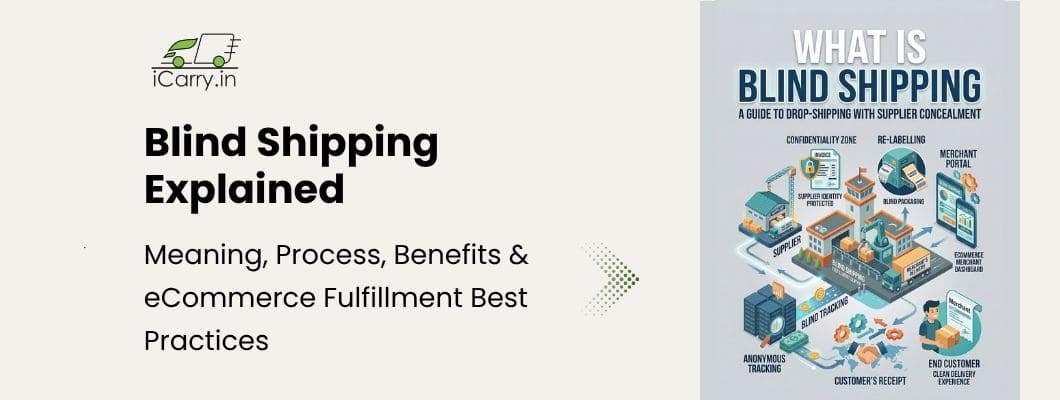
Blind shipping is a logistics practice used in eCommerce where suppliers ship products directly to customers while keeping the supplier's identity hidden. In modern supply chain operations, many businesses sell products without directly handling inventory. Brands often rely on manufacturers, wholesalers, or third-party fulfillment partners to ship products directly to customers or retailers. In such cases, businesses may not want the end customer to know the identity of the original supplier.
This is where Blind Shipping becomes important.
Blind shipping is a logistics practice used to hide the identity of the supplier or manufacturer from the final customer, a model commonly used when businesses source products from manufacturers while selling them under their own brand online. It is commonly used in drop shipping, reseller accounts, B2B wholesale distribution, and marketplace fulfillment where the seller wants to maintain control over the customer relationship.
Industry logistics associations such as the Council of Supply Chain Management Professionals (CSCMP) describe blind shipping as a documentation-based shipping practice used to conceal the origin shipper in commercial transactions.
For Indian eCommerce sellers, distributors, and global exporters, blind shipping helps protect supplier relationships, maintain brand identity, and create seamless customer experiences.
This guide explains what blind shipping means, how it works, its benefits, challenges, and best practices for implementing it in eCommerce fulfillment operations.
What is Blind Shipping in Logistics?
Blind shipping is a logistics method where a supplier ships products directly to a customer while hiding the supplier's identity. The seller appears as the shipper on shipping documents, allowing businesses to protect supplier relationships and maintain brand ownership.
Instead of the manufacturer or supplier appearing as the shipper on shipping documents, the seller's business name appears as the sender.
In simple terms:
Supplier ships the product → Customer receives it → Supplier identity remains hidden.
This allows businesses to sell products while keeping their supplier network confidential.
Blind shipping is often used in drop shipping, online reselling, B2B wholesale distribution, and marketplace fulfillment where the seller wants to maintain control over the customer relationship while managing supplier-driven fulfillment as part of modern supply chain operations.
Modern eCommerce fulfillment models such as drop shipping have expanded rapidly as online retail continues to grow globally according to UNCTAD's eCommerce and Digital Economy reports.
Why Blind Shipping Matters for eCommerce Businesses
Blind shipping plays a strategic role in modern eCommerce logistics by protecting supplier relationships, maintaining brand identity, and enabling flexible fulfillment models. As many online businesses rely on third-party manufacturers and fulfillment partners, blind shipping helps ensure that the seller remains the primary brand visible to the customer.
One of the most important benefits of blind shipping is protecting supplier relationships. When customers can see the original manufacturer or wholesaler on shipping labels or documentation, they may attempt to purchase directly from the supplier. This can bypass the seller entirely and weaken long-term business partnerships. Blind shipping prevents this by removing supplier details from shipment information.
Another key advantage is maintaining brand ownership. In competitive eCommerce markets, brand visibility and customer trust are essential. Blind shipping ensures that customers only see the seller's brand on shipping labels, packing slips, and communication materials. This reinforces the brand's presence and keeps the customer relationship directly tied to the seller.
Blind shipping is also especially valuable for dropshipping and inventory-light business models. Many online stores sell products without holding physical inventory. Instead, orders are forwarded to suppliers or fulfillment partners who ship products directly to the customer. With blind shipping, the supplier handles logistics while the seller remains the brand customers interact with.
Finally, blind shipping helps simplify complex supply chains. eCommerce businesses often work with multiple suppliers, warehouses, and fulfillment providers. By hiding supplier identities, companies can manage these relationships behind the scenes without exposing their operational structure to customers.
Key Concepts Behind Blind Shipping
Several logistics elements enable blind shipping to work effectively.
1. Modified Shipping Documentation
Shipping documents are adjusted so that:
- The seller appears as the shipper
- The supplier information is hidden
Documents modified may include:
- Shipping labels
- Packing slips
- Invoices
- Bill of lading
2. Supplier Confidentiality
Suppliers agree not to disclose their identity to the customer.
This is usually defined in supply agreements or fulfillment contracts.
Clear contractual agreements between supply chain partners are widely recommended by logistics experts at Deloitte's supply chain practice to prevent disclosure risks and ensure operational transparency.
3. Third-Party Logistics Coordination
Blind shipping often involves coordination between:
- Seller
- Supplier
- Courier partner
- Fulfillment provider
Clear communication is required to avoid shipping errors and ensure consistent shipping optimization and fulfillment coordination across logistics partners.
4. Neutral Packaging
Products are often shipped using plain packaging without supplier branding. This ensures customers only see the seller's brand.
Using neutral or unbranded packaging is another important best practice. Plain packaging prevents supplier branding from being visible and ensures a consistent customer experience. In many cases, businesses also rely on logistics platforms that support blind shipping configurations, allowing shipment labels and documentation to reflect the seller's brand rather than the suppliers - a feature especially useful for resellers and drop shipping businesses.
How Blind Shipping Works: Step-by-Step Process
Blind shipping follows a structured logistics workflow.
Structured fulfillment processes are a core part of modern logistics management frameworks used in global supply chains as documented by the World Bank's Logistics Performance Index.
Step 1: Customer Places an Order
The customer purchases a product from the seller's online store or marketplace listing.
Step 2: Seller Sends Order to Supplier
The seller forwards order details to the supplier or manufacturer responsible for fulfillment.
Step 3: Supplier Prepares the Shipment
The supplier packs the product using:
- Neutral packaging
- Modified shipping documents
Step 4: Shipping Documents Are Adjusted
Instead of listing the supplier as the sender, shipping labels display the seller's business name.
Step 5: Courier Picks Up the Shipment
The courier collects the package from the supplier's warehouse, after which the shipment moves through multi-courier logistics networks that optimize delivery routes and carrier performance.
Step 6: Customer Receives the Order
The customer receives the shipment believing it came directly from the seller.
Real-World Examples of Blind Shipping in eCommerce
Blind shipping is widely used across different eCommerce and supply chain models to protect supplier relationships and maintain brand control. From direct-to-consumer brands to B2B distributors and marketplace sellers, many businesses rely on this logistics strategy to keep their supply chains invisible to customers while ensuring efficient order fulfillment.
A common example can be seen with direct-to-consumer (D2C) eCommerce brands that sell products online without handling their own inventory. For instance, an electronics accessories brand may market and sell products through its website while a manufacturing partner ships orders directly to customers. Through blind shipping, the manufacturer fulfills the order behind the scenes, while the shipping labels and documents display only the brand's identity. This ensures that customers recognize the brand as the sender rather than the supplier.
Blind shipping is also widely used in B2B wholesale distribution. A distributor may sell products to multiple retailers but source inventory from different manufacturers or suppliers. Instead of routing products through its own warehouse, the distributor can instruct suppliers to ship orders directly to retailers. With blind shipping, the supplier's information is removed from shipping documentation, allowing the distributor to maintain control over the customer relationship while still benefiting from direct supplier fulfillment.
Another common use case appears in online marketplaces such as resellers on Meesho, Amazon and Flipkart. Many marketplace sellers rely on external suppliers or fulfillment partners to handle order shipping. Blind shipping helps ensure that supplier identities remain hidden from end customers, allowing sellers to protect their sourcing strategies and maintain their marketplace brand presence.
Together, these examples demonstrate how blind shipping supports scalable eCommerce operations while helping businesses maintain brand ownership, protect supplier relationships, and streamline fulfillment processes.
Blind Shipping vs Drop Shipping: Key Differences
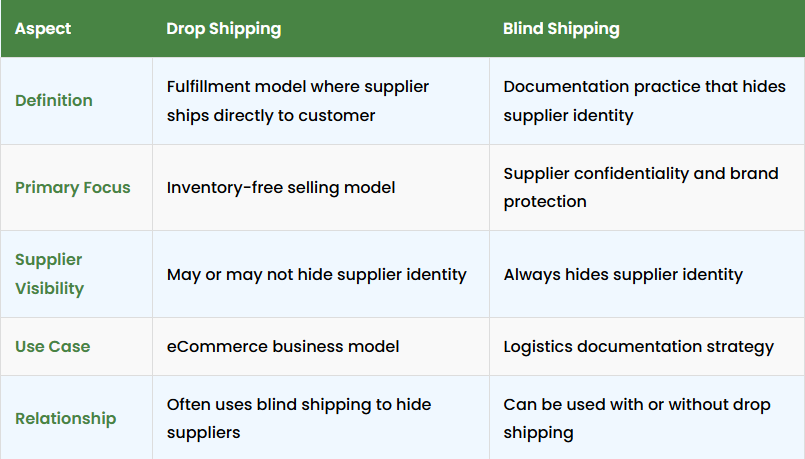
Blind shipping is often used within drop shipping models to maintain brand control.
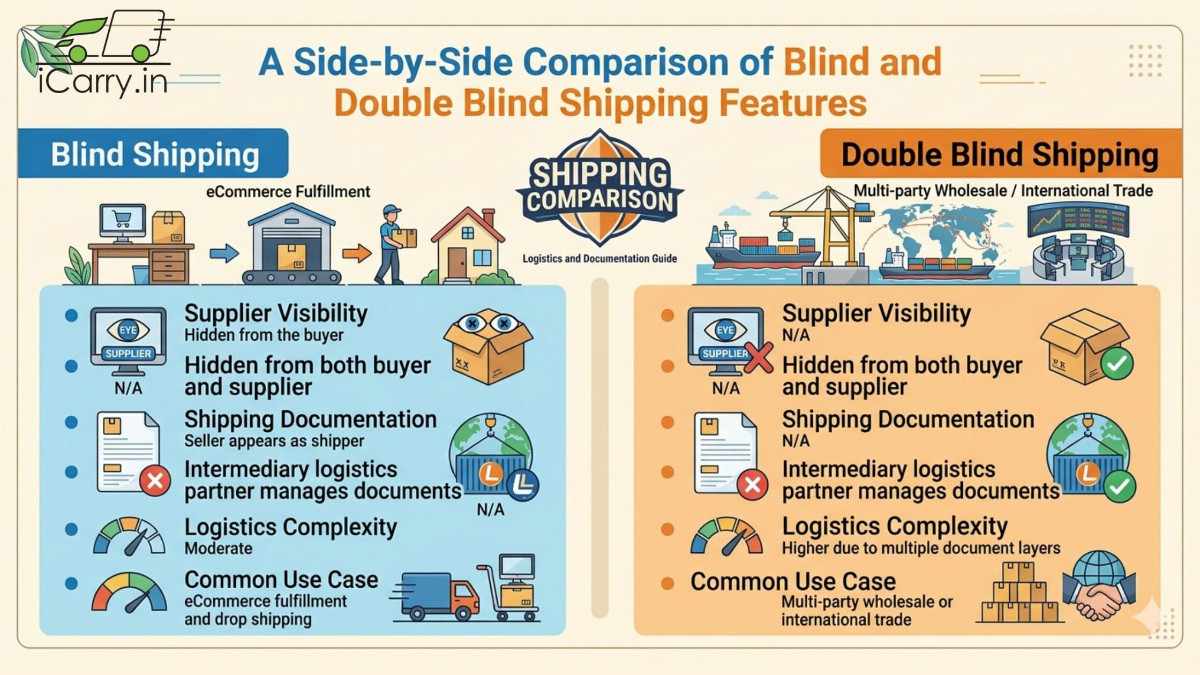
Blind Shipping vs Double Blind Shipping
Blind shipping and double blind shipping are closely related logistics practices used to hide supplier information in shipping transactions. However, they differ in how much information is concealed between supply chain participants.
In blind shipping, the customer does not see the supplier's identity, but the supplier still knows who the final customer is. In double blind shipping, both the buyer and the supplier remain unaware of each other's identities, with a third-party logistics partner managing the transaction and shipping documentation.
This model is sometimes used in complex B2B distribution networks or international trade where businesses want to protect both supplier relationships and customer data.
Key Benefits of Blind Shipping for eCommerce Businesses
Blind shipping offers several operational and strategic advantages for eCommerce businesses that rely on suppliers, manufacturers, or third-party fulfillment partners. One of the most important benefits is protecting supplier networks. When supplier details remain hidden from customers, businesses can maintain exclusive sourcing relationships and prevent customers from bypassing the seller to purchase directly from the manufacturer.
Another major advantage is strengthening brand identity. With blind shipping, all shipment documentation and communication reflect the seller's brand rather than the supplier's. This helps businesses build stronger customer relationships and maintain consistent brand recognition across the entire buying experience.
Blind shipping also enables scalable eCommerce operations. Many online businesses sell products without maintaining large inventories or warehouses. Instead, suppliers store and ship products directly to customers, allowing brands to expand their product catalog and market reach without heavy infrastructure investments.
Additionally, blind shipping can reduce warehousing costs and improve operational flexibility. Because suppliers manage product storage and shipping, businesses can minimize logistics overhead while still working with multiple suppliers or fulfillment partners across different regions.
Challenges of Blind Shipping in Supply Chain Operations
Despite its advantages, blind shipping can introduce operational complexities that businesses must manage carefully. One common challenge is coordination between multiple parties. Blind shipping typically involves sellers, suppliers, and logistics providers working together, which requires clear communication and accurate order information.
There is also a risk of documentation errors. If shipping labels, packing slips, or invoices are generated incorrectly, supplier details may accidentally appear in the shipment, defeating the purpose of blind shipping.
Another potential issue is limited control over packaging and presentation. Suppliers handling fulfillment may not always follow the seller's branding or packaging guidelines, which can affect the customer experience. In addition, customer support challenges can arise if delivery problems occur, as sellers must coordinate with suppliers to resolve shipping or fulfillment issues.
Common Blind Shipping Mistakes Businesses Should Avoid
Many businesses encounter problems with blind shipping because of unclear processes or poor coordination with suppliers. One frequent mistake is not defining blind shipping rules clearly. Suppliers must fully understand which information should appear on shipping labels, invoices, and packing documents.
Another issue is working with suppliers that lack fulfillment experience. Suppliers unfamiliar with blind shipping procedures may accidentally include their branding or contact details in shipments.
Businesses also sometimes ignore packaging standards, which can expose the supply chain if supplier logos or branded packaging are used. Finally, insufficient communication with logistics partners can create problems if courier companies are not aware of modified shipping instructions or documentation requirements.
Best Practices for Successful Blind Shipping Implementation
To run blind shipping operations successfully, businesses should establish clear processes and maintain strong coordination with suppliers and logistics partners. One of the most effective strategies is creating clear fulfillment agreements that outline blind shipping requirements, documentation standards, and packaging guidelines.
Companies should also standardize shipping documentation by providing suppliers with pre-approved templates for labels, packing slips, and invoices. This helps reduce the risk of supplier information appearing in shipments.
Using neutral or unbranded packaging is another important best practice. Plain packaging prevents supplier branding from being visible and ensures a consistent customer experience.
Businesses should also monitor supplier performance regularly by tracking fulfillment accuracy, delivery timelines, and packaging compliance. Finally, implementing logistics automation tools can streamline order processing and ensure that correct shipping instructions are consistently applied across suppliers and fulfillment partners.
In practice, executing blind shipping correctly depends heavily on the logistics partner being able to support documentation control and shipment customization. Platforms like iCarry support blind shipping workflows for resellers and suppliers, where shipping labels and documents can be configured to reflect the seller's brand instead of the supplier. This makes it easier for growing businesses to maintain supplier confidentiality while delivering a consistent, professional customer experience.
Blind Shipping Trends and Industry Insights
Blind shipping has become a widely used logistics strategy across modern eCommerce supply chains. As businesses increasingly adopt dropshipping, third-party fulfillment, and multi-supplier sourcing models, blind shipping helps maintain brand ownership while enabling efficient and scalable order fulfillment.
Many fast-scaling eCommerce brands rely on supplier-driven fulfillment models to expand product catalogs without increasing inventory costs.
Research from BCG's supply chain management practice shows that flexible fulfillment models help companies scale faster while reducing inventory and warehousing costs.
Conclusion: Why Blind Shipping is Important for Modern eCommerce Logistics
Blind shipping is an important logistics strategy that allows businesses to maintain control over customer relationships while relying on suppliers for fulfillment. By hiding supplier identities and presenting the seller as the shipper, businesses can protect supplier networks, strengthen brand identity, and scale operations efficiently. Along with documentation control, having logistics partners that support features like blind shipping can make it easier for resellers to scale without exposing supplier networks.
For eCommerce businesses operating in competitive marketplaces, blind shipping offers a powerful way to expand product offerings without managing complex inventory and warehousing operations.
When implemented with clear supplier agreements, standardized documentation, and strong logistics coordination, blind shipping can significantly improve fulfillment efficiency and operational flexibility.
Improve Fulfillment Efficiency with Smarter Logistics
Efficient fulfillment strategies such as blind shipping require reliable logistics coordination and strong visibility across supply chain partners. Businesses that optimize shipping workflows and partner with the right logistics platforms can deliver better customer experiences while maintaining operational efficiency.
Modern logistics operations increasingly combine compliance monitoring with broader shipment visibility and performance tracking. iCarry, India's most trusted shipping partner for growing businesses, helps teams connect courier coordination, shipment monitoring, and operational analytics into a more unified logistics control system.
Frequently Asked Questions About Blind Shipping
What is blind shipping in logistics?
Blind shipping is a logistics process where a supplier ships products directly to a customer while hiding the supplier's identity from the buyer.
How is blind shipping different from drop shipping?
Drop shipping refers to a fulfillment model where suppliers ship products directly to customers, while blind shipping specifically hides the supplier's identity from the customer.
Why do businesses use blind shipping?
Businesses use blind shipping to protect supplier relationships, maintain brand identity, and prevent customers from bypassing sellers to purchase directly from suppliers.
Is blind shipping commonly used in eCommerce?
Yes. Many eCommerce brands, wholesalers, and distributors use blind shipping to fulfill orders while maintaining control over their customer relationships.
Does blind shipping affect delivery speed?
No. Blind shipping primarily affects documentation and packaging, not the transportation process itself.
What documents are modified in blind shipping?
Documents such as shipping labels, packing slips, invoices, and bills of lading may be modified so that the seller appears as the shipper instead of the supplier.
Is blind shipping legal?
Yes. Blind shipping is a legitimate logistics practice commonly used in eCommerce, wholesale distribution, reselling and supply chain operations to protect supplier relationships and maintain brand ownership.
What is the difference between blind shipping and private label fulfillment?
Blind shipping hides the supplier's identity in shipping documentation, while private label fulfillment involves selling products manufactured by another company under your own brand.
Blind shipping is a logistics practice where suppliers ship products directly to customers while hiding the supplier's identity through modified shipping documentation—enabling eCommerce businesses to protect supplier relationships, maintain brand ownership, scale operations without inventory, and create seamless customer experiences while suppliers handle fulfillment behind the scenes.