Introduction
eCommerce shipping is one of the most critical components of any online business. In this comprehensive eCommerce shipping guide, you'll learn how to optimize delivery, reduce logistics costs, and improve customer experience. While marketing and product quality drive customer acquisition, shipping experience determines customer satisfaction, repeat purchases, and brand loyalty by directly influencing customer retention.
In India's highly competitive eCommerce market, customers expect:
- Fast delivery (1 - 3 days or even same-day)
- Affordable or free shipping
- Real-time tracking
- Hassle-free returns
For businesses, shipping is not just an operational activity—it is a strategic function that directly impacts costs, margins, and customer experience.
From choosing the right delivery model to optimizing shipping costs and courier performance, eCommerce brands must build efficient logistics strategies supported by strong supply chain management practices to scale successfully.
Global research from McKinsey's supply chain insights highlights that efficient supply chain management is a key driver of business performance and customer satisfaction.
This guide explains eCommerce shipping methods, cost structures, delivery models, and practical optimization strategies to help businesses improve logistics performance.
What is eCommerce Shipping?
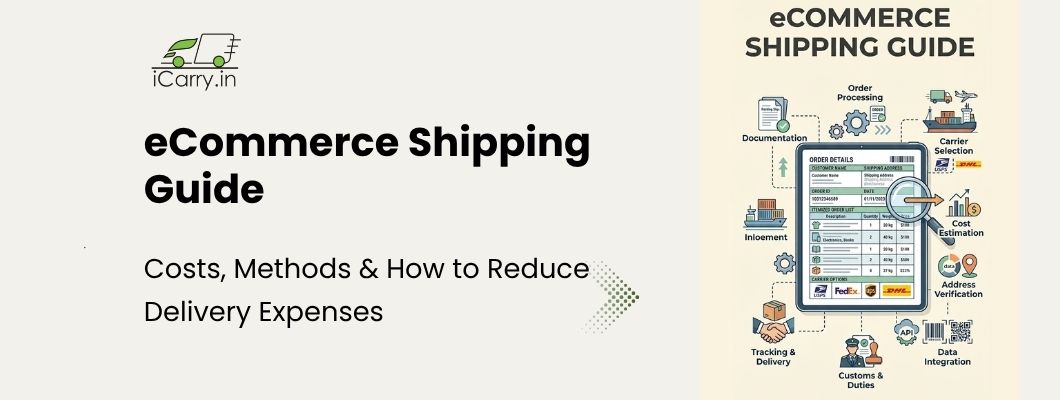
eCommerce shipping is the process of storing, packaging, and delivering products from a seller to a customer after an online order is placed. It includes order processing, packaging, transportation, and last-mile delivery.
Logistics and transportation systems form the backbone of global trade and play a critical role in ensuring efficient movement of goods according to the World Bank's transport sector overview.
In simple terms:
eCommerce shipping is the end-to-end process of delivering online orders to customers.
Why Shipping Matters for eCommerce Businesses
Shipping performance directly affects business success.
Studies from Google's consumer insights research show that delivery speed and reliability significantly influence customer satisfaction and purchase decisions in eCommerce.
Customer Experience
Fast and reliable delivery is one of the biggest drivers of customer satisfaction. When orders arrive on time and in good condition, customers are more likely to trust your brand and return for future purchases.
Conversion Rates
Shipping costs and delivery timelines can make or break a sale. High shipping fees or long delivery estimates often lead to cart abandonment, while transparent pricing and faster delivery options improve conversion rates.
Profit Margins
Shipping expenses are a major operational cost for eCommerce businesses. Efficient logistics, optimized packaging, and strategic carrier selection can help control costs and improve overall profitability.
Brand Perception
Reliable shipping strengthens your brand image. Consistently delivering on promises builds trust, encourages positive reviews, and enhances long-term customer loyalty.
Core eCommerce Shipping Methods
eCommerce businesses can choose from a variety of shipping methods depending on delivery speed, cost, and customer expectations. Selecting the right mix of shipping methods in eCommerce is essential for balancing customer satisfaction with operational efficiency.
Standard Shipping
Standard shipping is the most cost-effective option and typically delivers orders within 3 - 7 business days. It is ideal for non-urgent purchases where customers are willing to wait in exchange for lower shipping costs.
Express Shipping
Express shipping offers faster delivery, usually within 1 - 3 business days. While it comes at a higher cost, it is well-suited for time-sensitive orders and customers who prioritize speed over price.
Same-Day or Next-Day Delivery
This method focuses on ultra-fast fulfillment, with deliveries completed within hours or by the next day. It is commonly used in metro cities and hyperlocal markets, where logistics networks are optimized for rapid last-mile delivery.
International Shipping
International shipping enables cross-border eCommerce by delivering products to customers in different countries. This method involves additional complexities such as customs clearance, duties, and international logistics coordination.
Delivery Models in eCommerce
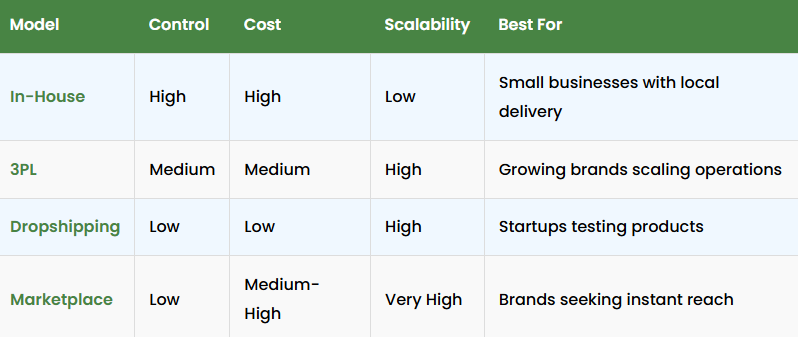
Beyond shipping methods, eCommerce businesses must also choose the right fulfillment model to manage how orders are processed and delivered. Each model offers different levels of control, cost, and scalability.
In-House Fulfillment
In this model, businesses handle the entire logistics process internally, including warehousing, packaging, and shipping. It provides greater control over operations but requires significant investment in infrastructure and resources.
Third-Party Logistics (3PL)
With 3PL, businesses outsource logistics operations to specialized fulfillment providers. This approach helps reduce operational burden and allows companies to scale quickly without managing their own warehouses.
Dropshipping Model
In the dropshipping model, suppliers manage inventory and ship products directly to customers. This eliminates the need for warehousing but offers less control over delivery timelines and product quality.
Marketplace Fulfillment
Marketplace fulfillment involves outsourcing logistics to large eCommerce platforms that handle storage, packing, and shipping. Popular examples include Amazon's Fulfillment (FBA) and Flipkart Fulfillment services, which enable faster delivery and broader reach.
eCommerce Shipping Process (Step-by-Step)
Step 1: Order Placement
Customer places an order on the website or marketplace.
Step 2: Order Processing
Warehouse teams pick and pack products.
Step 3: Labeling and Dispatch
Shipping labels are generated and shipments are handed over to courier partners.
Step 4: Transportation
Shipments move through courier networks (hub-and-spoke systems).
Hub-and-spoke logistics models are widely used to optimize transportation efficiency and reduce delivery times in large-scale supply chains according to research from BCG's operations practice.
Step 5: Last-Mile Delivery
Orders are delivered to customers.
Step 6: Delivery Confirmation
Customers receive order confirmation and tracking updates.
Shipping Cost Breakdown
Shipping costs include multiple components:
- Base shipping fee: Charged per delivery zone and weight
- COD charges: Additional fees for cash-on-delivery orders
- Fuel surcharges: Variable costs based on fuel prices
- Weight discrepancies: Extra charges if actual weight differs from declared
- RTO costs: Return shipping when delivery fails
- Packaging costs: Materials used for safe product transit
Typical eCommerce Shipping Costs in India
Note: You can review the iCarry rate chart or our online rate calculator to see how low the rates are to get an idea of how much you can save.
Real-World Business Examples
Example 1: D2C Brand Optimization
A D2C brand reduces delivery time by using multiple regional warehouses, improving customer satisfaction.
Example 2: Marketplace Seller Strategy
A seller uses Amazon FBA to outsource logistics and achieve faster delivery speeds.
Example 3: Cost Optimization
An eCommerce business reduces shipping costs by optimizing packaging size and negotiating courier rates.
Shipping Models Comparison
Benefits of Optimized Shipping
Optimizing your shipping strategy is essential for improving both customer experience and business performance. Efficient logistics not only enhance delivery speed but also help control costs and drive higher conversions.
Faster Deliveries
Streamlined shipping operations enable quicker order fulfillment, leading to improved customer satisfaction and a better overall shopping experience. Faster deliveries also increase the likelihood of repeat purchases.
Reduced Costs
Optimized logistics, including better route planning, packaging efficiency, and courier selection, can significantly reduce shipping expenses. Lower operational costs directly contribute to improved profit margins.
Better Conversion Rates
Transparent shipping costs and accurate delivery timelines build customer trust during checkout. When customers clearly understand what they are paying for and when they will receive their order, they are more likely to complete the purchase.
Improved Scalability
A well-optimized shipping system allows businesses to handle higher order volumes without compromising efficiency. This is especially important for scaling operations during peak seasons or rapid growth phases.
Challenges in eCommerce Shipping
Despite its importance, eCommerce shipping comes with several operational challenges that can impact both customer experience and profitability.
High Shipping Costs
Logistics expenses, including transportation, warehousing, and last-mile delivery, can significantly affect profit margins if not managed efficiently.
Delivery Delays
Courier inefficiencies, unexpected disruptions, or poor route planning can lead to delays, negatively impacting customer satisfaction and brand reputation.
RTO (Return-to-Origin) Issues
Failed deliveries often result in Return-to-Origin (RTO), where orders are sent back to the seller. This increases operational costs and reduces overall efficiency. Many businesses implement strategies to reduce RTO rates.
Inventory Distribution Challenges
Relying on centralized warehouses can increase delivery times, especially for customers located far from fulfillment centers. Distributed inventory strategies can help mitigate this issue.
Common Mistakes eCommerce Businesses Make
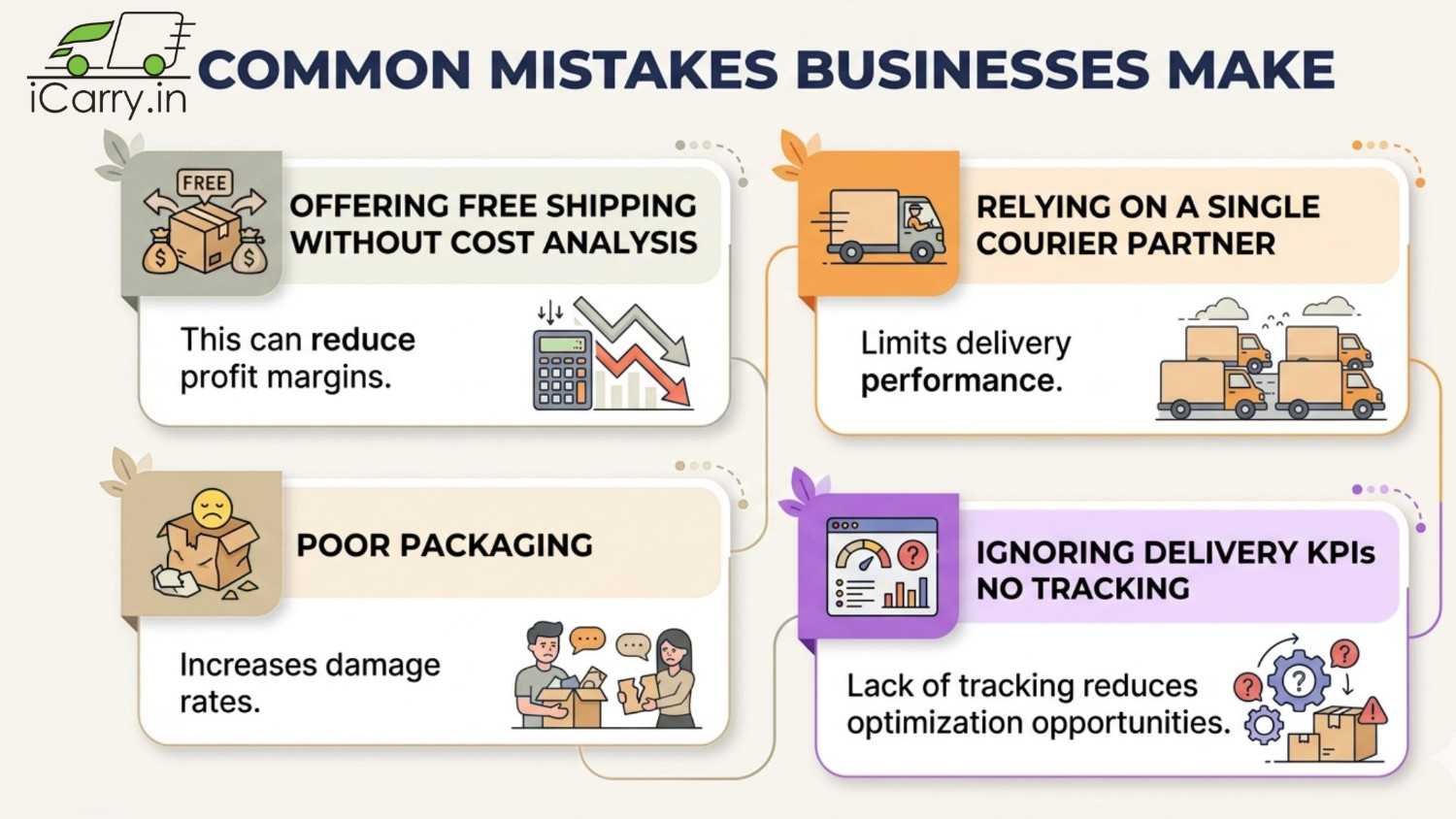
Many businesses struggle with shipping because of avoidable mistakes that limit efficiency and profitability.
Offering Free Shipping Without Cost Analysis
While free shipping can boost conversions, offering it without proper cost evaluation can significantly reduce profit margins.
Relying on a Single Courier Partner
Depending on just one logistics provider limits flexibility and can affect delivery performance, especially during peak demand or service disruptions.
Poor Packaging Practices
Inadequate packaging increases the risk of product damage during transit, leading to returns, replacements, and additional costs.
Ignoring Delivery KPIs
Failing to track key performance indicators (KPIs) such as delivery time, success rate, and RTO percentage reduces opportunities for optimization and growth.
Practical Shipping Optimization Strategies
Use Multi-Courier Strategy
Different couriers perform better in different regions, which is why many businesses adopt multi-courier allocation strategies for better performance.
Optimize Packaging
Reduce dimensional weight and shipping costs through efficient packaging design.
Implement Regional Warehousing
Store inventory closer to customers to reduce delivery times and transportation costs.
Offer Flexible Shipping Options
Provide standard and express delivery choices to meet different customer needs.
Monitor Logistics KPIs
Track:
- Delivery time
- Shipping cost per order
- Delivery success rate
Data-Driven Insights
Optimizing shipping can reduce logistics costs by 10 - 30%.
Research from UNCTAD's eCommerce and digital economy division indicates that supply chain optimization and digital logistics strategies can significantly reduce operational costs and improve efficiency.
Conclusion
This eCommerce shipping guide highlights how shipping directly impacts customer experience and profitability. By choosing the right shipping methods, optimizing costs, and leveraging efficient delivery models, businesses can scale faster and improve logistics performance.
In India's competitive eCommerce landscape, brands that invest in smarter logistics strategies gain a significant advantage through faster deliveries, lower costs, and improved customer satisfaction.
Improve Shipping Efficiency with Smarter Logistics
Efficient shipping requires strong coordination between warehouses, courier partners, and delivery networks. Businesses that optimize shipping workflows and track logistics performance can significantly improve delivery reliability and cost efficiency by leveraging advanced logistics technologies.
Explore advanced eCommerce shipping solutions with iCarry to reduce logistics costs, improve delivery speed, and scale your business efficiently.
Frequently Asked Questions (FAQs)
What is eCommerce shipping?
eCommerce shipping is the process of storing, packaging, and delivering products from a seller to a customer after an online order is placed.
What are the main types of shipping methods?
Common shipping methods include standard shipping, express shipping, same-day delivery, and international shipping.
How can businesses reduce shipping costs?
Businesses can reduce costs by optimizing packaging, negotiating courier rates, and using multiple shipping partners.
What is the best shipping model for eCommerce?
The best model depends on business size and scale, but 3PL and marketplace fulfillment are commonly used for scalability.
What is RTO in eCommerce shipping?
RTO (Return-to-Origin) occurs when a shipment fails to be delivered and is returned to the seller, making it essential for businesses to implement strategies to reduce return rates.
How long does eCommerce delivery take in India?
Delivery timelines typically range from 2 - 5 days, depending on location and shipping method.
eCommerce shipping is the end-to-end process of delivering online orders to customers—including order processing, packaging, transportation, and last-mile delivery—requiring businesses to balance shipping methods, cost optimization, delivery models, and logistics performance to improve customer experience, reduce expenses, and scale operations successfully in India's competitive market.