Why Stock Rotation Decides Your Write-Offs
Picture a snack distributor running a warehouse audit. The newest cartons sit at the front, while older batches at the back have quietly crossed their expiry date. Nothing was wrong with the product. The problem was which stock left the shelf first.
That is the core question behind FIFO vs FEFO. The inventory rotation method you choose decides how much stock you write off, and for food or medicine it also affects compliance with regulators such as FSSAI.
This guide explains both methods, compares them side by side, and helps you pick the right one.
What Is FIFO vs FEFO?
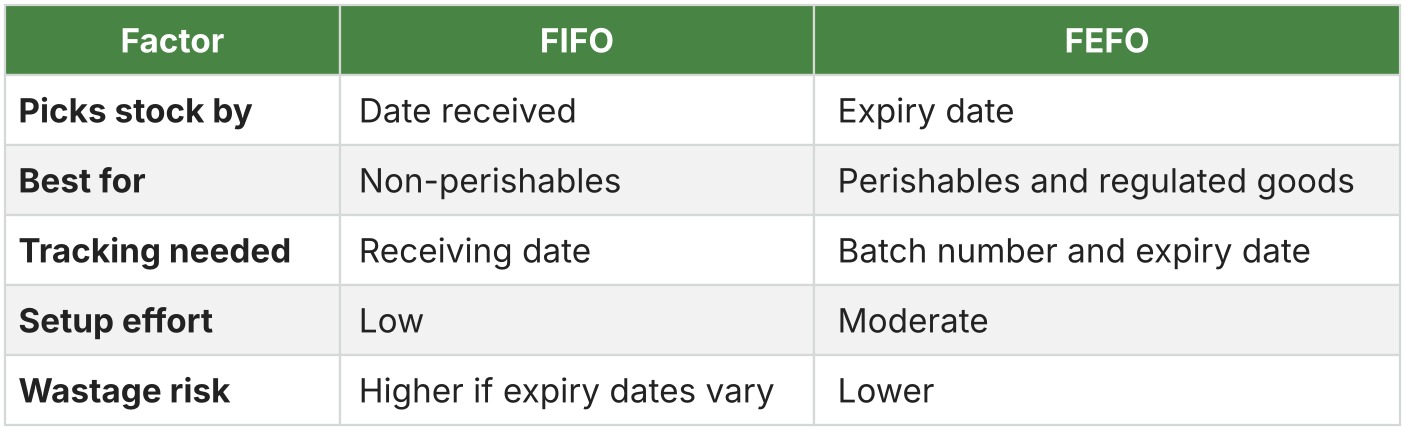
FIFO vs FEFO is the choice between two inventory rotation methods. FIFO (First In, First Out) ships the stock that arrived first, while FEFO (First Expired, First Out) ships the stock that expires first. FIFO suits goods that do not expire, and FEFO suits goods with expiry dates.
How to Choose FIFO or FEFO: Quick Checklist
- Does your product carry an expiry or best-before date?
- Do batches arrive with different expiry dates?
- Is your stock sensitive to heat or humidity?
- Do you track stock by batch or lot number?
- Are expired or damaged goods a recurring loss?
- Does your team pick by arrival date or by expiry date?
Tip: If you answered yes to the first two questions, FEFO is likely your answer.
What Is FIFO?
FIFO (First In, First Out) means the stock received earliest is shipped first. It works on arrival date, so it is simple to run and easy for warehouse teams to follow.
It suits non-perishables such as garments, books, hardware and electronics accessories. Older units never sit untouched long enough to become outdated or damaged.
What Is FEFO?
FEFO (First Expired, First Out) ships the stock with the earliest expiry date first, whatever its arrival date. It is essential for food, beverages, cosmetics and medicines, where rules from bodies like CDSCO apply.
A newer batch can expire sooner than an older one. FIFO would ship the wrong carton, while FEFO catches it.
Shipping short-dated stock? Compare courier partners on iCarry® and pick faster services for it.
FIFO vs FEFO: Key Differences
Which Method Should You Use?
Choose FIFO when
- Your products have no expiry or a very long shelf life
- Style or model changes make old stock obsolete
- You want the simplest possible warehouse process
Choose FEFO when
- Expiry dates differ between batches
- You sell food, cosmetics, supplements or medicines
- Returns of expired goods hurt your margins
Can you use both?
Yes. Many businesses run FEFO for perishable lines and FIFO for everything else. Track expiry write-offs and stock turnover alongside your other logistics KPIs to see whether your method is working.
Picked the right stock? Make sure it reaches customers in time with iCarry®.
Tips to Make Rotation Work
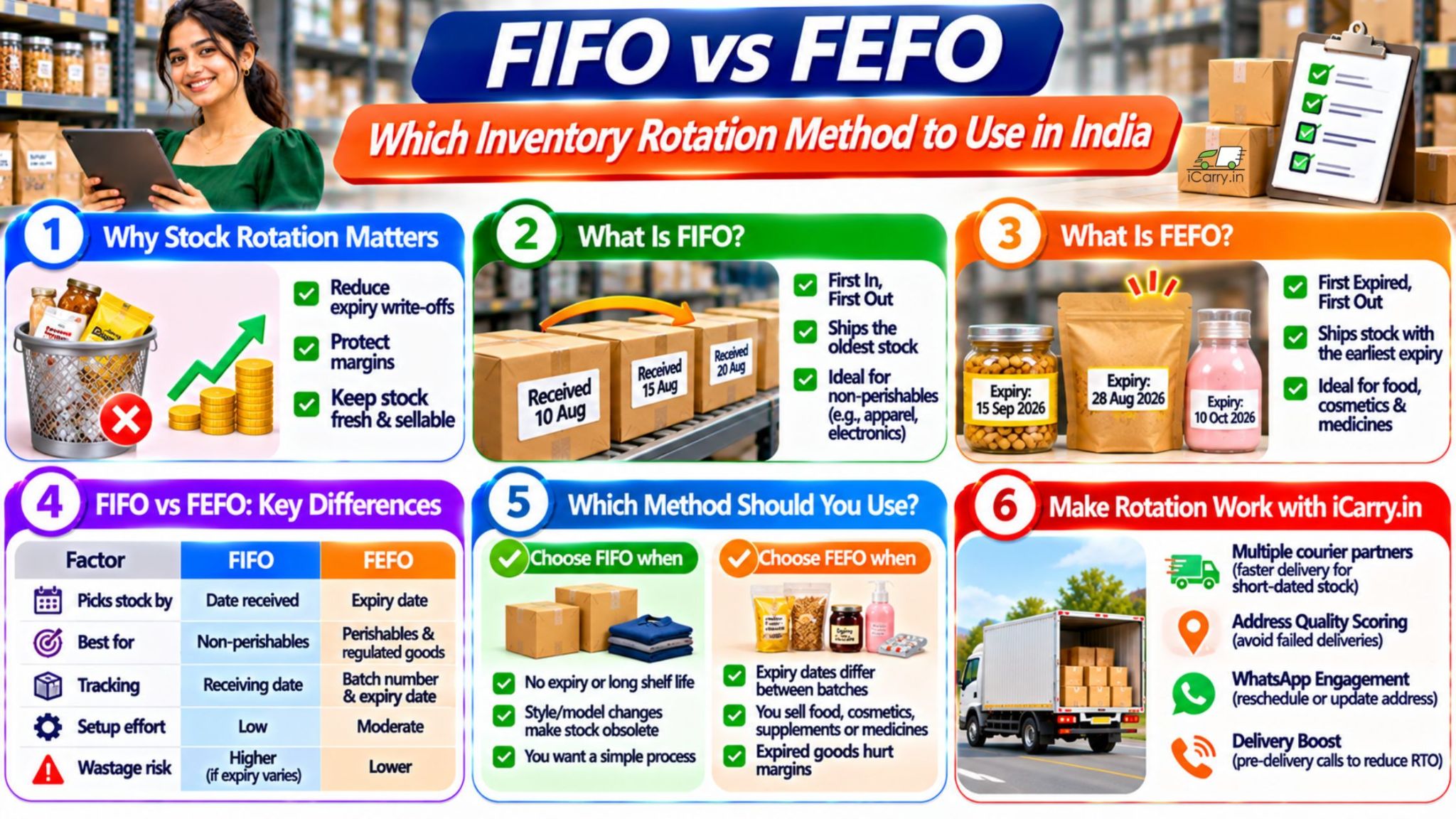
- Record batch number and expiry date at receiving
- Place earliest-pick stock at the front of each shelf
- Sort pick lists by expiry date, not just SKU
- Set near-expiry alerts and clear slow stock early
Good rotation also feeds into wider shipping optimization, because fresh stock needs a fast, reliable dispatch.
How iCarry® Supports Businesses Using FIFO or FEFO
FIFO and FEFO help businesses manage stock rotation, but timely delivery is equally important, especially for products with limited shelf lives. iCarry® is a courier aggregator that supports the dispatch and delivery process after orders are picked and packed. While it does not manage warehouse inventory, it provides shipping and delivery tools to help businesses manage time-sensitive orders.
- Multiple Courier Partners: Compare available courier services and choose suitable options for short-dated stock that needs faster delivery.
- Address Quality Scoring: Identify incomplete or potentially problematic addresses before dispatch to help avoid preventable delivery delays.
- WhatsApp Engagement: Allow customers to respond to delivery updates, reschedule deliveries or share updated address details. Sellers can view conversation history.
- Delivery Boost: Agents contact customers before delivery, coordinate delivery attempts and help reduce RTO, particularly for time-sensitive shipments.
Facing shipping delays or challenges with time-sensitive deliveries? Contact iCarry® customer support for assistance with your shipping requirements and delivery-related issues.
Final Thoughts
FIFO is simple and works well for goods that do not expire. FEFO takes more tracking but protects you from write-offs and compliance risk when expiry dates matter.
Match the method to the product, not the other way round. A mixed approach is often the most practical.
Once the right stock is picked, a dependable delivery partner completes the job. iCarry® helps businesses of every kind get that last step right.
Frequently Asked Questions (FAQs)
What is the main difference between FIFO and FEFO?
FIFO ships stock by arrival date, while FEFO ships stock by expiry date. FEFO is needed when batches expire at different times.
Is FEFO better than FIFO?
Not always. FEFO is better for perishables, while FIFO is simpler and enough for non-expiring goods.
Which products need FEFO?
Food, beverages, cosmetics, supplements, medicines and any product with a printed expiry date.
Can a small business use FEFO without special software?
Yes. Label batches, record expiry dates in a spreadsheet and sort pick lists by expiry. Software becomes useful as volumes grow.
How does shipping affect inventory rotation?
Delayed or failed deliveries can leave near-expiry goods stuck in transit or returned. Reliable couriers and good address checks protect short-dated stock.
FIFO ships the stock that arrived first and suits goods that do not expire. FEFO ships the stock that expires first and protects you from write-offs when expiry dates matter. Match the method to the product, and use a mix of both where it makes sense.