The Problem: Returns That Are Not What You Shipped
A customer returns a laptop. The box is sealed, but inside is a different, older model. A buyer returns a branded bag. It is used and has a different serial number. A parcel arrives at the warehouse with a note, but no product. Each case is a loss that starts after the parcel leaves your hands and ends with a dispute you cannot prove.
Return fraud and parcel swaps are a small share of orders, but a large share of the loss in high-value categories such as laptops, electronics, fashion, cosmetics and branded accessories. Most customers are honest. The goal of tamper-evident packaging and a strict return process is to protect your margin without treating honest customers as suspects.
What Is Tamper-Evident Packaging?
Tamper-evident packaging is packaging that shows visible signs if a parcel has been opened, such as tape that leaves a pattern, security bags and numbered seals. It does not stop opening, but it gives you evidence in disputes about swaps, missing items and tampering in transit.
Common Fraud and Loss Patterns
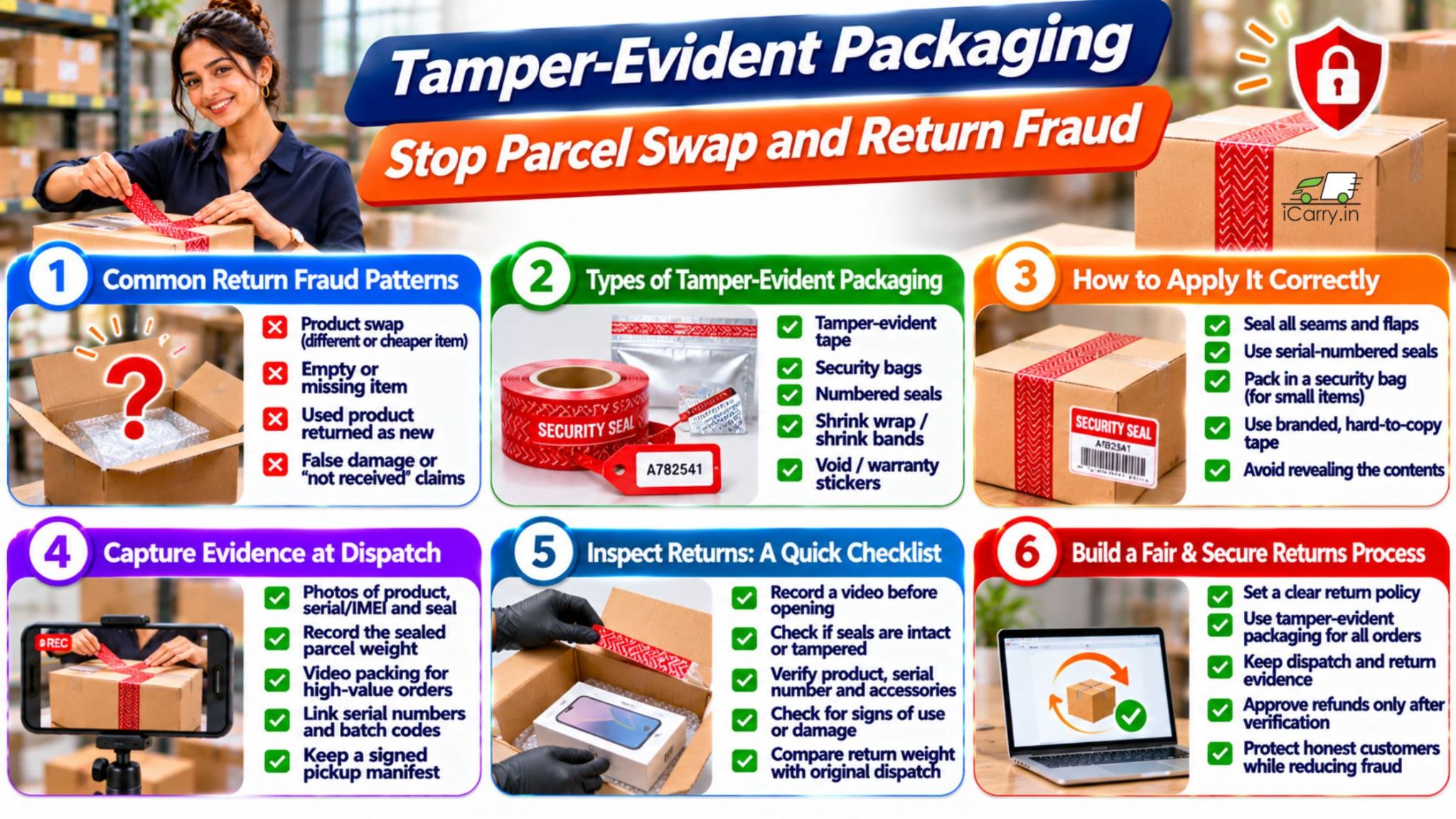
- Product swap: A genuine product is replaced with a cheaper, older or fake one before return
- Empty or missing item: The return arrives with no product or with missing accessories
- Used product returned as new: Worn, used or damaged goods returned within the return window
- Wrong item returned: A different product is sent back instead of the one purchased
- False damage claims: The customer claims transit damage that did not occur
- 'Not received' claims: The customer says the parcel never arrived, although tracking shows delivery
- In-transit tampering: A parcel is opened and items removed after pickup, before delivery
What Tamper-Evident Packaging Does
Tamper-evident packaging does not stop someone from opening a parcel. It makes it obvious when a parcel has been opened. That gives you evidence in three situations: tampering in transit, opened parcels at the customer's end and altered returns.
- It deters casual tampering, because it shows that the parcel has been opened
- It helps you decide if an opened parcel was your fault, the courier's fault or the customer's
- It gives you a basis to reject or investigate a claim, with evidence
Types of Tamper-Evident Packaging
- Tamper-evident tape: Leaves a visible pattern or residue if peeled. Use it across box seams
- Security bags: Tamper-evident polybags with a permanent adhesive strip, often with a serial number. Common for apparel and accessories
- Security seals and stickers: Numbered or patterned seals placed over openings, product boxes or key points
- Shrink wrap or shrink bands: Visibly broken when opened. Useful for retail product boxes
- Warranty or void stickers: Show if a device case has been opened
- Branded tape: Custom printed tape that is harder to replace convincingly
How to Apply Tamper-Evident Packaging
- Seal all flaps and seams, not only the top, with tamper-evident tape
- Place a serial-numbered seal on the product box or bag and record the number against the order
- Seal the item inside a tamper-evident bag before it goes into the outer carton, for small and valuable items
- Use branded tape that is difficult to copy for high-value items
- Avoid showing the contents on the outer packaging, such as writing 'mobile phone' on the box
- Tell customers about the seals in your packing note, so a broken seal is easy to spot
Evidence to Capture at Dispatch
- Photographs: The product, serial or IMEI number, packaging, seal and label
- Weight: Record the sealed parcel weight. It is useful if the return weighs much less
- Video for high-value orders: A short clip of the item being packed and sealed
- Serial numbers and batch codes: Link them to the order record
- Pre-uploaded SKU images: Standard product images supporting your declared weight and dimensions
- Pickup manifest: A signed manifest proves handover to the courier
Need return pickups from the same dashboard? Start with a free iCarry® account.
How to Inspect Returns: A Simple Checklist
- Photograph or video the return parcel before opening it, showing the label and seal
- Check the tape and seals. Are they the ones you applied? Is the serial number the same?
- Weigh the parcel and compare it with the dispatch weight
- Open the parcel on camera, and check the product against your photos
- Match the serial or IMEI number with the dispatch record
- Check accessories, tags, manuals and packaging
- Look for signs of use, damage or repair
- Record the findings, and decide to refund, reject or escalate
Policies That Reduce Fraud Without Hurting Honest Customers
- State clear return conditions: Unused, sealed or in original packaging, with tags, with the same serial number. Under the Consumer Protection (E-Commerce) Rules, 2020, sellers must display return, refund and exchange information
- Make the process fair: Tell customers how returns are inspected and what happens if conditions are not met
- Verify before refunding on high-value items: Refund after inspection, not at pickup
- Use unboxing video requirements for high-value orders: Ask customers to record opening the parcel when claiming damage or missing items
- Use OTP verified delivery where available: It reduces 'not received' disputes by proving who took the parcel
- Prefer prepaid for expensive items: It reduces refusals and some types of swap
- Track repeat patterns: A small number of customers, pincodes or products often cause most fraud losses
Keep your evidence ready for disputes. See how to raise a weight discrepancy dispute on iCarry®.
Handling a Suspected Swap
- Do not accuse the customer. State what you found and offer a way to resolve it
- Show the comparison between your dispatch photos and the return
- Share your evidence with the courier if tampering in transit is suspected, and raise a claim ticket with details
- Reject refunds only when your evidence is strong, and document the decision
- For repeated cases, consider restricting COD or high-value orders for that customer
How iCarry® Supports Fraud Prevention
iCarry® is a courier aggregator that provides shipping, tracking and delivery tools to help sellers maintain better shipment records and manage delivery-related disputes. Return inspections and refund decisions remain the seller's responsibility.
- OTP Verified Delivery: Enable OTP Verified Delivery to help confirm that a parcel is received by the intended recipient and maintain a verifiable delivery record.
- Pre-uploaded SKU Images: Use Pre-uploaded Product Images to save standard product images and keep relevant product evidence available for weight discrepancy disputes.
- Weight Discrepancy Management: Use Weight Discrepancy Management to review differences between declared and courier-billed weight and raise disputes with supporting evidence.
- Reverse Shipment Booking: Arrange return pickups through the iCarry® dashboard, subject to courier availability.
- Shipment Tracking and Support: Monitor shipments through the iCarry® Shipments Dashboard and contact support for assistance with delivery-related issues and disputes.
- Transit Loss Insurance: Add Transit Loss Insurance during booking for eligible shipments. Review the applicable fee, coverage details and terms before confirming.
For guidance on shipping features and dispute-related support, contact iCarry® customer support.
Frequently Asked Questions (FAQs)
What is tamper-evident packaging?
It is packaging, such as tamper-evident tape, security bags and numbered seals, that shows visible signs if the parcel has been opened. It does not stop opening, but it makes tampering obvious and gives you evidence in disputes.
How can I stop parcel swap fraud on returns?
Seal parcels with tamper-evident tape and numbered seals, record serial or IMEI numbers, photograph and weigh parcels at dispatch, inspect returns on camera against your records, and refund after inspection for high-value items.
What evidence do I need to reject a suspicious return?
Dispatch photographs, serial or IMEI records, the dispatch weight and seal numbers, plus video of the return being opened and its weight. Compare them with the item received, record the findings, and give the customer a clear explanation.
Will tamper-evident packaging upset honest customers?
Not if you explain it. Tell customers that seals protect their order from tampering, and keep return policies fair and transparent. Most customers see secure packaging as a sign of care, particularly for expensive items.
Tamper-evident packaging does not stop a parcel being opened, but it makes opening obvious and gives you evidence. Seal all seams with tamper-evident tape and numbered seals, photograph, weigh and record serial numbers at dispatch, inspect returns on camera against your records, and refund high-value returns only after inspection.