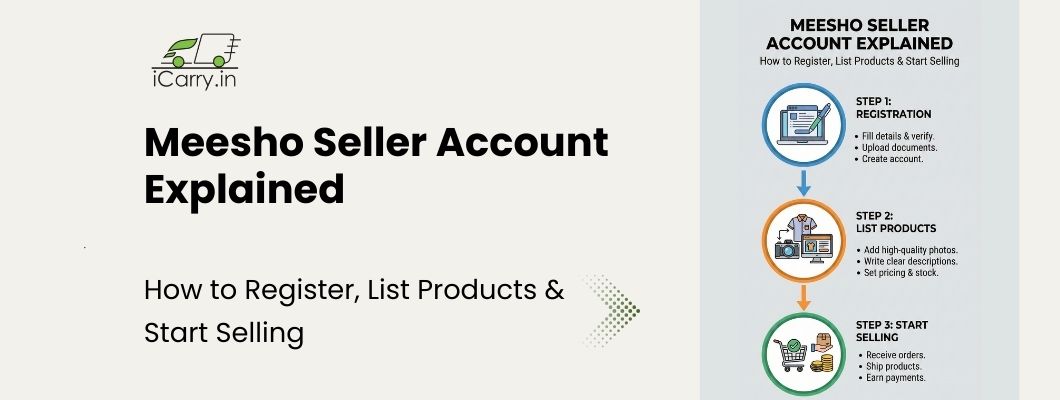
A Meesho Seller Account allows individuals, resellers, manufacturers, and small businesses in India to sell products directly to customers through Meesho's marketplace.
If you're searching for how to create a Meesho seller account, understand GST requirements, product listing, charges, shipping deductions, RTO impact, and payment cycles, this complete 2026 guide explains everything step-by-step.
Meesho has become one of the largest platforms helping small sellers in India start online businesses with minimal investment.
You don't need a website.
You don't need a warehouse network.
You don't even need deep technical knowledge.
What Is a Meesho Seller Account & How Does It Work?
A Meesho seller account acts as a gateway that allows businesses and individuals to start selling through the Meesho marketplace.
In simple words:
Meesho connects sellers with customers and handles logistics, payments, and returns.
Sellers mainly focus on sourcing products, setting competitive pricing, and fulfilling orders efficiently.
Why Sell on Meesho?
Meesho is popular because it:
- Has zero commission on many categories
- Supports small and home-based sellers
- Provides pan-India reach
- Handles delivery and COD - but understanding how COD impacts returns and margins is equally important
- Requires low upfront cost
Compared to marketplaces like Amazon or Flipkart, Meesho is designed specifically for small and first-time sellers with lower entry barriers through its simplified seller platform. It's especially useful for beginners.
Who Can Become a Meesho Seller?
You can sell on Meesho whether you are an individual seller, a reseller, a manufacturer, a wholesaler, or a small business operating as an MSME. The platform is designed to support both first-time sellers and established businesses looking to expand their online presence.
To register as a Meesho seller, you must have a valid bank account, basic business details, and a GST registration (mandatory for most product categories). Ensuring that your information is accurate and consistent with official records is important for smooth verification and payment processing.
Documents Required for Meesho Seller Account Registration
To create a Meesho seller account, you typically need a mobile number and email ID for verification, valid bank account details for payment settlements, a GSTIN for GST-applicable products, and a pickup address for order fulfillment. Make sure all submitted details match your official documents to avoid registration delays.
How to Register on Meesho Seller Panel (Step-by-Step Guide)
Step 1: Visit the Meesho Seller Panel via the official supplier portal to begin registration.
Go to Meesho's seller registration page.
Step 2: Enter Mobile Number
Verify your mobile number using OTP.
Step 3: Add Business & GST Details
Enter:
- Business name
- GSTIN (if applicable)
- Pickup address
Step 4: Add Bank Account Details
Payments are deposited directly into your bank account.
Step 5: Complete Verification
Once verified, your seller account becomes active.
After registration, you can access your Meesho seller login through the supplier panel dashboard. Registration is usually quick and simple according to Meesho's official registration guide.
Meesho Seller Login: Accessing the Supplier Panel
After completing registration, sellers can access their account through the Meesho Supplier Panel login.
The seller dashboard allows you to manage your entire store from one place, including:
- Product catalog management
- Order tracking and delivery updates
- Return and RTO monitoring
- Payment settlement reports
- Sales performance insights
Using the dashboard effectively helps sellers monitor performance and improve operations.
How to List Products on Meesho
Once your Meesho seller account is registered and verified, you can start listing products through the seller panel dashboard. The listing process is simple but requires accurate product information to attract buyers and reduce returns.
1. Choose the Correct Product Category
Start by selecting the most relevant product category for your item. This could be clothing, home essentials, beauty products, electronics accessories, or other categories available on Meesho.
Choosing the correct category helps:
- Improve product visibility
- Reach the right target audience
- Increase the chances of getting orders
2. Add Complete Product Details
Next, enter all necessary product information. Accurate and detailed listings improve buyer trust and reduce the chances of returns.
Make sure to include:
- Clear product title
- Detailed product description
- Attributes such as size, color, material, or variants
- High-quality product images
High-quality images are especially important because they directly affect conversion rates and customer confidence.
3. Set the Right Product Price
Pricing your product correctly is one of the most important parts of the listing process.
When setting your selling price, consider:
- Product sourcing cost
- Meesho shipping deductions (if applicable)
- Your desired profit margin
- Competitor pricing
Competitive pricing is essential, especially in price-sensitive categories where customers often compare multiple listings.
Example Pricing Calculation
This example shows the estimated profit before returns.
However, if the order is returned (RTO), shipping losses can reduce your actual margin.
In high-COD categories, Return-to-Origin (RTO) rates in Indian eCommerce can reach 20–35% according to industry reports, so monitoring returns and pricing products carefully is important.
4. Publish the Product Listing
After entering all the details and reviewing the listing, you can upload and publish the product.
Once Meesho approves the listing, it becomes live on the marketplace, and customers can start placing orders.
How Order Fulfillment Works on Meesho
When a customer places an order:
- You receive order details in the seller panel
- You pack the product as per guidelines
- While Meesho arranges pickup and delivery, sellers still benefit from understanding how courier selection impacts delivery success
- Meesho delivers to the customer
- Payment is settled to your bank account
You don't need to manage couriers yourself. But if you are a seller on Meesho and want to grow your sales on other channels, you can use the iCarry platform to ship at very affordable rates and get doorstep service along with bulk uploads, integration with websites, early COD payouts and many more services. You get the same top couriers of India but at super low rates.
Meesho Payment Cycle, Commission & Settlement Process Explained
The Meesho seller account payment cycle operates on a periodic settlement system, where payments are released after order delivery as per the platform's schedule. COD (Cash on Delivery) orders are managed directly by Meesho, and any returns or refunds are automatically adjusted before final settlement. Sellers can track all transactions, deductions, and payouts through the seller dashboard, making it important to monitor settlements regularly. Understanding how the Meesho seller account payment cycle works is essential for managing cash flow effectively and planning inventory purchases.
Meesho Charges for Sellers: What You Should Know
Although Meesho promotes zero commission in many categories, sellers may still incur certain operational charges. These can include shipping fees, Return-to-Origin (RTO) charges for failed deliveries, penalty fees for policy violations, and GST-related compliance costs. All of these Meesho seller account charges directly impact net profit margins. Having clarity on these deductions helps sellers price products strategically, protect margins, and avoid unexpected financial setbacks.
How Meesho Sellers Can Reduce Shipping Costs
Shipping costs are one of the biggest factors that impact profitability for Meesho sellers.
While Meesho handles delivery logistics for orders placed on its platform, many sellers eventually expand their business to multiple sales channels such as their own website, WhatsApp stores, or other marketplaces.
In these cases, controlling shipping costs becomes essential.
Here are some strategies successful sellers use to reduce logistics expenses.
1. Optimize Product Packaging
Oversized packaging can increase shipping charges unnecessarily.
To avoid higher shipping deductions:
- Use compact packaging
- Avoid excessive fillers
- Choose lightweight materials
- Follow Meesho packaging guidelines
Efficient packaging reduces both shipping costs and product damage during transit.
2. Price Products With Shipping Costs in Mind
Many new sellers make the mistake of pricing products without factoring in logistics expenses.
Always calculate:
- Product sourcing cost
- Shipping deductions
- Potential RTO losses
- Platform charges
- Target profit margin
Smart pricing protects your business from unexpected losses due to returns or shipping deductions.
3. Reduce RTO (Return-to-Origin) Rates
High RTO rates can significantly increase logistics costs.
Common causes of RTO include:
- Incorrect customer address
- COD order cancellations
- Delayed delivery attempts
- Poor product descriptions
To reduce RTO:
- Write accurate product descriptions
- Use clear product images
- Monitor delivery failures
- Analyze return reasons regularly
Lower RTO rates directly improve seller profitability.
4. Use Courier Aggregators for Multi-Channel Selling
Many Meesho sellers eventually expand beyond a single marketplace.
When selling through your own website, Instagram, or other marketplaces, using a courier aggregator platform can help reduce shipping costs.
Platforms like iCarry allow businesses to:
- Compare courier rates across multiple carriers
- Choose the most cost-efficient shipping partner
- Automate bulk order shipments
- Access lower negotiated shipping rates
- Track deliveries in real time
This helps sellers maintain better control over shipping performance and delivery success rates.
For growing eCommerce businesses, multi-courier logistics platforms can significantly improve operational efficiency.
5. Monitor Courier Performance
Shipping success depends heavily on courier performance.
Tracking metrics like:
- Delivery success rate
- Transit time
- RTO percentage
- Courier reliability
helps sellers identify inefficiencies and choose better logistics partners.
Consistent monitoring leads to lower delivery failures and better customer satisfaction.
Returns, RTO & Common Issues
Common reasons for returns:
- Size mismatch
- Quality issues
- Wrong product delivered
To reduce returns, follow proper packaging guidelines to ensure products reach customers safely and intact.
Returns directly impact profitability - especially when return-to-origin rates rise due to avoidable delivery failures through NDR management strategies.
High RTO directly impacts shipping profitability.
Tips to Succeed with Your Meesho Seller Account
- Start with low-risk, high-demand products
- Price competitively
- Maintain good product quality
- Respond quickly to order issues
- Monitor return reasons regularly and analyze delivery failure patterns to prevent repeat losses
Consistency beats shortcuts.
Best Products to Sell on Meesho
Some product categories consistently perform well on Meesho because of strong demand and competitive pricing.
Popular categories include:
- Women's fashion and ethnic wear
- Home and kitchen products
- Beauty and personal care items
- Mobile accessories
- Home décor products
Choosing high-demand categories with manageable return rates can significantly improve seller profitability.
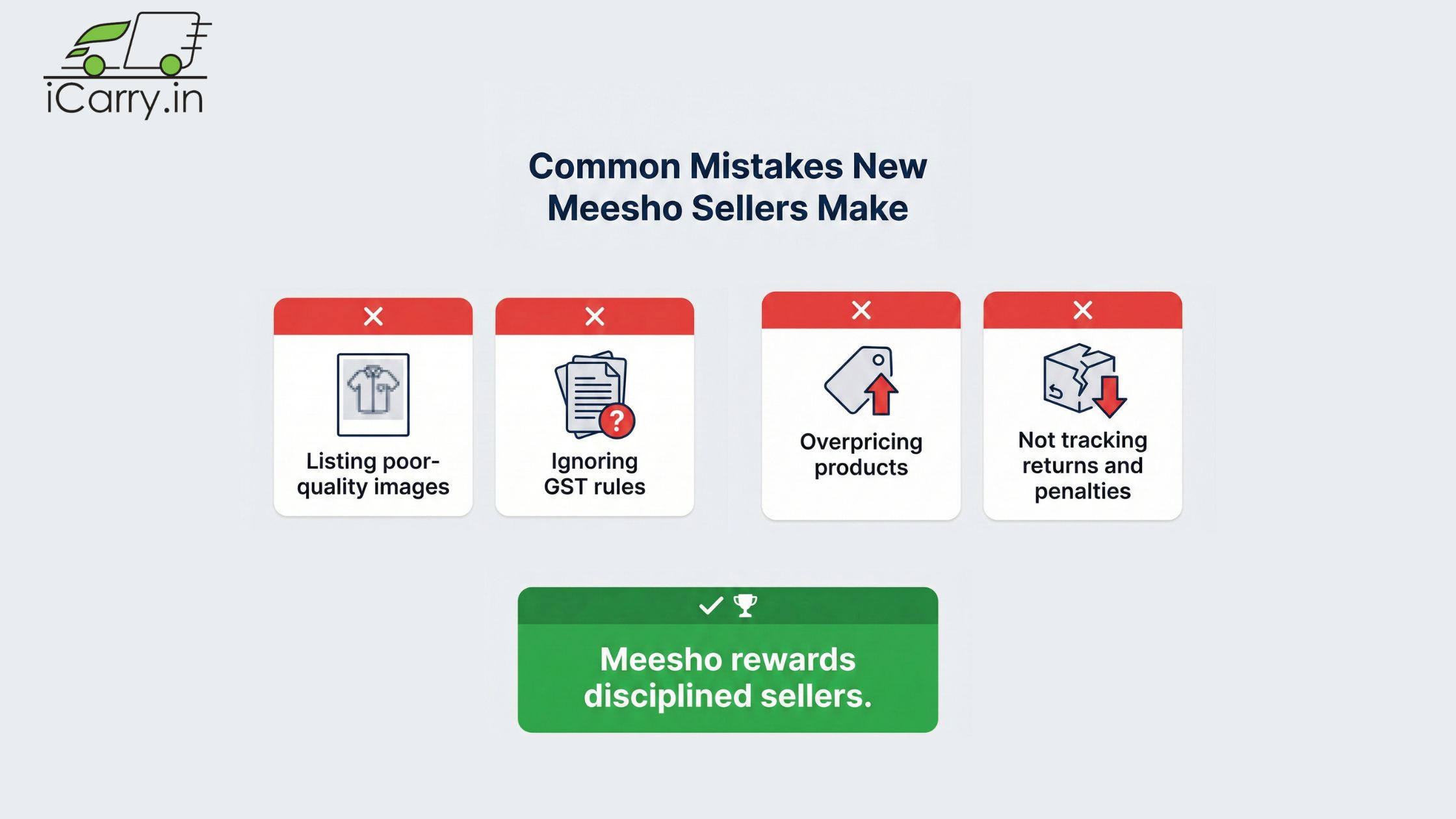
Common Mistakes New Meesho Sellers Make
Many new sellers make avoidable mistakes that directly affect their sales and profitability. One of the most common issues is listing poor-quality images, which reduces customer trust and lowers conversion rates. Ignoring GST rules can also create compliance problems and payment disruptions. Overpricing products without considering competition often results in low visibility and fewer orders. Additionally, failing to track returns, RTO rates, and platform penalties can silently erode profit margins over time. Meesho rewards disciplined sellers who monitor performance regularly and operate with pricing accuracy and compliance awareness.
Is Meesho Good for Long-Term Business?
Meesho is excellent for:
- Learning eCommerce basics
- Testing products
- Starting with low capital
As you grow, many sellers:
- Expand to other marketplaces and eventually build independent fulfillment systems to improve delivery control and cost efficiency through structured shipping optimization strategies and smarter pre-order planning
- Build their own brand presence
Think of Meesho as a launchpad.
Is Meesho Safe for Sellers?
Meesho is a legitimate Indian eCommerce marketplace used by millions of buyers and sellers. The platform manages payments, delivery logistics, and return processing, making it easier for new sellers to start online businesses.
However, sellers should still monitor:
- Product quality
- Return rates
- Pricing strategies
- Platform policy compliance
Managing these factors carefully helps maintain profitability and reduce operational risks.
Final Thoughts
A Meesho seller account lowers the barrier to online selling in India.
For beginners, it offers:
- Easy entry
- Logistics support
- Wide customer reach
But success depends on:
Product selection, pricing discipline, and execution quality.
Start small, learn fast, and scale smart.
Managing your Meesho seller account efficiently determines your long-term profitability.
If you want to reduce Meesho RTO rates and improve delivery success, explore smart courier automation tools like iCarry that help sellers control shipping performance and margins.
Meesho Seller Account FAQs
1. Is GST mandatory for a Meesho seller account?
Yes. GST registration is mandatory for most product categories on Meesho, except certain exempt categories like books and handicrafts.
2. What is Meesho commission for sellers?
Meesho claims zero commission in many categories but shipping and penalty charges apply.
3. How long does Meesho take to pay sellers?
Payments are generally settled within a fixed cycle after order delivery.
4. Can individuals create a Meesho seller account?
Yes, individuals, resellers, and small businesses can sell on Meesho.
5. Is a Meesho seller account free?
Yes, creating a Meesho seller account is free. Meesho promotes zero commission in many product categories, although sellers may still incur shipping deductions, RTO costs, and policy-related penalties depending on order outcomes.
A Meesho seller account offers free registration and zero commission in many categories, but success requires understanding GST compliance, pricing strategy, RTO management (20–35% in high-COD categories), shipping deductions, and payment cycles—disciplined sellers who monitor returns, optimize packaging, and use accurate product listings achieve sustainable profitability.