Why Multi-Channel Fulfillment Breaks Without the Right System
Modern eCommerce is no longer limited to a single sales channel. You are getting orders from multiple platforms, but your stock count is inaccurate, deliveries are delayed, and customers are complaining. For example - your stock shows 10 units available, while you've already sold 12. One customer gets a cancellation email. Another gets a delayed delivery. Two negative reviews later, you're still manually updating spreadsheets. This is what happens when businesses grow across channels without a fulfillment system to match. Businesses adopting multi-channel strategies experience faster growth and improved customer reach.
Today, Indian brands cater to omnichannel commerce. Which means they sell across direct D2C websites, marketplaces such as Amazon, Flipkart, Meesho, WhatsApp, Instagram, social commerce, and offline stores. More channels means more revenue - but also more operational complexity, especially in order fulfillment. This is one of the most common challenge for growing eCommerce businesses.
Imagine managing orders from your website, marketplaces like Amazon and Flipkart, plus Instagram or WhatsApp orders-all at the same time. Without a structured system, this can lead to inventory mismatches, delayed shipments, and poor customer experience.
This is where multi-channel order fulfillment becomes critical.
It enables businesses to manage, process, and deliver orders efficiently across multiple sales channels while maintaining consistency in inventory, shipping, and customer experience through optimized shipping operations. Integrated supply chain systems are critical for improving operational efficiency and ensuring seamless fulfillment across channels.
This guide explains how multi-channel fulfillment works, key challenges, tools, and optimization strategies for scaling eCommerce operations.
What is Multi-Channel Order Fulfillment?
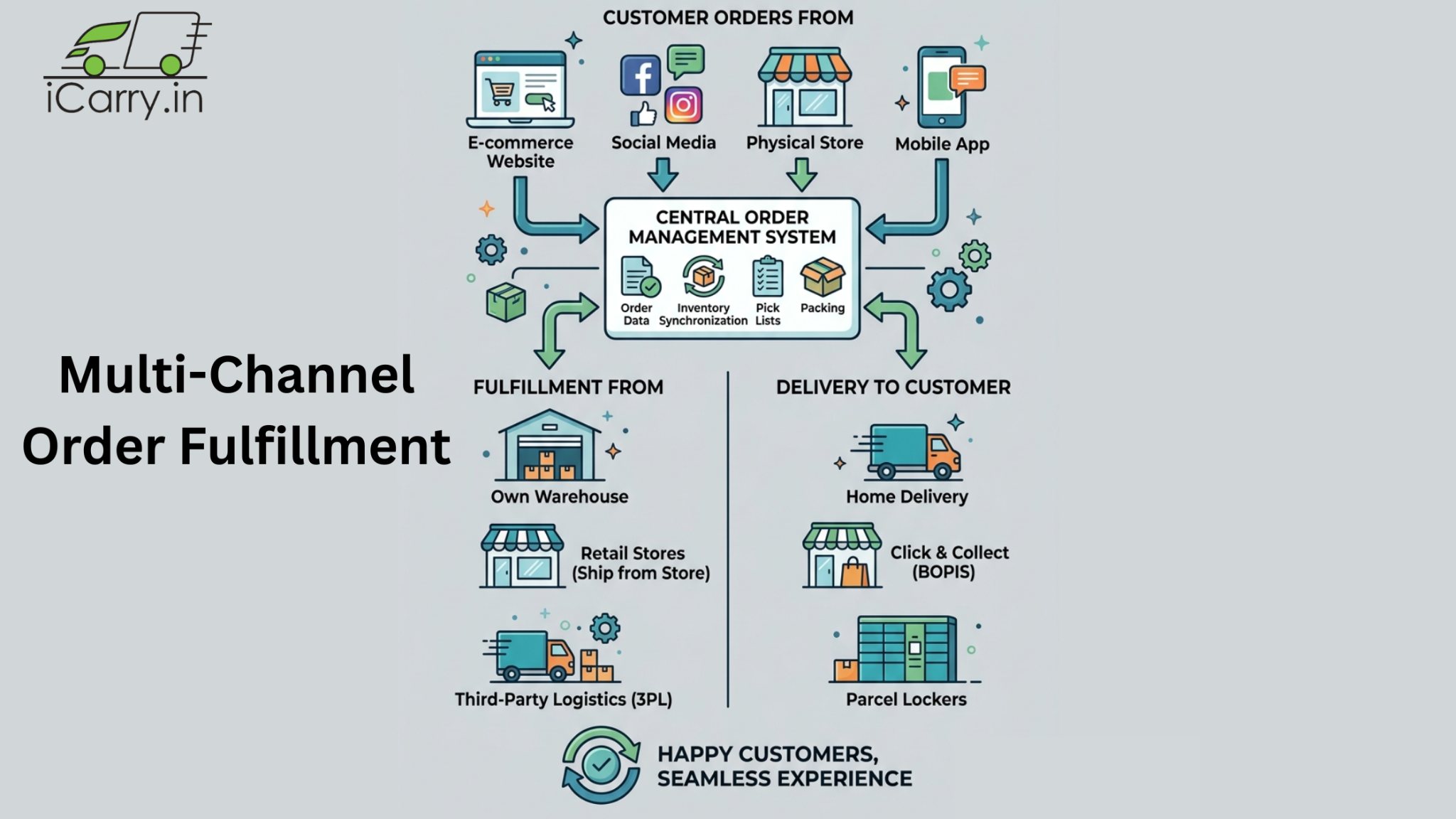
Multi-channel order fulfillment is the process of managing and delivering customer orders from multiple sales platforms using a single, unified logistics and inventory system.
Instead of handling each channel separately, businesses centralize operations to streamline order processing, inventory tracking, and shipping.
These sales channels typically include your own eCommerce website, online marketplaces like Amazon or Flipkart, social commerce platforms such as Instagram and WhatsApp, and even offline retail stores.
Put simply: multi-channel fulfillment means handling all orders from different platforms through one integrated system.
Why Multi-Channel Order Fulfillment Is Non-Negotiable in 2026
As businesses expand across multiple sales channels, fulfillment becomes more complex. Managing orders, inventory, and deliveries across different platforms requires a more structured and centralized approach.
1. Increased Sales Opportunities
Selling across multiple platforms allows businesses to reach a broader audience and tap into different customer segments, ultimately increasing overall revenue potential.
2. Centralized Operations
Using a unified system helps streamline order management by bringing all sales channels into one place, reducing manual effort and improving operational efficiency. Centralized data systems enable better decision-making and improve overall business performance.
3. Better Customer Experience
Maintaining consistent delivery timelines and service quality across all channels builds customer trust and ensures a seamless delivery experience. Customer experience and delivery reliability are key drivers of satisfaction and retention in eCommerce.
4. Improved Inventory Control
Real-time visibility of inventory across all channels helps prevent overselling, reduces stock discrepancies, and ensures better stock management.
Core Components of a Multi-Channel Fulfillment System
A successful multi-channel fulfillment system is built on several core components that work together seamlessly.
An Order Management System (OMS) acts as the central hub, collecting and managing orders from all platforms in one dashboard. It handles order aggregation, routing, and status tracking.
An Inventory Management System ensures accurate stock tracking across warehouses, marketplaces, and offline stores, helping prevent discrepancies.
The warehouse and fulfillment network includes central warehouses, regional hubs, and fulfillment centers that enable efficient storage and dispatch.
Courier and logistics integrations allow businesses to connect with multiple shipping partners, ensuring flexibility in delivery options through multi-courier allocation systems.
Finally, channel integration connects platforms like Amazon, Flipkart, WooCommerce, Shopify, your own website and others, enabling smooth data flow and synchronization.
Step-by-Step Multi-Channel Fulfillment Process
Step 1: Order Capture
Customer orders are received from multiple sales channels such as your website, marketplaces, social media platforms, or offline stores.
Step 2: Centralized Order Processing
All incoming orders are automatically collected and organized within a centralized Order Management System (OMS), creating a single source of truth.
Step 3: Inventory Allocation
The system checks real-time inventory and assigns stock based on product availability and the nearest fulfillment location.
Step 4: Warehouse Fulfillment
The selected warehouse processes the order by picking the items, packing them securely, and preparing them for dispatch.
Step 5: Courier Selection
The system chooses the most suitable courier partner by evaluating delivery location, shipping cost, and expected delivery speed.
Step 6: Shipping and Delivery
The order is shipped to the customer through the selected logistics partner and moves through the delivery network.
Step 7: Tracking and Customer Updates
Customers receive real-time tracking updates and notifications until the order is delivered. iCarry® automates steps 5-7 for you and also allows a two-way whatsapp engagement feature so that customers can respond to the notifications to ensure orders do get delivered. You can see how to set it up here.
Multi-Channel Fulfillment in Practice: Indian Business Examples
Example 1: D2C + Marketplace Brand
A brand sells through its website and marketplaces. Orders are centralized and fulfilled from a single warehouse, ensuring consistent delivery.
Example 2: Omnichannel Retail
A retailer integrates online and offline inventory, enabling fulfillment from the nearest store.
Example 3: Social Commerce Brand
A brand receives orders via Instagram and WhatsApp and processes them through a centralized system.
Multi-Channel vs Single-Channel Fulfillment: Key Differences
| Factor | Multi-Channel | Single-Channel |
|---|---|---|
| Complexity | High | Low |
| Reach | High | Limited |
| Inventory management | Complex | Simple |
| Scalability | High | Limited |
Benefits of Managing Orders from Multiple Sales Channels
Multi-channel fulfillment enables businesses to expand efficiently while improving operational performance and customer satisfaction.
1. Higher Revenue Potential
Selling across multiple channels increases visibility and opens up more sales opportunities, allowing businesses to generate higher overall revenue.
2. Better Customer Reach
By being present on different platforms, businesses can access diverse customer segments and cater to varying buying preferences.
3. Improved Inventory Utilization
Inventory can be strategically distributed across multiple channels, ensuring better stock usage and reducing the chances of dead stock or shortages.
4. Business Scalability
A multi-channel approach lets you grow fast - without your logistics falling apart. It allows businesses to scale operations seamlessly across platforms without major disruptions. iCarry® is built for exactly this.
Order Fulfillment Challenges Across Channels (and How to Fix Them)
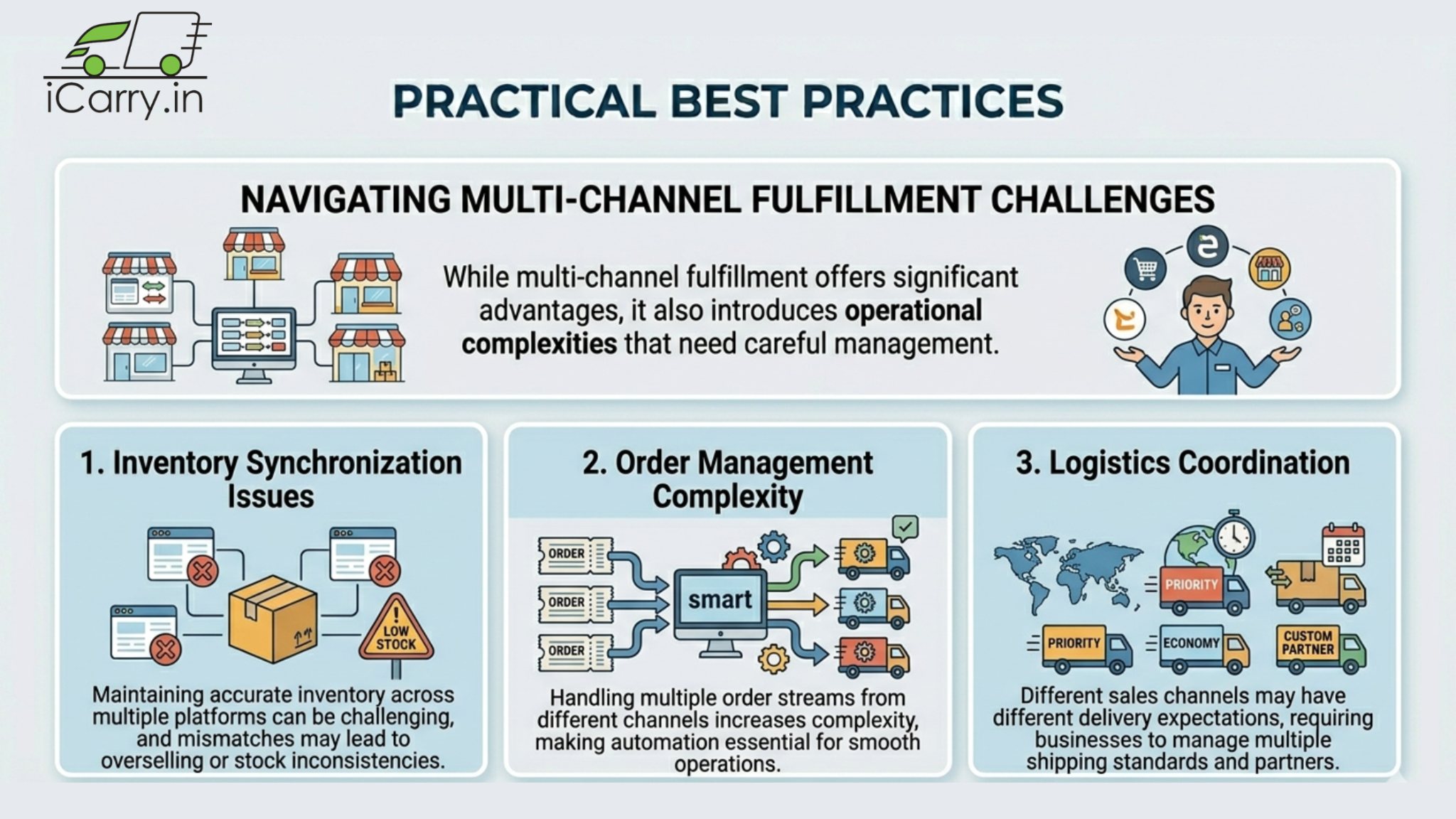
While multi-channel fulfillment offers significant advantages, it also introduces operational complexities that need careful management.
1. Inventory Synchronization Issues
Maintaining accurate inventory across multiple platforms can be challenging, and mismatches may lead to overselling or stock inconsistencies.
2. Order Management Complexity
Handling multiple order streams from different channels increases complexity, making automation essential for smooth operations.
3. Logistics Coordination
Different sales channels may have different delivery expectations, requiring businesses to manage multiple shipping standards and partners. Coordinating logistics across multiple channels requires efficient transportation systems and strong infrastructure support.
4. Returns Management
Processing returns across various platforms can be complicated, especially when policies and workflows differ between channels.
4 Common Mistakes That Cost You Sales
Many businesses struggle with multi-channel fulfillment due to avoidable operational gaps and poor planning.
1. Not Centralizing Order Management
Managing orders separately across channels leads to inefficiencies, delays, and increased chances of errors.
2. Poor Inventory Visibility
Lack of real-time inventory tracking can result in stockouts, overselling, and a negative customer experience.
3. Over-Reliance on One Channel
Depending too heavily on a single platform limits growth potential and increases business risk.
4. Lack of Automation
Manual processes slow down operations, increase human errors, and make scaling difficult.
Tools That Simplify Cross-Platform Order Management
Businesses rely on a combination of tools to streamline operations and ensure smooth coordination across channels.
1. Order Management Systems (OMS)
These systems centralize orders from all sales channels into one platform, making it easier to process and manage them efficiently.
2. Inventory Management Systems
They help track stock levels in real time across warehouses, marketplaces, and stores, ensuring accuracy and better control.
3. Warehouse Management Systems (WMS)
WMS solutions optimize warehouse operations, including picking, packing, and inventory storage.
4. Shipping Aggregators
These tools help businesses select the most suitable courier partner by comparing cost, speed, and serviceability using centralized courier aggregation platforms.
Modern platforms often integrate these tools with marketplaces and logistics providers, enabling seamless end-to-end operations.
How to Improve Fulfillment Efficiency Across Channels
To maximize efficiency and reduce operational challenges, businesses should adopt proven optimization strategies.
1. Use Centralized OMS
Managing all orders within a single system improves visibility, reduces manual effort, and enhances operational control.
2. Synchronize Inventory in Real-Time
Real-time updates across all channels help prevent stock discrepancies and ensure accurate inventory management.
3. Use Multi-Warehouse Strategy
Fulfilling orders from the nearest warehouse reduces delivery time, lowers shipping costs, and improves customer satisfaction.
4. Automate Courier Selection
Automating courier selection ensures the best balance between cost, speed, and serviceability for each order.
5. Monitor Fulfillment KPIs
Tracking key performance indicators such as order processing time, delivery performance, and shipping costs helps identify inefficiencies and improve overall fulfillment performance.
Multi-Channel Fulfillment: Key Data Driven Stats for Indian Sellers
| Metric | Insight |
|---|---|
| Multi-channel sellers growth | Brands on 3+ channels grow 190% faster (UNCTAD) |
| Inventory accuracy importance | Inventory errors cause 34% of eCommerce stockouts |
| Order fulfillment speed impact | 69% of buyers less likely to re-order after late delivery |
Brands selling on 3+ channels grow up to 190% faster than single-channel sellers - and those with centralized fulfillment achieve 10-20% lower logistics costs through better courier allocation.
Conclusion
Multi-channel order fulfillment isn't just an operations upgrade - it's what separates brands that scale from brands that stall. Yes, it adds complexity. But the sellers getting it right are growing 190% faster than single-channel competitors.
The fix is simple in principle: centralize your orders, sync your inventory in real time, and automate courier selection. Do those three things well, and the complexity mostly manages itself.
If you're selling on 2+ channels and still managing logistics manually - that's your biggest growth bottleneck right now.
Selling Across Channels? Let iCarry® Handle the Logistics
Managing orders across Amazon, Flipkart, your website, and social channels is hard enough. You shouldn't also be manually picking couriers for each shipment. iCarry® connects all your sales channels to multiple courier partners, routes every order automatically and helps you improve efficiency with each delivery.
Managing orders manually across Amazon, Flipkart, Meesho, Shopify and WhatsApp quickly becomes a huge operational chaos as order volumes grow. Platforms like iCarry centralize order sync, courier booking, courier allocation, shipping, delivering, billing and tracking - all in one dashboard.
Frequently Asked Questions (FAQs)
What is multi-channel order fulfillment?
It is the process of managing orders from multiple platforms using a centralized system.
Why is multi-channel fulfillment important?
It improves efficiency, customer experience, and scalability.
What is multi-channel fulfillment in India?
It refers to managing orders across marketplaces, websites, and social platforms using centralized logistics systems.
What are the biggest challenges?
Inventory sync, logistics coordination, and order management complexity.
What tools are used?
OMS, inventory systems, warehouse systems, and shipping platforms.
How can businesses optimize fulfillment?
By centralizing operations, automating logistics, and using multi-courier systems.
Multi-channel order fulfillment is what separates brands that scale from brands that stall. Centralize your orders, sync inventory in real time, and automate courier selection - brands doing this grow 190% faster than single-channel competitors.