
Introduction
Inventory is one of the most valuable operational assets for businesses dealing with physical products. For eCommerce brands, retailers, distributors, and logistics companies, managing inventory accurately is essential for maintaining smooth operations and avoiding costly disruptions.
However, inventory records in software systems do not always perfectly match the actual stock available in warehouses. Issues such as misplaced products, incorrect stock updates, damaged goods, or operational errors can lead to discrepancies between recorded and actual inventory.
To ensure stock accuracy, businesses conduct physical inventory management - the process of physically counting inventory and verifying it against recorded inventory data.
In fast-moving industries such as eCommerce and retail, inventory accuracy directly impacts order fulfillment, customer satisfaction, and operational efficiency, especially when businesses manage complex supply chain operations. Poor inventory visibility can lead to stockouts, delayed shipments, and lost sales, making it essential for online stores to optimize their shipping and fulfillment processes.
This guide explains physical inventory management, including inventory counting methods, warehouse verification processes, benefits, and best practices for maintaining high inventory accuracy.
What is Physical Inventory Management
Physical inventory management is the process of physically counting and verifying products stored in a warehouse and comparing them with inventory records in management systems.
The purpose of this process is to ensure that the actual stock available matches recorded inventory data and to identify discrepancies caused by damage, theft, or operational errors.
This process compares:
- The physical quantity of products in stock
- The inventory recorded in inventory management systems
If discrepancies are found, businesses investigate and correct the records.
In simple terms:
Physical inventory management ensures that the stock recorded in systems matches the actual inventory available in the warehouse.
Why Physical Inventory Management Matters
Accurate physical inventory management plays a critical role in ensuring smooth warehouse operations and reliable supply chain performance. When inventory records accurately reflect the actual stock available in warehouses, businesses can avoid operational disruptions, improve order fulfillment, and make better strategic decisions.
One of the most important benefits of maintaining accurate inventory records is the ability to prevent stockouts. When inventory data is correct, businesses know exactly how much stock is available at any given time. This allows them to replenish products before they run out and ensures customers can place orders without encountering availability issues.
Accurate inventory data also improves order fulfillment efficiency. Warehouses rely on inventory systems to pick and pack products quickly. When system records match the physical stock in storage locations, warehouse teams can process orders faster and reduce delays caused by missing or misplaced products.
Another major advantage of physical inventory management is the reduction of financial losses caused by inventory discrepancies. Errors such as misplaced products, damaged goods, or incorrect stock updates can create significant financial gaps between recorded and actual inventory levels. Regular inventory verification helps identify these issues early and minimizes losses.
Maintaining accurate inventory records also enhances supply chain visibility and planning. Reliable inventory data allows businesses to forecast demand more effectively, optimize procurement strategies, and maintain optimal stock levels across warehouses and distribution centers.
Finally, physical inventory verification is essential for accurate financial reporting and compliance. Many businesses rely on inventory data to determine asset valuation and cost of goods sold. Conducting regular physical inventory counts ensures that accounting records reflect the true value of inventory assets.
Core Inventory Management Concepts
Understanding the core concepts of inventory management helps businesses maintain accurate stock records, improve warehouse operations, and reduce costly inventory discrepancies. These concepts form the foundation of effective physical inventory management and help organizations maintain better control over stock movement, storage, and replenishment.
Below are the key concepts every business should understand when managing warehouse inventory.
Inventory Accuracy
Inventory accuracy measures how closely the stock recorded in inventory management systems matches the actual physical stock available in a warehouse. Maintaining high inventory accuracy is essential for reliable order fulfillment, efficient warehouse operations, and accurate financial reporting.
Businesses calculate inventory accuracy using the following formula:
Inventory Accuracy = (Correct Inventory Records ÷ Total Inventory Records) × 100
Higher accuracy indicates better control over inventory processes and fewer discrepancies between recorded and actual stock levels.
Inventory Accuracy Benchmarks
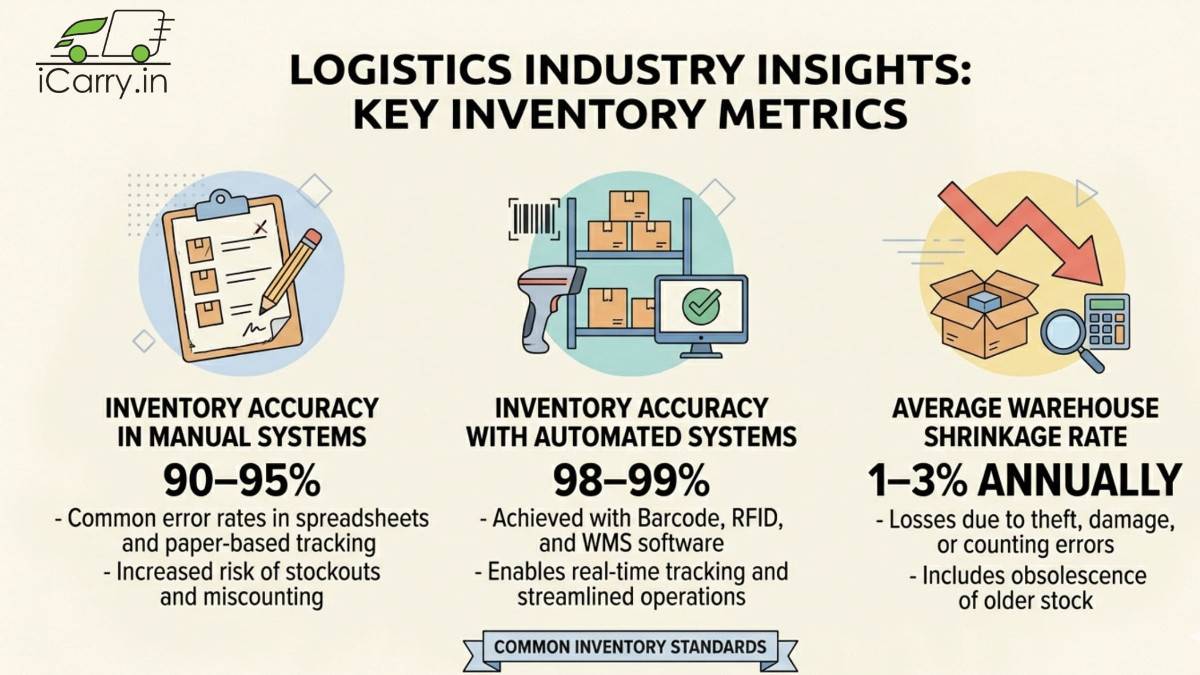
Organizations that maintain above 98% inventory accuracy typically use automated inventory tracking systems and regular cycle counting processes.
Inventory Shrinkage
Inventory shrinkage refers to the loss of inventory caused by discrepancies between recorded stock and actual inventory levels. Shrinkage can occur due to operational errors, theft, damage, or misplacement of products within the warehouse.
Common causes of inventory shrinkage include internal theft, damaged goods during handling, administrative errors in stock updates, and misplaced items within storage locations. Monitoring shrinkage levels helps businesses identify weaknesses in warehouse operations and implement better inventory control systems.
Regular physical inventory verification helps detect shrinkage early and prevents long-term financial losses.
Safety Stock
Safety stock refers to the extra inventory that businesses maintain to protect against unexpected demand fluctuations or supply chain disruptions. Maintaining an appropriate level of safety stock ensures that products remain available even when demand suddenly increases or supplier delays occur.
Proper safety stock planning improves inventory availability, reduces stockout risks, and ensures smoother order fulfillment for customers.
Inventory Turnover
Inventory turnover measures how frequently a business sells and replenishes its inventory during a specific time period. A higher turnover rate generally indicates strong product demand and efficient inventory management practices.
Businesses monitor inventory turnover to understand product performance, optimize stock levels, and reduce excess inventory that may increase storage costs.
Efficient warehouse operations and accurate inventory tracking systems often lead to higher turnover rates and improved supply chain efficiency.
Physical Inventory Counting Methods
Businesses use different inventory counting methods to verify stock levels and maintain accurate warehouse records. The method chosen typically depends on warehouse size, operational complexity, and inventory volume.
Annual Physical Inventory Count
An annual inventory count involves verifying the entire warehouse inventory at once, typically at the end of a financial year. This method provides comprehensive stock verification and is often required for financial audits and regulatory compliance.
However, conducting a full warehouse inventory count can temporarily disrupt warehouse operations, as inventory movement is often paused during the counting process.
Cycle Counting
Cycle counting is a more modern approach to inventory verification, where small portions of inventory are counted regularly throughout the year instead of conducting one large annual count.
This method allows businesses to maintain higher inventory accuracy while minimizing operational disruption. Many warehouses use automated inventory management systems and barcode scanning technology to support continuous cycle counting processes.
Cycle counting is widely used in large warehouses and eCommerce fulfillment centers because it allows teams to identify discrepancies early and maintain consistent inventory accuracy.
Spot Checking
Spot checking involves randomly verifying selected inventory items to quickly detect discrepancies between system records and physical stock levels.
Although spot checks provide limited coverage compared to full inventory counts, they are useful for identifying operational issues early and verifying stock accuracy for high-value or fast-moving products.
Step-by-Step Physical Inventory Process
A structured inventory counting process helps businesses ensure accurate stock verification and inventory reconciliation.
Step 1: Prepare the Warehouse
Before the inventory count begins, warehouses typically pause inventory movements to avoid discrepancies during the counting process. Storage locations should be organized properly, and products should be clearly labeled to make the counting process more efficient.
Step 2: Generate Inventory Lists
Warehouse teams generate inventory reports from inventory management systems. These reports provide a structured list of items and their expected quantities based on system records.
Step 3: Conduct Physical Inventory Counts
Warehouse staff physically count products at each storage location to verify actual stock levels. Counting may be performed using manual methods or supported by modern technologies such as barcode scanners and RFID tracking systems.
Step 4: Compare With Inventory System Records
After the physical count is completed, the counted quantities are compared with the inventory data recorded in warehouse management systems. This comparison helps identify discrepancies between system records and actual inventory.
Step 5: Investigate Inventory Discrepancies
If differences are found between physical counts and system records, warehouse teams investigate possible causes such as misplaced inventory, data entry errors, or damaged goods.
Resolving these discrepancies helps improve inventory accuracy and strengthens warehouse inventory control processes.
Step 6: Update Inventory Records
Once discrepancies are verified and resolved, the inventory management system is updated to reflect the correct stock levels. This step ensures that future order fulfillment and procurement decisions are based on accurate inventory data.
Real-World Examples of Physical Inventory Management
eCommerce Warehouse
An online retail warehouse may conduct weekly cycle counts for fast-moving products. This helps maintain high inventory accuracy and ensures that popular products remain available for customers.
Retail Store Chain
Retail chains often perform annual physical inventory counts across all stores to verify stock levels and ensure accurate financial reporting.
Third-Party Logistics Provider
A third-party logistics (3PL) company that manages inventory for multiple clients may rely on barcode scanning systems and automated inventory tracking tools to maintain accurate inventory records across multiple warehouses.
Manual vs Automated Inventory Management
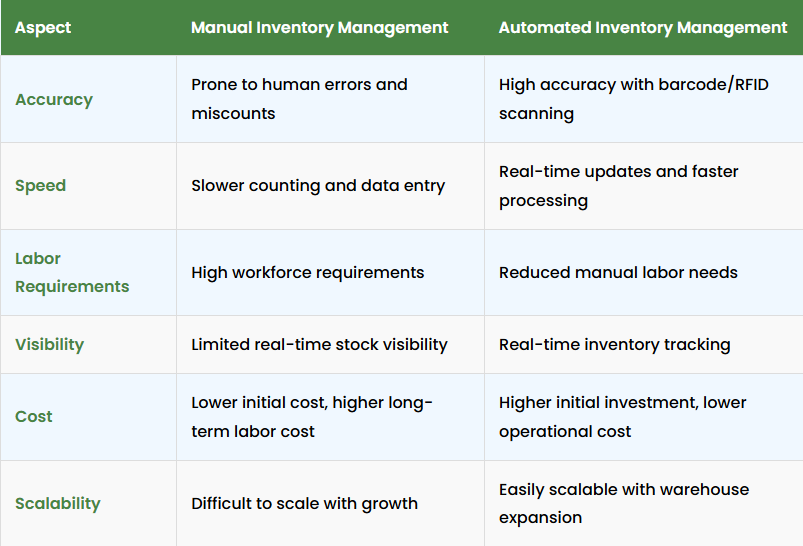
Automated inventory management systems significantly improve inventory accuracy, warehouse efficiency, and real-time stock visibility, making them essential for modern logistics and eCommerce operations as highlighted in reports on warehouse automation trends in India.
Benefits of Effective Physical Inventory Management
Improved Inventory Accuracy - Regular stock verification ensures accurate records.
Reduced Operational Errors - Identifying discrepancies early prevents larger issues.
Better Demand Forecasting - Accurate inventory data improves supply planning and helps businesses manage operational capital more efficiently.
Increased Customer Satisfaction - Reliable stock levels ensure faster order fulfillment and support a better delivery experience for customers.
Financial Transparency - Accurate inventory valuation supports accounting processes as documented in federal inventory management guidelines.
Challenges in Physical Inventory Management
Despite its importance, maintaining accurate inventory records can be challenging, especially in large warehouses with high inventory movement.
Labor-Intensive Processes
Manual inventory counting requires significant workforce effort and careful coordination.
Operational Disruption
Full inventory counts may temporarily interrupt warehouse operations when inventory movement must be paused.
Human Errors
Manual counting increases the likelihood of miscounts and data entry mistakes.
Data Synchronization Issues
Inventory updates must synchronize across warehouse systems, accounting platforms, and order management tools.
Common Inventory Management Mistakes Businesses Make
Even businesses with well-established warehouse operations can experience inventory discrepancies if proper processes are not followed. Many inventory management issues arise from operational inefficiencies, lack of technology adoption, or inconsistent inventory verification practices.
Understanding the most common mistakes in physical inventory management can help businesses reduce inventory errors, improve warehouse efficiency, and maintain accurate stock records.
Infrequent Inventory Checks
One of the most common mistakes businesses make is conducting inventory counts too infrequently. When physical inventory verification is delayed for long periods, discrepancies between system records and actual stock levels can accumulate.
Regular inventory verification, such as cycle counting or periodic stock audits, helps businesses identify discrepancies early and maintain higher inventory accuracy across warehouse operations.
Poor Warehouse Organization
Disorganized warehouse layouts can significantly slow down inventory counting processes and increase the likelihood of stock misplacement. When products are stored inconsistently or storage locations are poorly labeled, warehouse staff may struggle to locate items during physical inventory checks.
A well-structured warehouse layout with clearly labeled storage zones, organized shelves, and standardized product placement makes inventory counting faster and more accurate.
Ignoring Inventory Discrepancies
Inventory discrepancies should never be ignored or postponed for later investigation. Even small differences between system records and actual stock levels can signal deeper operational issues such as data entry errors, misplaced inventory, or product damage.
Businesses that regularly investigate discrepancies can identify the root causes of inventory issues and implement corrective measures to prevent recurring errors.
Lack of Inventory Tracking Technology
Many businesses still rely heavily on manual inventory tracking methods, which significantly increases the risk of human errors. Manual data entry, paper-based tracking systems, and inconsistent stock updates can create inaccurate inventory records.
Adopting modern inventory tracking technologies, such as barcode scanning systems, RFID tracking, and warehouse management systems (WMS), helps automate inventory updates and significantly improve stock accuracy.
Best Practices for Improving Inventory Accuracy
Maintaining high inventory accuracy requires consistent processes, proper warehouse organization, and the adoption of reliable inventory tracking technologies. Businesses that follow structured inventory management practices can reduce discrepancies, improve operational efficiency, and ensure smoother order fulfillment.
Implement Cycle Counting
Cycle counting is one of the most effective ways to maintain accurate inventory records. Instead of performing a single large inventory count once a year, businesses count small portions of inventory regularly throughout the year.
This method allows warehouse teams to detect discrepancies early, correct errors quickly, and maintain consistent inventory accuracy without disrupting daily operations.
Use Barcode or RFID Tracking Systems
Automated tracking technologies significantly improve inventory accuracy by reducing manual data entry errors. Barcode scanners and RFID systems allow warehouse staff to quickly verify stock quantities, update inventory records in real time, and minimize operational mistakes.
These technologies are widely used in modern warehouse management systems to support efficient inventory tracking and stock verification.
Optimize Warehouse Layout
An optimized warehouse layout makes inventory counting faster and more accurate. Organizing products by category, labeling storage locations clearly, and maintaining standardized storage procedures helps warehouse teams quickly locate items during inventory checks.
Efficient warehouse layouts also improve overall operational efficiency by reducing the time required for picking, packing, and inventory verification.
Train Warehouse Staff
Well-trained warehouse staff play a critical role in maintaining inventory accuracy. Employees should be trained on proper counting procedures, inventory tracking systems, and warehouse organization practices.
Consistent training ensures that staff follow standardized processes and reduces the likelihood of operational errors during inventory counting.
Monitor Inventory KPIs
Tracking key performance indicators (KPIs) helps businesses monitor inventory performance and identify operational inefficiencies. Important inventory metrics include inventory accuracy rate, shrinkage levels, and inventory turnover.
Regularly analyzing these metrics allows businesses to improve inventory control processes and maintain better visibility over warehouse stock levels.
Data-Driven Inventory Insights
Modern inventory management relies heavily on operational data to improve warehouse efficiency and maintain accurate stock levels. Businesses that implement automated inventory systems and structured counting processes often achieve significantly higher inventory accuracy.
The following industry benchmarks illustrate the impact of proper inventory management practices.
Organizations that combine cycle counting, automated inventory tracking, and structured warehouse processes typically achieve the highest inventory accuracy and operational efficiency.
Businesses that implement regular cycle counting and automation achieve significantly higher inventory accuracy, which is especially important as online commerce operations continue to scale.
Accurate inventory management becomes significantly more effective when it is connected with real-time logistics execution. Businesses that align inventory data with shipping operations gain better control over order processing, reduce fulfillment delays, and improve delivery success rates.
In practice, this level of operational coordination improves when businesses use centralized logistics systems that combine inventory visibility, courier allocation, and tracking in one place. iCarry enables this by helping brands manage shipping workflows, monitor delivery performance, and maintain better control over fulfillment operations without increasing operational complexity.
Conclusion
Physical inventory management is not just about counting stock - it is about building accuracy across the entire fulfillment system. When inventory records, warehouse operations, and logistics workflows are aligned, businesses can reduce errors, improve delivery timelines, and operate with greater efficiency.
As eCommerce continues to scale in India, inventory accuracy will become a key driver of operational performance. Businesses that combine structured inventory processes with real-time logistics visibility will be better positioned to handle growth without increasing operational risks.
Businesses that prioritize strong inventory management practices gain a competitive advantage through more efficient operations and better customer service.
Improve Inventory Visibility and Logistics Efficiency
Accurate physical inventory management becomes even more powerful when combined with real-time logistics tracking and shipping visibility. Businesses that integrate inventory systems with logistics platforms can reduce fulfillment delays and improve delivery performance.
iCarry helps businesses streamline logistics workflows, track shipments, and coordinate deliveries across supply chains.
Frequently Asked Questions (FAQs)
What is physical inventory management?
Physical inventory management is the process of physically counting and verifying the actual stock present in a warehouse and comparing it with recorded inventory data.
Why is physical inventory important for businesses?
Physical inventory ensures stock accuracy, improves order fulfillment reliability, and supports accurate financial reporting.
What are the main types of physical inventory counting?
Common methods include annual inventory counts, cycle counting, and spot checks.
What causes inventory discrepancies?
Inventory discrepancies may occur due to theft, damage, misplacement, incorrect data entry, or operational errors.
What is cycle counting in inventory management?
Cycle counting is a method of regularly counting small portions of inventory throughout the year instead of conducting a full warehouse count.
How can businesses improve inventory accuracy?
Businesses can improve accuracy by implementing barcode scanning systems, cycle counting processes, warehouse organization, and automated inventory management tools.
How often should businesses perform physical inventory counts?
Businesses typically perform full inventory counts annually while conducting cycle counting weekly or monthly depending on warehouse size and product volume.
What is the difference between cycle counting and full inventory counting?
Cycle counting involves regularly counting small portions of inventory, while full inventory counting verifies all warehouse stock at once.
Which technology improves inventory accuracy the most?
Barcode scanning systems, RFID tracking, and warehouse management systems (WMS) significantly improve inventory accuracy by reducing manual errors.
Physical inventory management is the process of physically counting and verifying warehouse stock against system records to ensure accuracy—enabling businesses to prevent stockouts, improve order fulfillment, reduce financial losses, and maintain reliable supply chain operations through structured counting methods like cycle counting and automated tracking technologies.