You packed 200 boxes of fresh mangoes on Monday morning. By Wednesday evening, 40 of them arrived at customers' homes in Bengaluru with bruised skin and off-putting smell. No temperature failure - just a 36-hour standard courier run through a sorting hub that was not built for perishables.
Shipping perishable products is one of the most unforgiving areas of Indian logistics. Unlike regular goods, perishables are time-sensitive and temperature-sensitive - meaning even small delays or improper handling can lead to spoilage that costs you the product, the customer, and the review.
India's food processing sector has grown at an average of 6.55% annually over the last nine years, according to sector growth data by Invest India - making cold chain logistics a serious operational challenge for any brand shipping perishables. Platforms like Swiggy, Zomato, and Blinkit have built entire logistics ecosystems around the cold chain - demonstrating that fast, temperature-controlled delivery at scale is achievable in India.
For eCommerce businesses, D2C food brands, exporters, and logistics operators, mastering perishable shipping is essential to maintain product quality, meet compliance requirements, and build customer trust. For most brands, shipping perishable products in India successfully depends on matching product shelf life, packaging performance, and courier transit time.
This guide explains cold chain logistics, packaging methods, compliance requirements, costs, and best practices for shipping perishable products in India.
Quick Checklist - Before You Ship Your First Perishable Order
Most perishable shipping failures are predictable. Confirm these 7 things before dispatch:
- Is your product pre-conditioned to the required temperature before packaging - not just after?
- Are you using the right cooling element for the delivery window - ice packs for 24 hours, gel packs for 48 hours, dry ice for frozen products?
- Is your packaging tested for the maximum ambient temperature your delivery route will encounter?
- Have you confirmed your courier partner has actual cold chain capability - not just 'fast delivery'? Using a courier aggregator lets you compare cold chain-capable partners for each route before booking
- Are your labels clearly marked Perishable, Keep Refrigerated, and This Side Up where relevant?
- Is your delivery window short enough to guarantee the product arrives within shelf life - accounting for worst-case transit delays?
What Is Shipping Perishable Products?
Shipping perishable products means maintaining strict cold chain standards throughout the supply chain. This process is a core component of cold chain logistics, which ensures product quality is maintained from storage through final delivery.
In simple terms: the product must arrive at the same temperature it left - or as close to it as logistics allows.
According to the Food and Agriculture Organization of the United Nations (FAO) - even brief temperature excursions during transit can trigger bacterial growth in food products, reduce pharmaceutical efficacy, or accelerate decay in fresh produce.
Why Shipping Perishable Products in India Requires Special Handling
Perishable shipping requires specialized handling because these products are highly sensitive to environmental changes, time delays, and improper storage conditions - all of which are more variable in India's logistics environment than in controlled markets.
Temperature Sensitivity
Perishable goods must be stored and transported within strict temperature ranges. Even minor fluctuations - a loading dock left open too long, a delivery vehicle without proper insulation, a sorting hub without refrigeration - can trigger spoilage faster than most sellers expect.
Short Shelf Life
These products have a limited lifespan, which means businesses must ensure faster processing, efficient logistics, and minimal delays. Every hour in transit counts. A product with a 5-day shelf life that spends 2 days in transit has lost 40% of its sellable window before reaching the customer.
Quality Risk
Improper handling, exposure to external conditions, or inconsistent temperature control can result in contamination, spoilage, or degradation - directly affecting customer experience and brand trust.
Regulatory Compliance
FSSAI (Food Safety and Standards Authority of India) guidelines, which govern labeling, packaging, cold chain standards, and documentation requirements for food products in transit.
Types of Perishable Products
1. Food and Grocery
Fruits and vegetables, dairy products, meat and seafood - these require continuous temperature control and quick delivery timelines to maintain freshness and prevent spoilage. India's online grocery market is one of the fastest-growing segments, driven by platforms that have industrialised cold chain delivery in metro areas.
2. Flowers and Plants
Flowers and plants require carefully managed humidity and temperature conditions during transit. They are highly sensitive to environmental stress - even a few hours in heat can irreversibly affect appearance and shelf life, making hyperlocal or same-day delivery essential for most floral shipments.
3. Pharmaceuticals
Vaccines, medicines, and biologics require highly controlled cold chain systems. Temperature deviations can affect efficacy, safety, and regulatory validity. Pharma cold chain in India is governed by strict guidelines from the WHO, with temperature logs and chain-of-custody documentation required for most products.
4. Frozen Products
Ice cream, frozen foods, and frozen meats must be transported at sub-zero temperatures, typically using dry ice or specialized refrigerated vehicles. The window for delivery is much tighter - any break in the freeze leads to texture and safety compromise that cannot be reversed.
Cold Chain Logistics Explained
Cold chain logistics refers to a temperature-controlled supply chain system designed to maintain consistent environmental conditions for perishable goods throughout the entire journey from production to delivery.
1. Temperature-Controlled Storage
Cold rooms and refrigerated warehouses store products under precisely maintained temperature conditions before dispatch. Pre-conditioning the product to the right temperature before packaging is as important as the packaging itself - a warm product placed in insulated packaging will heat the interior rather than stay cool.
2. Refrigerated Transportation
Reefer trucks and insulated delivery vehicles maintain consistent temperature levels during long-distance transit. For shorter urban routes, insulated delivery bags carried by bike riders are the standard for quick-commerce platforms.
3. Real-Time Monitoring
Why real-time tracking is essential in modern logistics covers how IoT-based temperature sensors create an unbroken data record that supports both quality assurance and compliance documentation.
4. Last-Mile Cold Delivery
Last-mile delivery challenges in India covers why this stage is particularly complex - delivery vehicles sitting in traffic, extended waiting times at apartment gates, and non-refrigerated bike deliveries all create temperature risks at the final handover point.
Temperature Requirements for Common Perishable Products
| Product Category | Required Temperature Range | Max Transit Window |
|---|---|---|
| Fresh fruits and vegetables | 2°C to 8°C | 24 to 48 hours |
| Dairy products | 1°C to 4°C | 12 to 24 hours |
| Meat and seafood | -18°C to 2°C (chilled/frozen) | 12 to 24 hours chilled |
| Flowers and plants | 4°C to 10°C with humidity control | 12 to 36 hours |
| Vaccines and biologics | 2°C to 8°C | Per manufacturer spec |
| Frozen foods and ice cream | -18°C to -25°C | 4 to 8 hours (insulated) |
Packaging Requirements for Perishables
Packaging is the first and most controllable line of defence in perishable shipping. Courier partners cannot compensate for inadequate packaging - the product must arrive safely regardless of handling quality in transit.
1. Insulated Packaging
Thermal boxes and insulated liners reduce external temperature impact and maintain internal cooling during transit. The insulation rating should be matched to the expected ambient temperature on the delivery route and the length of the transit window.
2. Cooling Elements
Ice packs for short-transit chilled products, gel packs for 48-hour windows, and dry ice for frozen goods. Over-relying on insufficient cooling elements is one of the most common causes of spoilage - especially when sellers underestimate transit time on non-metro routes.
3. Airtight Sealing
Proper sealing ensures products remain protected from air exposure, leakage, and contamination. For liquids and dairy, leakage during transit is a quality and customer experience failure that also damages other products in the same shipment.
4. Ventilation Where Required
Certain products like fresh produce need controlled airflow to prevent moisture buildup and accelerated decay. Solid insulation without ventilation can trap ethylene gas from fruits and accelerate ripening.
5. Clear Labelling
All perishable shipments must be clearly labelled: Perishable, Keep Refrigerated, This Side Up, and any temperature range required. Clear labelling ensures every handler in the logistics chain knows how to treat the shipment - and gives you documentation if something goes wrong.
Step-by-Step Perishable Shipping Process
Step 1: Product Preparation
Products must be pre-conditioned and stored at the required temperature before packaging. Packaging a warm product in insulated materials accelerates spoilage - pre-conditioning is not optional.
Step 2: Packaging
Select appropriate insulated materials and cooling agents based on the product category, transit time, and ambient temperature of the delivery route. Test packaging performance before going live with customers.
Step 3: Courier Selection
Choose logistics partners with proven cold chain capabilities for your specific route and product type. For non-metro deliveries, verifying actual refrigerated vehicle availability - not just stated capability - is essential. Multi-courier allocation allows sellers to assign perishable orders to the best cold chain-capable courier for each delivery zone rather than defaulting to a single partner.
Step 4: Dispatch
Shipments must be dispatched immediately after packaging - holding a packed perishable shipment waiting for a pickup slot wastes the cooling window. On iCarry®, booking before 11 AM ensures same-day pickup, which is critical for time-sensitive perishable logistics.
Step 5: Transit Monitoring
Real-time temperature and location tracking should run throughout the journey. Any deviation from the expected temperature range should trigger an immediate alert so corrective action can be taken before delivery.
Video: How to Monitor Shipment Status in Real Time
Step 6: Delivery
For short-transit perishables, Hyperlocal delivery models - where product is dispatched from a dark store or local hub within 2 to 5 kilometres of the customer - are the most reliable way to guarantee perishable quality at the final step.
Real-World Business Examples
Example 1: Online Grocery Delivery
Swiggy Instamart uses hyperlocal logistics and cold chain infrastructure to deliver fresh groceries within minutes while maintaining quality. Their dark store model - with products stored at the right temperature within 2 to 3 kilometres of customers - is built specifically to eliminate last-mile cold chain failure.
Example 2: D2C Meat Delivery Brand
D2C meat brands rely on advanced insulated packaging and refrigerated transportation systems to ensure products remain fresh and safe during delivery. The most successful brands in this category treat packaging as a product in itself - custom-designed ice gel packs, leak-proof inner lining, and outer boxes tested to survive 6 hours at 40°C ambient.
Example 3: Pharma Logistics
Pharma cold chain requirements are governed by good distribution practice standards set out by the World Health Organization (WHO). Temperature data loggers that create an unbroken audit trail from warehouse to delivery point are standard practice in regulated pharma cold chain.
Cost Factors in Perishable Shipping
Perishable shipping typically costs 20 to 40% more than standard shipping due to specialized infrastructure, faster delivery requirements, and strict temperature control. The main cost drivers are:
- Cold storage and pre-conditioning before dispatch
- Insulated packaging materials and cooling elements per shipment
- Refrigerated or temperature-controlled transportation
- Real-time temperature monitoring technology
- Express or hyperlocal delivery to reduce transit time
- Compliance documentation and regulatory overhead
Sellers who want to manage these costs systematically should start by understanding where the biggest cost leaks occur. Hidden shipping charges in India covers how packaging choices, weight billing, and courier fees compound into a higher total cost than most sellers initially account for.
For strategies to bring per-shipment logistics costs down without compromising cold chain quality, the guide on reducing shipping costs for eCommerce in India is a useful reference - particularly the sections on packaging optimisation and courier selection.
Benefits of Proper Perishable Shipping
Maintains Product Quality: Products reach customers in a fresh, safe, and usable condition - preserving brand trust and reducing refund or replacement claims.
Reduces Spoilage Losses: Consistent temperature control and efficient delivery timelines minimise product loss before it reaches the customer.
Improves Customer Satisfaction: Delivering fresh, high-quality products enhances the overall customer experience and drives repeat purchases.
Compliance with Regulations: Food businesses shipping perishables across states should ensure FSSAI licensing, batch traceability, and compliant food labelling are in place before dispatch. Proper cold chain documentation helps businesses adhere to FSSAI and pharma guidelines, reducing legal and operational risks.
Delivery quality for perishable products has an outsized impact on repurchase decisions. How shipping experience impacts customer retention explains why a single spoiled delivery in this category is more damaging to retention than multiple delayed deliveries in regular eCommerce.
Challenges in Shipping Perishables
Temperature Control Failures: Even small disruptions in the cold chain can compromise product integrity. A sorting hub without refrigeration, a loading dock left open during summer, or a rider's bag left in direct sunlight during a delay - each of these breaks the chain.
Limited Delivery Window: Time-sensitive delivery requirements increase operational pressure. Unlike standard eCommerce where a 1-day delay is manageable, a 1-day delay on a fresh product with a 3-day shelf life eliminates a third of the customer's usable window.
High Costs: Cold chain logistics involves significant investment in infrastructure, packaging, and transportation - making unit economics tight, especially at low order volumes.
Infrastructure Gaps: Limited cold chain infrastructure in Tier-2 and Tier-3 cities restricts scalability. Refrigerated last-mile delivery outside major metros remains sparse, making most perishable businesses metro-first by necessity.
Common Mistakes Businesses Make
Poor Packaging: Using standard boxes for perishables, under-dosing cooling elements, or failing to pre-condition the product before packing. The packaging must be engineered for the route, not just the product.
Choosing Standard Courier Services: Standard logistics providers often lack cold chain capabilities. Selecting a courier based on price alone - without verifying refrigerated vehicle availability on the specific route - is the most common cause of perishable shipping failure.
Ignoring Delivery Timelines: Delays directly affect product freshness and shelf life. Booking a perishable shipment on a route where the courier's standard TAT exceeds the product's transit window is a guaranteed spoilage event.
Lack of Temperature Monitoring: Without monitoring, temperature deviations go undetected and undocumented. This creates both a product quality risk and a regulatory compliance gap - especially for pharmaceutical and food-grade products.
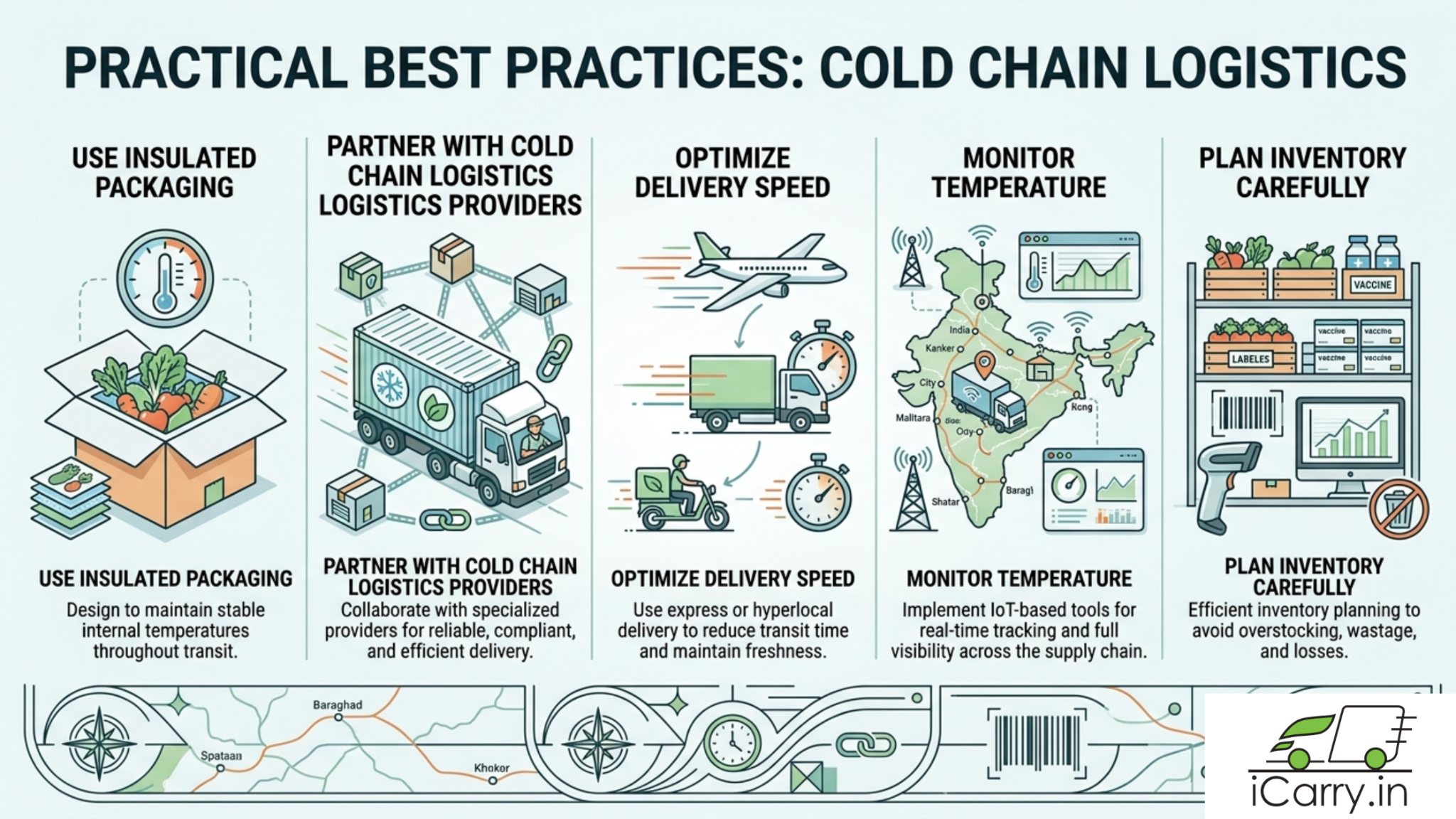
Practical Best Practices
Use Insulated Packaging: Match packaging materials and cooling elements to the specific product, transit time, and route ambient temperature. Test before scaling. Vacuum sealing is the most effective option for moisture-sensitive items. It removes air from the pack, slows bacterial growth, and significantly extends the window between dispatch and spoilage.
Partner with Cold Chain Logistics Providers: Verify that your courier partner has actual cold chain infrastructure on your specific routes - not just stated capability. Ask for vehicle specifications, hub refrigeration status, and last-mile delivery method.
Optimise Delivery Speed: Use express or hyperlocal delivery models to reduce transit time. The shorter the transit window, the less cooling performance is required from packaging. Consider using hyperlocal (same day delivery) service at iCarry.
Reduce Moisture Content Before Shipping: High moisture is the fastest route to spoilage in transit. If you are shipping baked goods, snacks, or processed foods, opt for drier formulations where possible - less moisture means a longer shelf life and fewer complaints on delivery.
Monitor Temperature: Implement IoT-based temperature sensors and logging to track conditions throughout transit. This creates a quality assurance record and satisfies regulatory documentation requirements.
Monitor Delivery Performance: Track delivery success rates, spoilage complaints, and transit times by route and courier. 7 logistics KPIs every eCommerce business should track covers the benchmarks relevant to perishable operations alongside standard shipping metrics.
Plan Inventory Carefully: Avoid overstocking perishables. Build inventory levels around realistic demand forecasts and leave buffer stock only where cold storage capacity exists to hold it safely.
Data-Driven Industry Insights
- Perishable shipping in India costs 20 to 40% more than standard shipping due to cold chain requirements
- India's cold chain logistics market is growing at approximately 14 to 15% annually, driven by online grocery, D2C food brands, and pharma logistics
- FAO data estimates that 25 to 30% of fresh produce in India is lost post-harvest due to cold chain gaps - creating significant opportunity for sellers who get logistics right
- Quick-commerce platforms completing deliveries in under 20 minutes have demonstrated that cold chain delivery at hyperlocal scale is achievable in Indian metro markets
- Pharmaceutical cold chain in India is expected to grow as vaccine distribution and biologics demand increase through 2026
Final Thoughts
Efficient perishable shipping depends on strong logistics coordination, temperature monitoring if needed, and delivery partners who can actually execute the cold chain on your specific routes. iCarry® provides access to all the top courier partners in India from one platform - allowing sellers to compare rates, check serviceability by pincode, and select the right courier for each perishable delivery route. For sellers managing both perishable and standard shipments, iCarry® makes it possible to handle both from a single logistics account especially with the same day delivery service in select cities.
Frequently Asked Questions (FAQs)
What is cold chain logistics?
Cold chain logistics is a temperature-controlled supply chain system used to transport perishable goods - food, pharmaceuticals, flowers, and frozen products - while maintaining the required temperature conditions from storage through final delivery.
How are perishable products shipped safely in India?
They are shipped using insulated packaging, appropriate cooling elements (ice packs, gel packs, or dry ice), temperature-controlled transport, and FSSAI-compliant labeling. Delivery timelines must be matched to the product's shelf life and the cooling capacity of the packaging.
Why is shipping perishable goods more expensive?
Costs are higher due to cold storage requirements, specialized insulated packaging, refrigerated or temperature-controlled transportation, real-time monitoring technology, and faster delivery mandates - all of which add to the standard per-shipment cost.
Which industries use perishable shipping in India?
Food and grocery, pharmaceuticals, floriculture, dairy, meat and seafood, and frozen food brands are the primary users of cold chain logistics in India. Online D2C brands in these categories are among the fastest-growing adopters of perishable-specific logistics infrastructure.
What happens if the cold chain breaks during transit?
Products may spoil, lose quality, become unsafe for consumption, or fall out of regulatory compliance. For pharmaceutical products, a cold chain break can invalidate the product entirely. For food, it creates both a health risk and a customer satisfaction failure.
How can businesses improve perishable shipping?
Use right-sized insulated packaging with tested cooling performance for the route, select courier partners with verified cold chain capability, implement real-time temperature monitoring, optimize delivery speed to match product shelf life, and track delivery KPIs by route to identify where the cold chain is breaking down.
Perishable shipping failures are almost always packaging or courier selection failures - not courier delays. Match your insulation rating to the route's ambient temperature and transit time, verify that your courier actually has refrigerated vehicles on the specific route (not just fast delivery), and pre-condition the product before packing. Get these three things right and most spoilage risk disappears.