Introduction
You listed your products on Flipkart, set competitive prices, and started getting orders. Then the complaints came in. Late deliveries. Missed SLAs. A seller score that started dropping. And shipping costs eating into margins you had not fully accounted for.
Shipping on Flipkart is not just about getting a parcel from your warehouse to a customer. It is one of the most direct inputs into your product's visibility, your conversion rate, and your long-term standing on the platform. Flipkart's algorithm rewards faster, more reliable sellers. Slow dispatch and high cancellation rates push you down the rankings, regardless of how good your product is.
Global eCommerce research shows that logistics performance and delivery experience are key drivers of customer satisfaction and repeat purchases.
Logistics infrastructure and connectivity help enable faster, more reliable delivery networks across India.
For sellers, understanding Flipkart's shipping ecosystem is essential to improve delivery speed, reduce logistics costs, maintain seller ratings, and win more orders through optimised shipping strategies.
This guide explains Flipkart seller shipping models, cost structures, policies, and best practices to optimise delivery performance.
What is Flipkart Seller Shipping?
Flipkart seller shipping is the process by which sellers on Flipkart.com receive customer orders and fulfill them - either through Flipkart's own warehouses (FBF), a shared model (Smart Fulfillment), or independently using their own logistics (Self Ship). The fulfillment model you choose directly affects your delivery speed, seller score, and per-order cost.
Quick Checklist - Before You Start Shipping on Flipkart
Most seller performance issues on Flipkart trace back to shipping decisions made at the start. Get these right first:
- Choose the right fulfillment model for each product type - FBF for fast-movers, Self Ship for bulky or slow-moving SKUs
- Set your pickup address correctly and confirm pickup timelines with your chosen logistics partner
- Pre-validate inventory counts before going live - stockouts directly cause cancellations and hurt your seller score
- Understand volumetric weight billing before pricing your shipping - large, light products cost more than they appear
- If using Self Ship, get Flipkart's self-shipment approval before setting up the iCarry® Flipkart connector
- Enable real-time shipment tracking so customer queries are answered without manual effort
- Decide upfront how you will manage RTO and NDR - having a process for failed deliveries saves significant cost over time
How Flipkart Shipping Works for Sellers
Efficient supply chain systems are essential for ensuring smooth order fulfillment and delivery operations in eCommerce.
In simple terms: list your product, receive orders, fulfill them using Flipkart's services or your own logistics. Get this right and you protect your delivery metrics, your seller score, and your margins.
Why Shipping Matters for Flipkart Sellers
Consumer behaviour studies consistently show that delivery speed is one of the top factors influencing repeat purchases on Indian eCommerce platforms.
Product Visibility
Efficient and faster delivery improves your product rankings on Flipkart, helping your listings appear higher in search results and attract more buyers. Sellers who consistently meet SLAs get a visibility boost that slower sellers simply cannot compensate for with pricing alone.
Customer Experience
Delivery quality is one of the most direct drivers of whether a customer comes back. The relationship between shipping experience and customer retention is well-documented - and on a marketplace like Flipkart, poor delivery reflects on your seller profile, not on Flipkart itself.
Return Rates
Delayed or inconsistent shipping increases the chances of returns and order cancellations, which negatively affect your revenue. A customer who waited too long for a COD order often refuses delivery when it finally arrives - turning a sale into an RTO cost.
Seller Score
Flipkart closely tracks seller performance metrics such as delivery timelines and fulfillment efficiency, making shipping a key factor in maintaining a strong seller score. A deteriorating score affects both your visibility and your ability to participate in Flipkart's promotional events and sales.
Is Flipkart Seller Shipping Profitable in 2026?
Flipkart seller shipping can be highly profitable in 2026, but only when logistics are optimised effectively. With rising competition and increasing customer expectations for faster delivery, shipping performance has become a key factor in determining profitability.
Sellers today must balance delivery speed, shipping costs, and fulfillment efficiency to maintain healthy margins.
Key factors that impact profitability include:
- Rising logistics and fulfillment costs across India
- Increasing demand for faster and same-day delivery in metro markets
- Higher competition requiring consistently better seller performance metrics
- The need to reduce returns and RTO - understanding what drives RTO on COD orders is one of the highest-leverage things a Flipkart seller can do to protect margins
Profitability largely depends on choosing the right fulfillment model, optimising inventory placement, and controlling shipping costs. Sellers who focus on faster delivery and efficient logistics operations can significantly improve conversions, reduce cancellations, and increase overall profitability on Flipkart.
Flipkart Fulfillment Models
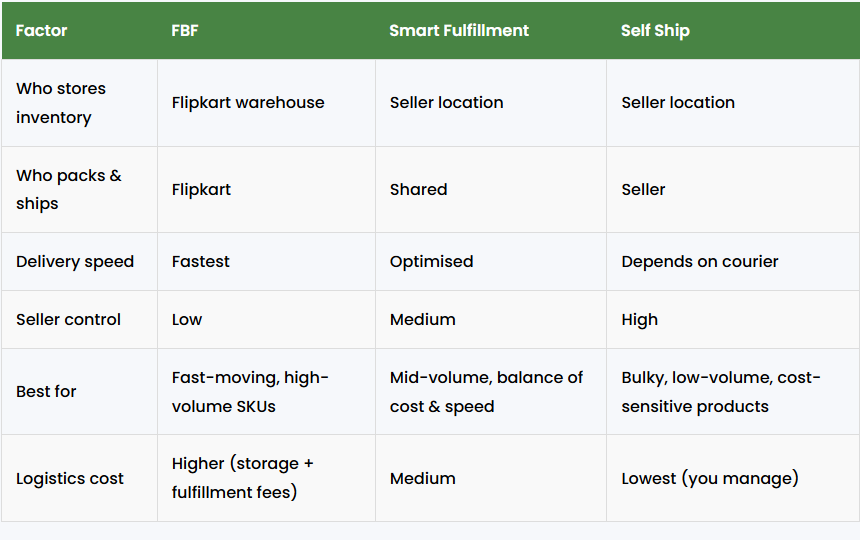
Flipkart offers multiple fulfillment models for sellers - FBF, Smart Fulfillment, and Self Ship - allowing you to choose the one that best suits your business needs and operational capabilities.
Flipkart Fulfillment (FBF)
This is a warehouse-based fulfillment model where sellers send their inventory to Flipkart's fulfillment centres. Flipkart then takes care of storage, packing, shipping, and customer service.
The biggest advantage of FBF is faster delivery, which leads to higher product visibility and improved conversion rates. It is ideal for sellers looking to scale their operations with minimal logistical involvement. FBF products are typically eligible for faster delivery badges that influence purchase decisions on the platform.
Smart Fulfillment
In this model, sellers store inventory at their own location but follow Flipkart's fulfillment guidelines and processes.
Smart Fulfillment offers a balance between control and performance, making it suitable for sellers who want to manage logistics operations efficiently while still achieving optimised delivery timelines.
Self Ship (Non-Fulfilled)
Self Ship is a Flipkart fulfillment model where the seller is fully responsible for storing, packing, and shipping orders using their own logistics partners.
In the Self Ship model, Flipkart only provides the platform and order flow-you handle everything else.
Once you receive an order:
- you pick and pack the product
- book a shipment with your courier partner
- ensure dispatch within Flipkart's SLA timelines
This model gives you:
- complete control over logistics
- flexibility in choosing courier partners
- ability to optimize costs using multi-courier strategies
However, it also requires strong operational discipline to avoid:
- late dispatch penalties
- higher RTO rates
- poor seller ratings
When to Use Self Ship:
- Bulky or heavy products
- Low-volume SKUs
- Products with tight margins
- Sellers using multi-courier platforms like iCarry®
iCarry® integrates directly with Flipkart for order sync and fulfillment. You can set it up from Main Menu > API/Integrations > Flipkart in your iCarry® dashboard - just ensure you have received Flipkart's self-shipment approval first. Learn more about iCarry®'s shipping integrations.
Flipkart Fulfillment Models Comparison
Flipkart Seller Shipping Workflow - Step-by-Step
The Flipkart shipping workflow follows a structured process from listing to delivery.
Step 1: Product Listing
The seller uploads product details and listings on Flipkart. Ensure weight and dimensions are entered accurately - these directly affect the shipping charges applied to each order and can trigger weight discrepancy charges if inaccurate.
Step 2: Order Placement
A customer places an order on the platform. For FBF orders, Flipkart takes over immediately. For Smart Fulfillment and Self Ship, you are notified and the clock on your dispatch SLA starts.
Step 3: Order Processing
The responsibility for processing depends on the chosen fulfillment model. FBF is handled entirely by Flipkart. Smart Fulfillment is shared. Self Ship is fully managed by the seller. For Self Ship sellers, this is where having a bulk booking workflow matters - processing orders one by one at high volume creates delays.
Video: Bulk Shipment Upload to Book Multiple Orders at Once on iCarry®
Step 4: Shipping & Delivery
Last-mile delivery plays a critical role in ensuring timely fulfillment. For Self Ship sellers using iCarry®, you can compare rates across 10 courier partners and select the best option for each order's destination zone.
Video: How to Book a Shipment and Select Your Preferred Courier on iCarry®
Step 5: Tracking & Updates
Transparency and real-time tracking are important factors influencing customer trust and satisfaction. On iCarry®, you can monitor every shipment - from pending pickup through to delivered or returned - across all courier partners from one dashboard.
Video: Overview of the My Shipments Dashboard on iCarry®
How to Improve Flipkart Delivery Performance
Improving delivery performance is crucial for maintaining high seller ratings and increasing visibility on Flipkart. Faster and more reliable deliveries directly impact customer satisfaction and conversion rates.
Sellers can improve delivery performance by:
- Processing orders quickly to avoid delays in dispatch - treat your SLA clock as non-negotiable
- Maintaining accurate inventory to prevent order cancellations caused by stockouts
- Reducing late dispatch rate through better operational planning and bulk booking tools
- Using efficient packaging to speed up fulfillment - right-sized boxes also reduce volumetric weight charges
- Leveraging automation tools for order and inventory management - shipping optimization strategies that work across channels are especially valuable when selling on multiple platforms simultaneously
Consistently monitoring performance metrics and optimising operations helps sellers meet Flipkart's SLA requirements and improve overall efficiency.
Flipkart Shipping Cost Structure
Shipping costs on Flipkart vary based on fulfillment model, shipment weight, dimensions, and delivery distance. Understanding the cost structure helps you price products correctly and protect your margins.
Key Cost Components
- Base freight: Per-shipment charge based on weight and delivery zone
- Volumetric weight: If the dimensional weight of your package exceeds the actual weight, you are billed on volumetric weight - L x B x H (cm) divided by 5000
- Fulfillment fees (FBF): Storage and handling charges for inventory held in Flipkart's warehouses
- COD charges: A fixed fee plus a percentage of order value for cash-on-delivery orders
- RTO charges: Return-to-origin freight when a delivery fails - typically equal to the forward freight charge
One of the most common sources of unexpected charges is volumetric weight billing, particularly for sellers shipping fashion or home décor products in large boxes. Understanding how hidden shipping charges accumulate in India is essential reading before you finalise your packaging strategy.
Flipkart Shipping Charges Summary
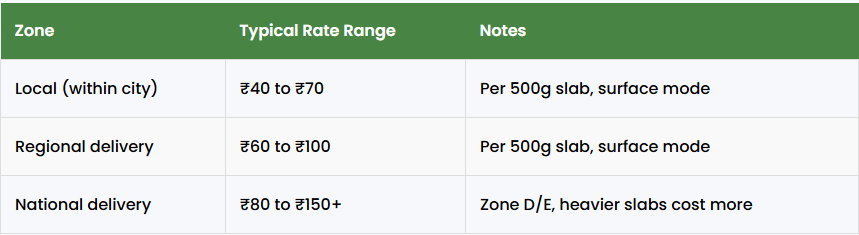
These are indicative ranges. Actual charges depend on courier partner, weight slab, fulfillment model, and promotional periods. Always verify against your specific shipment details before pricing.
How to Reduce Flipkart Shipping Costs
Reducing shipping costs is essential for improving profit margins and staying competitive on Flipkart. Sellers who actively optimize their logistics strategy can significantly lower expenses without compromising delivery performance.
- Store inventory closer to high-demand regions to reduce delivery zone and transit distance
- Use lightweight and right-sized packaging to lower volumetric weight charges - how weight discrepancy charges work and how to dispute them is useful if you have already been hit with unexpected billing
- Choose the right fulfillment model based on product demand and margin profile - FBF storage fees can erode margins on slow-moving SKUs
- Reduce RTO by ensuring accurate product descriptions and validating customer addresses before dispatch - choosing the right courier for COD orders reduces COD return rates significantly
- Use a hybrid fulfillment strategy to balance cost and speed - FBF for top-sellers, Self Ship for everything else
- Regularly analyse shipping performance and courier efficiency using logistics KPIs - if a courier is underperforming in a specific zone, route those orders elsewhere
Flipkart Shipping Policies
Standardised logistics processes and performance metrics are critical for maintaining quality and consistency in large-scale eCommerce operations. Sellers must adhere to these standards to avoid penalties and maintain account health.
SLA Compliance
Understanding how SLA compliance in courier contracts works helps you set realistic commitments and hold courier partners accountable when they miss targets.
Cancellation Rate
Maintaining a low cancellation rate is crucial. Frequent order cancellations - especially due to stockouts - negatively impact seller performance and visibility. Flipkart penalises sellers with high cancellation rates by reducing their ranking and eligibility for promotional placement.
Late Dispatch Rate
Delays in dispatching orders reduce seller ratings and affect overall performance metrics. For Self Ship sellers, the dispatch clock starts when the order is placed. Booking shipments in bulk immediately after order sync prevents late dispatch accumulating during busy periods.
Video: How to Print Shipment Labels and Manifests on iCarry®
Return and Refund Policies
Sellers must strictly follow Flipkart's return and refund guidelines to ensure a smooth customer experience and avoid disputes or penalties. For COD orders specifically, actively managing NDRs reduces the chances of returns due to failed delivery attempts.
When a delivery fails and generates a Non-Delivery Report, you have a narrow window to update instructions and request a reattempt. Fake delivery attempts - where courier executives file false NDRs - are a real risk that iCarry®'s Delivery Boost feature directly addresses.
Real-World Business Examples
FBF Growth Strategy
A fashion accessories seller moved their top 20 SKUs to FBF during the festive season. Delivery time dropped from 4 to 5 days to 1 to 2 days for metro customers. The faster delivery badge improved conversion rate by around 18%, and their seller score improved enough to qualify for Flipkart's Big Billion Days promotional placement.
Smart Fulfillment Optimisation
A home décor brand used Smart Fulfillment to maintain control over fragile item packaging while meeting Flipkart's delivery SLAs. This let them use custom packaging without sacrificing the delivery performance metrics FBF would have provided.
Self Ship Cost Control
A seller of heavy furniture accessories found FBF storage fees made margins unworkable. Switching to Self Ship with iCarry® allowed them to route each order to the most cost-effective LTL courier for that destination, keeping per-shipment costs 20 to 25% lower than FBF alternatives.
Benefits of Flipkart Seller Shipping Models
Flipkart's shipping models offer several advantages that help sellers improve performance, scale operations, and enhance customer satisfaction.
- Faster Delivery: Using FBF enables quicker delivery timelines, improving customer experience and increasing conversions.
- Improved Visibility: Strong shipping performance boosts product rankings, helping listings gain more visibility and attract higher traffic.
- Scalability: Flipkart's logistics infrastructure allows sellers to scale efficiently without managing warehousing complexity during peak periods.
- Customer Trust: Reliable and timely deliveries lead to better reviews, higher ratings, and increased customer trust - which compounds over time into a defensible position on the platform.
Challenges for Sellers
While Flipkart shipping models offer many benefits, sellers may face certain operational and cost-related challenges.
- High Fulfillment Costs: FBF storage and handling fees can significantly impact margins for slow-moving products. Always model FBF costs against projected sales velocity before enrolling a product.
- Limited Control in FBF: Sellers have less visibility into how products are handled and packed inside Flipkart's fulfillment centres, which matters for fragile or premium items.
- Strict Performance Metrics: Flipkart's SLA enforcement is unforgiving. Non-compliance - even temporarily during a surge period - can affect seller ratings and account health in ways that take time to recover from.
- Inventory Management Complexity: Managing inventory across different fulfillment models requires careful planning to avoid overstocking in FBF (incurring storage fees) or stockouts in Self Ship (causing cancellations).
Common Mistakes Sellers Make
Many sellers face performance issues due to avoidable errors in their shipping strategy.
- Choosing the Wrong Fulfillment Model: Not every product is suitable for FBF. High storage fees on slow-moving SKUs silently erode margins. Analyse your sell-through rate before enrolling products in FBF.
- Ignoring Logistics Costs: Failing to account for shipping, fulfillment, and RTO expenses in your pricing model leaves you with margins that look healthy on paper but are negative in practice.
- Poor Inventory Planning: Inadequate stock management causes stockouts and cancellations, both of which directly hurt your Flipkart seller score.
- Not Monitoring Seller Metrics: Ignoring late dispatch rate, cancellation rate, and delivery performance allows problems to compound before you catch them. Track these daily, not weekly.
Best Practices for Delivery Optimisation
To maximise efficiency and performance, sellers should adopt proven shipping and fulfillment strategies.
Use FBF for Fast-Moving Products
Using FBF for high-demand products improves delivery speed, increases visibility, and boosts conversion rates. The FBF delivery badge is a meaningful conversion driver for price-sensitive buyers choosing between similar listings.
Optimise Inventory Placement
Storing inventory closer to high-demand regions reduces delivery time and improves operational efficiency. If selling nationally, split inventory between warehouses serving North/Central India and South India to reduce average delivery zone.
Monitor Seller Performance Metrics
Regularly track:
- Late dispatch rate - should stay below 2%
- Cancellation rate - keep below 2.5% to maintain good account standing
- Delivery success rate - monitor by courier and zone
- RTO rate - especially for COD orders in Tier-2 and Tier-3 cities; The logistics KPIs covers what to measure and benchmark against
Use a Hybrid Fulfillment Strategy
Combining FBF with Self Ship allows sellers to balance cost, control, and delivery efficiency. Use FBF for your top-selling 20% of SKUs that drive 80% of your revenue, and Self Ship for the long tail.
Optimise Packaging
Use right-sized packaging to keep volumetric weight low. A box 5 cm larger than needed on each dimension can push a shipment into the next weight slab - adding ₹20 to ₹40 per order in unexpected charges at scale.
Best Shipping Strategy for Flipkart Sellers
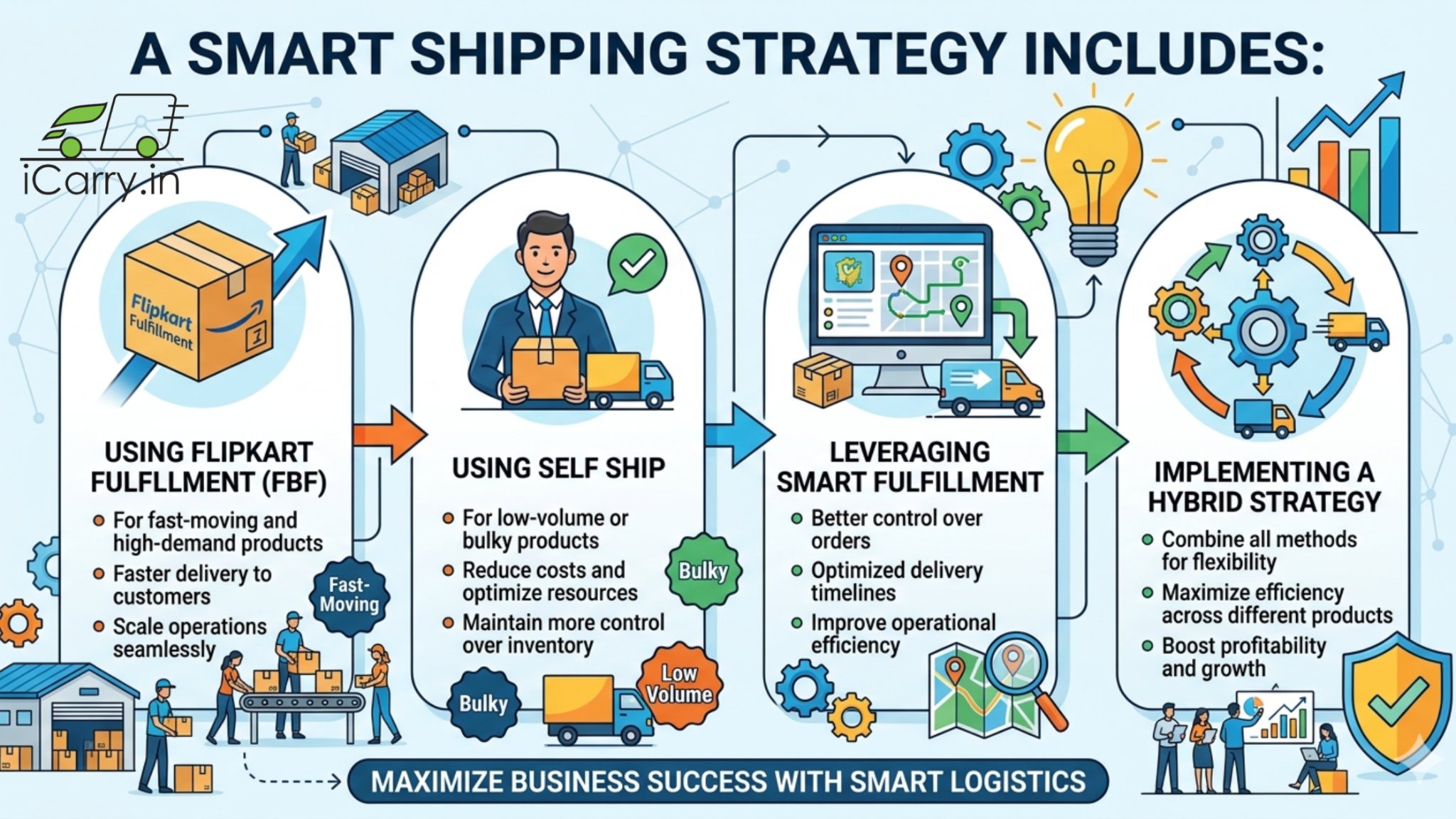
Choosing the right shipping strategy is essential for balancing cost, control, and delivery speed. Successful sellers often use a combination of fulfillment models to optimise performance.
A smart shipping strategy includes:
- Using FBF for fast-moving and high-demand products where delivery speed is the primary conversion driver
- Using Self Ship for low-volume, bulky, or fragile products where packaging control matters
- Using Smart Fulfillment for mid-volume products where you want better control with optimised delivery timelines
- Implementing a hybrid strategy to maximise efficiency and profitability across your full product catalogue
A multi-courier allocation platform ensures each order is automatically routed to the best available courier for that destination - rather than using a single partner whose performance varies significantly by region.
Data-Driven Insights
Efficient shipping directly impacts sales and customer satisfaction on Flipkart.
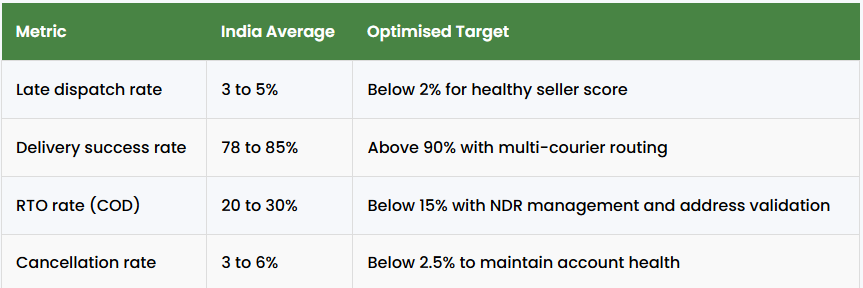
BCG supply chain research consistently shows that companies optimising last-mile delivery see 15 to 25% improvements in customer satisfaction scores.
Conclusion
Flipkart gives you three fulfillment models - each with a clear use case. FBF for speed and scale. Self Ship for cost control on bulky or slow-moving products. Smart Fulfillment for the middle ground.
The sellers who win on Flipkart are not the ones with the best products - they are the ones with the tightest logistics. Right model, right courier, right packaging, right NDR process.
Nail these and your seller score improves, your visibility grows, and your margins hold up even as competition increases.
Compare courier performance by pin-code to get started right.
Optimise Flipkart Shipping with Smarter Logistics
Efficient shipping requires strong coordination between inventory, fulfillment, and courier networks. Businesses that optimise logistics workflows can improve delivery performance and reduce costs.
iCarry® integrates directly with Flipkart for Self Ship sellers - syncing orders and enabling fulfillment from one platform alongside 10 courier partners. Set up the connector at Main Menu > API/Integrations > Flipkart in your iCarry® dashboard. Flipkart self-shipment approval is required before setup.
New to iCarry®? Register free and activate your account in minutes. No minimum shipment volume required.
Frequently Asked Questions (FAQs)
What is Flipkart Fulfillment (FBF)?
FBF is a service where Flipkart stores, packs, and delivers products on behalf of sellers from its own fulfillment centres. FBF products typically receive faster delivery badges that improve conversion rates.
What is Smart Fulfillment on Flipkart?
Smart Fulfillment allows sellers to manage inventory at their own location while following Flipkart's optimised delivery guidelines and processes. It offers a middle ground between full FBF and independent Self Ship.
Which fulfillment model is best on Flipkart?
FBF is best for faster delivery and visibility on high-volume SKUs, while Self Ship is better for cost control on bulky or slow-moving products. Most successful sellers use a hybrid of both.
How much does Flipkart shipping cost?
Shipping costs typically range from ₹40 to ₹150+ depending on delivery zone, product weight, and fulfillment model. Volumetric weight billing can push costs higher for large, light packages.
Does Flipkart Fulfillment increase sales?
Yes. Faster delivery through FBF and the associated delivery speed badge improve conversion rates, particularly in competitive categories where multiple sellers offer similar products at similar prices.
Can sellers use multiple fulfillment models?
Yes. Many sellers use a hybrid strategy - FBF for fast-moving products and Self Ship for low-volume or bulky SKUs - to balance delivery speed and cost efficiency.
How can sellers reduce Flipkart shipping costs?
Optimise packaging to reduce volumetric weight, use regional inventory placement, minimise RTO through better NDR management, and choose the right fulfillment model per product. Reducing RTO systematically has the highest single impact on per-order shipping cost for COD-heavy Flipkart sellers.
How does iCarry® integrate with Flipkart?
iCarry® has a Flipkart connector for order sync and fulfillment for Self Ship sellers. Set it up from Main Menu > API/Integrations > Flipkart in your iCarry® dashboard. You must first obtain Flipkart's self-shipment approval before activating the connector.
How do I handle failed deliveries on Flipkart?
Failed deliveries generate an NDR. Follow up within 24 hours by updating delivery instructions or requesting a reattempt through your shipping dashboard. Using NDR data effectively helps you identify which couriers and pincodes have the highest failure rates so you can reroute proactively rather than reacting order by order.
FBF is best for faster delivery and visibility on high-volume SKUs, while Self Ship is better for cost control on bulky or slow-moving products. Most successful sellers use a hybrid of both.